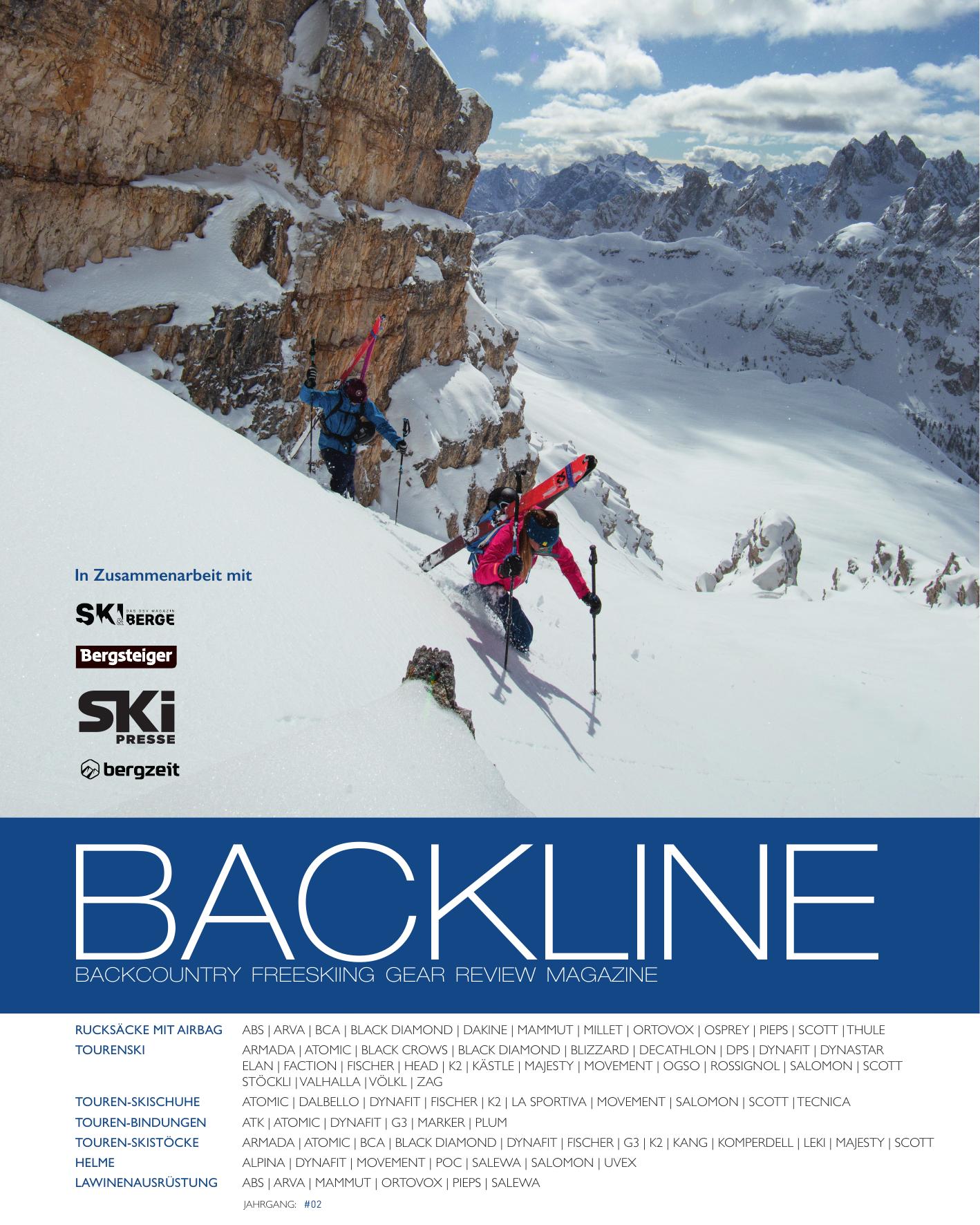
Avalanche transceivers · Test magazine 2020
Tech talk with Lien Schellens, ARVA
Export Manager Germany & Austria · Print page 95
Who is Lien Schellens? ARVA Export Manager for Germany and Austria
In the BACKLINE 2020 test magazine, Lien Schellens appears as ARVA’s Export Manager for Germany and Austria, discussing avalanche transceivers. Born in Belgium, she has lived in France since 2010. She learned to ski at the age of three; skiing, particularly in the backcountry, is an essential part of her life.
In the interview, Schellens explains how to prepare avalanche safety equipment for winter. She recommends removing batteries from the transceiver after the season and storing the device in a dry place. Before winter, users should insert new batteries and test the transmit and search functions. Shovels and probes also need a functional check. Rereading the user manual and practising procedures are further recommendations.
For ski touring beginners, Schellens stresses professional instruction and regular practice: modern equipment cannot replace knowing how to use it properly. Before every tour, she recommends a transceiver group check and checking battery levels, shovels and probes. The transceiver should be worn on the body, with shovel and probe readily accessible in the backpack. In the interview, she specifies minimum distances from electronic devices of 20 centimetres in transmit mode and 50 centimetres in search mode, as electronics can impair transceiver function.
Winter is around the corner – what should you check on your avalanche equipment before it starts?
After the winter the batteries should be removed from the transceiver and the device stored in a dry place. Before using it again we recommend fitting completely new batteries, switching the device on and checking the transmit and search functions. After the summer people often forget the details of operation; we recommend reading the manual again, or better still practising all the procedures with friends or under professional guidance. It also makes sense to unpack the probe and shovel and check all their functions.
What do you recommend to ski touring beginners when handling avalanche equipment?
Professional training is the basis for your own safety and that of everyone with you in the backcountry. It is of no use to own the latest equipment if you cannot use it properly. And a single course is not enough. We recommend practising the correct procedures and the use of avalanche equipment in an emergency at least before every winter, on a professional course or with experienced friends. The transceiver should be worn on the body, ideally under the outermost layer of clothing. Probe and shovel should always be stowed in the same place in the pack, and it should be possible to unpack and use them quickly with just a few movements. Before every tour, do a group check – this mode is already integrated in all our ARVA transceivers and in some other well-known devices on the market – to see whether all transceivers are switched on and ready to transmit and search. We also recommend checking the battery level; at 50 % charge at the latest we recommend changing the batteries. Rechargeable batteries should not be used. Also check that everyone has a shovel and a probe with them.
On the subject of interference: what should be considered with mobile phones and other electronic devices?
Electronic devices can negatively affect the accuracy and functionality of transceivers. We recommend a minimum distance of 20 centimetres from all electronic devices in transmit mode and 50 centimetres in search mode.