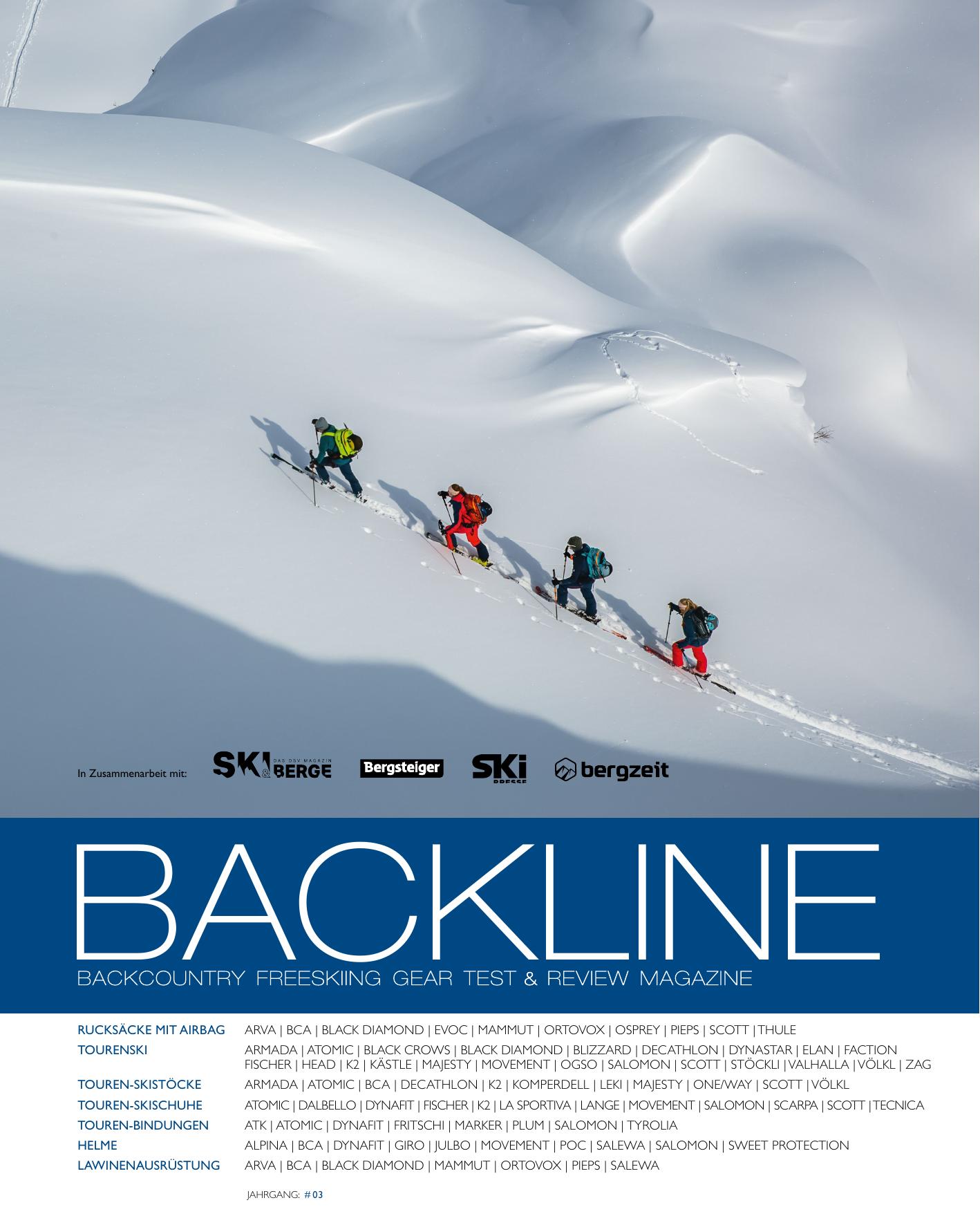
Ski touring skis · Test magazine 2021
Tech talk with Florian Frießnegg, KÄSTLE
Head of Product Management (Alpine & Nordic) · Print page 47
Who is Florian Frießnegg? Head of Product Management at KÄSTLE
Florian Frießnegg is featured in the BACKLINE 2021 test magazine as Head of Product Management for Alpine & Nordic at KÄSTLE. Born and raised in the heart of the Alps, he is a state-certified ski instructor and ski guide, combining his professional work with practical skiing experience. In the interview, he discusses touring skis, equipment development and demand in the ski touring market.
His personal touring skis include the KÄSTLE TX93 in 186 cm and the TX103 in 189 cm. Frießnegg describes the TX93 as an all-rounder for different conditions and tours, from glaciated sections in high-alpine terrain to descents on groomed slopes. He sees balancing weight and downhill performance as a central development challenge. Particularly on steep, crusty sections, the lightest equipment is not necessarily the best choice.
Frießnegg identifies sustainability as the area with the greatest potential for innovation. He also reports development findings that dark ski surfaces are more prone to snow buildup, which is why KÄSTLE mainly uses light colours for its touring models. Based on sales figures at the time, he notes strong demand in the Alps for waist widths around 90 mm, as these skis cover many uses.
How many touring skis – and which models – do you have in your cellar?
Because of my job there are quite a few skis in my cellar during the season. The number of my private models is limited, though: the TX93 in 186 cm and the TX103 in 189 cm.
Which touring ski do you use most in winter?
That depends a little on the conditions and the tour I choose. Basically the TX93 is my all-rounder – whether glaciated sections in high alpine terrain have to be managed or for relaxed turns on the piste. For me the TX93 is one of the most versatile touring skis.
Which innovations would you like to see in touring skis in the future?
The balance between performance and weight is without doubt the focus of every manufacturer. Thanks to special materials and innovative technologies that ratio has been optimised in recent years. Ambitious tourers know that the lightest equipment is not necessarily fun when a 40–50 degree crusty section with fall risk has to be managed. Ski weight will certainly remain a topic, but at some point you hit physical limits when it comes to optimum downhill performance. The greatest innovation potential lies in sustainability. But how about a compostable ski, or electric assistance on the ascent?
What tip do you have for our readers to avoid annoying snow build-up on the ski topsheet during the ascent?
In development we found that the probability of snow sticking to the ski is considerably higher when the topsheet is black or dark. That is one reason why we mainly use light or white colours on our touring models. In addition there are various products on the market such as “anti-stick sprays” that reduce snow adhesion. My tip: better not to look down at your skis too much – enjoy the landscape and keep an eye on objective dangers, concentrating on what matters. Besides, a little extra training weight does no harm.
In which touring ski segment do you expect the biggest growth in the coming years?
The current boom in ski touring is enormous, whether it is evening piste tours with a cold beer afterwards, a fitness programme on Friday afternoon or a classic one-day tour with a summit experience. All kinds of groups are emerging that we as manufacturers will serve in future. Based on current sales I can say that mid widths around 90 mm are in high demand in the Alps, because one ski covers most uses. Sport and exercise in nature have gained immense importance recently, especially during the pandemic, and the connection with nature and the topic of sustainability are more present than ever.