Ski touring skis · Test magazine 2022
Tech talk with Stefan Stankalla, EOC Europe
Commercial Director Ski · Print page 49
Who is Stefan Stankalla? Commercial Director Ski at EOC Europe
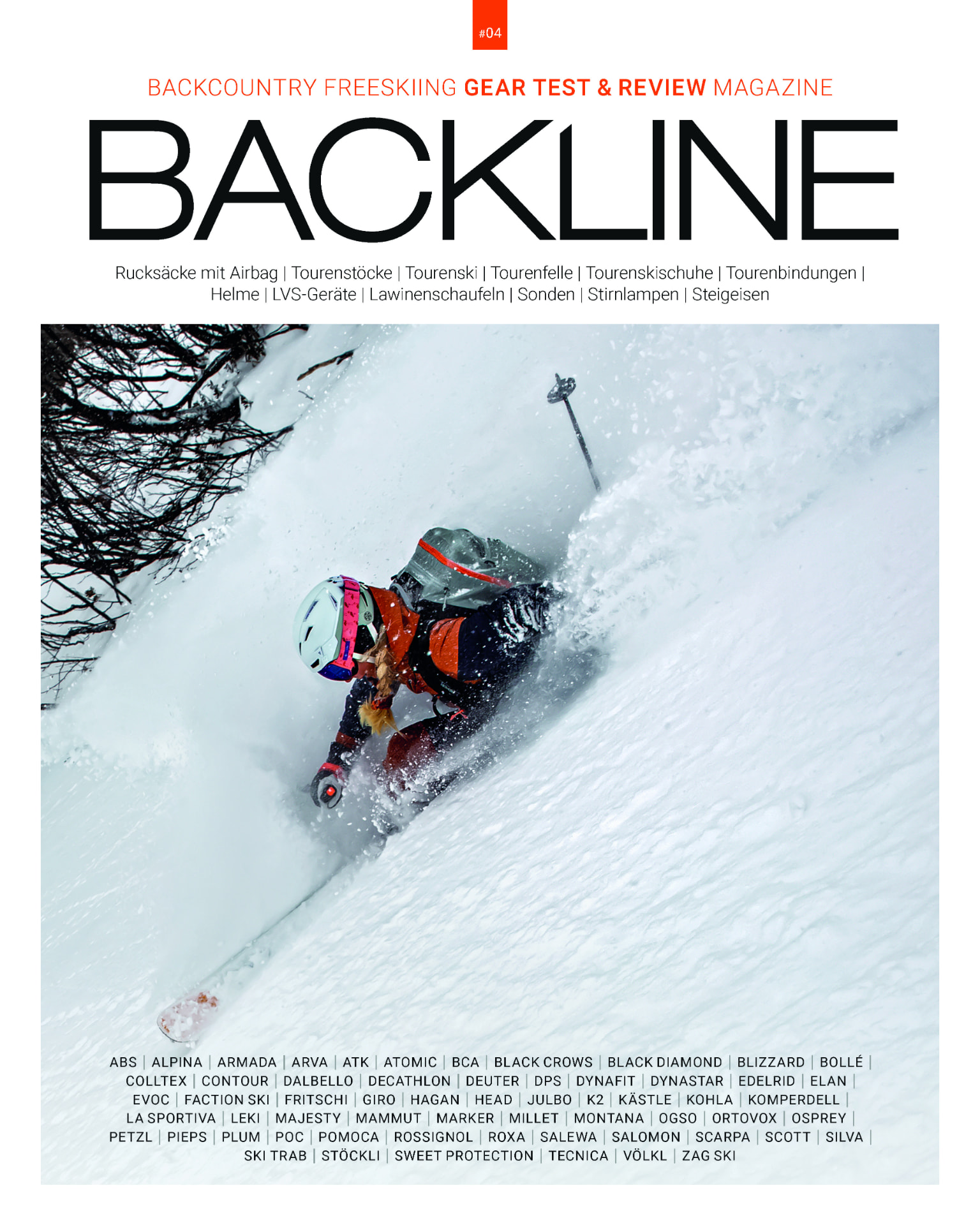
Stefan Stankalla is introduced in the 2022 BACKLINE test magazine as Commercial Director Ski at EOC Europe. Born and raised in Garmisch-Partenkirchen, he spent ten years as a World Cup ski racer. He subsequently moved off-piste, first on telemark skis and later exploring the backcountry with touring equipment. In the interview, he explains K2’s approach to touring skis and their development process.
Stankalla focuses on ski tourers’ individual requirements and the balance between weight and predictable, secure skiing performance. He cites the Wayback 92 as an entry-level option and the Wayback 96 W and Wayback 96 as models for advanced tourers. He describes development as a collaboration between in-house specialists and external professionals such as mountain guides. Handmade prototypes are progressively refined through material selection and placement, shape, torsion and flex before moving into industrial production.
According to Stankalla, development and prototype construction take place in the USA, testing in the USA and Europe, and production in China. He identifies sustainable materials, versatility and a longer usable lifespan as important future priorities. Optimising performance, skiing enjoyment and weight remains a key focus.
The ski touring segment has undergone strong differentiation in recent years. What are K2's main focuses?
As with all our skis, we focus on the preferences of the end consumer. In the ski touring segment, emphasis is often placed on weight in relation to balanced and safe handling. Ultimately, it's about the perfect ski for the personal endeavor. The demands of end consumers range from high-alpine tours to quick excursions for a winter fitness kick, and variable tours in different conditions. Since the beginning of the pandemic, the requirement to be able to adapt individually and easily in all conditions has become clear. At K2 Skis, we focus on maximum skiing pleasure and easy access to the individually suitable touring ski.
Especially unisex all-rounders have to cover an extremely wide range of uses. Aren't several target-group-specific models necessary, especially in this category?
Absolutely, and this again relates to the values of the target group. In the K2 Skis product range, we offer three ski touring models with a waist width of 90–100 mm for the coming season. Starting with the Wayback 92, which is perfect as an entry-level ski for both ascents and descents on groomed slopes as well as off-piste in varying conditions. The Wayback 96 W and the Wayback 96 are aimed at advanced ski tourers. The material supports skiing ability and delivers better performance, especially in open terrain and changing snow conditions. Our touring skis are tuned to cover the specifications of every need.
What steps and phases does a new touring ski model go through until it is available in stores?
Anyone who wants to build a ski today doesn't start from scratch. In most cases, there's an initial situation from which certain parameters are to be changed. This could be performance, i.e., handling characteristics, but also weight, width, or character. During development, it's important to work with external professionals, alongside in-house experts. These are often mountain professionals, i.e., mountain guides. Furthermore, many other people are involved: the sales, design, and marketing teams are also engaged. After defining the requirement profile by the development and expert team, the next step is to build the first prototypes. These are handcrafted. The shape, torsion, and flex are determined by the use and placement of different materials. These parameters allow the character of a ski to be changed. The prototype is continuously optimized and modified. At some point, the time comes to commit to a model that will go into sample and test material production. From spring onwards, the production phase for new models is another challenge. What was previously handcrafted must now be (re)produced with the same care and, above all, the same result in industrial production. This is often not an easy undertaking. How the ski touring community receives the new products after all the effort is, of course, always a particularly exciting matter for everyone involved.
Where are K2 Skis produced?
The development and production of the prototypes take place in the USA. Our skis are then tested in the USA and Europe. The test results and feedback are consolidated globally before the actual production begins in our Chinese production facilities, which are already powered by 44% renewable energy.
What developments and trends can we expect in ski touring models in the coming years?
A significant topic, thus definitely a still growing trend, will be sustainability. What and how much sustainable material is used in my ski? Most importantly, how long will it be usable? The focus will be on the versatile application range of a ski. This is where we, as ski manufacturers, are in demand. The production of a touring ski continues to focus on optimizing performance, skiing pleasure, and weight. In addition to improved usability, we also prioritize a longer lifespan for the ski.