Bolivien · Anden
A Quest beyond Summits
Issue 2024 · Words: Andri Bieger · Photos: Mountain Tribe · 4 min read
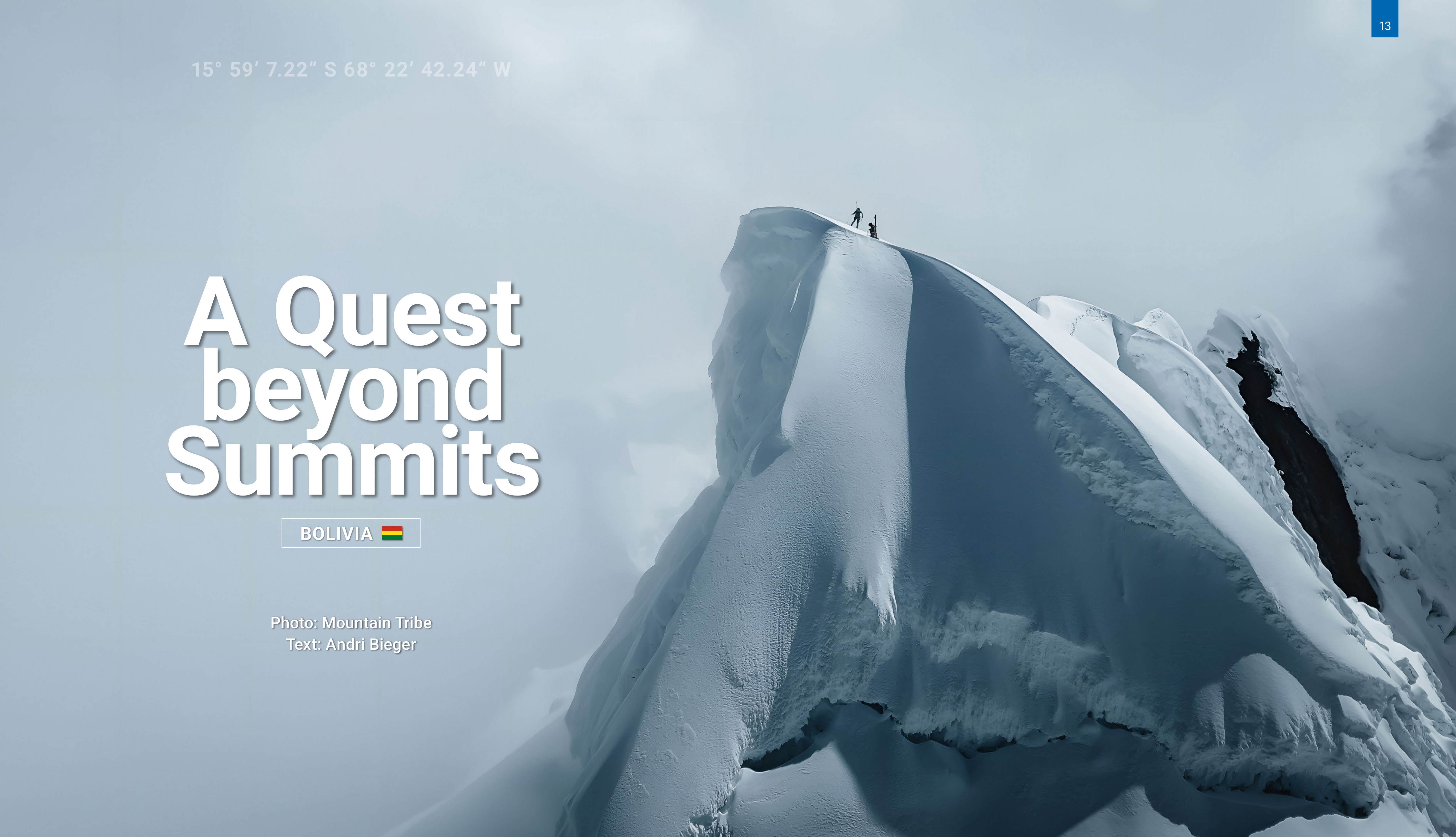
The Andes - a majestic mountain range that impresses with both its height and cultural diversity. In Bolivia and Peru, the mountains are sacred, and anyone who wants to climb them must treat them with respect. Our small group from Austria, Germany, and Switzerland not only wanted to master steep …
The Andes - a majestic mountain range that impresses with both its height and cultural diversity. In Bolivia and Peru, the mountains are sacred, and anyone who wants to climb them must treat them with respect. Our small group from Austria, Germany, and Switzerland not only wanted to master steep descents but also learn from the locals, who opened doors to these magical places.
The trip took us to the highest peaks in the region, pushing us to our physical and mental limits. Despite the thin air, medical conditions, and unpredictable weather, we experienced unforgettable moments. It wasn’t just the descents that left their mark on us, but also the people who accompanied us with their knowledge and hospitality.
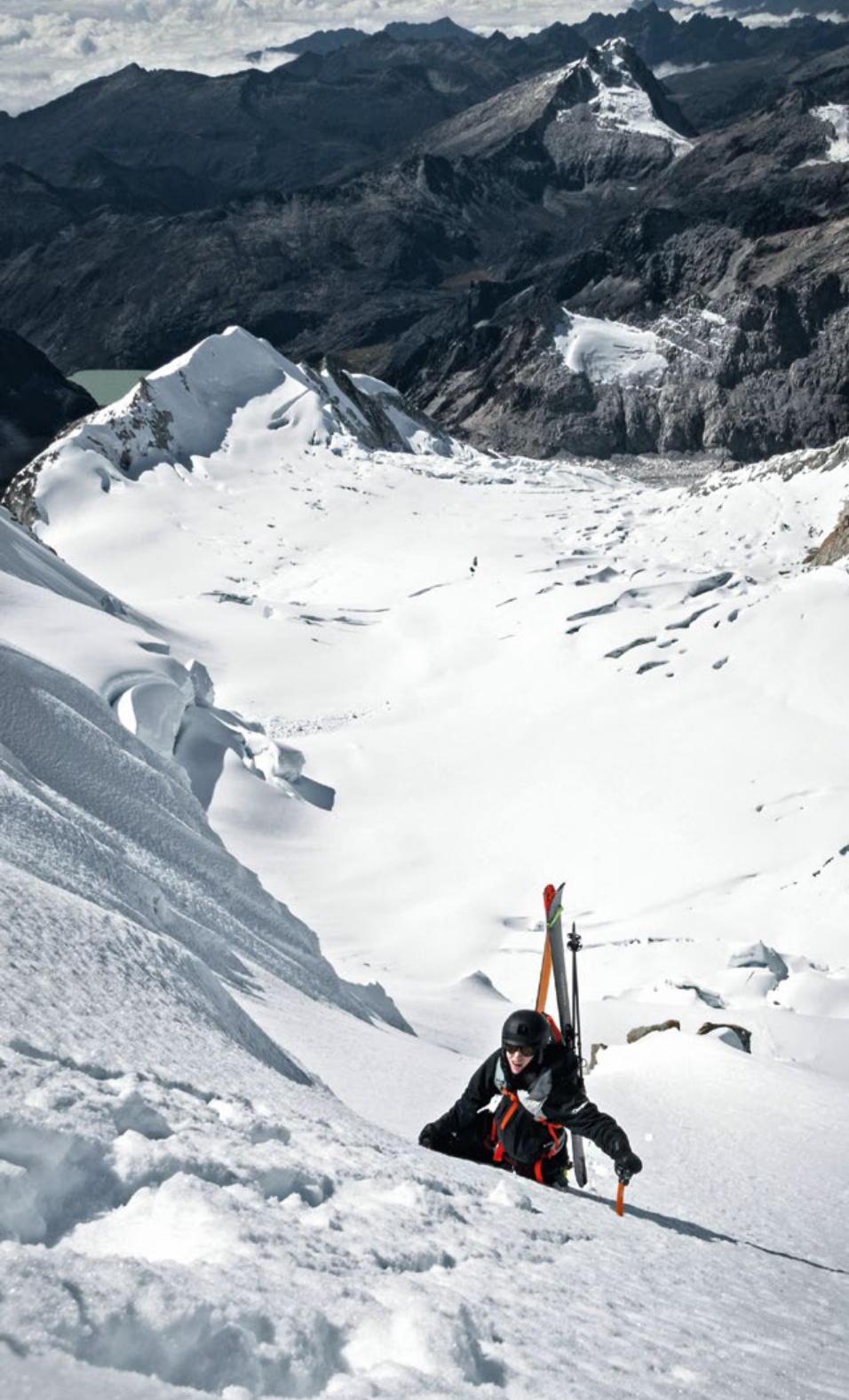
I feel my pulse pounding as the crampons break through the thin layer of snow and hit the ice. I force myself to take three more steps before I come to an exhausted halt to catch my breath. The dizziness subsides. My gaze wanders up the wall to the summit. I have barely covered 50 feet since the last break. At least the stomach cramps have disappeared; the antibiotic seems to be working.
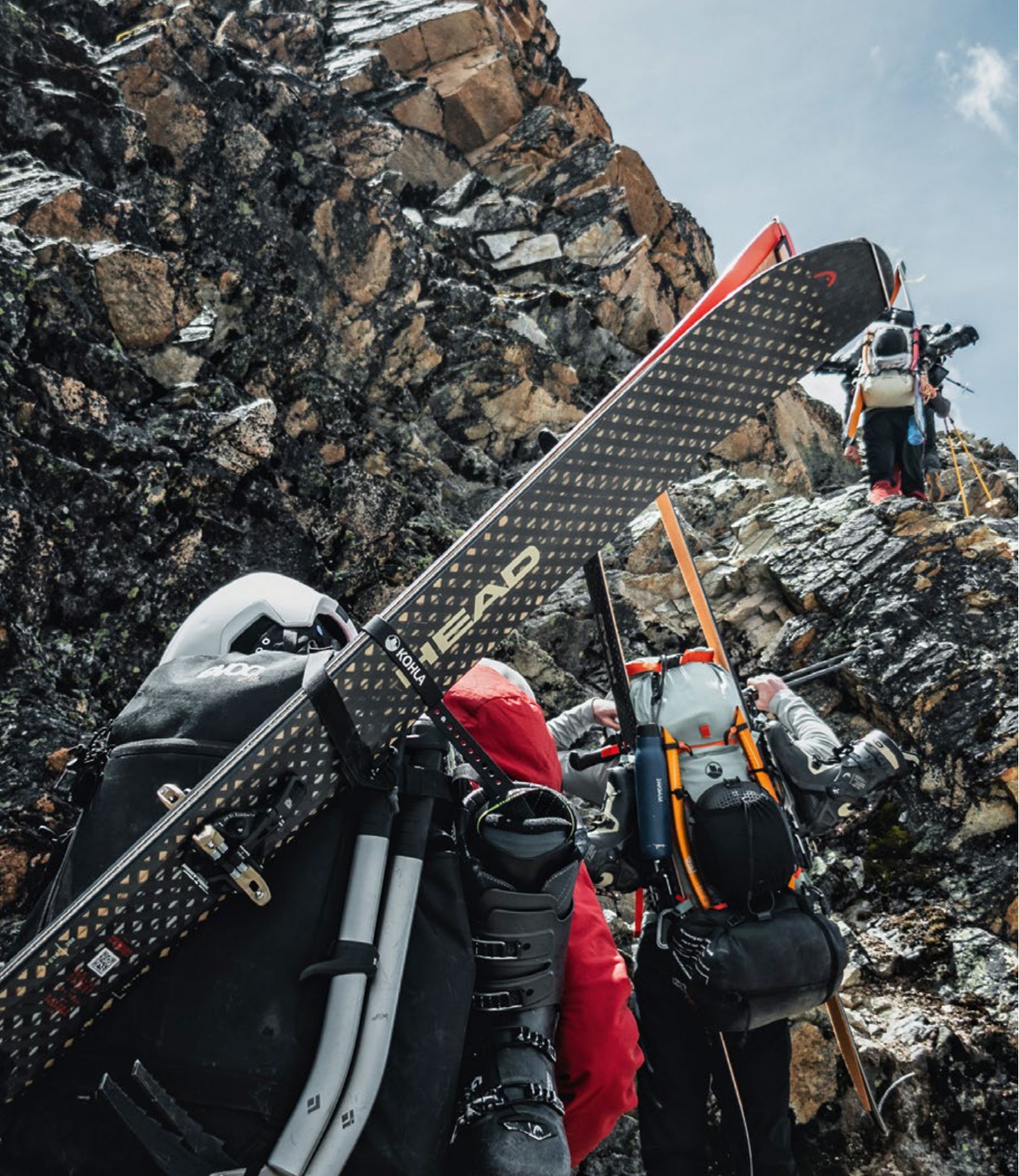
Our first stop is La Paz, the vibrant city situated at over 12,000 feet. The smell of spices and roasted meat fills the air. Cholitas sell their goods on the roadside, minibuses zip through the alleyways, and street dogs snooze in the shade. We spend the first few weeks acclimatizing and adjusting our stomachs to the local cuisine. Finally, we are prepared for the 19,973-foot-high Huayna Potosi. Sergio, our local ski guide, leads us through golden grass meadows where llamas graze. We carry our skis up to 17,060 feet to the lip of the glacier, where snow is finally covering the surface. Despite my physical discomfort, I manage to reach the summit. We sit there panting until a weather window allows us to start our descent. I begin my run with awkward moves, but then the confidence grows, and I have fun making smooth, harmonious turns.
After this achievement, we continue our journey in Peru, where we are able to ski Pisco (18,871 feet) and Tocllaraju (19,799 feet) despite precarious snow conditions. On our down days, we delve into the rich culture of the Quechua and Aymara, the local indigenous mountain people. Since Francisco Pizarro crushed the mighty Inca empire in the 16th century,
the Europeans came mainly as conquerors. Summit names such as “Pico Austria” bear witness to these colonial aspira- tions. It is no surprise that many locals are averse to tourists desecrating their holy mountains. Just a few years ago, the region around the 19,928-foot Chachacomani in Bolivia, our last destination, was off-limits to foreigners. Today, however, the locals happily profit from tourism and assist us as porters, carrying our equipment through a breathtakingly beautiful alpine valley for two days to the high camp. In taped san- dals and with 66 pounds of luggage each, they transport the equipment to over 17,060 feet at an unimaginable speed. They are the true heroes of this expedition, and we are filled with gratitude and respect.
That night, we set off for the summit of Chachacomani. The climb leads through a huge labyrinth of crevasses. We have to find our way over narrow snow bridges several times by the light of our headlamps.
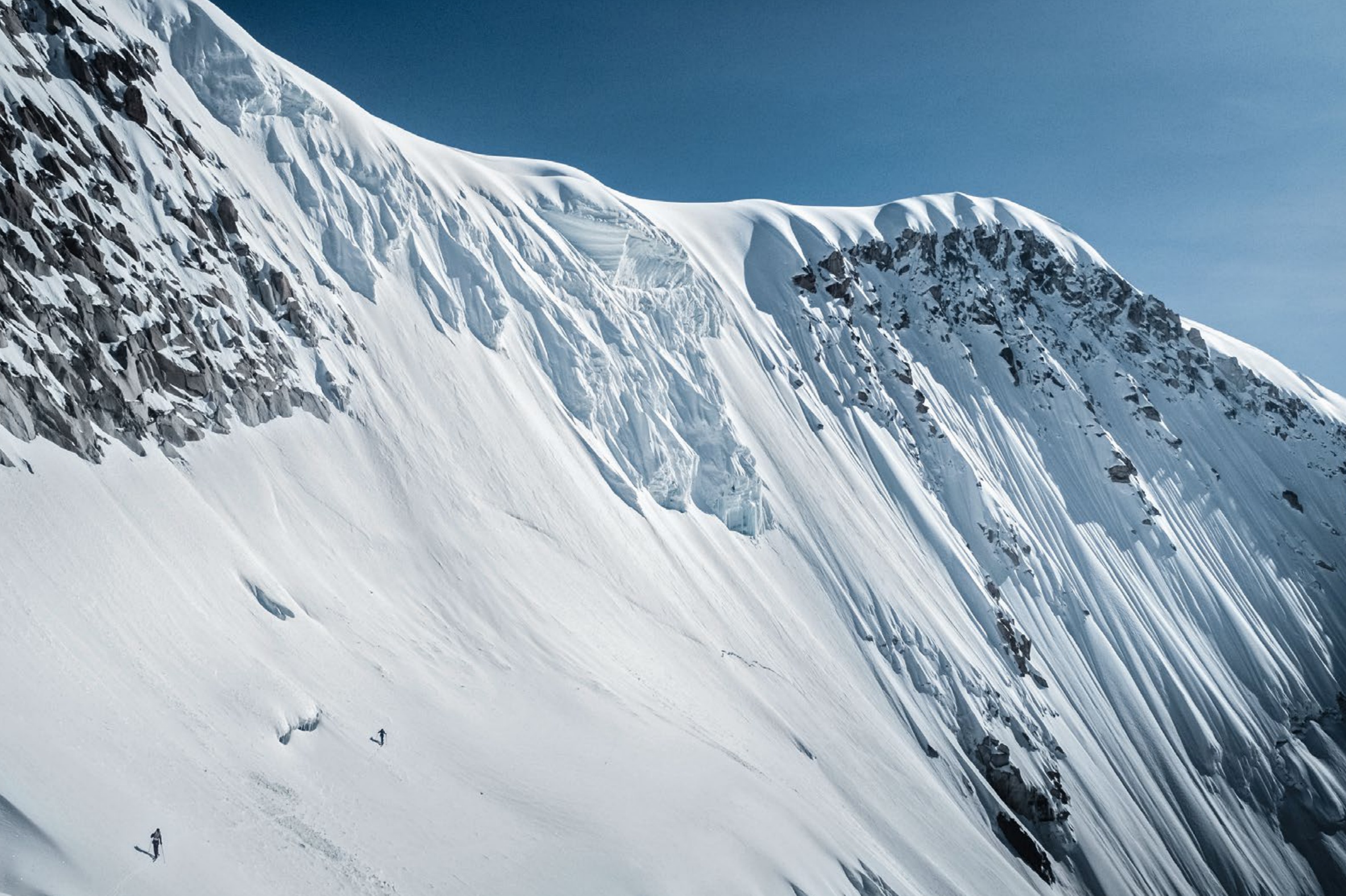
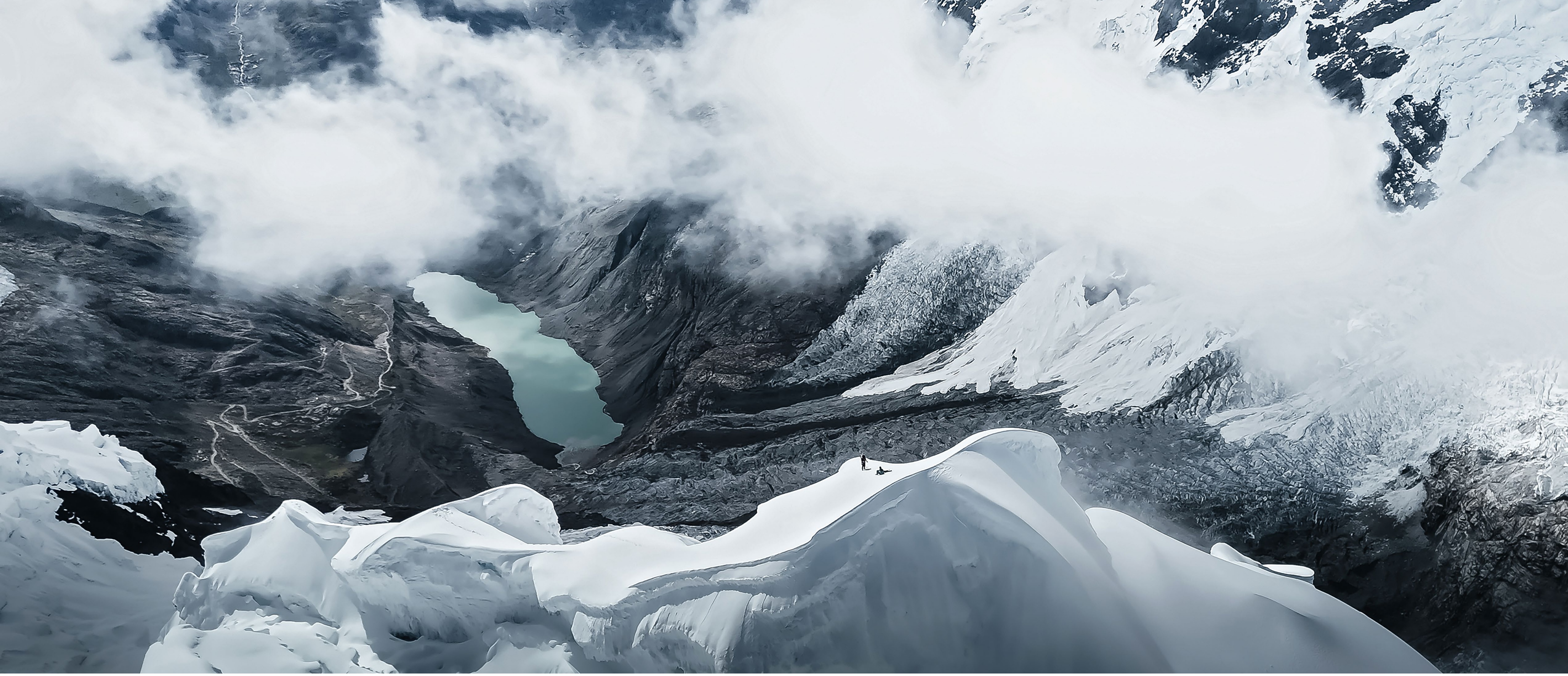
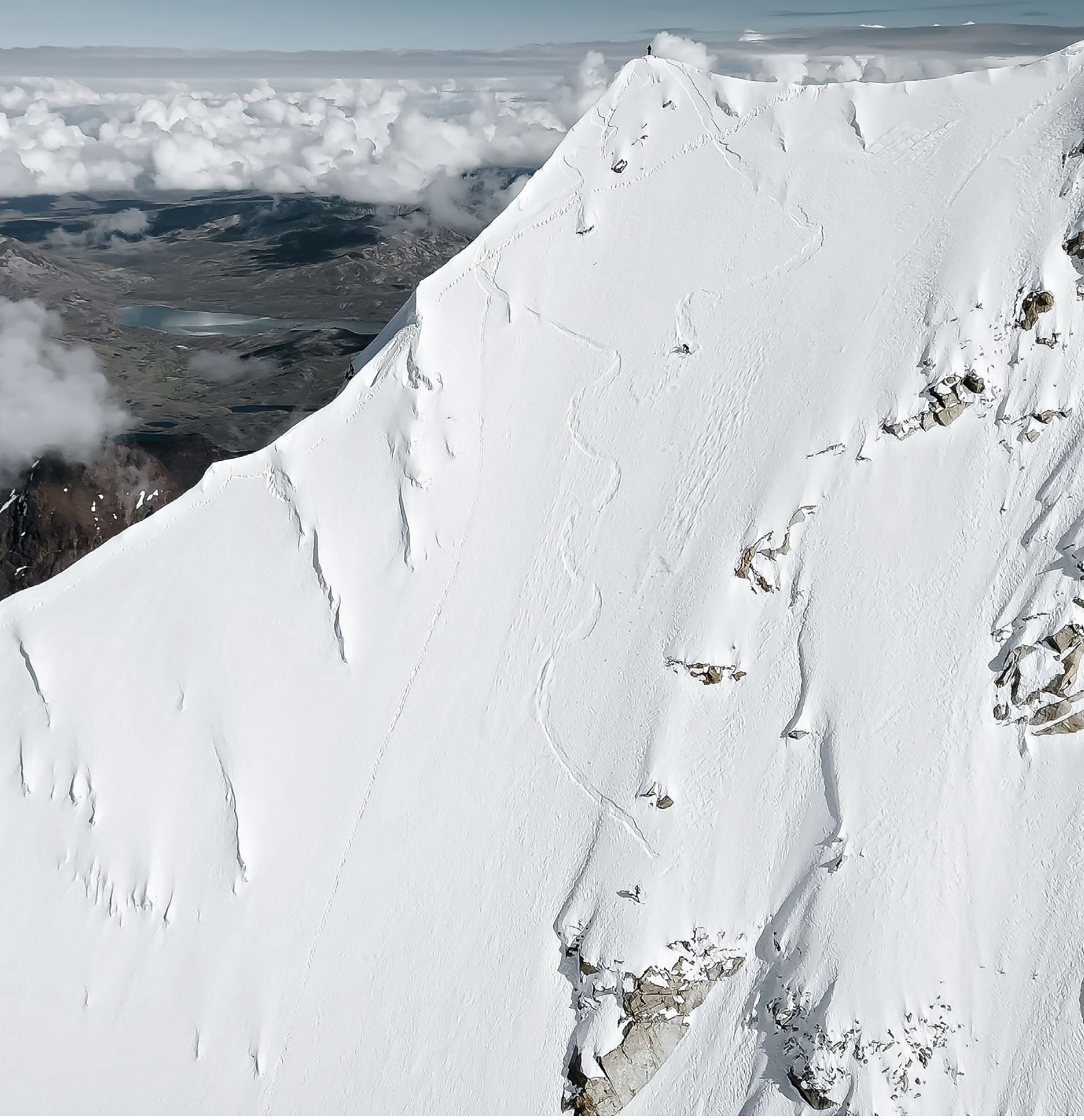
At first daylight, we are disillusioned: the face we wanted to ski is much icier and steeper than expected. Nevertheless, we climb through the south face to the summit in the hope of finding a passable line somewhere. The view takes our breath away: the mist-shrouded Amazon extends into the distance, the endless Altiplano sprawls out in front of us, and Lake Titi- caca glows a deep blue on the horizon. Below us, the yawning void of the south face.
Mascht is the first to drop in, straightlining through the wall, past menacing glacier crevasses. Vali chooses a terrifying, rock-ridden line that was first ascended in 2018, while I opt for a line along the impressive ridge. Our joy when reunited at the bottom of the glacier, high-fiving and hugging, is beyond words. We fight our way through the soggy snow back to the pass, where Paul and Sergio are eagerly awaiting us.
Sergio doesn’t blame us for “demystifying” one of their peaks with our first descents. After all, we are united by something stronger than any linguistic, geographical or cultural differ- ences: the love of the mountains.