Island · Snæfellsnes
A Strong Taste of Iceland
Issue 2025 · Words: Alberto Sciamplicotti · Photos: Alberto Sciamplicotti · 4 min read
There are journeys that immerse you in a nature so primordial it feels like the beginning of the world, when no footprint had yet touched the earth. You feel as if you’ve stepped into a parallel universe where everything is in harmony with its surroundings. Even the harsh weather, the howling wind, …
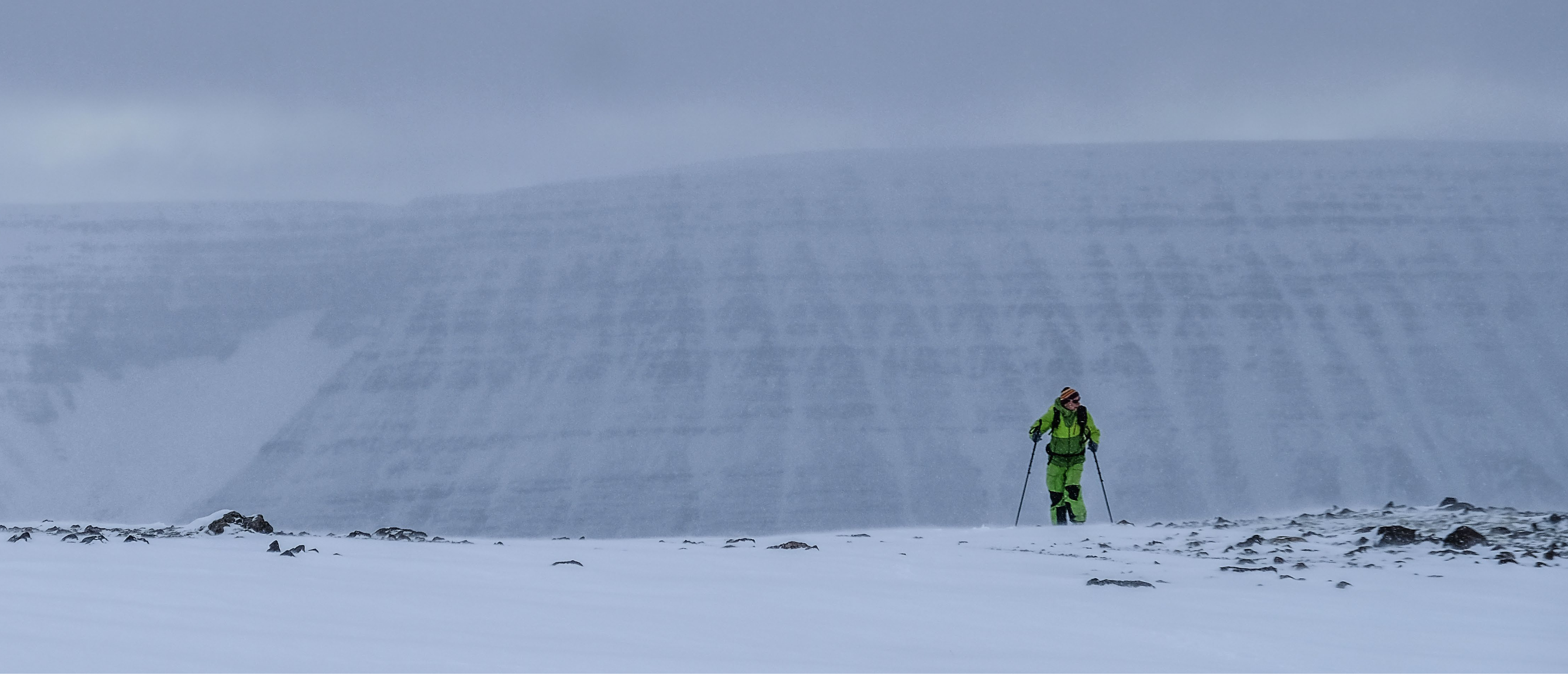
There are journeys that immerse you in a nature so primordial it feels like the beginning of the world, when no footprint had yet touched the earth. You feel as if you’ve stepped into a parallel universe where everything is in harmony with its surroundings. Even the harsh weather, the howling wind, the snow driven almost horizontally by powerful gusts, the fog so dense you could cut it, and the bare slopes where fallen flakes have been swept away become part of a rugged enchantment. An enchantment that carries you back to an archaic land, one you can imagine traversed only by great reptiles in a prehistoric age.
It is on such journeys – often arduous, where the hope of reaching a goal is continually thwarted – that you begin to grasp the true essence of wandering. A wandering that becomes not merely the act of getting somewhere, but one in which the struggle itself is what gives meaning to the whole. For us, Iceland was exactly this: a return to something we had never truly experienced, yet which felt as though it had always been embedded in the most secret folds of our human genome. Something we carry deep within, close to the spirit, yet so easily forgotten in the constant, relentless rush of everyday life. In Iceland’s landscapes, humans remain a marginal presence – part of them, yet somehow apart, as if this separation were essential to survival.
The raw power of Icelandic nature tells stories long lost to time. Stories of resilience, of people in constant battle for life itself. Here, the struggle might be against the waves, the wind, the ice, the rock or the countless mysteries, monsters and magical beings the far North still seems to summon: a land where nature’s signs blend seamlessly with the whispers of the occult. We had come to climb and ski the volcanoes and slopes of this wild place. But the perpetually overcast skies, unending storms, snow, fog and fierce Atlantic winds granted us just a single day of reprieve – and that day came exactly when we had planned to head for the fjords of the northwest.
A trick, perhaps, of the álfar, Iceland’s elves, and the dvergar, its goblins – possibly offended that we hadn’t stopped in Hafnarfjörður to ask the three members of the city council responsible for human–fairy relations to put in a good word for us.
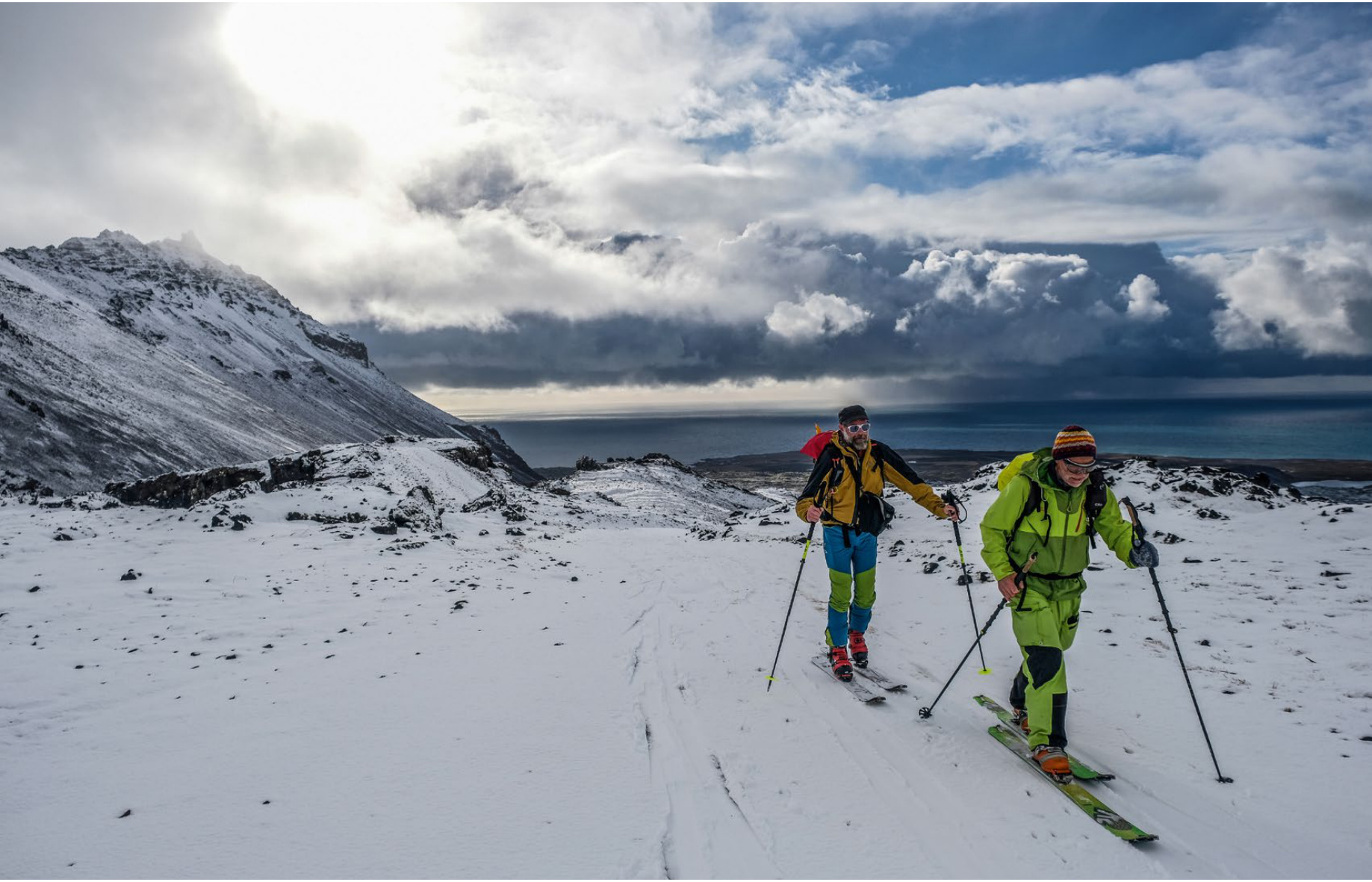
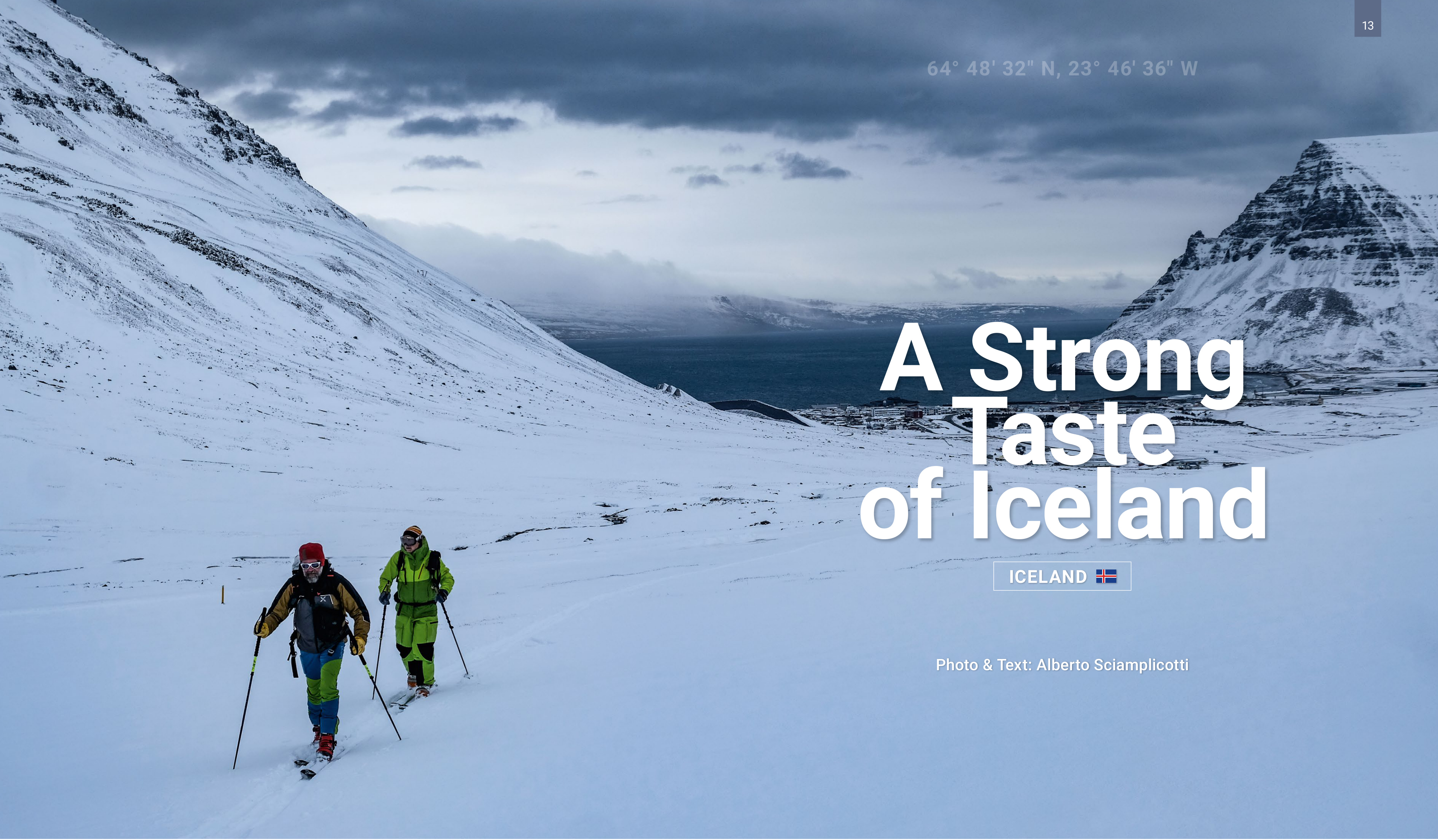
We barely managed a glimpse of Snaefellsjökull’s double peak, the volcano whose crater launches Jules Verne’s journey to the center of the earth. Plumes of snow streamed from its crest, carried upward by the wind, which the álfar were surely still blowing in our direction. On the western slope, we climbed on foot toward the heavily crevassed glacier, only to be turned back once again by the weather. Our next attempt took us to the eastern side. There, after a windy ascent with sweeping views of the coast and sea far below, we crossed paths with a group of skiers from South Tyrol. Thick fog engulfed everything ahead, convincing them to turn around.
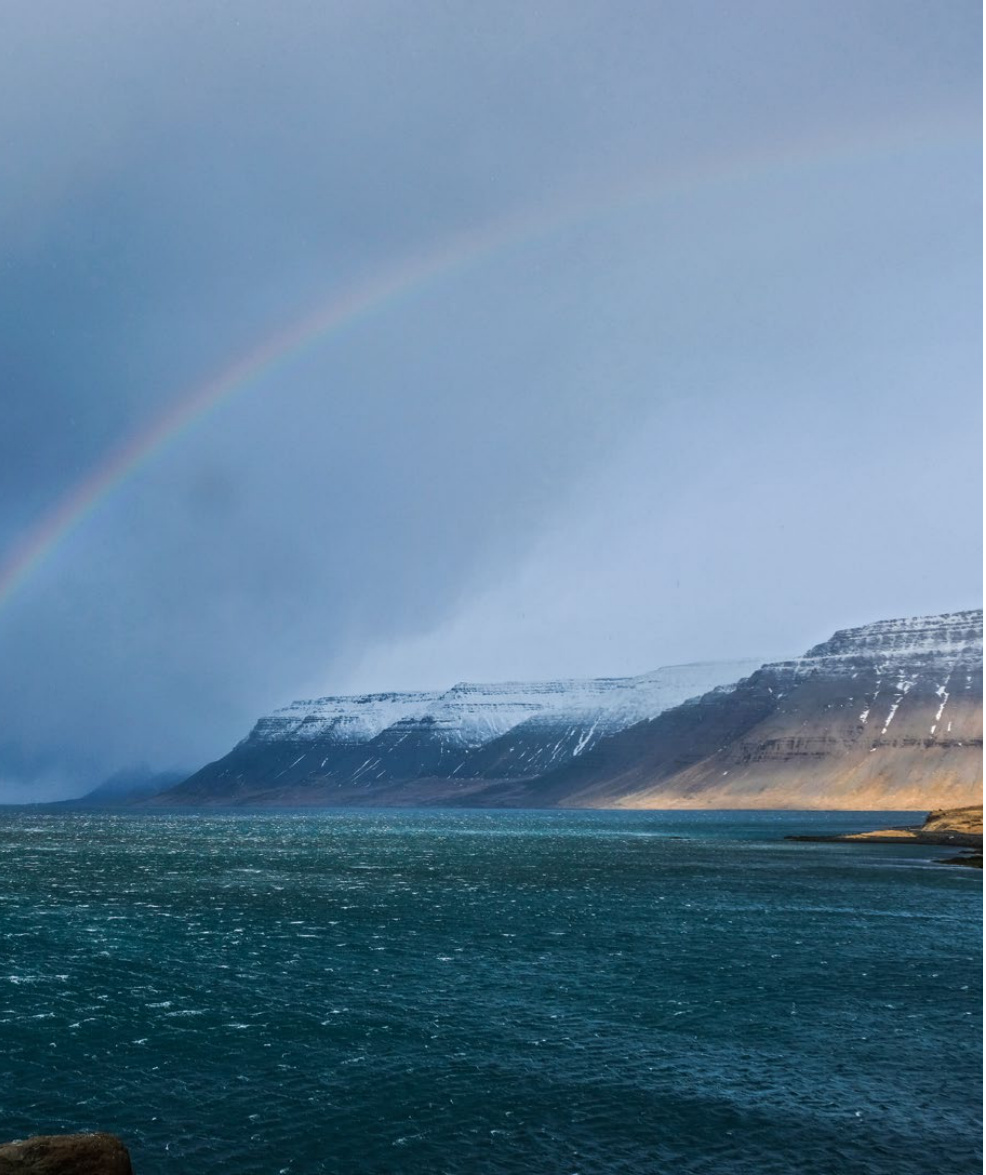
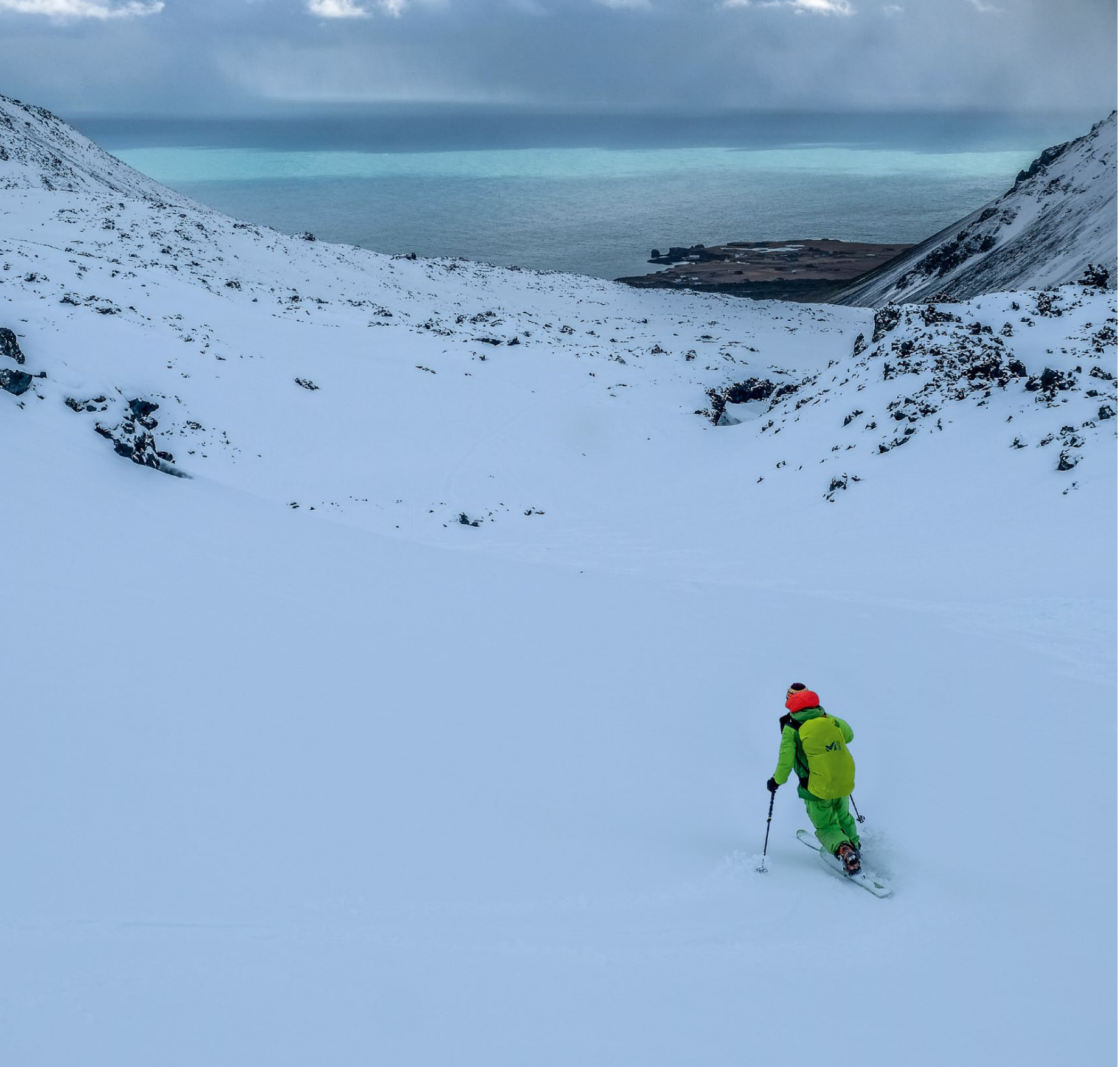
Not long after, we conceded too, our short-lived climb rewarded by dry, powdery snow that carried us all the way back to the valley. Below, the sea shimmered with cobalt blue light, a sight that filled our hearts if not our craving for long turns on a white canvas. The peaks of the northwest fjords offered no better fortune – only more fog, storms and stinging sleet. We fell asleep as snowflakes fell gently over the land, only to wake to fierce winds that had scoured the ridges bare, sending the snow who knows where. We spent the day wondering what offense we had committed to earn the wrath of Iceland’s entire magical pantheon. Still, stubbornness prevailed, and we managed to find climbing lines just a few hundred meters from the sea. Lines that gave us descents as light and effortless as wings through white powder.
And yet, despite what felt like the álfar’s curse, the journey was worth every thwarted plan. Skiing up and down snow-covered slopes was, as always, only part of the story. The landscapes, the raw environment and the bonds forged with fellow travelers were the true heart of this experience. Where I come from, in Rome, we have a saying for moments like this: “Ariconsolate co’ l’ajetto” – “Comfort yourself with garlic.” The only Italian way to add depth to even the humblest dish. Perhaps that was what happened here. One thing is certain: without garlic, many dishes are bland. And the flavor of this trip, in the end, was anything but. RUSTLER /one.case/one.case Press Send.