Österreich · Hohe Tauern
An Ancient Majesty
Issue 2024 · Words: Sandra Lahnsteiner-Wagner · Photos: Christoph Oberschneider · 4 min read
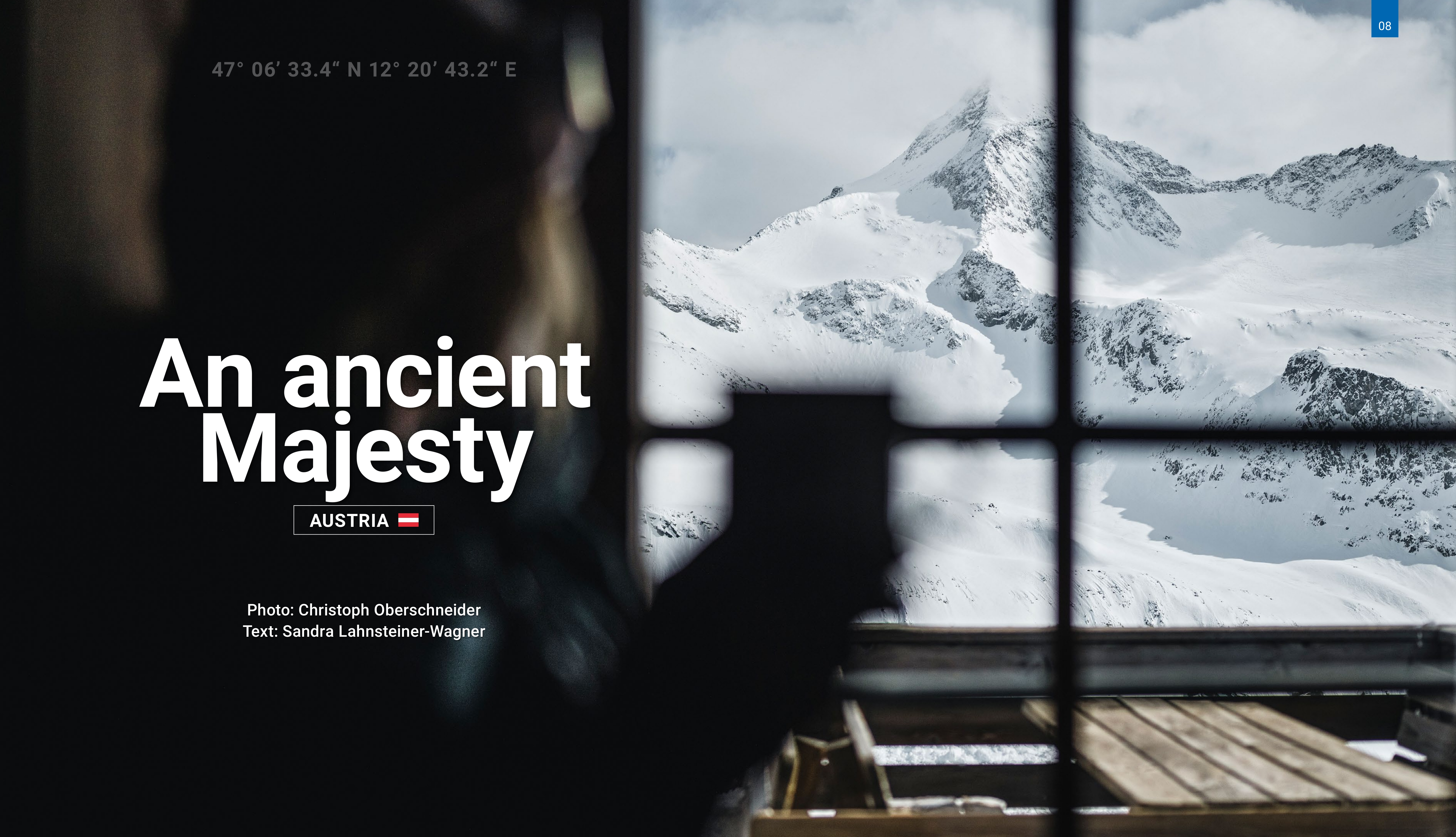
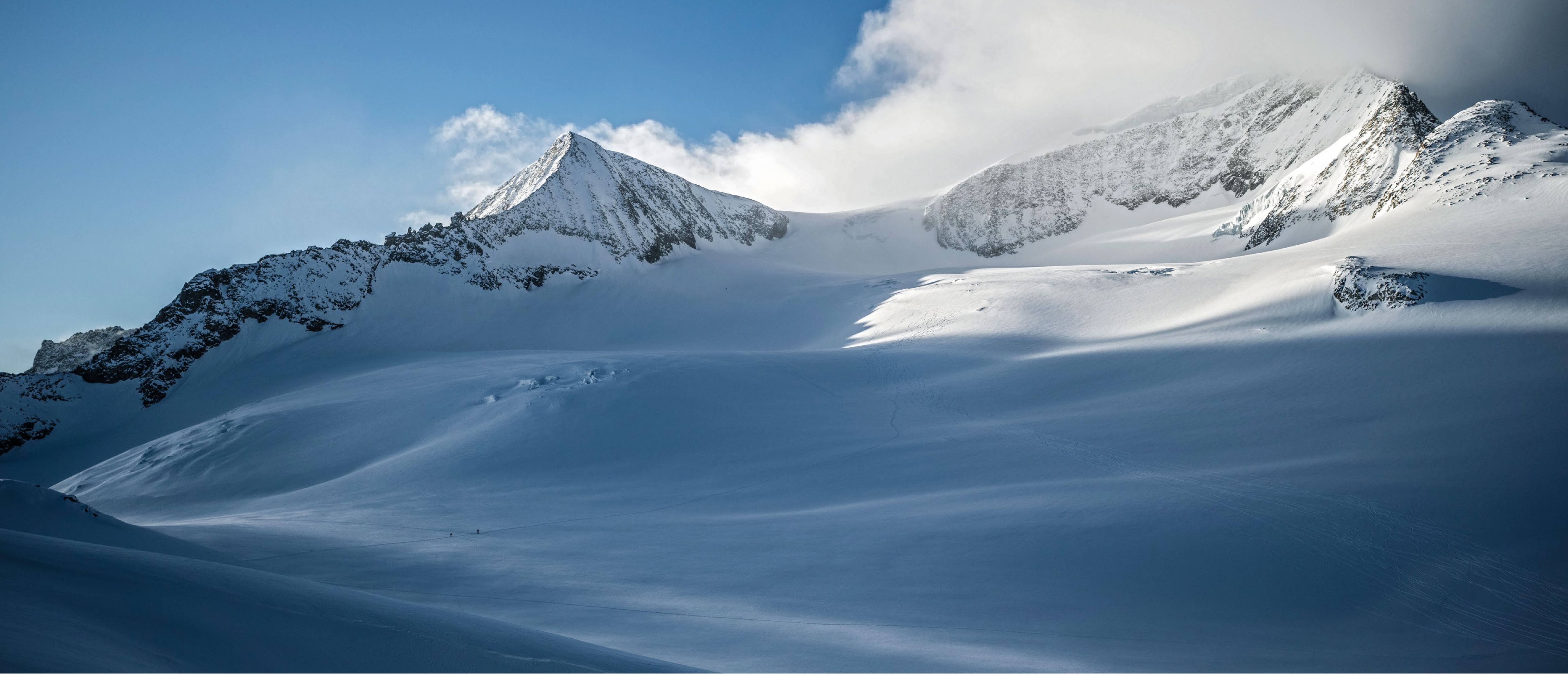
Amidst the Hohe Tauern, Austria’s highest mountain range, rises the Großvenediger, one of the last glacier-covered peaks in the Eastern Alps. The Großvenediger, known as the “ancient majesty” since its first ascent in 1841, is the highest mountain in Salzburg at 11,998 feet and the fourth highest …
Amidst the Hohe Tauern, Austria’s highest mountain range, rises the Großvenediger, one of the last glacier-covered peaks in the Eastern Alps. The Großvenediger, known as the “ancient majesty” since its first ascent in 1841, is the highest mountain in Salzburg at 11,998 feet and the fourth highest in Austria. The origin of the name is not well known, as Venice is not visible from the summit. Legend has it that “Venedigermandl” – foreigners from Venice who came in search of gold and precious stones centuries ago – are responsible for the name.
What is truly golden is the ski tour to the Großvenediger. Although the summit has decreased in size (originally measured at 12,024 feet) and the summit cross was relocated by 49 feet in 2012, the Großvenediger remains one of the most famous and sought-after ski mountaineering destinations in the Eastern Alps.
No wonder, as it is visible from tours in the Bavarian Alps, the Karwendel and even from the Tennengau and Kitzbühel Alps. The ascent from the north side is considered the most beautiful and diverse, but is also the longest.
Having just returned from the Haute Route, I was not yet ready to put my skis away. When my friends Ursi and Christoph expressed their desire to stand on the highest mountain of their homeland, Salzburg, I was immediately up for it. Just a few days later, the weather and avalanche conditions were perfect.
Starting from the north side of Pinzgau – despite the chalet taxi to the Postalm at 5,577 feet– almost 6,562 feet in altitude have to be conquered to reach the summit. The ideal plan is a two-day trip, especially as the Kürsinger hut at 8,392 feet is the perfect base for ski tourers.
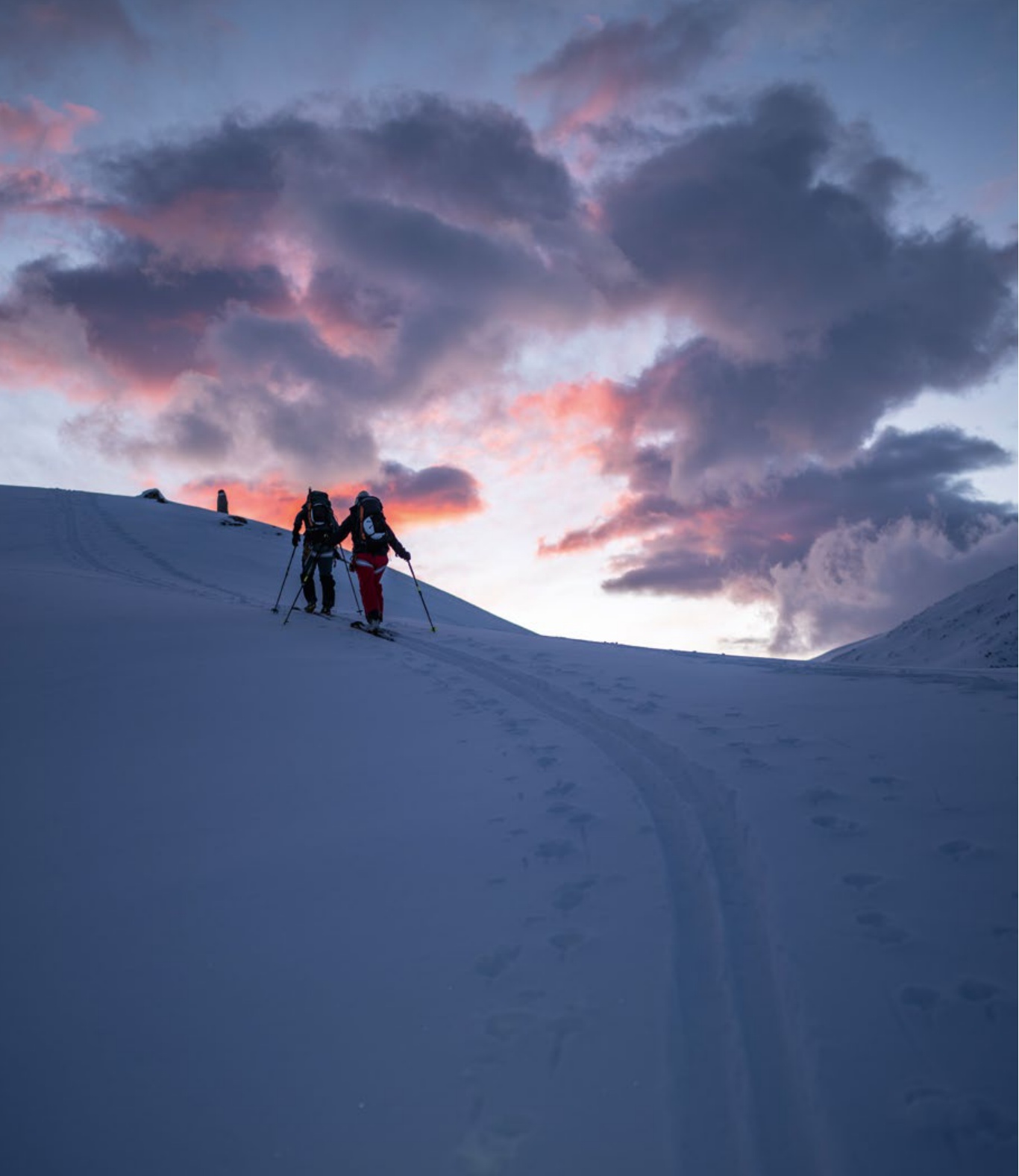
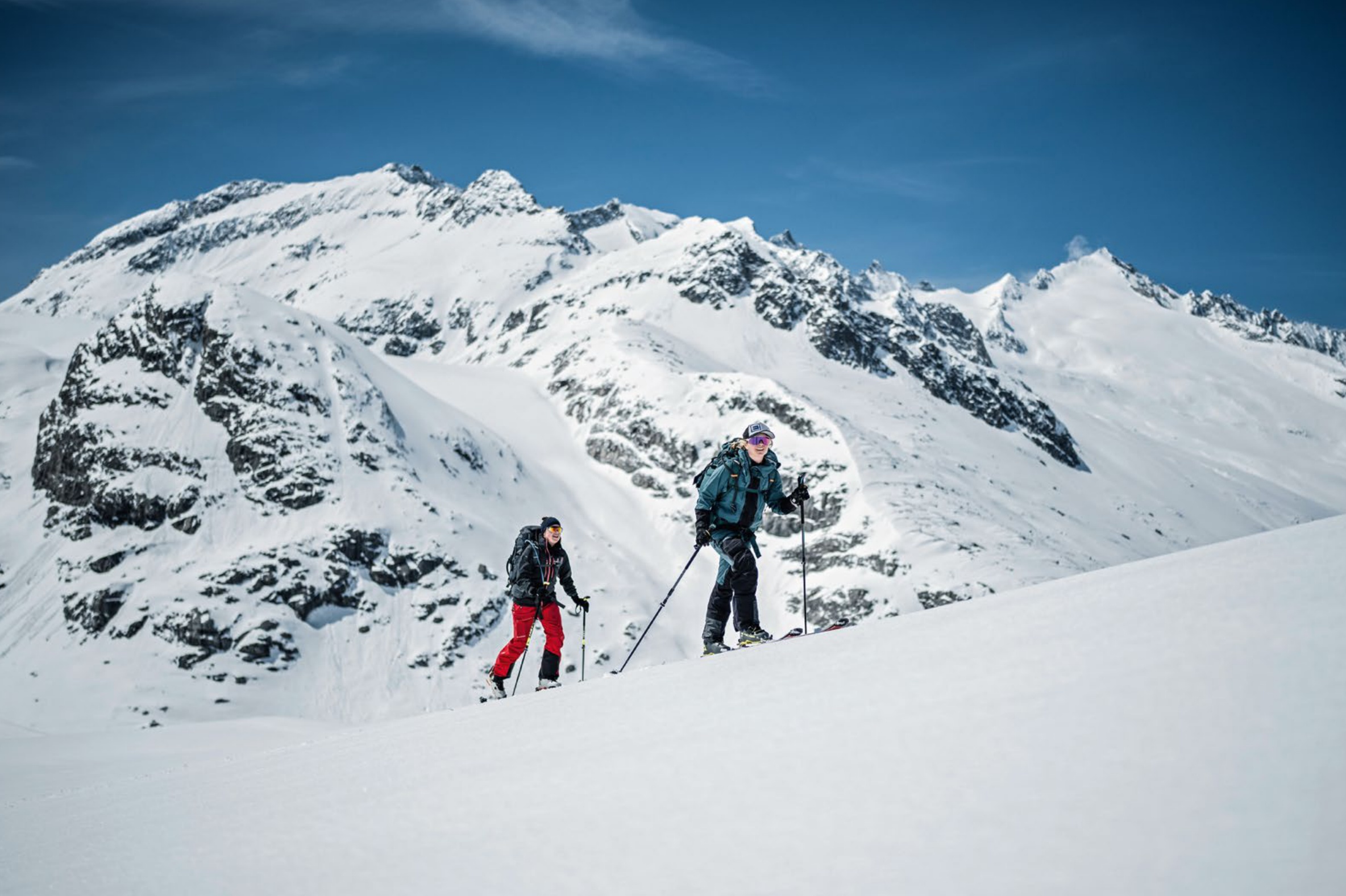
Shortly after the Postalm, we strap on our skis and enjoy the continually ascending trail through the Obersulzbach valley. The narrow valley with its steep flanks leads into the magnificent glacier area of the Großvenediger. There are nine glaciers in the Obersulzbach basin, the largest being the Obersulzbach-Kees. At 7,316 feet, we reach the glacial lake, which was formed on the site of the former “Turkish Tent City”. Ignaz von Kürsinger, an Austrian alpinist, gave the huge icefall of the Obersulzbach-kees this name because its ice formations looked like tents.
After crossing the lake, we climb across several ridges to the Kürsinger hut. Once there, we set up camp early, enjoy the excellent strudel and the view of the surrounding 10,000ers: Großer Geiger, Maurerkeesköpfe, Hinterer Brochkogel... There are plenty of objectives here. The hut is filling up and backcountry skiers from all over the world share our destination. After a hearty dinner, we go to bed early, determined to be the first to leave the hut in the direction of the Großvenediger.
At dawn, we start our ascent directly behind the Kürsinger hut. While other groups first descend and then ascend via the wide glacier tongue of the Obersulzbachkees, I opt for the route above the summer route along the south- western flank, below Bach-
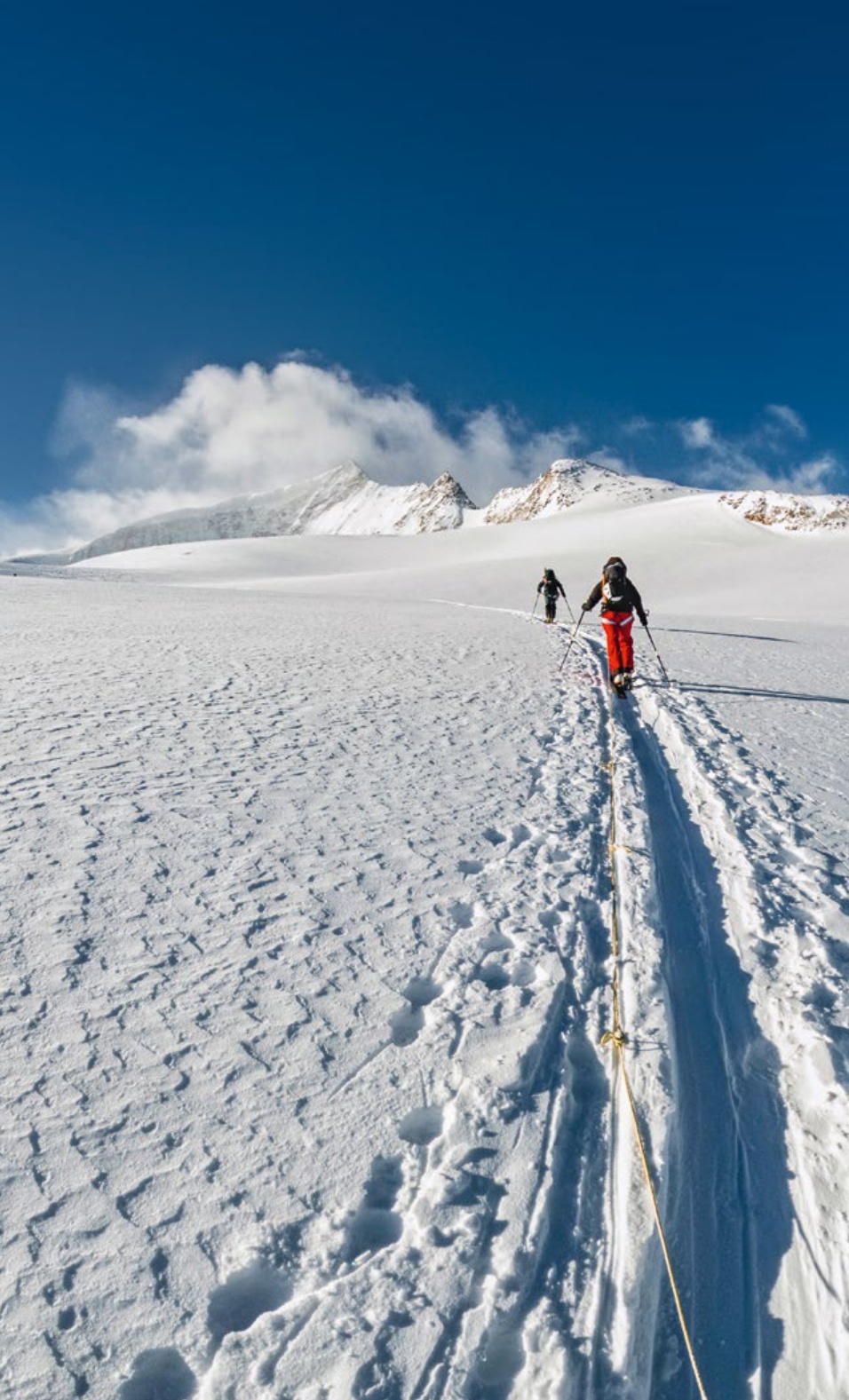
Roped up, we traverse the flat glacier terraces southwards to the saddle between Kleinvenediger and Großvenediger, the summit always in view. While the sky around us is blue, the peak is often shrouded in clouds, which doesn’t worry me at first. Only when we reach the Venedigerscharte, which is often regarded as the crux of the tour, do the conditions change. The clouds become denser. Soon, we find ourselves surrounded by fog, without any visible guidance. If I hadn’t already climbed the Großvenediger several times, I might have turned back. Instead, we carry on, and an hour later, we are standing on the pre-summit of the
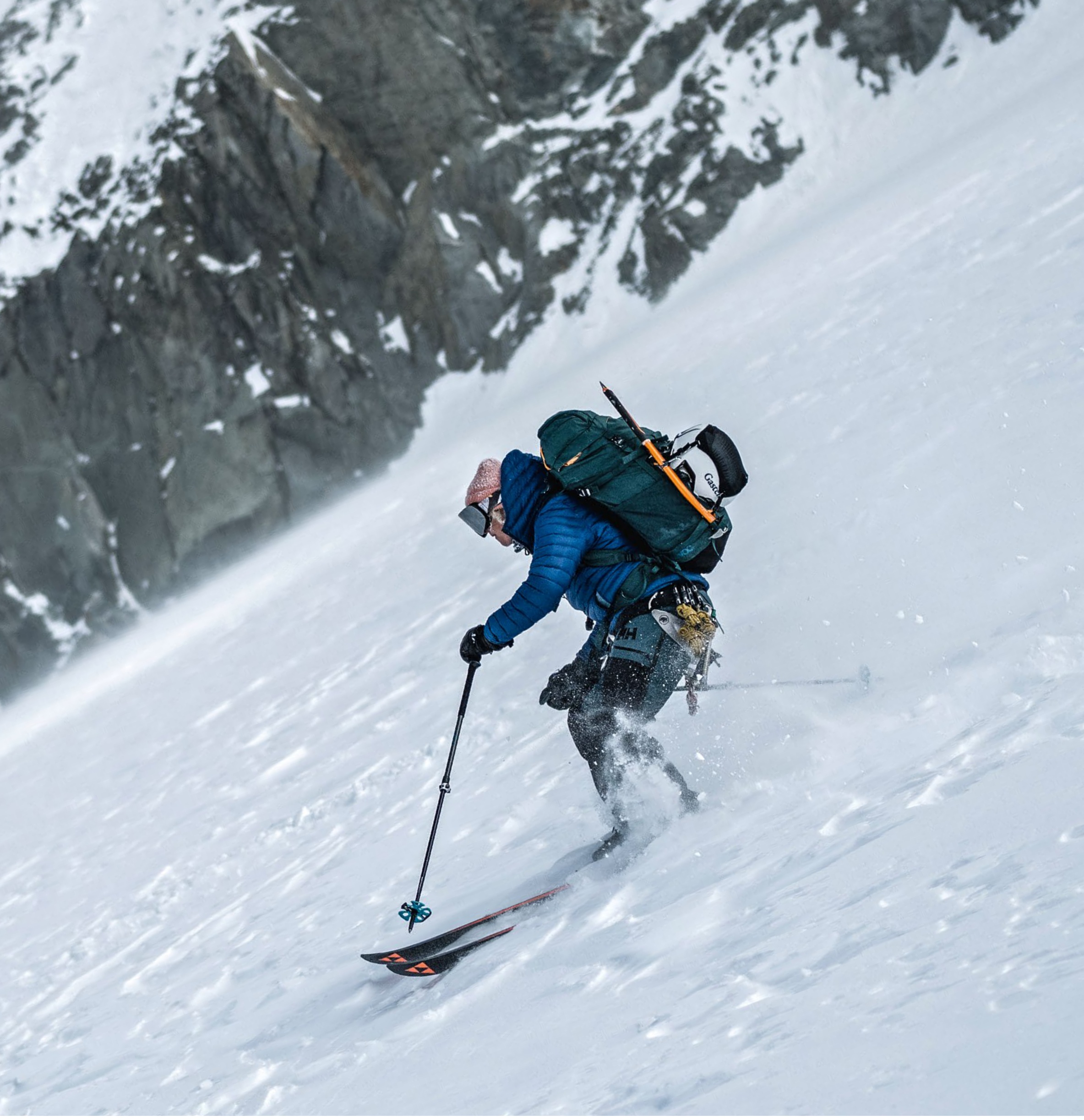
Großvenediger. Without skis, we hike across the short snowy ridge to the summit cross at 11,998 feet. We are denied spectacular views, but the pleasure of the hike and the anticipation of the descent prevail. The snow on the Venedigerkees invites us to make long turns, but we need to be careful, as the Obersulzbachkees is more crevassed than its reputation.
We circumnavigate the visible crevasses and ski down the glacier tongue to the Turkish Tent City. A day later, spring is making its appearance in the Obersulzbach valley and the snow fields are shrinking. If this trip to the “ancient majesty” was our last ski tour of the season, it was a truly worthy finale.