USA (Alaska) · Kahiltna Glacier (Mt. Hunter)
Annie’s Ridge – Mt. Hunter
Issue 2013 · Words: Adam Clark · Photos: Adam Clark · 5 min read
If you have ever flown from Seattle, Washington to Anchorage, Alaska on a clear day with a window view, most likely the first thing you noticed was the endless expanse of mountains. During my flights …
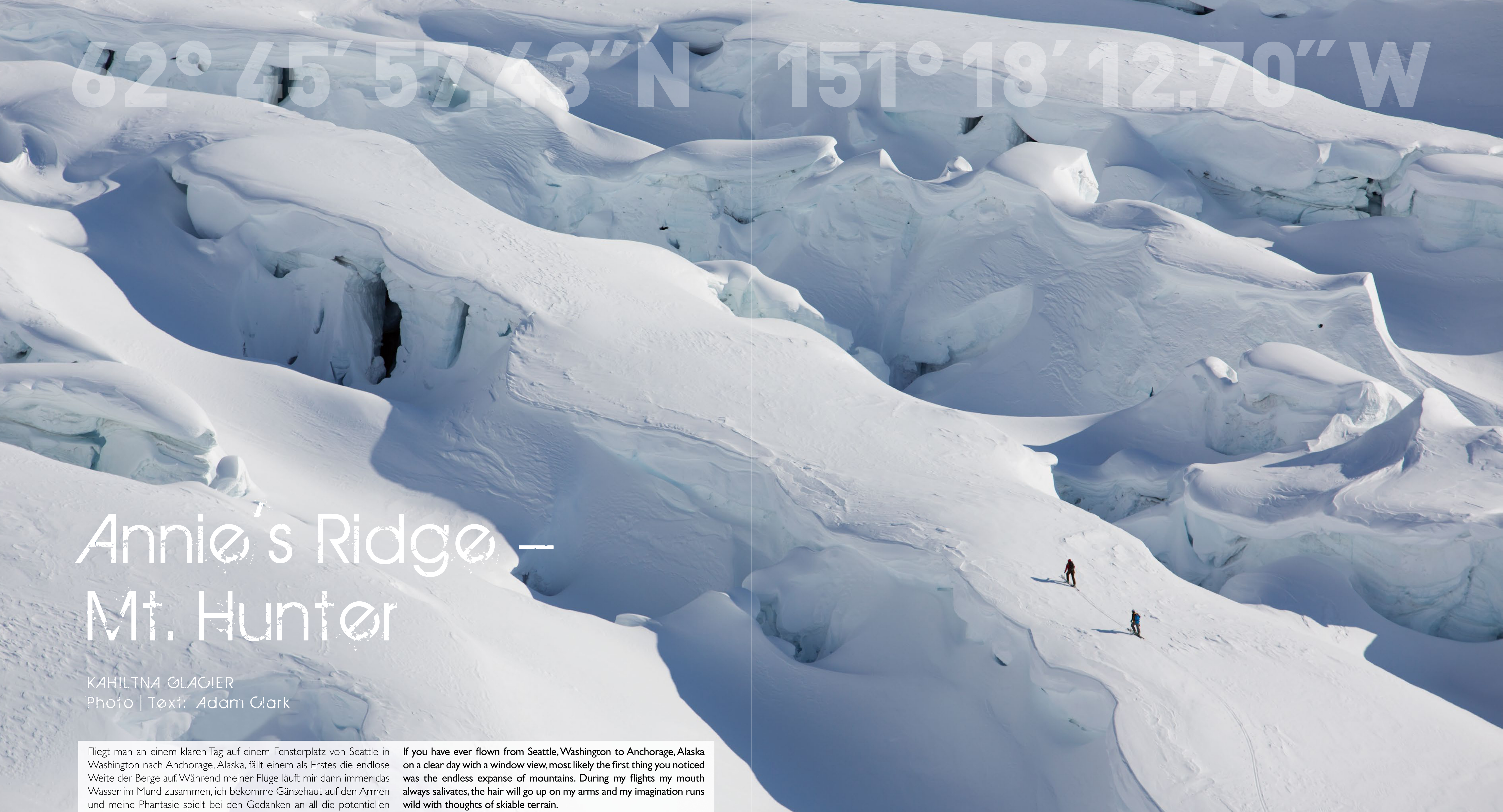
If you have ever flown from Seattle, Washington to Anchorage, Alaska on a clear day with a window view, most likely the first thing you noticed was the endless expanse of mountains. During my flights my mouth always salivates, the hair will go up on my arms and my imagination runs wild with thoughts of skiable terrain. One could say the culmination of all those mountains is Denali - the highest peak in North America. At the foot of Denali is the Kahiltna Glacier, the longest glacier in Alaska. The Kahiltna starts its 65 kilometers of glacier at the base of Denali, Mt. Hunter and Mt. Foraker, the three tallest peaks in North America.
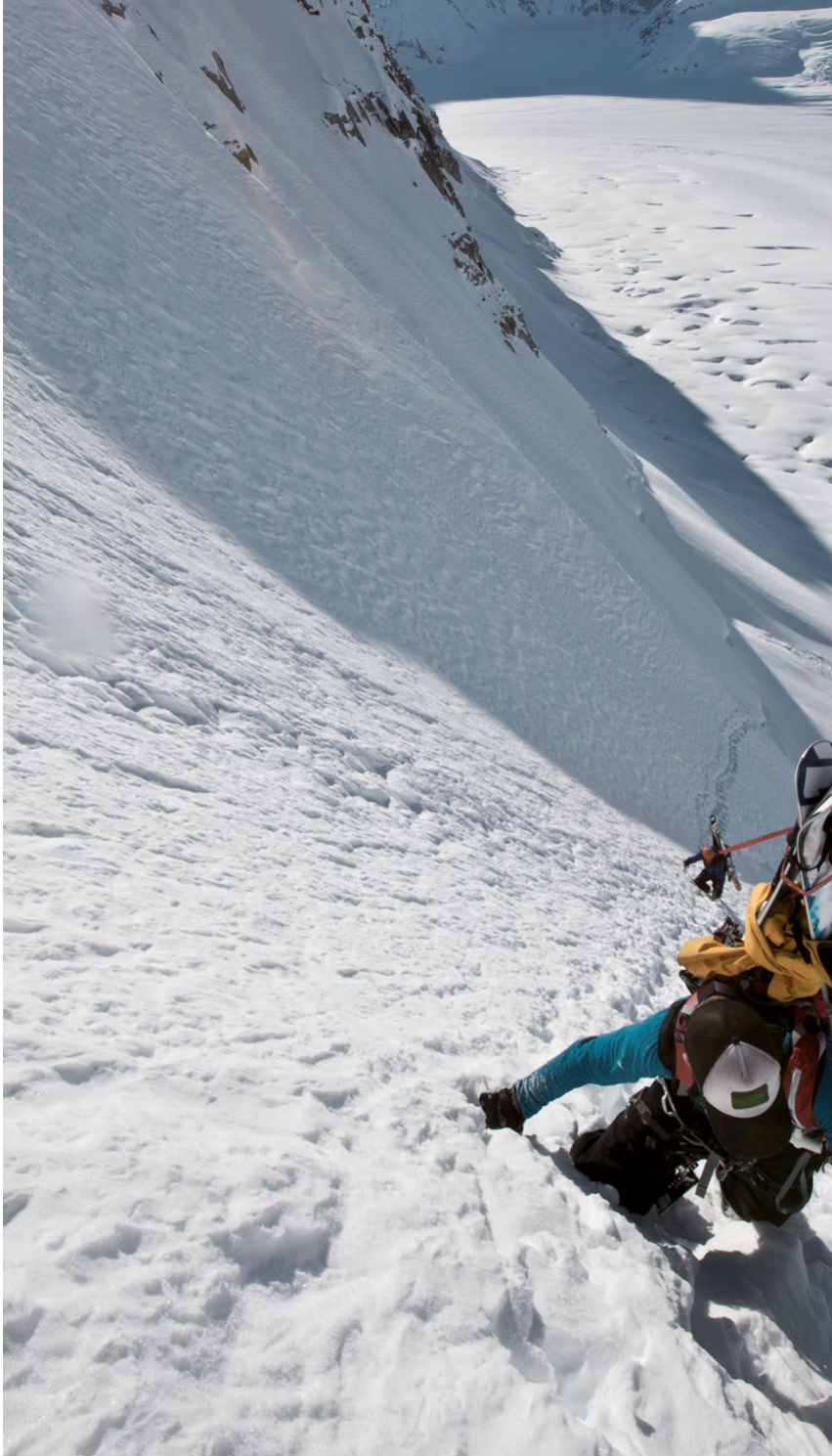
In late April I was standing with film maker Eric Croslyn listening to Ian Mcintosh and John Collinson making their way up a 120 meter tall spine wall at the base of Mt. Hunter. The snow and spines looked great from our camp 800 meters away. But the sounds of crampons on ice made their way to us all the way across the glacier. Not really what you want to hear. After Ian and Jonny scraped down to the bottom of Mt. Hunter, we talked about how the face was almost impossible to ski. While slightly shivering that night I wondered if all the terrain would be the same. Camping and skiing in Alaska is becoming more and more popular. Planes have become wildly common and it's usually pretty easy to charter one with skis to land on glaciers.
Landing on the Kahiltna is easy because it's used as the seasonal airstrip for Denali climbers. Except one lone Japanese woman trying to climb Denali we were the only ones in the area. Only four other climbers showed up during our two-week stay. Ian Mcintosh, a pro skier based in Pemberton, B.C., Canada has a deep fascination and addiction for spines and Alaskan terrain. With the prompting of a few photos and some time on Google Earth it became clear that the terrain surrounding the glacier landing strip on the Kahiltna Glacier held some of the most unique and dramatic terrain in Alaska. With mountaintops being the priority for 99% of the climbers and skiers that use the Kahiltna Glacier, the sub-peak terrain had barely ever been skied.
Other than the usual obstacle of skiing in Alaska, the decision to go here created even more difficulties. The mountains are in permanent winter. Spring conditions do come in, but the base of the steep ski terrain is mostly ice. So the new winter snow has to stick to the steep faces. This deep into the Alaska Range, there isn't the usual large amounts of AK snowfall, the temperatures are significantly colder and wild winds are common compared to the rest of Alaska. With that carrot dangling Ian proposed the trip to the Kahiltna Glacier and a ridge commonly referred to as Annie's Ridge. The dramatic backdrops, wild glaciers, and Ian's enthusiasm quickly convinced everybody to support the idea.
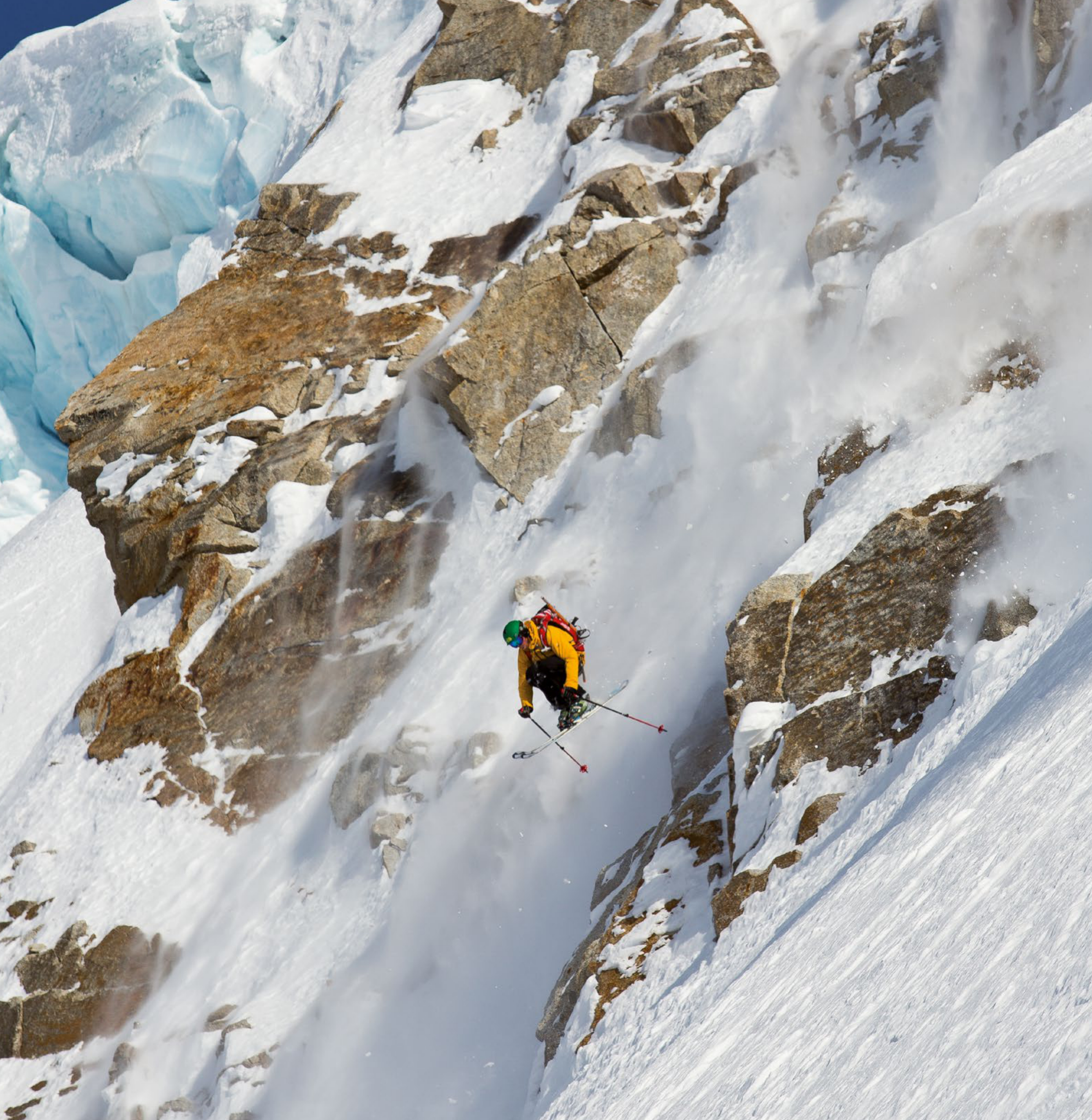
The Collinson siblings, Angel and Jonny, were also brought on to ski with Ian. Annie's Ridge spurred off the main massif of Hunter on the northwest side of the Kahiltna landing strip. Dwarfed by the surrounding mountains it looked small. The ridge is sometimes used as a training area for alpine climbers. Annie's is a steep rocky spine that drops off steeply on three sides into arms of the Kahiltna. The north face is what every person who lands sees; a wall full of steep spines and rock cliffs. Its south face is also steep, but rarely seen. It consists of a variety of couloirs and bigger cliff walls. Annie's Ridge was the main objective, but the options were endless with enough good weather, Cliff Bars and perseverance.
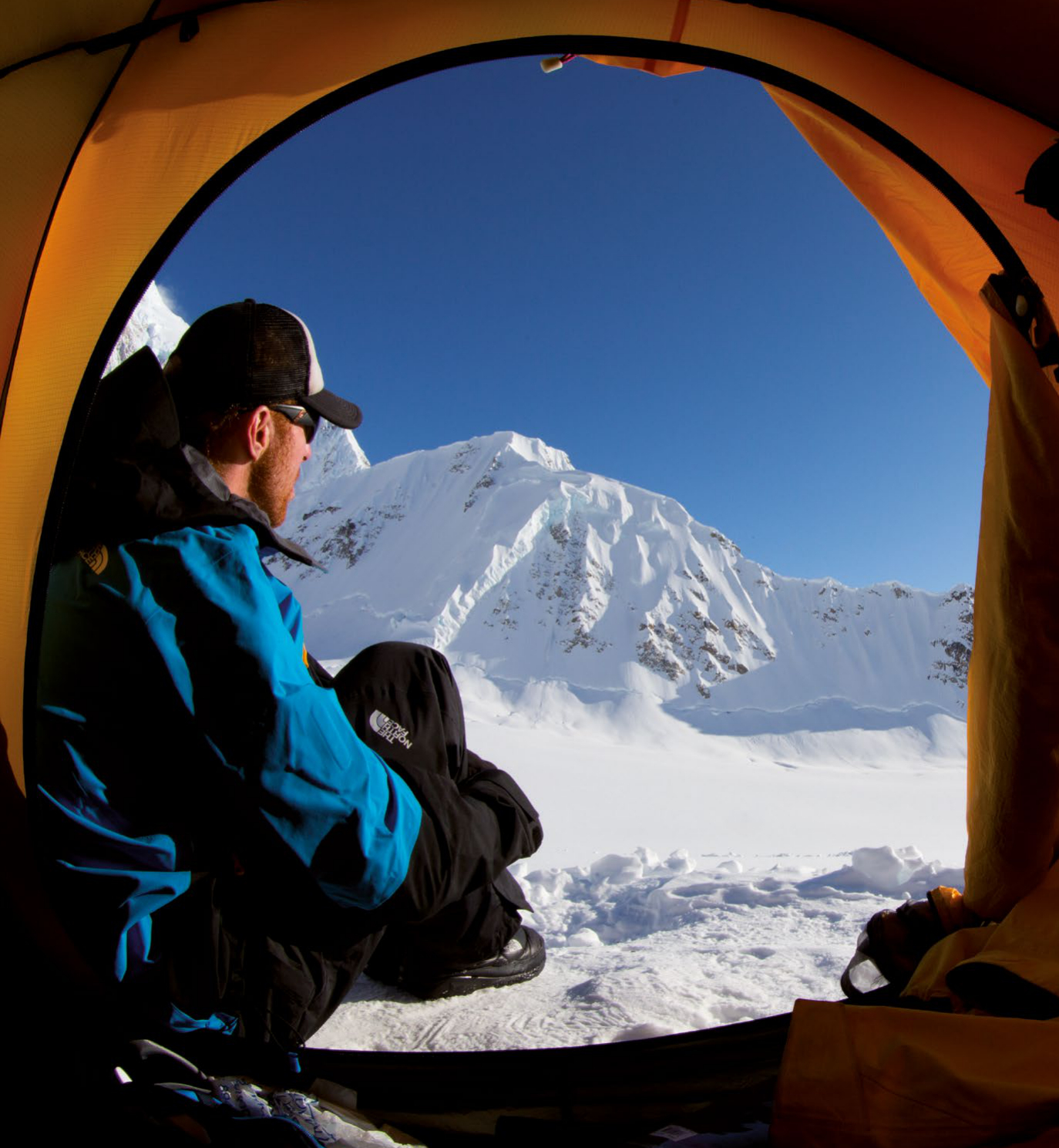
One Otter, two Beavers (both are types of airplanes) and 45 minutes took our crew of nine from the quiet town of Talkeetna to the Kahiltna. It was sunny, beautiful and cold. We immediately began shuttling gear just a few meters away and building camp. The planes took off as quickly as they had landed and we were on our own. The evening sun started to light up Annie's Ridge and it was all we could do to not start skiing. We knew night was coming, and with it the cold. The first morning I woke up to thousands of little ice crystals falling down on my face, our breath had condensed and frozen on the roof of the tent. I began the night in my 40-below sleeping bag with two air pads and a boiling bottle of water shoved in with me.
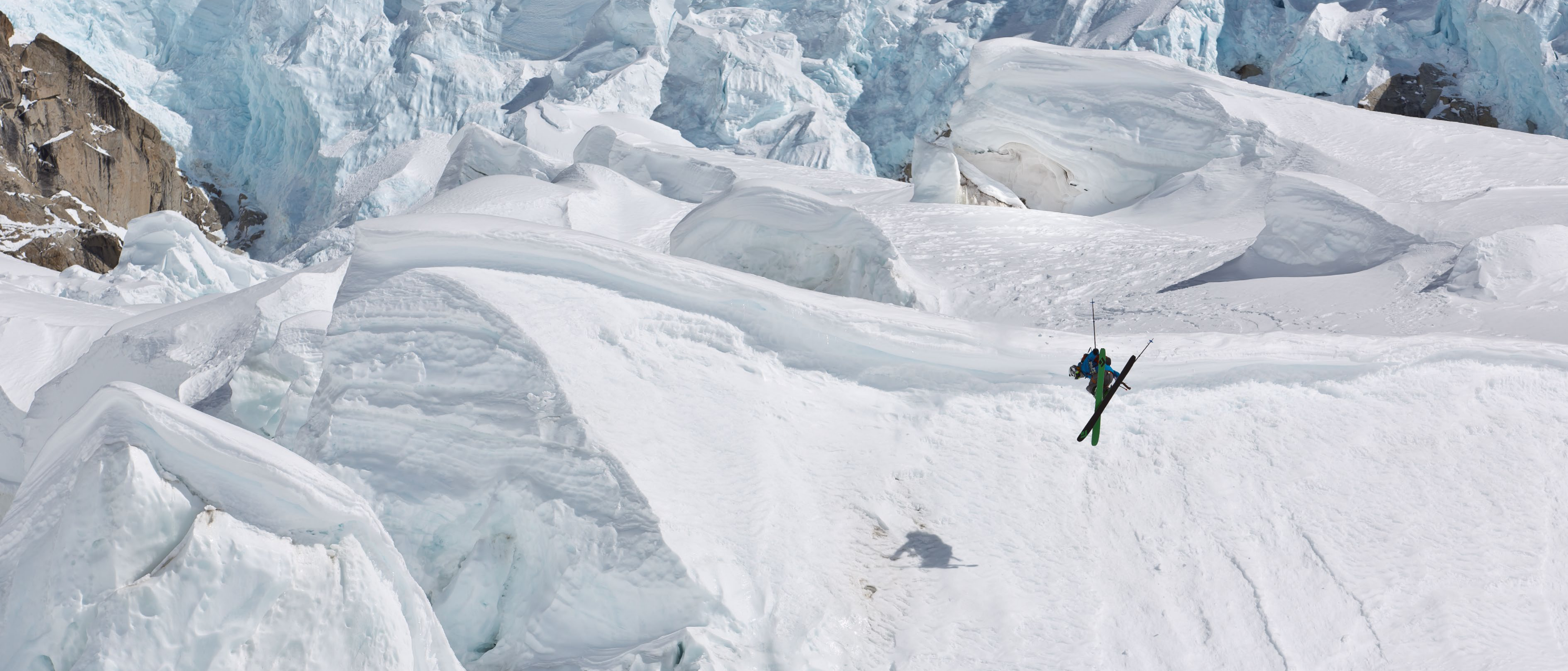
By morning the boiling water bottle was partially frozen. Luckily the days warmed up. The southern faces went through a spring freeze thaw cycle. Annie's north face had just enough base and powder that the skiing looked good. Over the next twelve days, Ian, Angel and Jonny slowly but surely ticked off a bunch of spines and couloirs on the north and south aspects of Annie's Ridge that had light and not too much exposure. The snow was good enough for them to ski and the temperatures warmed up enough to enjoy the days. The week was blissful. Our idea was working. Annie's Ridge proved to be worthy of great freeskiing. Steep, aesthetic and varied. The spines topped out at over 50 degrees. The longest one was around 220 vertical meters.
The south face couloirs were over 300 meters of elevation, lined with beautiful rock walls. Tent life was almost luxurious. Since we had a plane drop-off we didn't have to carry our gear in. A huge dome tent was made for the kitchen, and another for film production. It was all smiles and high fives every 10 p.m. when the light would fade off the north face of Annie's and we would have the short hike across the glacier to camp after skiing and shooting. When a small storm came through and deposited ten centimeters of snow we held our breath in anticipation of even better skiing and conditions. The morning after the storm the mountains were again refreshed.
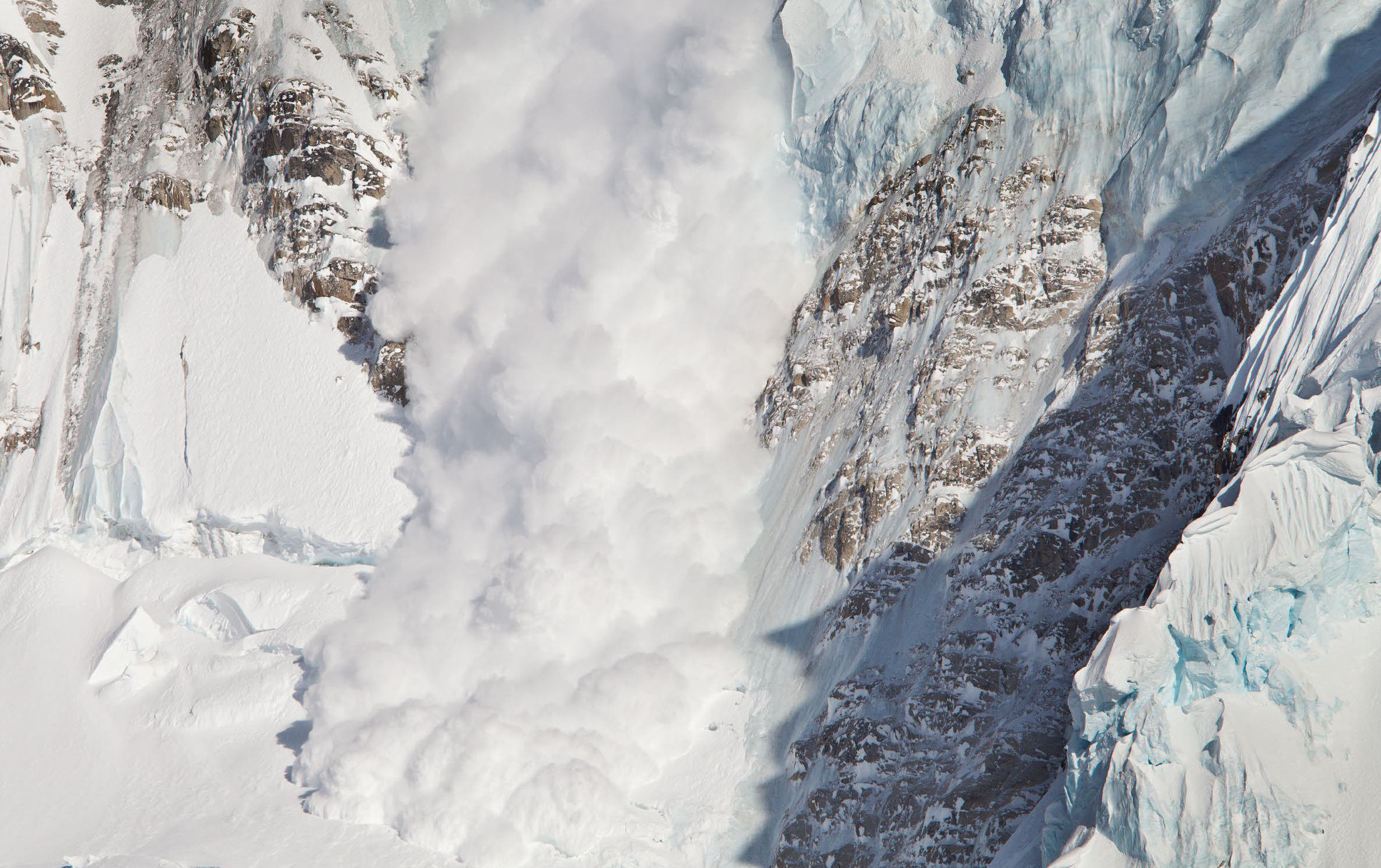
As soon as the sun hit our tents around 10:30 a.m. the wind started and quickly blew down every gram of fresh snow. Annie's Ridge quickly became almost unskiable. We took two days to discover the south side was rock-hard and the north was sastrugi on ice. The temperatures plummeted and the wind didn't stop. We felt lucky to get it as good as we did and flew home.