Argentinien · El Chaltén (Patagonien)
Collector’s Patagonia
Issue 2016 · Words: Jacob Slot · Photos: Jacob Slot · 6 min read
Patagonia is a place full of possibilities and a climber's Mecca. For skiers, it made a transition in the last 15 years from an exotic destination to something more accessible. The ski areas in the …
Patagonia is a place full of possibilities and a climber's Mecca. For skiers, it made a transition in the last 15 years from an exotic destination to something more accessible. The ski areas in the north have grown and benefited from the freeride culture, low Peso, and people's hunger for traveling with their skis. Some places have turned into touristic playgrounds, while others are still in a state of slumber. When looking into the options for a ski adventure, in an area larger than one million square kilometer, you will find a lot of different alternatives, which you won't be able to do in a lifetime. From lift-served skiing, classic ski touring and alpinism-style skiing, to remote expeditions in the Patagonian Ice Cap.
After covering a large area over the last 18 years, I've lately been more focused on the southern province of Santa Cruz in Argentina and the southern provinces of Patagonian Chile. These areas are remote and less inhabited than the north, and any skiing is based on effort, commitment, and work. Not to forget that you might be the only skier around and that organized rescue in case of emergencies might simply not be available. This year, I returned on a mixed mission with Catalan climber and skier David Sanabria. Our goal was to climb and ski a couloir in the area of the Torre Glacier, between Aguja de l'S and Mojon Rojo and to capture unique ski images based on a real story.
After a few days of warm-up ski touring around the Lago del Desierto, we carried a load of gear up the Torre Valley. We installed a cache at Cerro Solo Creek. This is a little more than halfway to the Niponino camp at Torre Glacier. From here, we could move fast with a light pack and food for a day. With limited time on our hands, we had to use the first good days to ski our objective instead of waiting for a bigger weather window. It was a warm day hiking up the valley, and it felt more like spring, with only a few people around. We spent the night in the valley and tried to locate the safest way down to the glacier. The next morning, we headed back out to El Chaltén to check the weather, drink coffee, and relax a little.
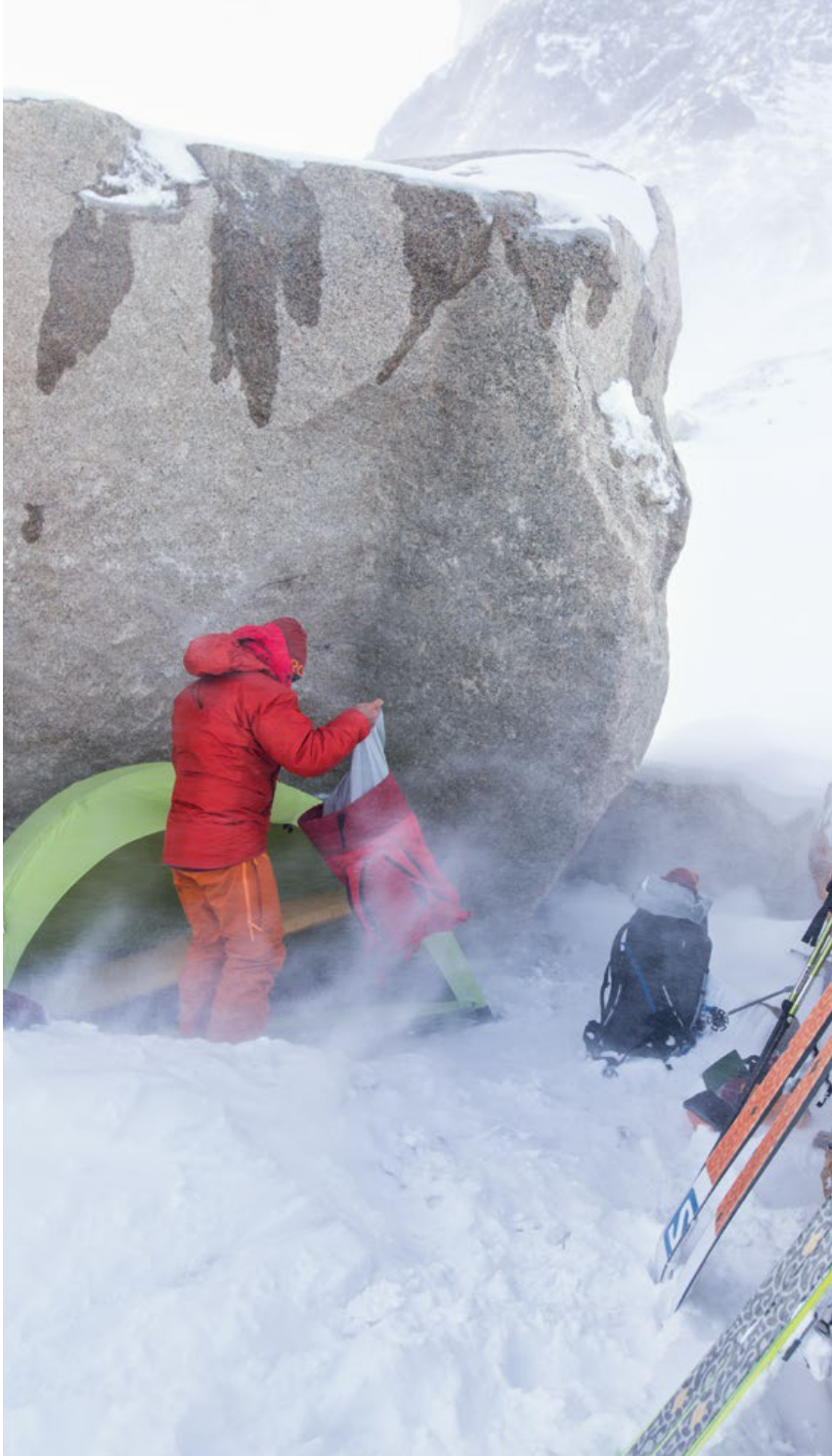
A few days of light snow had covered the couloir and created skiable conditions. At the same time, the entire valley turned white, which made the approach up the valley a bit harder since there was not enough snow for skins, but it was still too wet for running shoes. We spent a very cold night in the Solo camp. The next morning, we set out with a 40-liter pack, a light tent, and a bit of gas and food. We expected to be alone but just before our departure, Canadian climber Marc Andre turned up with a cheerful "good morning." He was on a solo mission setting up a cache at the Niponino. The three of us went down the moraine and a bit up the glacier.
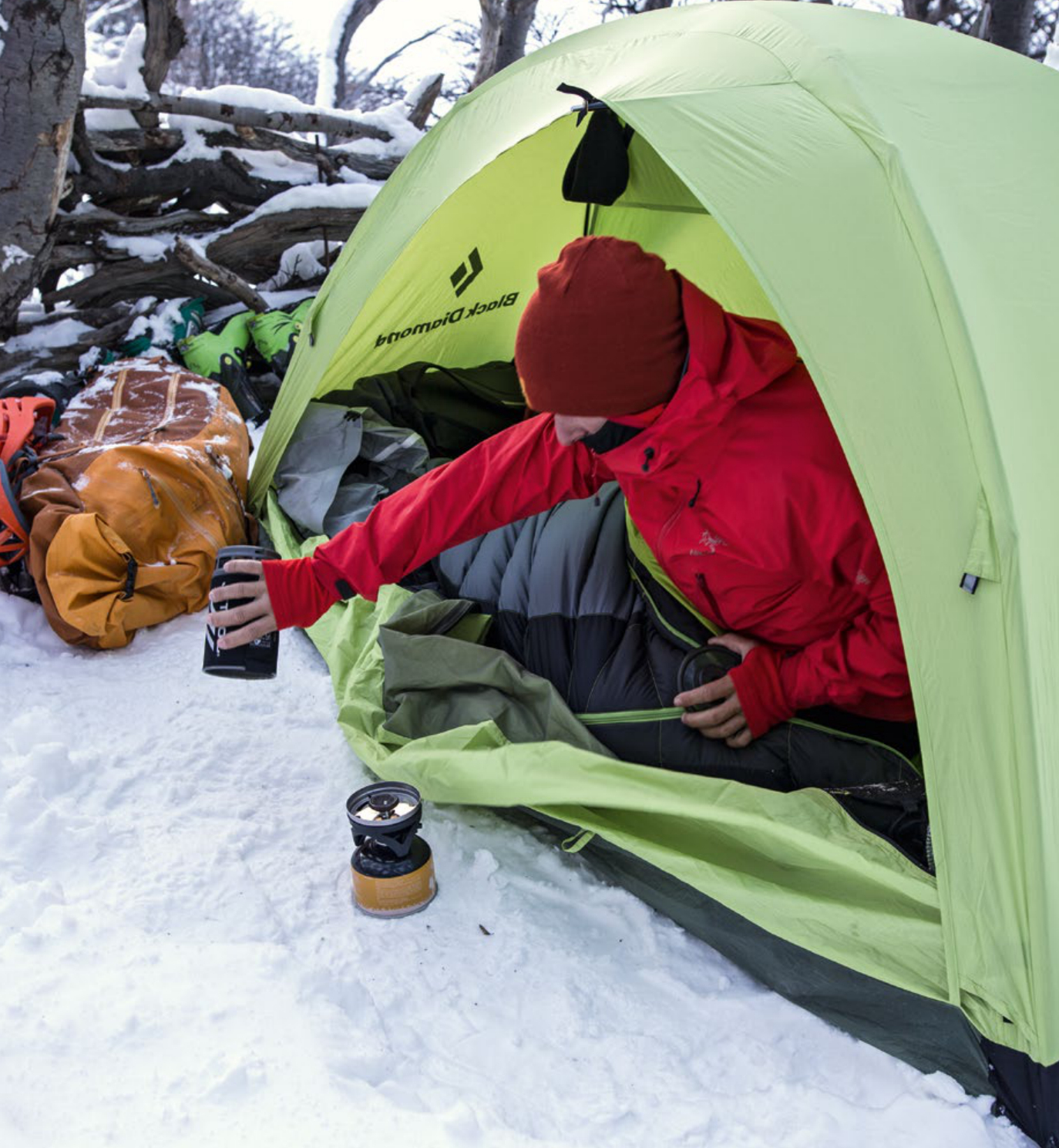
Marc with his light pack and super fast steps returned to El Chalten to wait for an extended weather window. We parted ways at the laguna before entering the glacier. The conditions were perfect, and we were able to use skins all the way across to our camp below the walls of the Fitz Roy range. We pitched our tent below the couloir we planned to ski, a little down from the Polacos bivy. A small storm hit during the night. In the morning, we were soaking wet from the humidity in our tent, and it looked like all the snow was swept off the glacier. The upper part of the couloir looked like ice on one side and heavy wind-blown structures on the other. All the good snow was gone. We became a bit nervous.
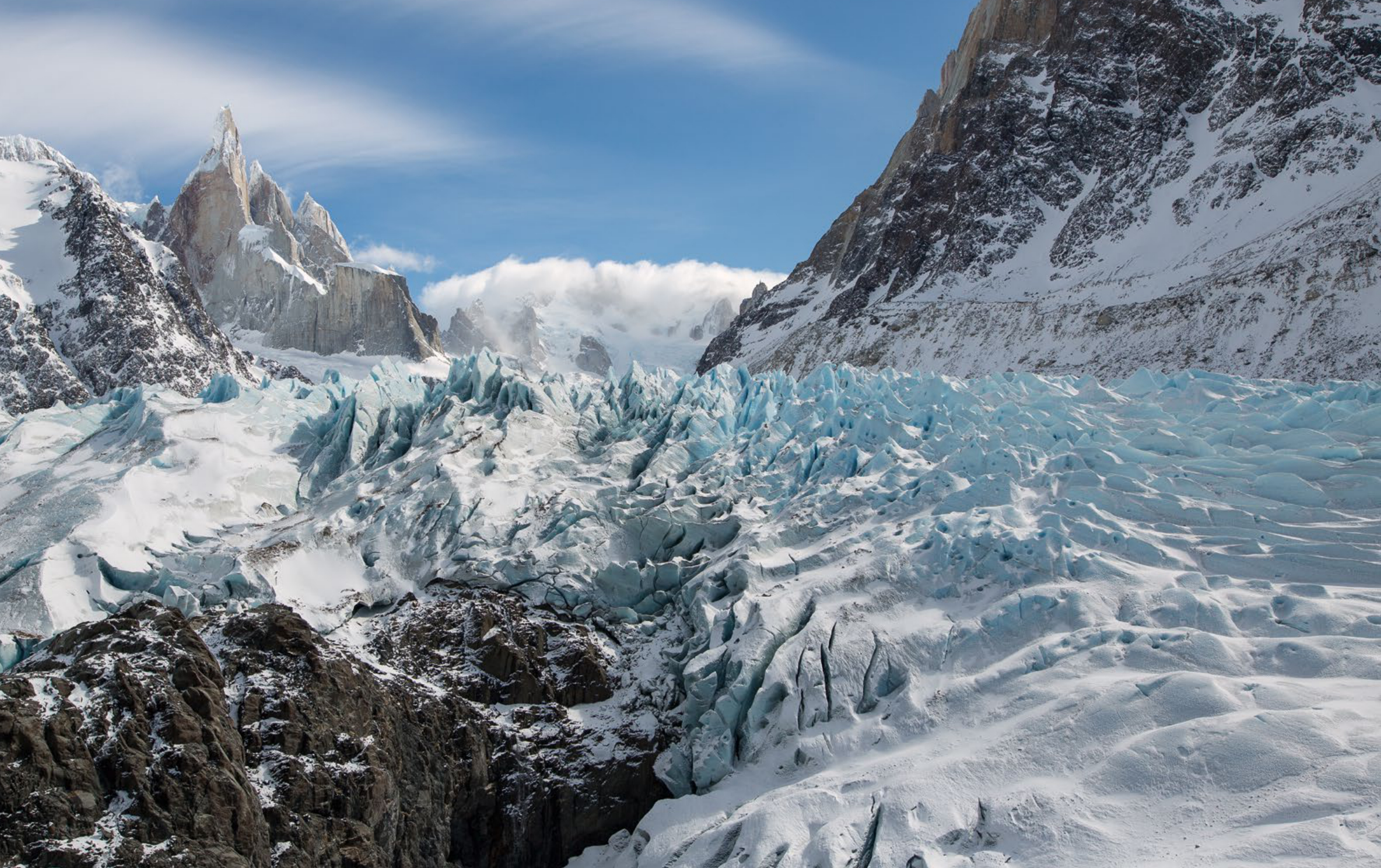
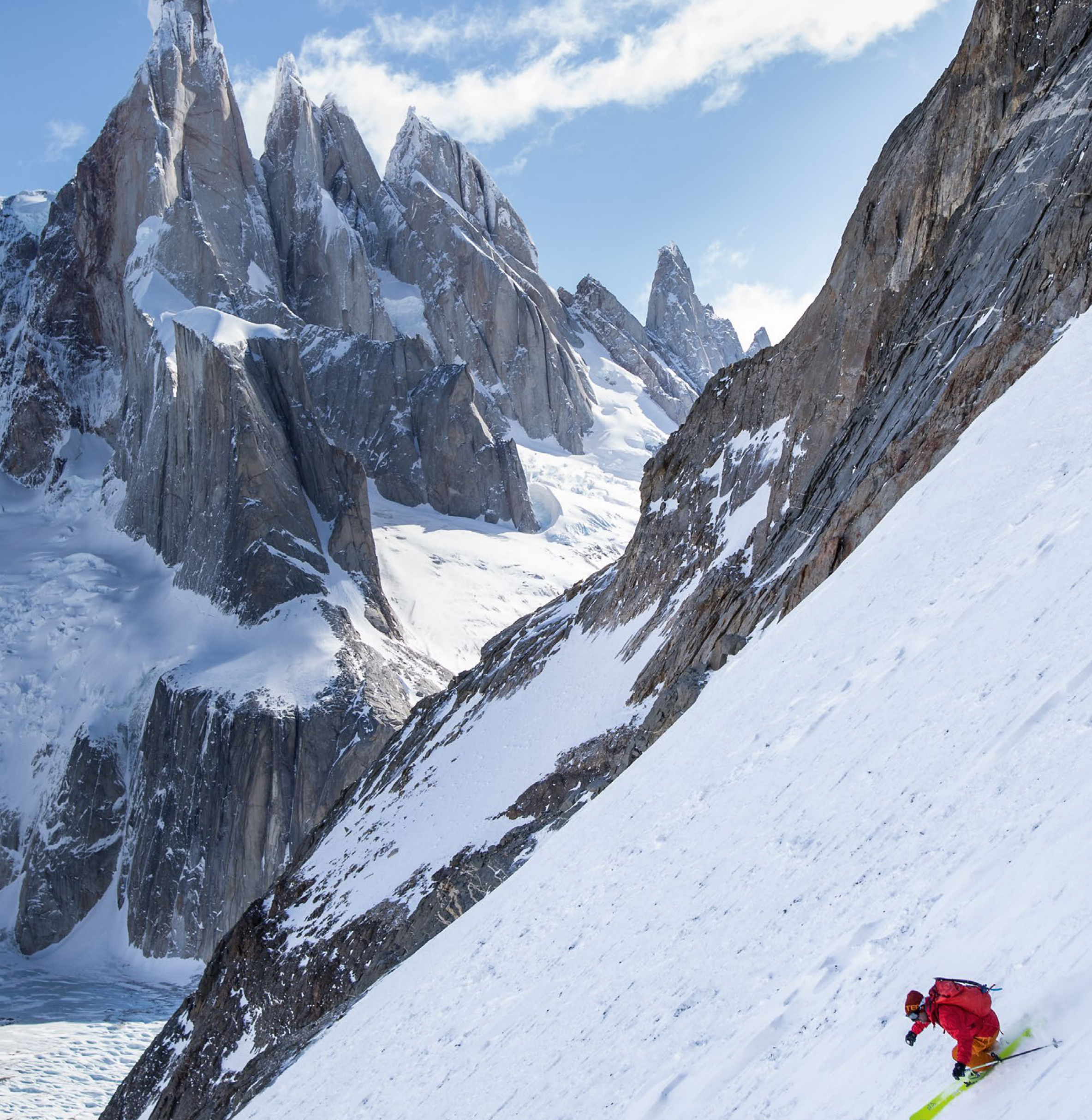
What if we'd stay one more night and ski the next day? But what if the weather gets worse? We prepared some coffee to ease our worries. And then the sky turned blue. We started climbing at 11:30 am. In addition to the skiing, I was focused on shooting two images: One showing David skiing the steep couloir in front of the great Cerro Torre; the other climbing the couloir with its three different rock colors. Bringing the big camera into this place is not a problem, but to have it ready to shoot is not as easy as if you had a snapshot camera. Finding the right angle when standing on the front teeth of your crampons in a photo studio with a 1,000-meter vertical stage is definitely a bit more stressful.
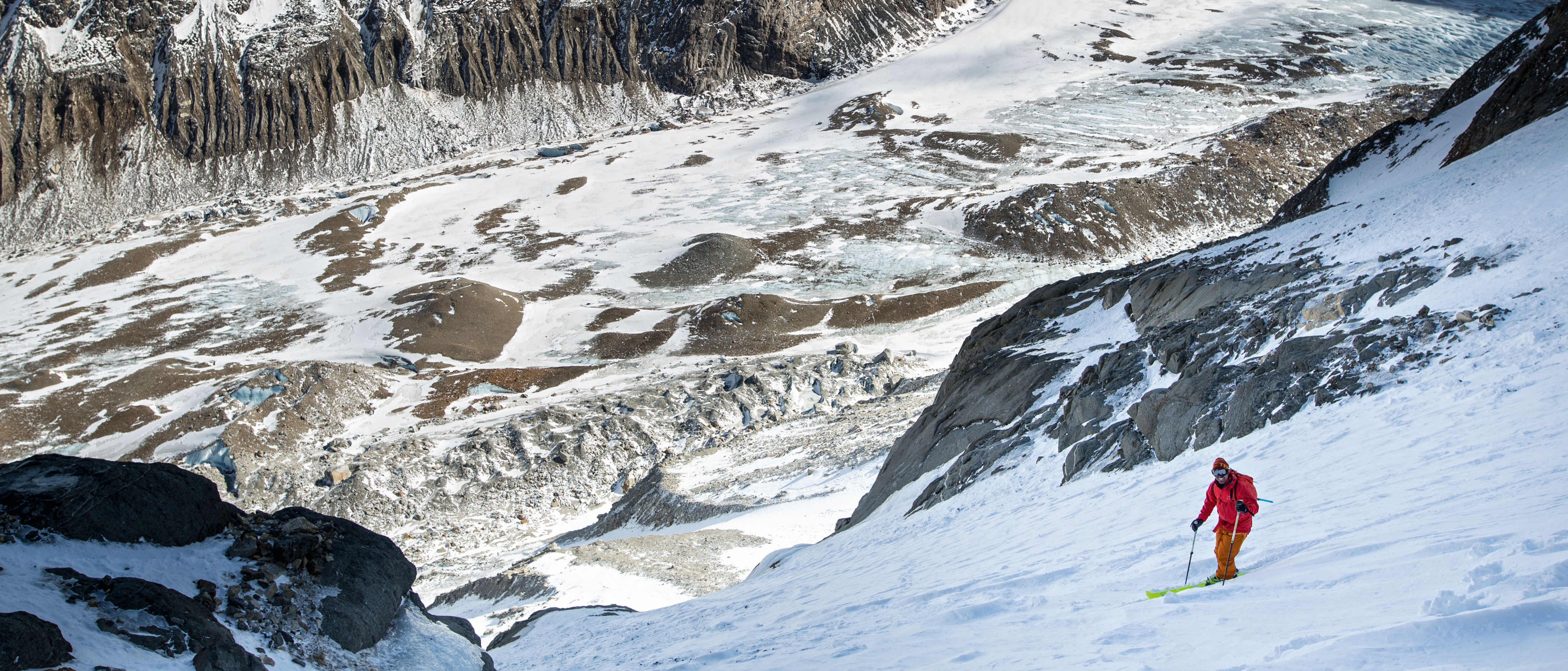
We succeeded in our mission on the second last day of winter, climbing and skiing the face and couloir within five hours and with conditions much more difficult than anticipated. The winter in the Torre valley had been dry and cold, there were big patches of blue ice, and parts of the chute were covered with wind-packed, blown-in snow. David skied the entire chute – maybe a first descent. The upper half of the couloir is a no-fall zone with two rock bands below. We believe the skiing was 900 vertical meters, with sections up to 50 degrees steep. The exit onto the glacier has no moraine balcony so that you can ski the entire face down to the glacier and our bivy.
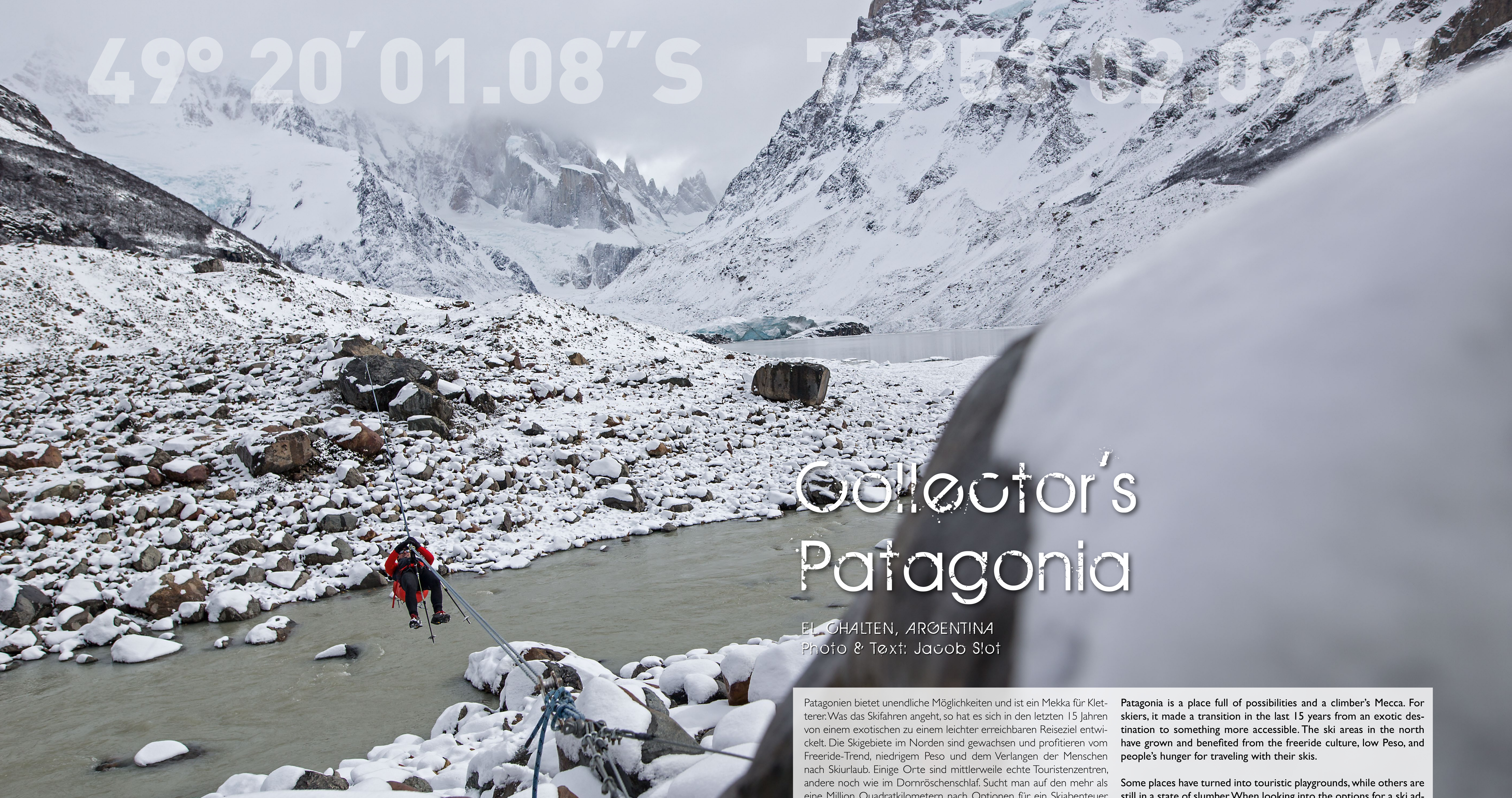
We took a break, cleared the camp around 5:30 pm, and skied back across the glacier before starting the walk back towards the steep moraine and up to the Solo camp. At 8:00 pm, we reached the top with the last light. 15 minutes later we were back at Solo Creek. We cleared our cache and tried to reach the Agostini camp on the other side of the Tyrolean traverse. From there, we would only have a few hours back to Chalten the next morning. That night I slept under the stars. There is a huge contrast between winter and summer in Chalten. In winter, it's a peaceful village community, in summer a pulsating tourist town. As a skier, I prefer the cold season with the unique feeling of being in a quiet place where everybody knows everybody.
Patagonia has a ton of locations open for ski explorations only to be discovered. It takes only a day of skiing in Patagonia to have skied there, but a lifetime of collecting and exploring the region to feel fulfilled. A special mention to the locals who eat, drink and ski with me in Chaltén and often provide the final solution and ideas when trying to make things happen. Carolina, Marcela, Annabel, Conny, Max, Astro, Jimmy, Agustin, Lucho, Merlin, and Leo – these names stand for the true ski explorers in the valley of the Vueltas River and El Chaltén.