Norwegen · Stjernøya Island Mountains
Finding Stjernøya
Issue 2014 · Words: Leslie Anthony · Photos: Mattias Fredriksson · 5 min read
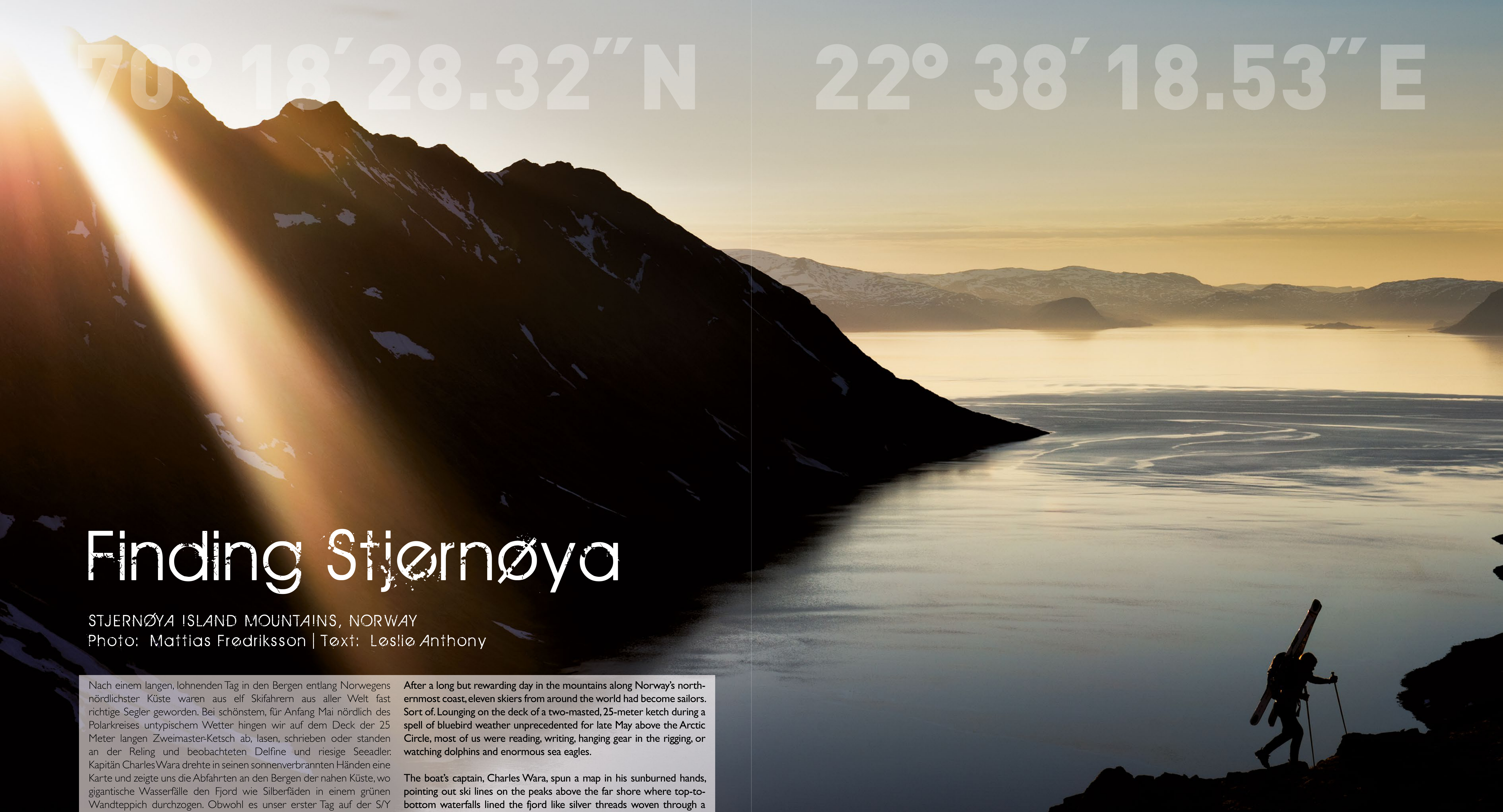
After a long but rewarding day in the mountains along Norway's northernmost coast, eleven skiers from around the world had become sailors. Sort of. Lounging on the deck of a two-masted, 25-meter …
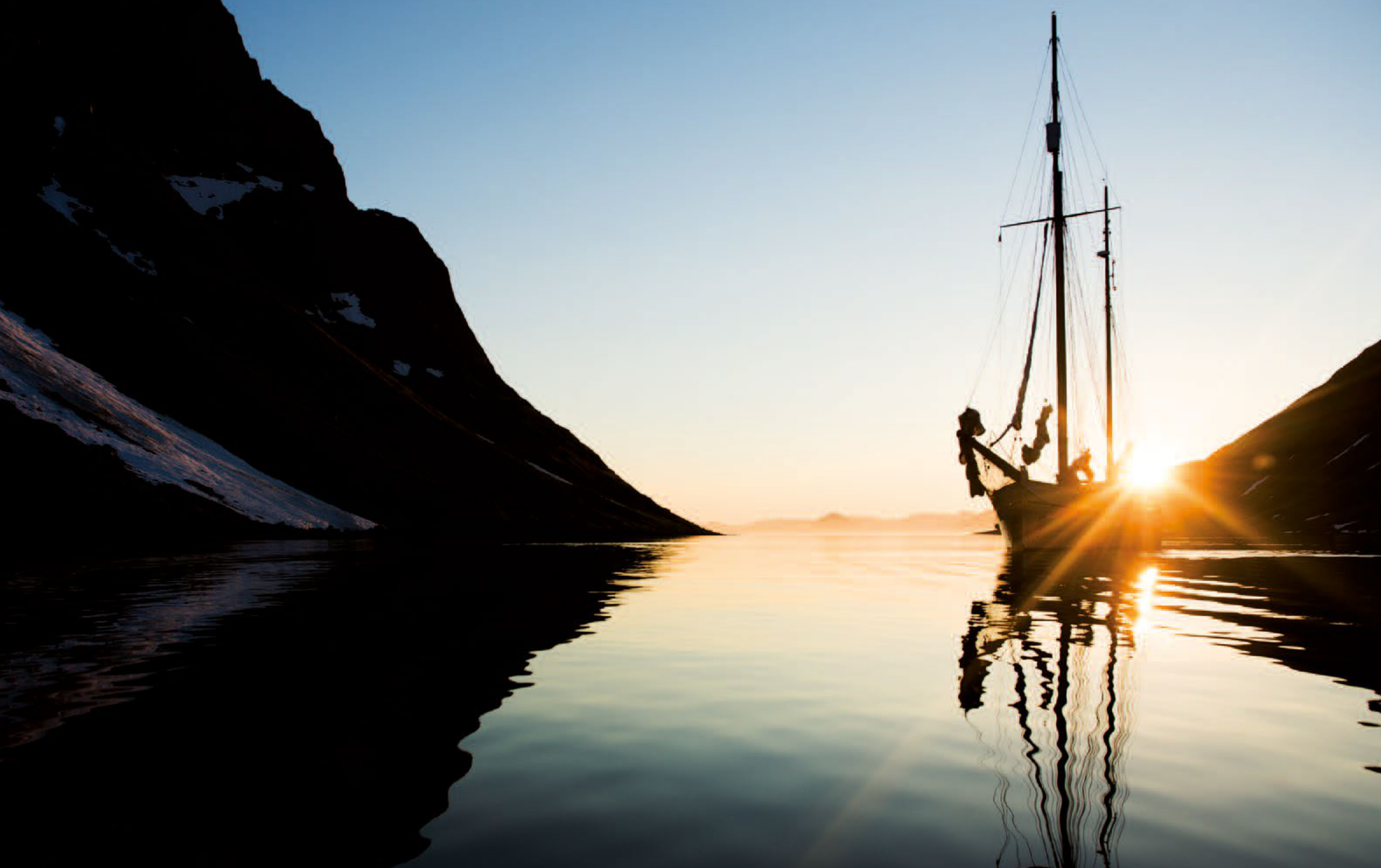
After a long but rewarding day in the mountains along Norway's northernmost coast, eleven skiers from around the world had become sailors. Sort of. Lounging on the deck of a two-masted, 25-meter ketch during a spell of bluebird weather unprecedented for late May above the Arctic Circle, most of us were reading, writing, hanging gear in the rigging, or watching dolphins and enormous sea eagles. The boat's captain, Charles Wara, spun a map in his sunburned hands, pointing out ski lines on the peaks above the far shore where top-to-bottom waterfalls lined the fjord like silver threads woven through a green tapestry.
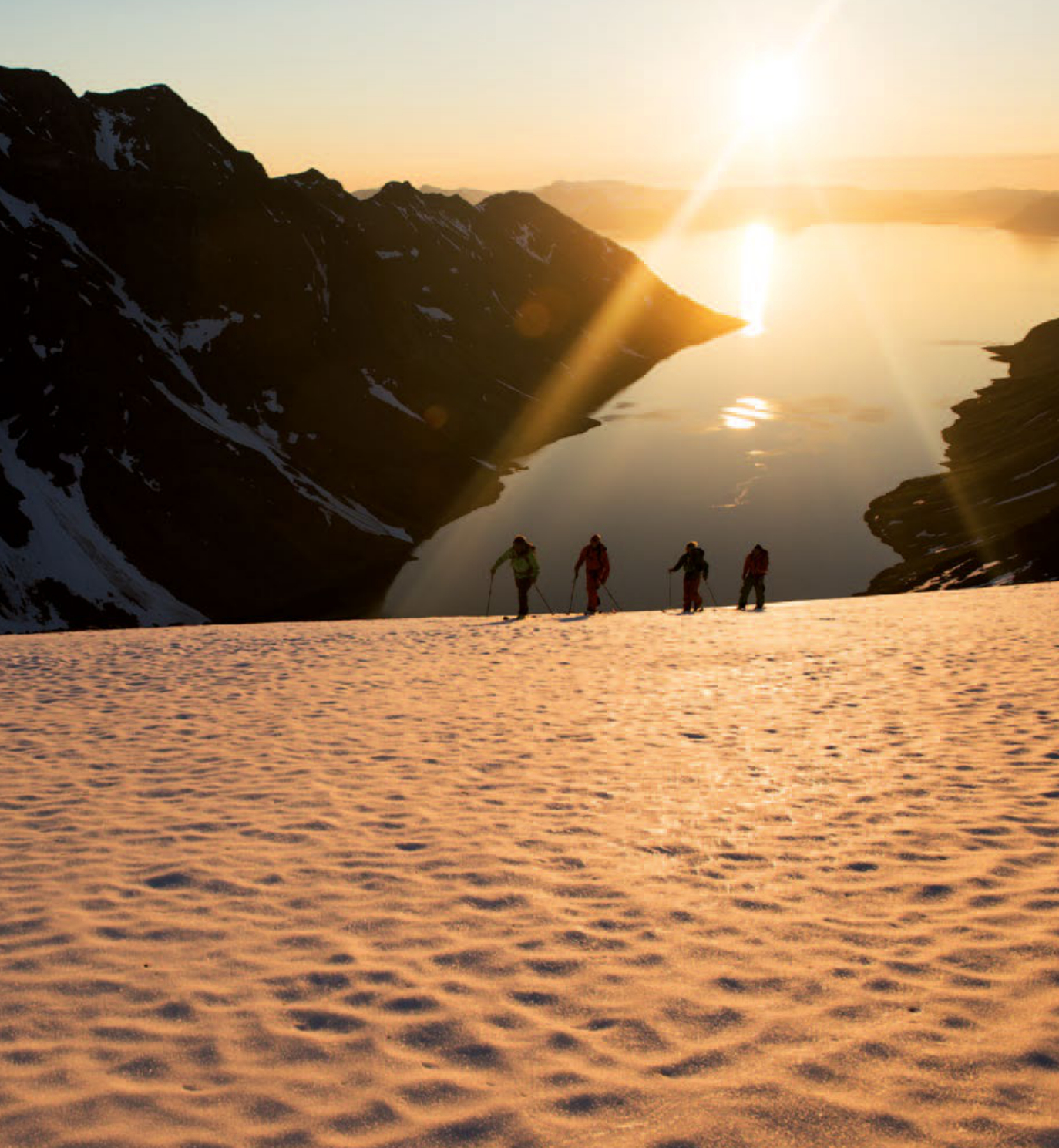
And though it was only day one aboard S/Y Goxsheim, and most of our crew were veterans of past Norwegian ski experiences, we all had the same thought: this is the best trip ever. We'd started early that day with zodiac shuffles to a black-sand beach where gurgling streams braided into the fjord. Assembling on shore, we'd hiked first over grass tussocks, then onto sloping meadows of mud and snow before burrowing into the dwarf-birch forest ringing the bottom of every hillside here like a hula skirt. Skinning upward under thinning trees, we'd shadowed the larger streams cutting through the snowpack, following one into an alpine bowl invisible from below.
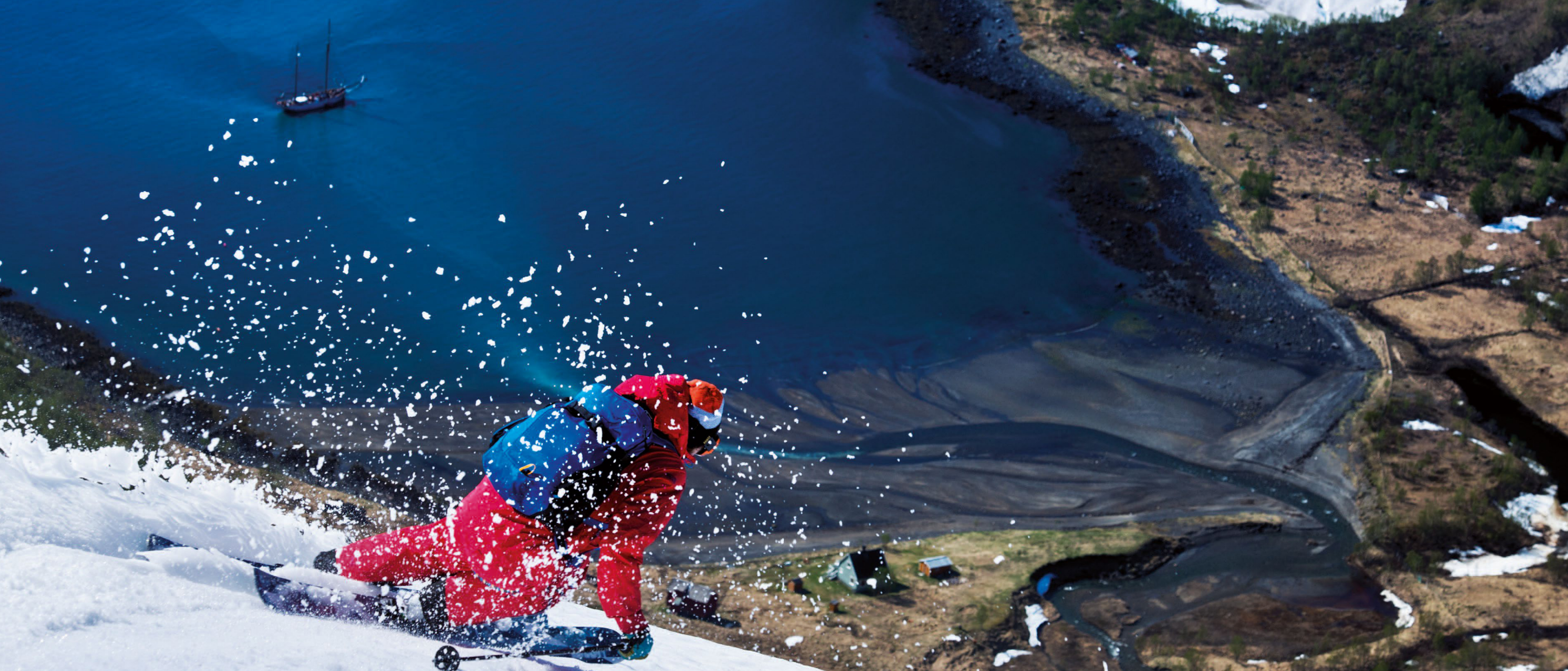
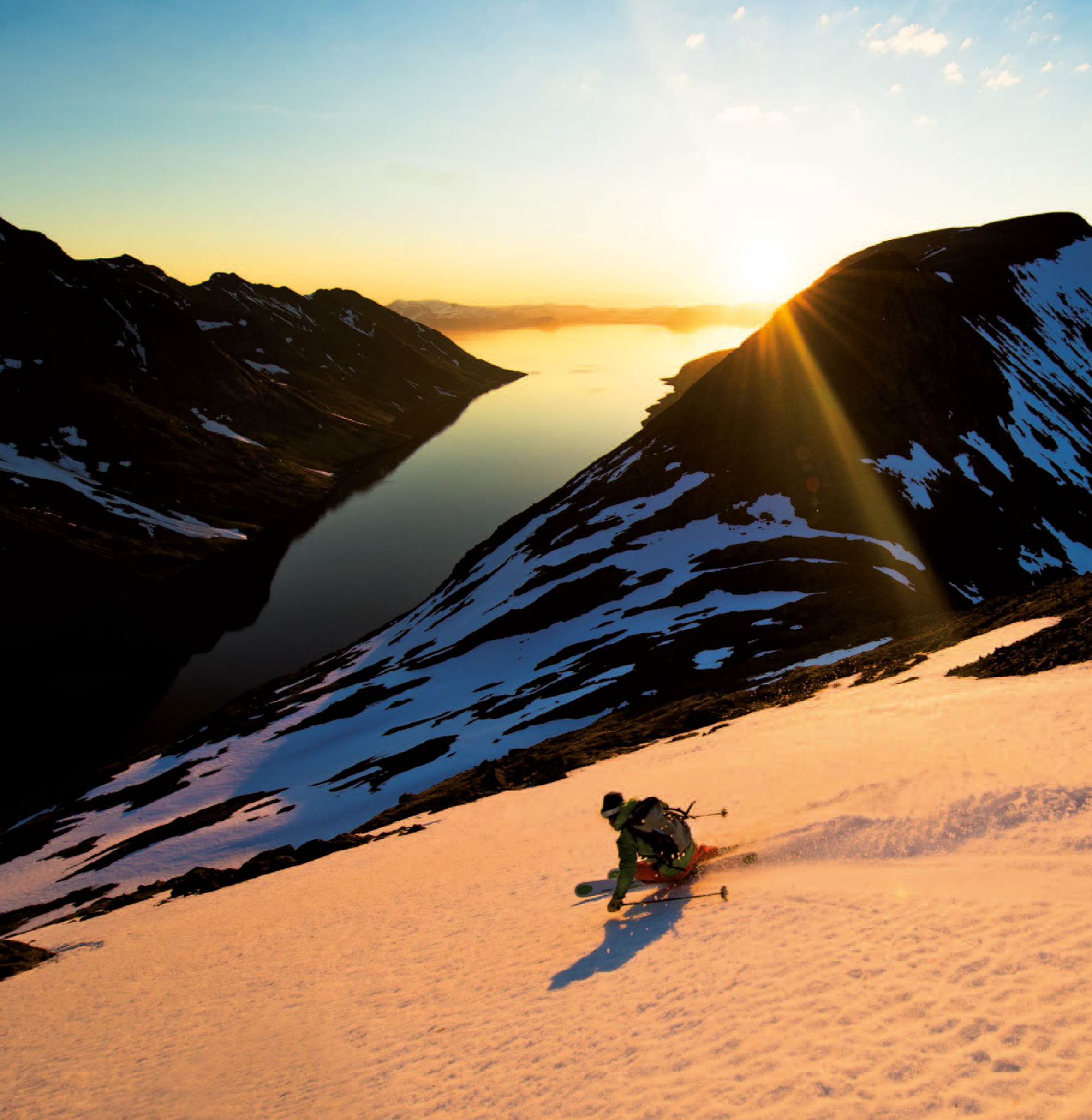
Cresting the rocky rim of a headwall onto the long, sloping plateau characteristic of most of the area's flat-topped summits. After a few more hours of slogging in the sun we found ourselves on an overhanging promontory, legs dangling, gazing over the fjord. At anchor far below, the Goxsheim fluttered like a wooden ring on an improbable emerald finger. The descent began in a shallow basin that funneled onto a steep face. Diamond arcs peeled from behind as we picked our way from chute to chute on perfect snow, skirting week-old avalanche debris to land at the base of a whaleback hillock breaching from a sea of snow.
Guide Per Ås, a Swede based in La Grave, had then posed the question: down this draw to the ship, or a 20-minute skin to an unknown valley? Chad Sayers, Mattias Fredriksson, Janne Tjärnström, Klas Granström, Captain Charles, and I had all answered by slapping our skins back on skins, the reward being to climb and ski something that, as far as anyone knew, no one ever had. Near the aquamarine ring of a sagging frozen lake we found the line: an outlet still encased under meters of snow and pinched by cliffs into a natural, several-kilometer-long halfpipe. No one expected the whoops that followed nor the reindeer herd above the birch forest.
Below that, the morning's quiet creeks had become rivers roaring with snowmelt; like armored Vikings, the Scandos simply waded through, while Sayers and I – in typical Canadian fashion – forded the icy cascades in bare feet with the water swirling around our pants, continuing across moss, snow, grass, swamp, and sand for an hour. Back on board we hung up sweat-soaked gear, made spastic plunges into an icy sea, and hauled chilled beers aboard in buckets. We would do it all again the next day. And the next. For a week in fact, and never in the same place twice. Most of it would be map-in-hand exploration, the daily theme a 7-8 hour ski tour and single 1,000-meter descent from a nameless summit in perfect weather.
"It can't get any better," we would say. And then the next day it would be better terrain, better snow, better everything. That's not hard to imagine in one of the least-trodden mountainscapes on earth, but access has always been the issue here. There had been a push to open up Norway a couple of decades ago that fizzled because too many North Americans experienced the kind of nasty weather you'd expect of a maritime climate at Arctic latitudes. But after the sail and ski concept was developed during the 1990s in the Lyngen Alps by Italian mountain guide Lucas Caspari, the Scandinavians and Europeans kept at it. In 2005, Lyngen veteran Per Ås started working with Charles, who originally purchased the Goxsheim for his dream trip of sailing the world.
To fund that project and a necessary refit, he'd decided to offer sailing tours. First in summer, then to the growing ranks of ski tourers overflowing north from Lyngen. At this point Charles skied only the occasional day of cross-country. That first winter/spring, he shuttled folks around on the Goxsheim without participating; but the boat quickly became popular and guides filled his client list. Intrigued, Charles obtained a touring set-up, followed groups when the weather was nice and the boat anchored safely, and was soon enjoying the idea of earned turns. It was only logical then that this new convert began to explore the remote, fjord-riddled reaches beyond the port of Alta around Stjernøya (Star Island) where we spent the majority of our trip.
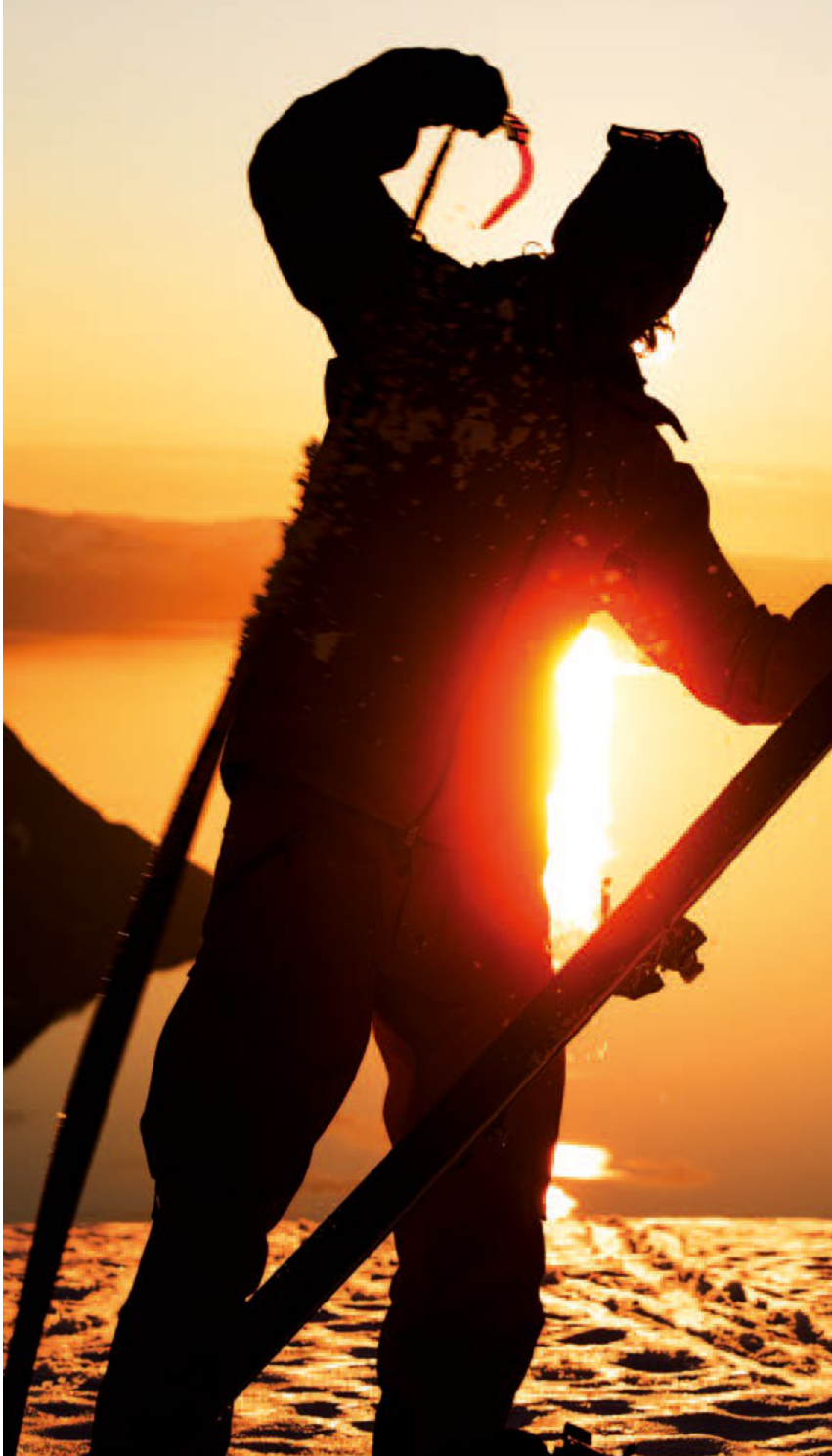
Because the Finnmark region abutting both Finland and Russia is so far north, snow lies lower and longer in the fjords, with the added bonus of being relatively safe. In our last 24 hours on the Goxsheim, the group knocked in two enormous day outings, and then, anchored in the prettiest fjord yet, another post-dinner tour in the midnight sun, with summer temperatures far above freezing and amazing skiing in copper light that ended at the water's edge. Our best tour of all, however, was our final one. We'd start earlier than usual with no bushwhacking for a change, climbing straight up a north-facing gully right from the water's edge. It was the steepest tour yet, ascending tighter canyons and more exposed and steeper faces than we'd previously seen.
But Per and Charles had read the maps well and the long, circuitous route afforded beautiful views as well as challenging climbing. Birds circled as we downed tea and sandwiches on the summit, then it was time once again to aim for the boat. Tipping into the fall line off the long, gentle summit, we got up to speed and were soon hurtling into the abyss. The group split, most following Per into a steep cirque, while Charles and I wrapped around a longer valley to the west. After we met up again at a frozen alpine lake, the route led down the tight chute of a frozen river that ended in a roaring waterfall emptying directly into the ocean. All life returns to the sea, they say, and the Goxsheim was bobbing on the shimmering waters below, awaiting our return.