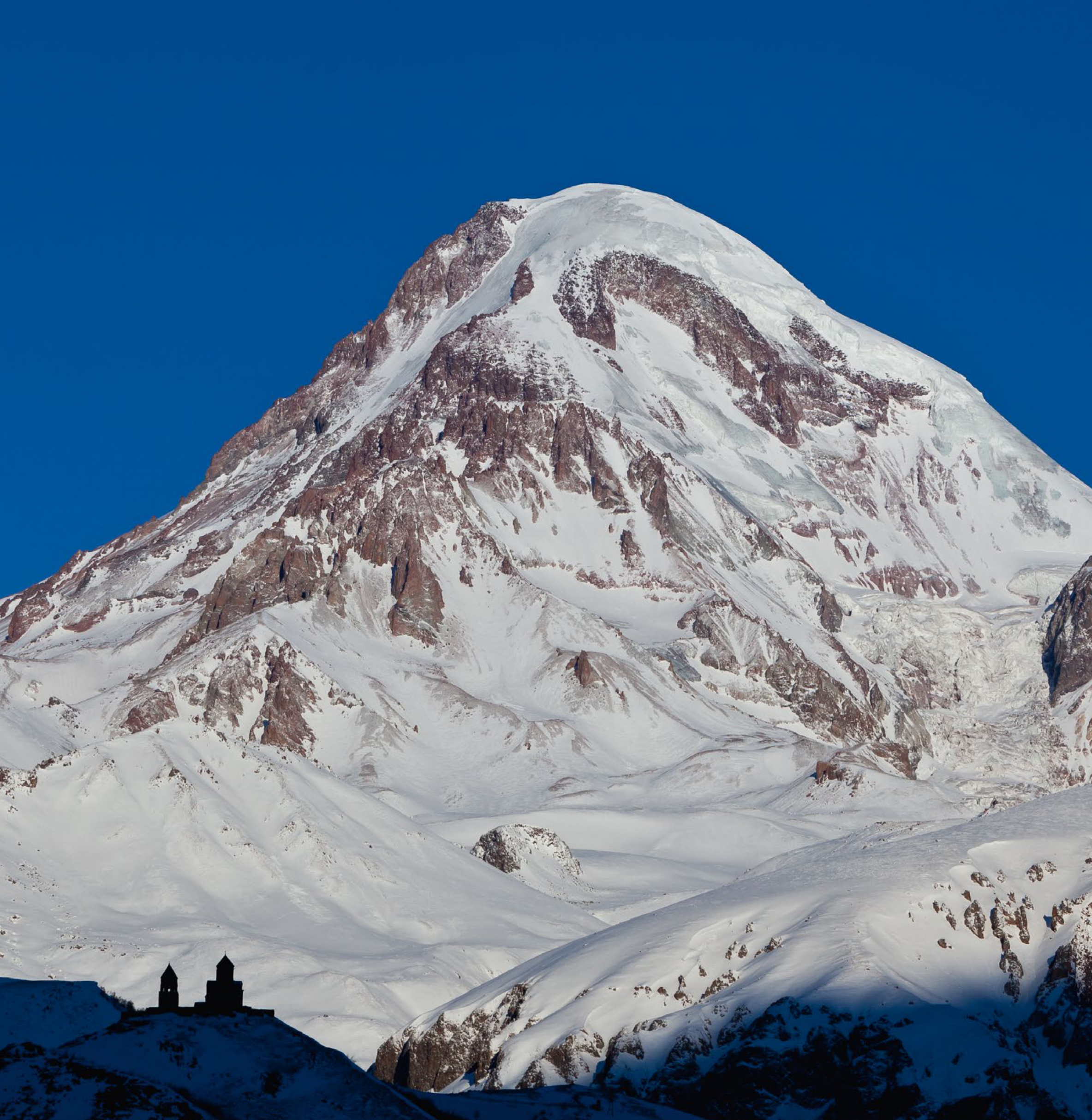
Georgien · Caucasus (Kazbek / Gudauri)
Georgia
Issue 2012 · Words: Anton Brey · Photos: Anton Brey · 5 min read
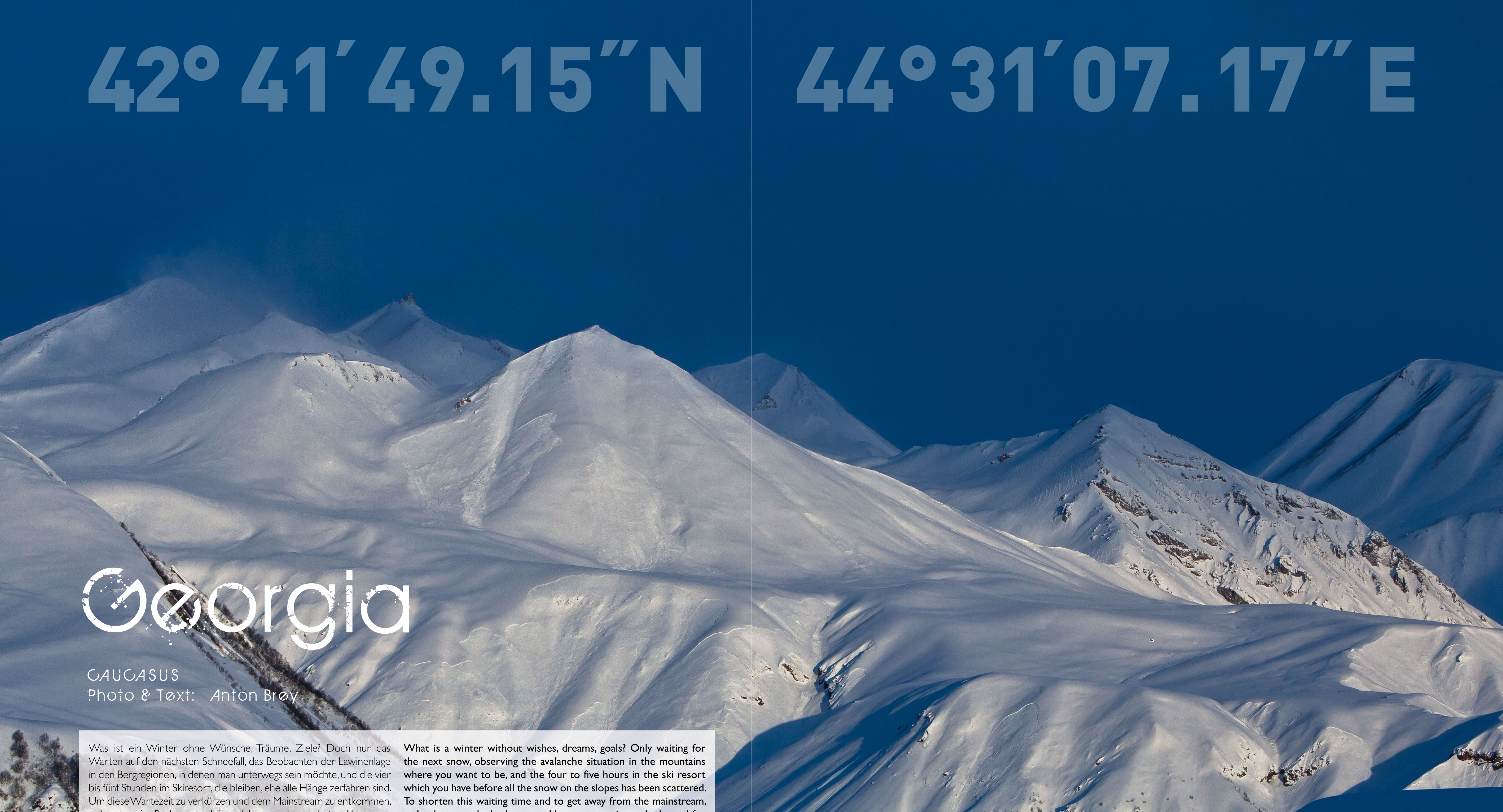
What is a winter without wishes, dreams, goals? Only waiting for the next snow, observing the avalanche situation in the mountains where you want to be, and the four to five hours in the ski resort …
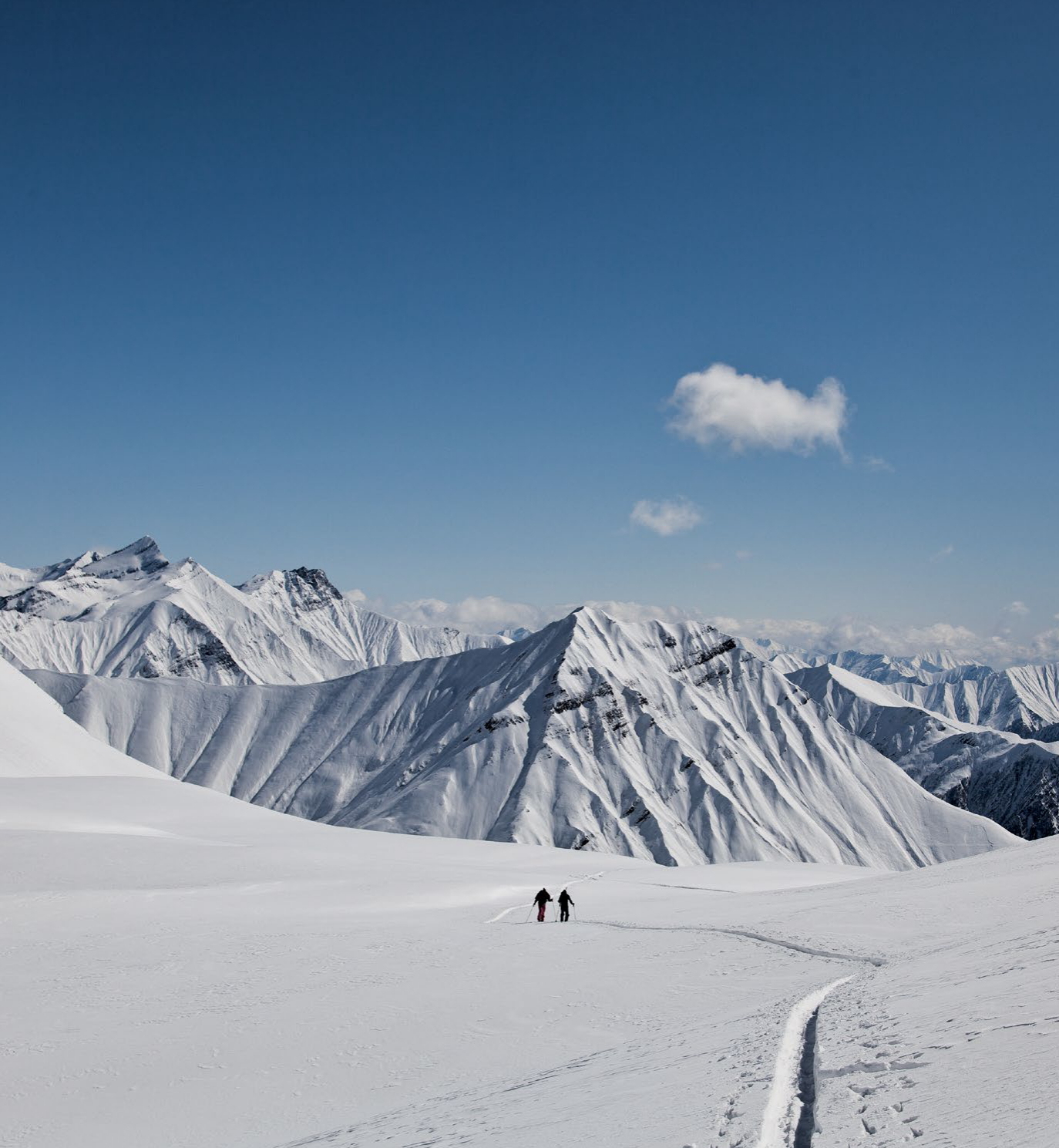
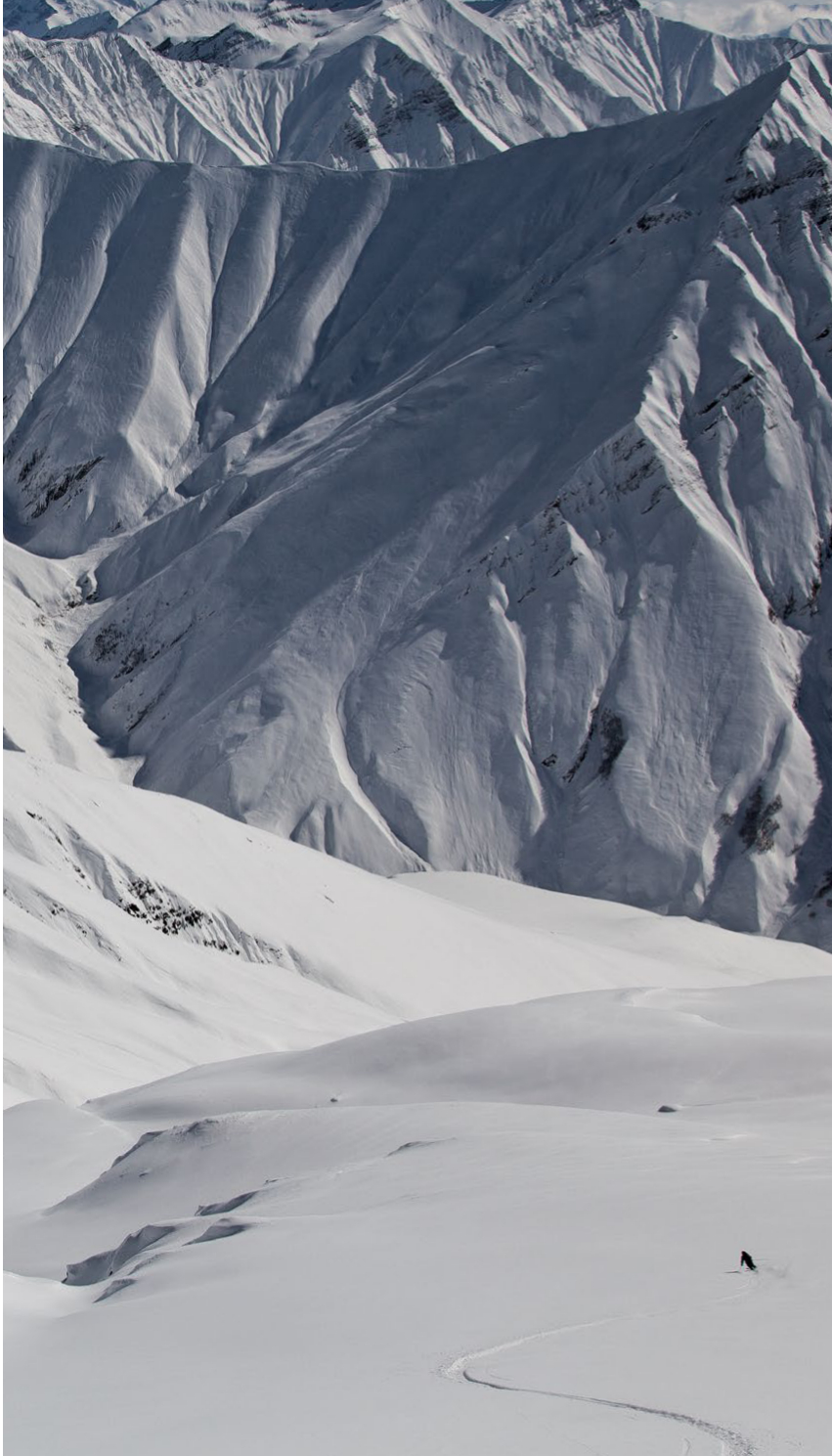
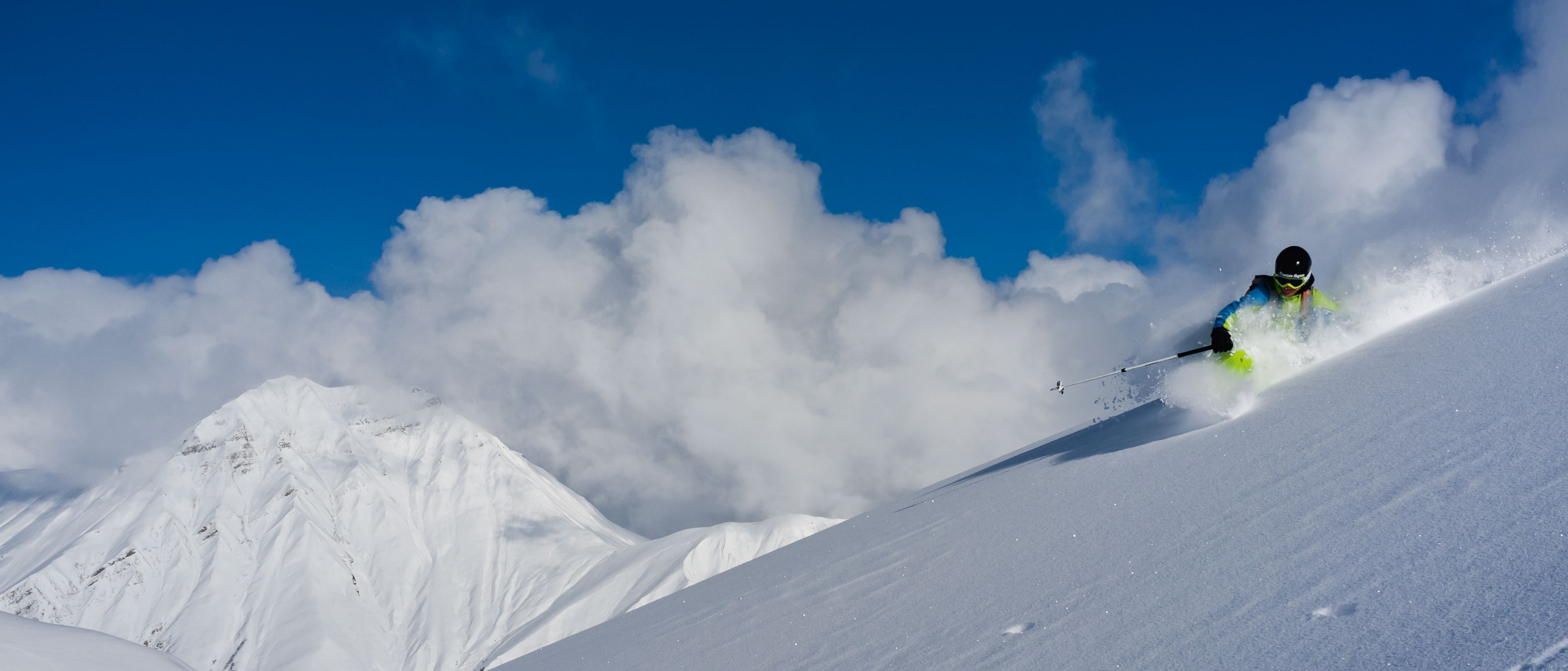
What is a winter without wishes, dreams, goals? Only waiting for the next snow, observing the avalanche situation in the mountains where you want to be, and the four to five hours in the ski resort which you have before all the snow on the slopes has been scattered. To shorten this waiting time and to get away from the mainstream, we're drawn to the backcountry. Here we experience the longed-for adventures, here, our dreams come true: Skiing in powder, discovering strange countries and mountains, meeting new people. Last winter, Georgia was on my wish list, a small country on the southern side of the Caucasus, the highest mountain range in Europe.
Here, Chacha, the traditional Georgian pomace brandy is served not only with the national dish Khachapuri, a cheese-filled flatbread, and filled pasta parcels called Khinkali. I joined a group of skiers, snowboarders and telemark skiers, all experienced tourers with conviction. Our target was Mount Kazbek (5,033 meters) at the Jvari Pass. At about five o'clock in the morning we landed in the Georgian capital Tiflis. A shuttle took us to the ski resort Gudauri, where we spent the first few days and waited until everyone had arrived. Even the drive there was an adventure: Police cars with constantly blaring sirens racing past us through the streets with signs illegible for us in exotic, Georgian letters.
Outside the town and its lights our driver soon felt tired, but the many potholes ensured he stayed awake. After an hour, we drove through snow and 15 kilometers on, a ten meter wide snowslide blocked the road. It was six o'clock in the morning and we couldn't expect a snow plough any time soon. So we got the avalanche shovels out of our luggage and got stuck in. After 45 minutes we had dug our way through – with Georgian support – and could continue our drive. We reached the road to the Jvari Pass. The rain turned into snow and the snow piled up continuously. During the following two days the snow fell until it was several meters high, so that we were stuck in the Gudauri Hut Hotel – apart from one attempt at flight to escape.
There, we had more than enough time to plan our stay. On the third day the weather improved and we took the opportunity to get to know the terrain and snow cover. The diagnosis was sobering: too much snow in too short a time. As there is no avalanche warning service in the Caucasus, we stayed another two days in Gudauri in order to get a better overview of the state of the snow. Smaller tours from the ski resort to the Kudebi (3,006 meters) and Sazele summits (3,300 meters) deepened our feel for the situation in the area. The weather forecast is better for the coming days. So we started out at the crack of dawn to get to the other side of the Jvari Pass via the Sazele. On the way to Stepantsminda we passed the village of Kobi.
This is where every vehicle has to wait whenever the pass is closed, and in winter that is the case almost every day. The pass is only opened in the morning and evening for a few hours. With our skis on our shoulders, we marched past the trucks, which, for better or for worse, are forced to hibernate – without any profile on their tires and with three chains wrapped around the wheel rims it was impossible for them to cross the pass. After this quick insight into road safety on the streets of Georgia, we continued our trip to Stepantsminda, the base for our three-day tour up Mount Kazbek. The night was short and the strong valley wind blowing around the house did its bit, too.
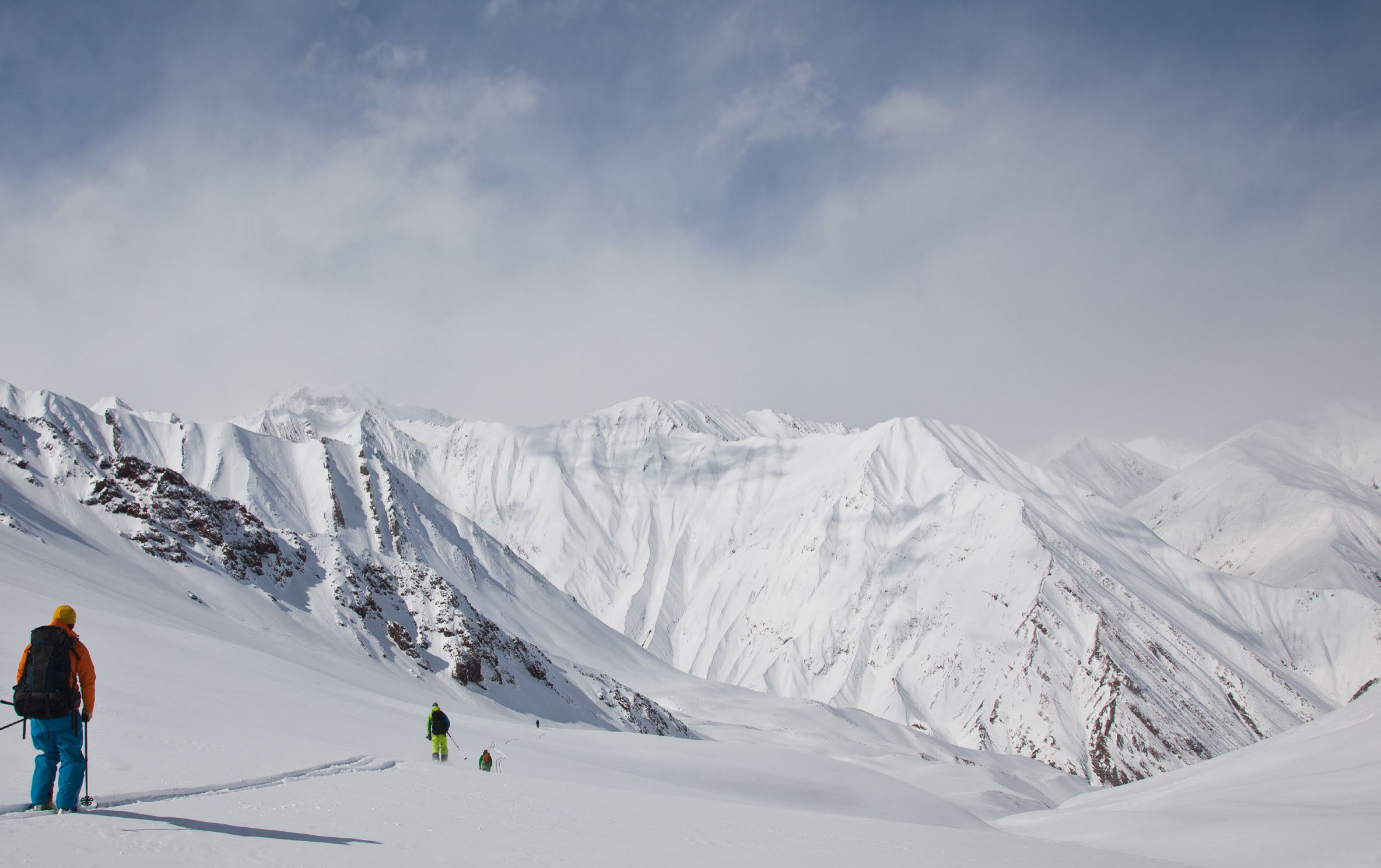
At about half past six, after an extensive breakfast, we went on our way to the Bethlemi Hut, a deserted Russian weather station, which should become our base for the following days. For the 1,900-meter ascent from our location at Kazbegi (1,740 meters) up to the Bethlemi Hut (3,680 meters) we calculated ten hours. The sun was rising when we plodded through the village. We made good progress up to the pilgrimage site of Zminda Sameba (2,050 meters) which, with its impressive domed church, belongs to one of the most photographed monasteries in Georgia. On the way, we passed two off-road vehicles, which had been surprised by winter. Only their roofs protruded from the snow.
Then we had to leave the slope which was protected from the wind, and reached the never-ending ridge, which we followed up for 700 height meters to the Sabertse Shrine at 2,900 meters. We arrived there at about 1 pm. Up to here we had made good progress considering the circumstances, except for the freezing cold and the uncomfortable, heavy backpack. Now we were at the crux, a 500 meter wide slope, exposed to the northeast, which barred our way to the Gergeti Glacier. The view became worse so we couldn't see the slope. Because of the direction the wind was blowing from we knew that the slope was extremely loaded with new snow. It was time to hear everybody's opinion and make a decision.
My decision caused very mixed feelings to rise inside me: frustration, quarreling with my weaker self, relief and disappointment for not reaching the set target. At Mount Kazbek there were too many factors against continuing. We decided to turn back. After all, the mountain isn't going anywhere and, God willing, a new chance will arise. Our tour days in the Caucasus show that we walk along a fine line when looking for adventures. At the end of a tour, it's never possible to say for sure how close you came to causing an avalanche. If you move in nature, you should do so humbly.