Japan · Hokkaido
Hokkaido
Issue 2011 · Words: Regina Lind · Photos: Christian Weiermann · 6 min read
In a karaoke bar, we can hear ourselves sing "No woman no cry" through an echoing microphone. Our travel crew - the snowboarder Regina Lind, the photographer Christian Weiermann, and the skiers Michi …
In a karaoke bar, we can hear ourselves sing "No woman no cry" through an echoing microphone. Our travel crew - the snowboarder Regina Lind, the photographer Christian Weiermann, and the skiers Michi Trojer, Peter Riesch and Florian Hellberg - is making a complete fool of itself singing karaoke. But we're having a lot of fun doing it. Two weeks full of colorful skiing and backcountry skiing impressions on the island of Hokkaido, in northern Japan, are behind us. Immediately after our arrival at the airport it becomes clear that things work quite differently here. Driving our rental car on the "wrong" side of the road demands quite a bit of concentration at first, and elicits the occasional energetic advice from passengers: left!
Consequently, we're moving at a leisurely pace. On Hokkaido the speed limit for country roads is 50 km/h and even on the highway it only allows a mighty ten extra kilometers per hour. During the drive to Niseko, our first destination, we get our first taste of a Japanese winter: The road is covered in 30 centimeters of powder snow and at minus 8 degrees it seems as if we're driving straight into a snow cannon. The unique thing about Japan is a climatic confluence whereby the continental cold air from Russia and China pushes underneath moist sea air to create enormous precipitation. We are lucky enough to witness this phenomenon the next morning, and enjoy one of this area's legendary powder days in a meter of fresh snow.
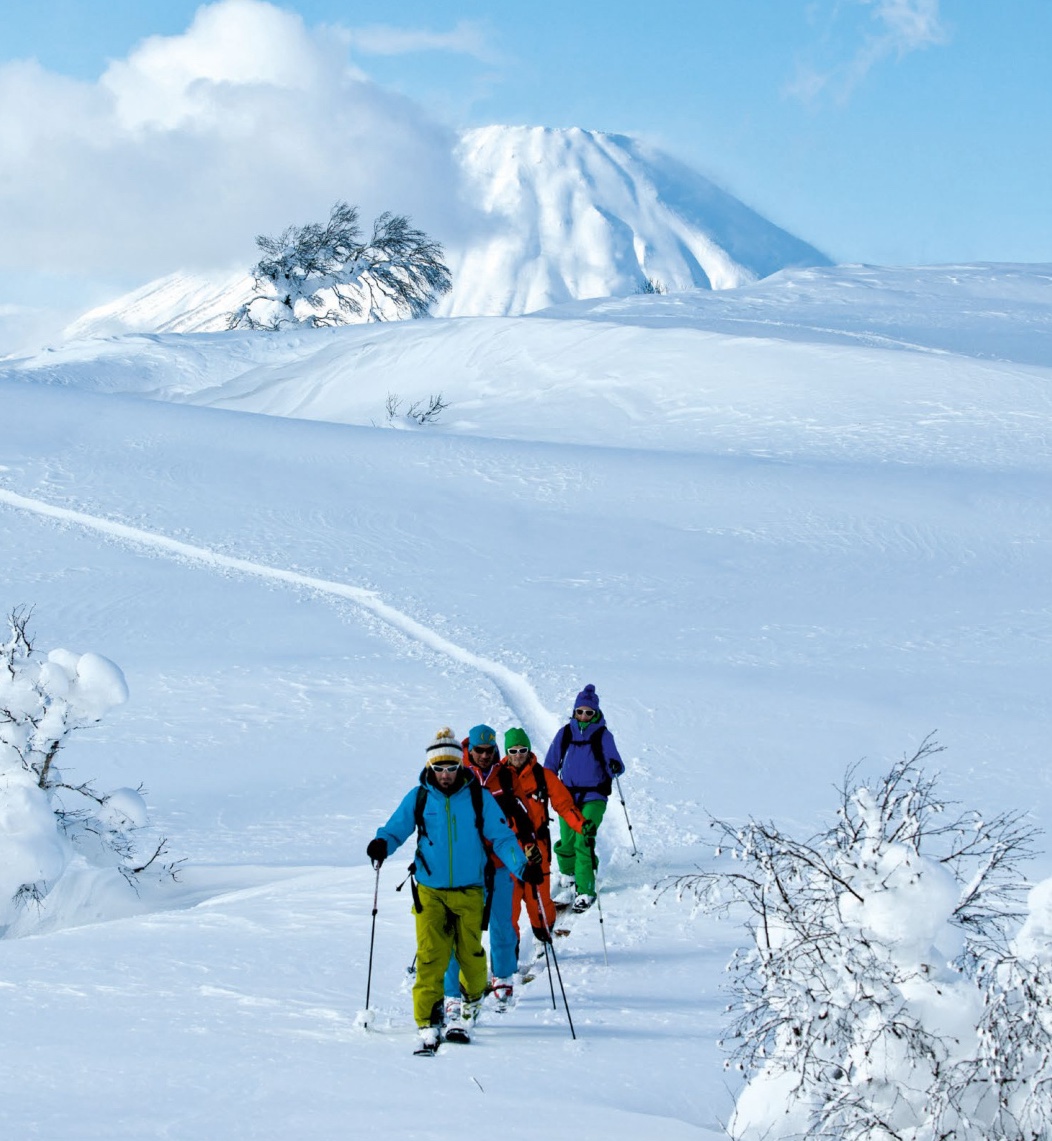
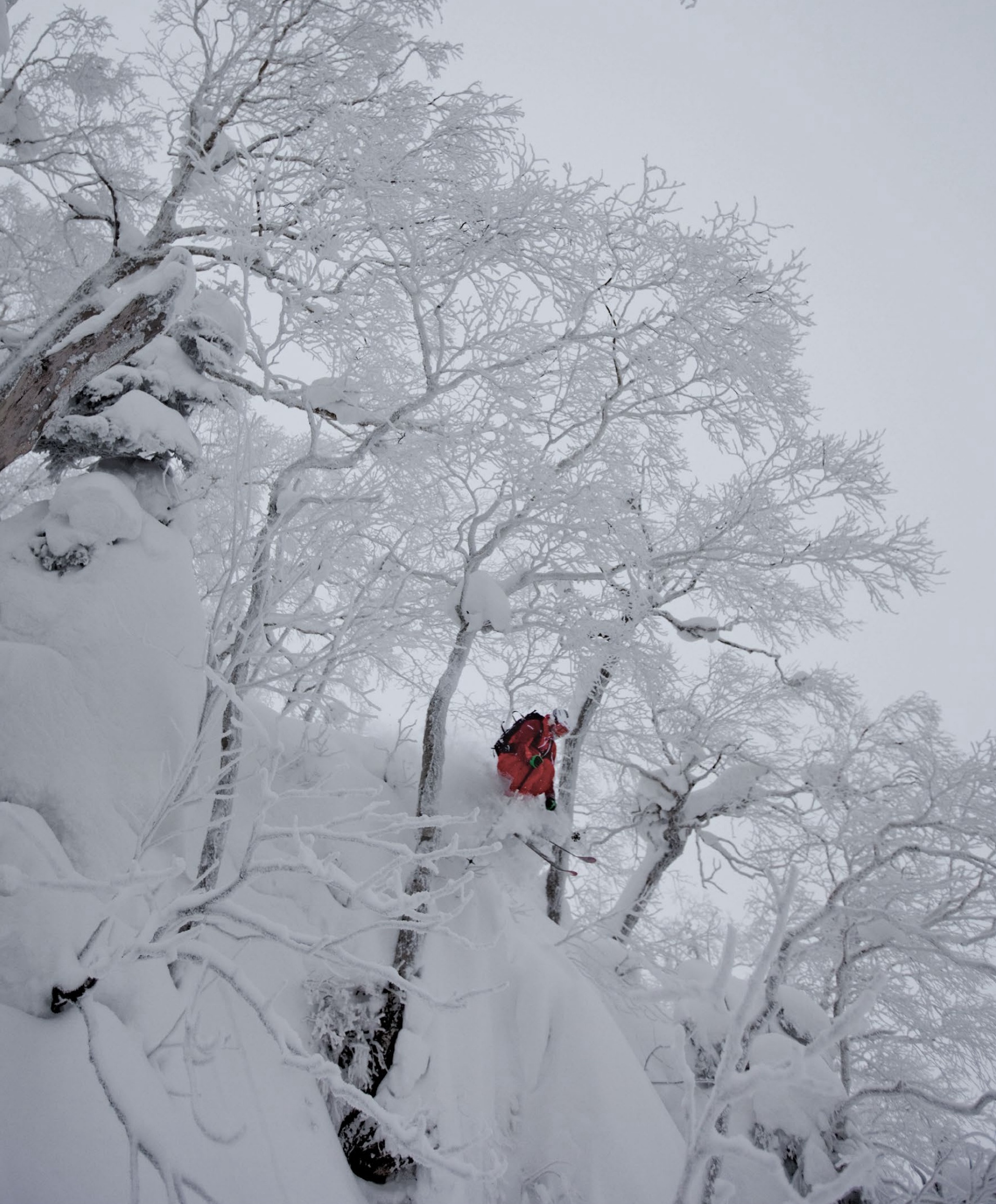
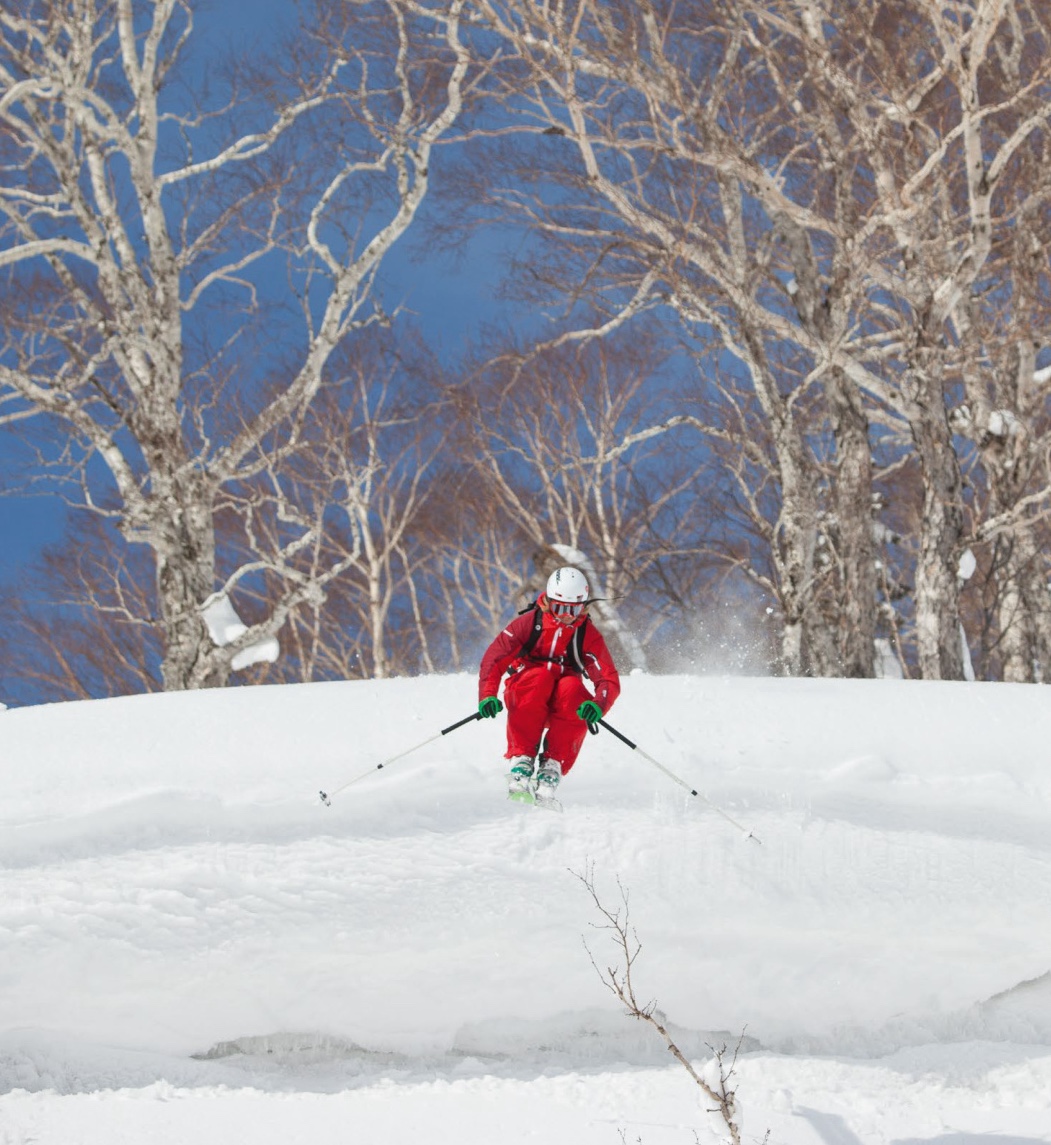
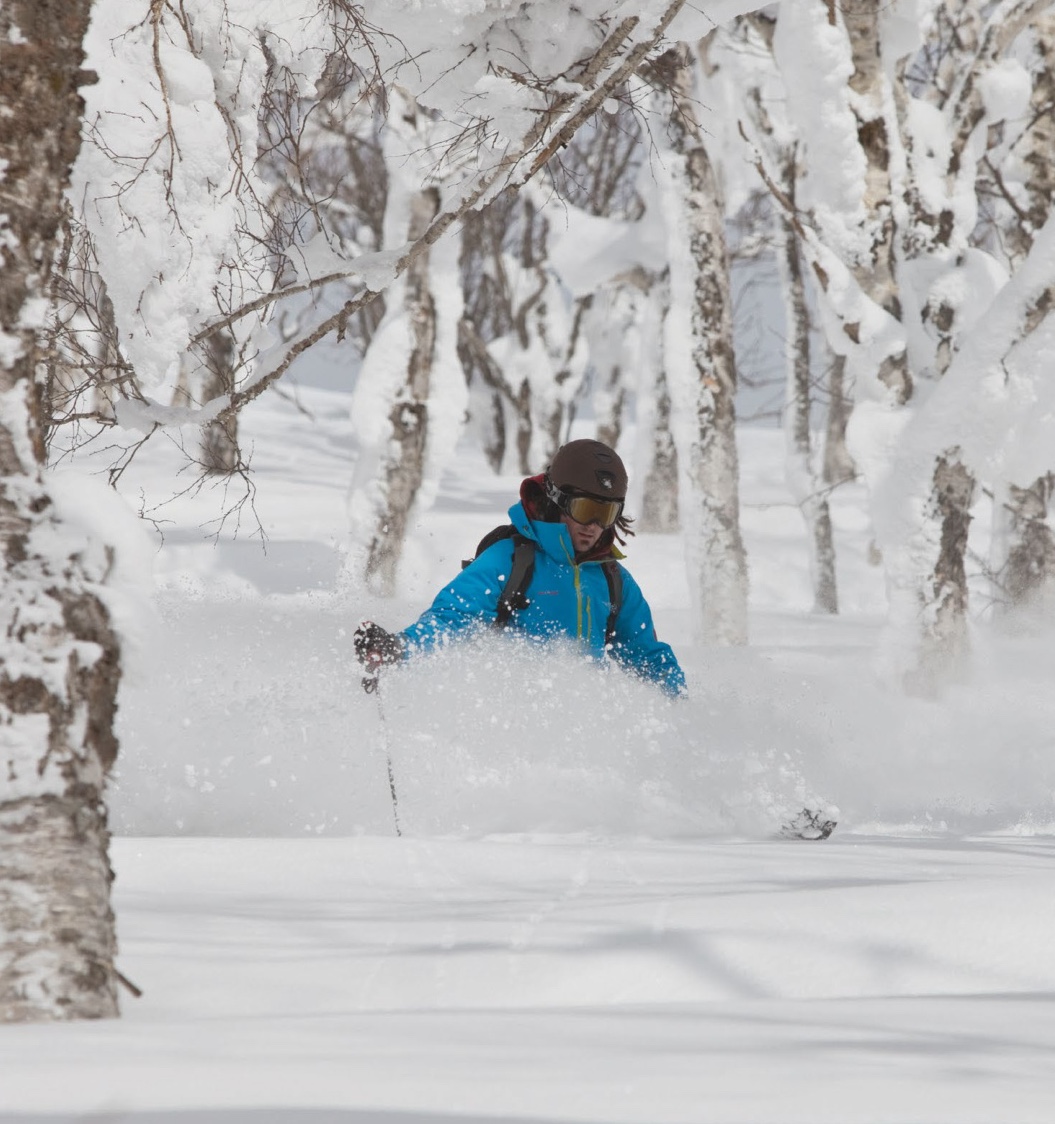
The terrain at the volcano is characterized by thin birch forests, which are perfect for skiing even in poor visibility. The powder is so deep that we have to take care just to keep our airways clear, and to keep our own spray from entirely blocking our view. There's no time for photos, so we're just enjoying the powder. Our goal in Niseko is to climb Mt. Yotei, a 1,898 meters high volcano situated completely on its own. In the evening, the clouds thin out completely and for the first time we can see our target for the next day. The weather forecast is good and temperatures are a little warmer than predicted - around minus 5 degrees. These are good conditions for our plan. After an extensive Japanese breakfast we begin with the ascent.
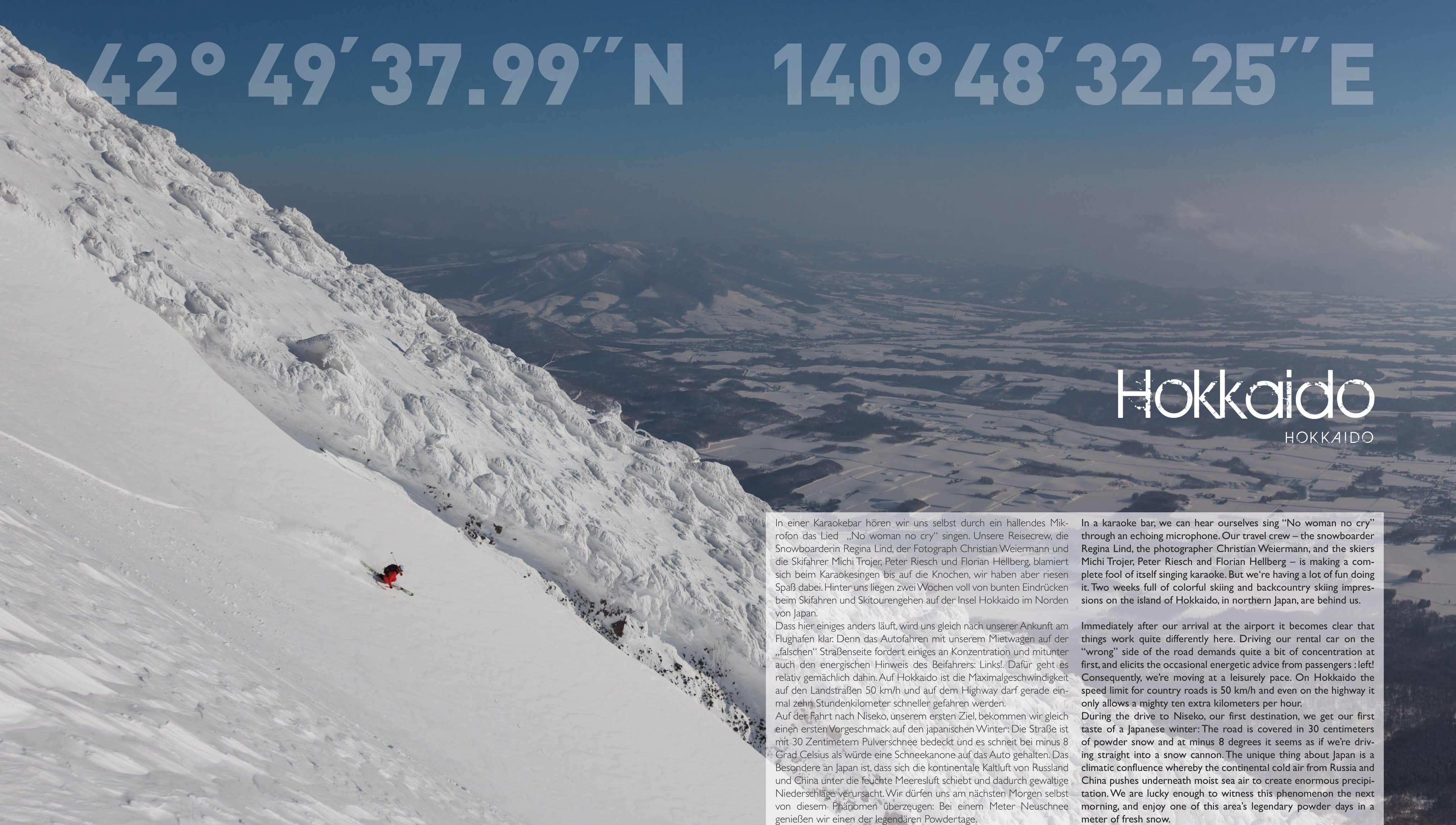
It leads us through beautiful birch forests with impressive frost formations then into open country. The last meters up to the crater's edge are a little treacherous as big hollows have been formed in warm spots that collapse when walked on. Time and again a slight smell of sulfur reaches our nostrils. At the top of the crater we get a view over the whole region and across to the sea. We can't resist the temptation, and add another 150 meters of total altitude to our climb so we can ski down into the crater. As the crater is sheltered from the wind, the snow is great, and the perspective of going into a nearly circular volcano crater is impressive.
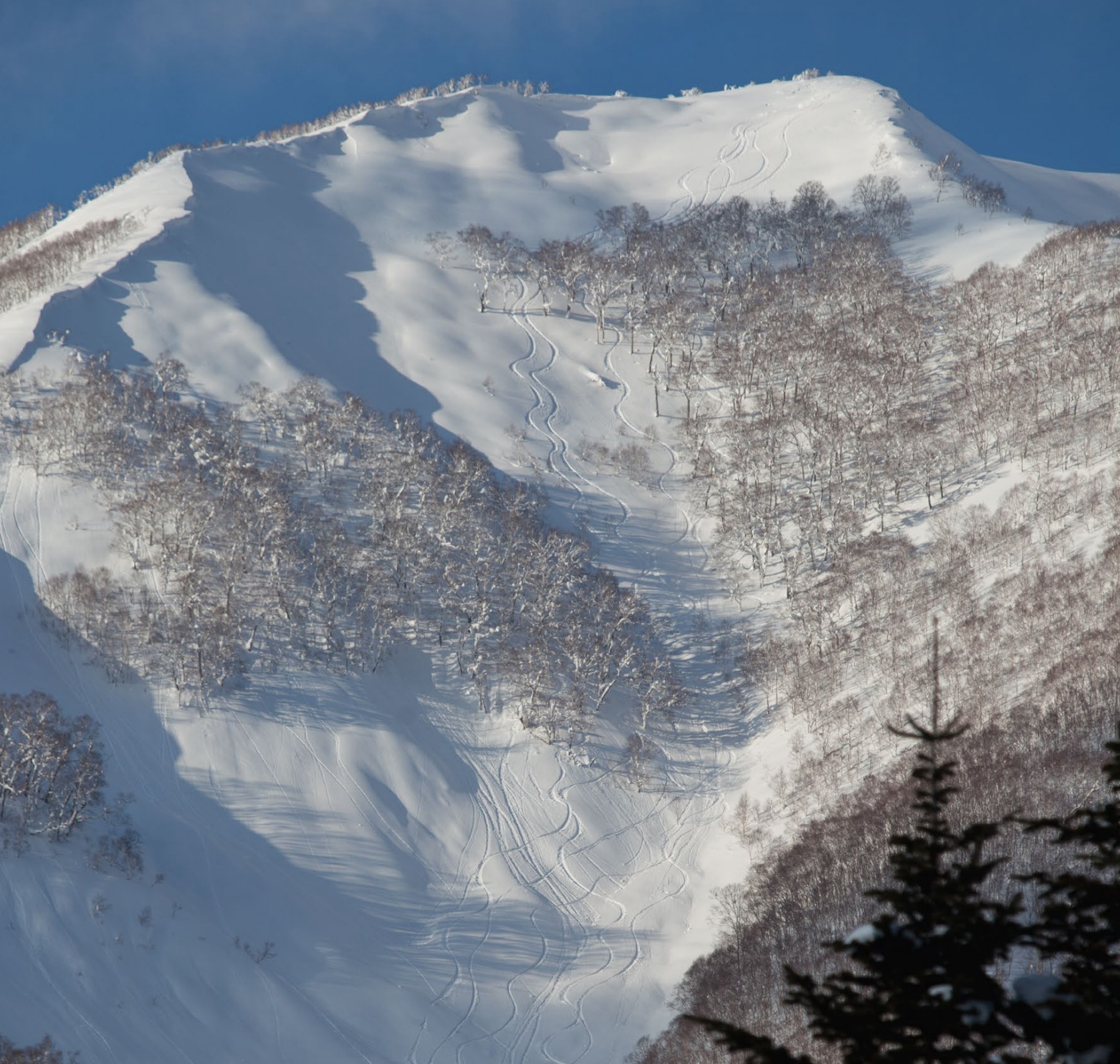
After the little ascent back to the edge of the crater, we look for the entrance into the gully which we had planned for our descent. Due to the consistent temperatures and the abundant precipitation, the blanket of snow is very stable. No danger stands in the way of our descent, and every one of us can choose a different gully to ski down. A must to round off any tour day is a visit to an Onsen, a traditional hot natural spring. After a few days of blue sky and sunshine we have a déjà-vu on the road to Asahidake. Again, strong snowfalls set in and the corners of our mouths drift up to our ears. For the next day the weather forecast predicts better weather. Amongst outdoor ozone, surrounded by high snowdrifts, we plan the tour up Mt.
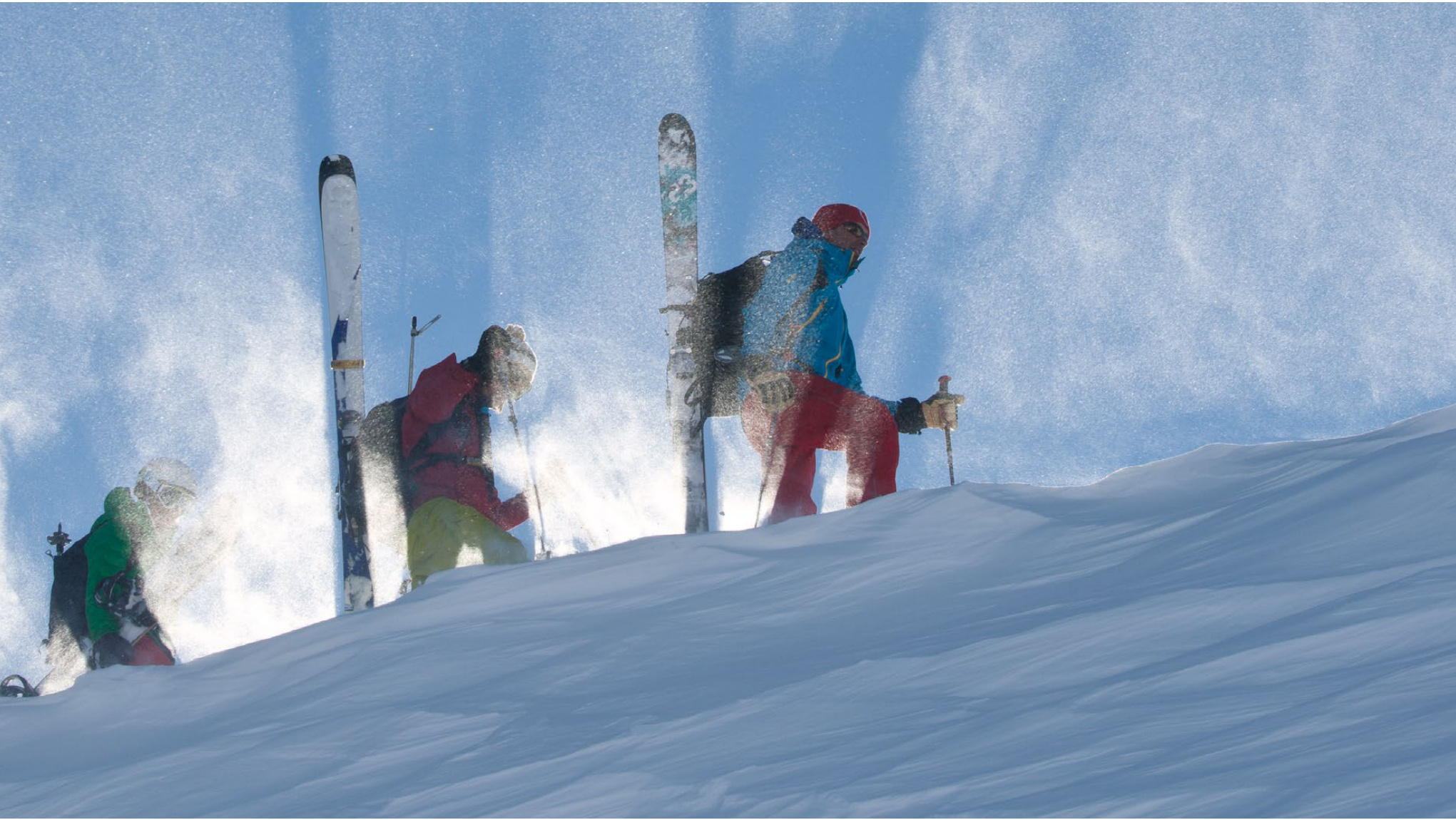
Asahidake (2,290 meters) for the next day. With this tour we have to be careful about another alpine danger – sulfur springs. Soon we see the giant white clouds shooting out of the snow surface. Luckily our route of ascent is on the windward side of the springs and therefore we are spared the gentle aroma of rotten eggs. Amongst strong wind and icy temperatures we enjoy the wonderful distant panorama at the summit for a short time. Then we sally out to descend. We are especially taken with the eastern slope of the mountain, which allows all of us to find our own lines. After a few turns the bones have defrosted, and we can enjoy the long descent into the valley.
Because of the aforementioned reduced speed for travelling, we have to adapt our travel plans. Thus, the 600-kilometers car drive to Shiretoko National Park turns into a two-day tour. But that gives us the chance to get to know the different facets of this island and to make contact with people beyond the tourist spots. At nightfall, we decide to spend the night in the next village. As we neither understand Japanese characters nor find Roman characters anywhere, we ask a local woman for accommodation. Thanks to Flos' charm and a few bits of Japanese, the woman skips her gymnastics class and takes us to a small guesthouse at the edge of the village.
We soon discover that we are the only guests in the only guesthouse in the second smallest village on Hokkaido. Word of our arrival spreads quickly and before we know it we are sitting at a table with the owner of the guesthouse, our newly met companion, her daughter, and other villagers, who offer us local specialties to savor. Through the entire evening there's a busy exchange of information and a display of wonderful Japanese hospitality, which we should use as an example for ourselves. With brilliant sunshine we drive on along the coast in an easterly direction, our attention dominated by the white spots on the sea. Finally we get to see the ice drift.
Naturally, we look for the first chance to make contact with the ice floes which float from Alaska to the northeast coast of Hokkaido. In the background, we can recognize the first mountains, and from afar they look like perfect targets for our ski tour tomorrow featuring descents down to the polar sea. As day fades into evening we experience a wonderful sunset over the Sea of Okhotsk. Once in our accommodation, the weather forecast doesn't promise anything good for the coming day. Instead the sea is roaring and huge waves throw the ice floes around. Due to these conditions and the fact that there aren't enough maps for our chosen goal, Mt. Rausu, we reluctantly decide to stay at the sea and start travelling back to Sapporo around midday.
Before we end our trip to Japan we also get to know the Japanese gambling game of Patchenko, which takes place in the epitome of a gambling den. The hall with hundreds of gambling machines and excessive noise from the loudspeakers and the gambling machines overstimulate us completely, and shows us the less quiet and reserved side of Japan. We prefer the cozy karaoke bar where we retreat, and our very impressive trip fades away amongst bizarre singing performances.