Mongolei · Tavan Bogd (Altai)
Into the Unknown – Mongolia
Issue 2013 · Words: Stephan Skrobar · Photos: Zlu Haller · 5 min read
Uka looked worried. Usually he was the relaxed "You don't worry, my friend" kind of guy. And our cook. But now, he exchanged concerned looks with the Mongolian translator, Tsogo. The kitchen tent was …
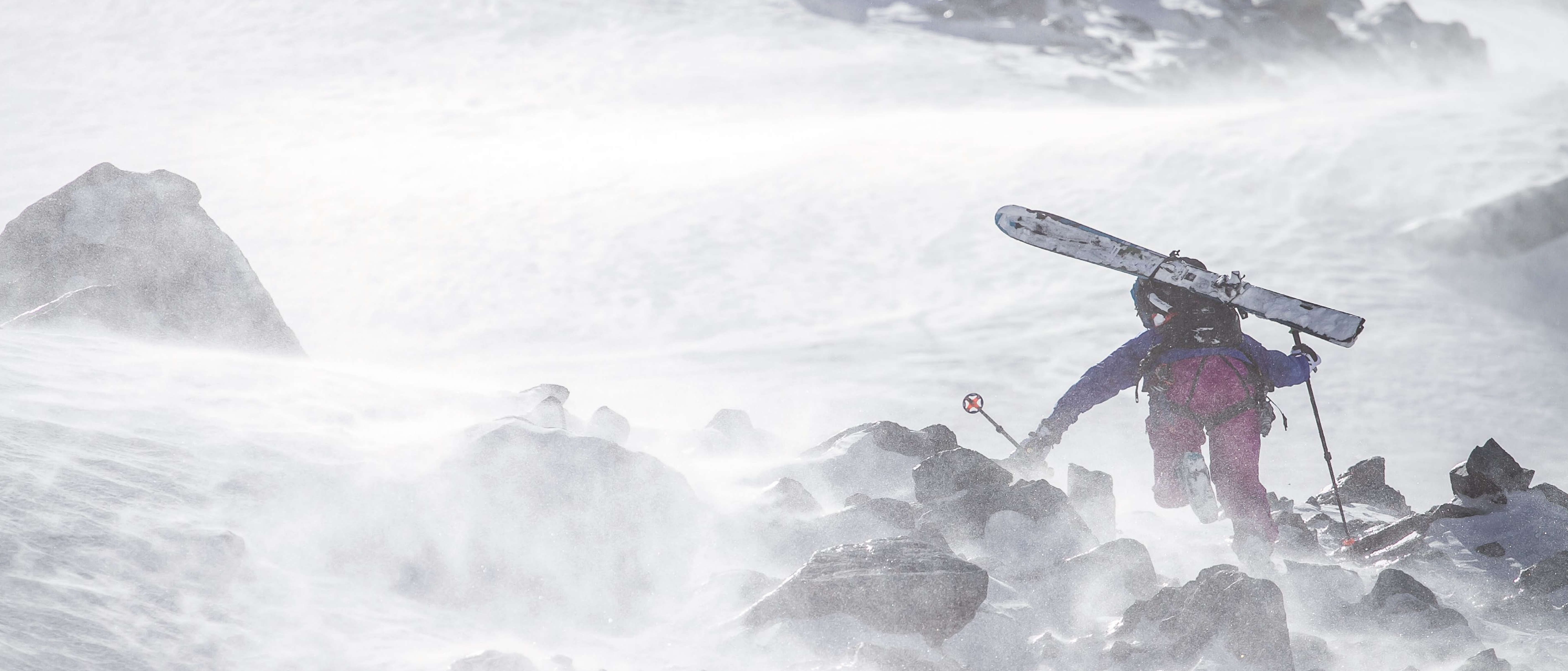
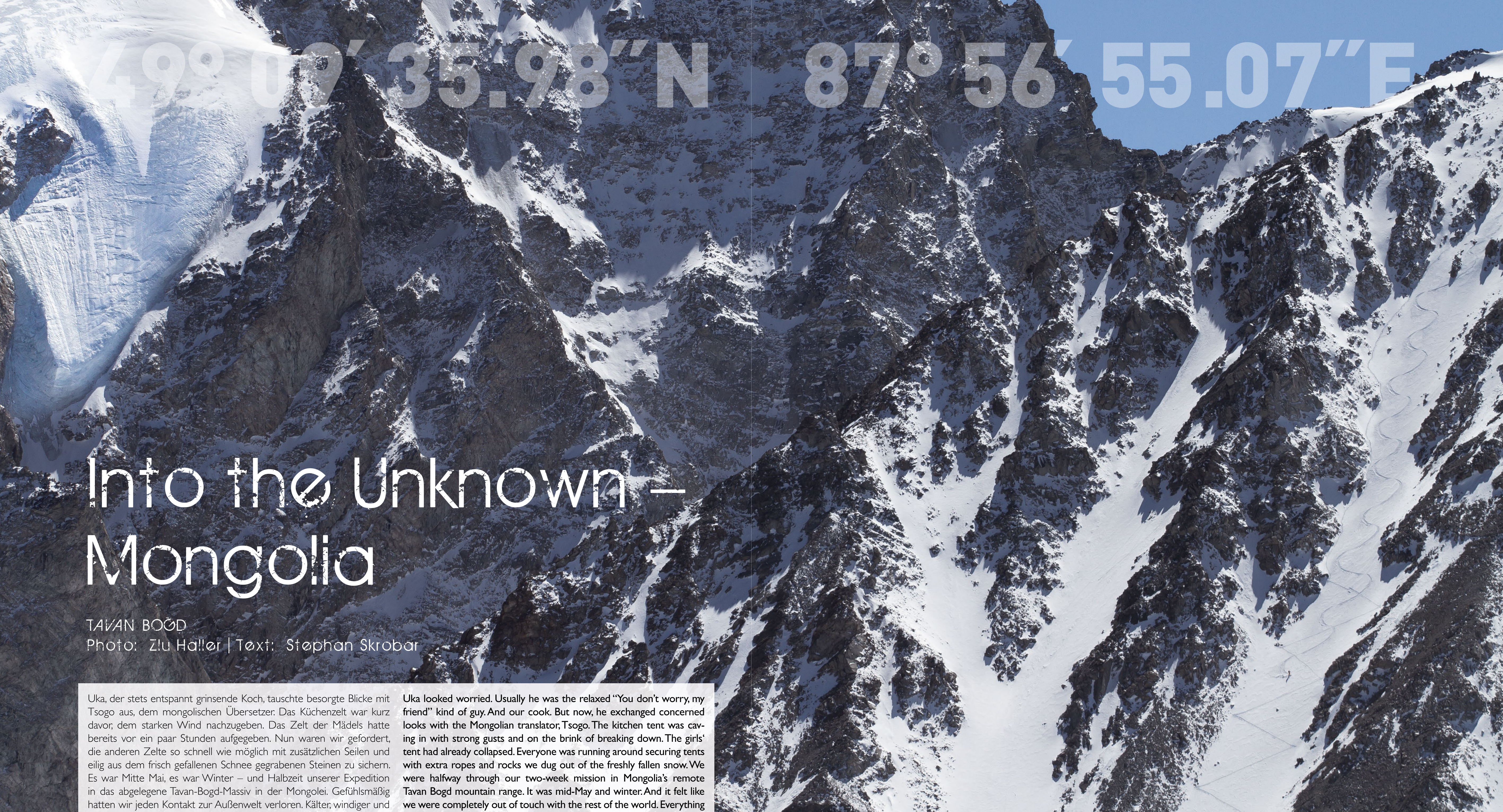
Uka looked worried. Usually he was the relaxed "You don't worry, my friend" kind of guy. And our cook. But now, he exchanged concerned looks with the Mongolian translator, Tsogo. The kitchen tent was caving in with strong gusts and on the brink of breaking down. The girls' tent had already collapsed. Everyone was running around securing tents with extra ropes and rocks we dug out of the freshly fallen snow. We were halfway through our two-week mission in Mongolia's remote Tavan Bogd mountain range. It was mid-May and winter. And it felt like we were completely out of touch with the rest of the world.
Everything was colder, windier and icier than expected, but when the weather was clear it was also more impressive and overwhelming under a sky that was bigger than you could ever imagine. We came to explore these mountains, find interesting skiable lines and bag a few of the 4,000-meter peaks along the way. Melissa Presslaber, arguably one of the strongest big mountain skiers in Austria, came up with the idea. She put together a team of like-minded ski mountaineers for this trip: Liz Kristoferitsch holds the Austrian Snowboard Freeride Masters title, Michi Mayrhofer competes in freeride contests, Zlu Haller is a well-known Austrian climber and photographer, Tom Andrillon is an accomplished French filmmaker and I, Stephan Skrobar, run a freeride center in Austria.
Organizing the trip was a drag, but part of the experience. Getting immunization shots (expensive), obtaining visa and border permits (complicated), brushing up on rescue technique (necessary), wooing sponsors for gear (part of the game) and finally trying to fit everything into bags that won't exceed airline limitations and won't freak out airport staff. We failed miserably at the latter. Once in Ulan Bator, the capital of Mongolia, we hooked up with Mongolia Expeditions who handled the logistics of our trip to the Altai. It was absolutely necessary to have a local partner organizing food and transport and eventually bringing us a lot closer to the Mongolian culture and way of life.
Olgii is a small city in the Bayan Olgii Aimag in Western Mongolia where we ended up spending a few days before and after our time in the mountains. Olgii has a mentionable relaxed, friendly vibe. It is a place where cows battle it out with the few traffic lights, and the sun settles in an incredibly warm magenta. From there we headed further west, leaving civilization It was a one-day trip through the steppe in one of those unbreakable Russian vans, designed to go on roads where there is no roads. The end of the path marked the end of the day, so we camped and individually contemplated the upcoming days and what animals roamed outside our tents. Wild horses, sheep, yak, wolves, bears, wolverines.
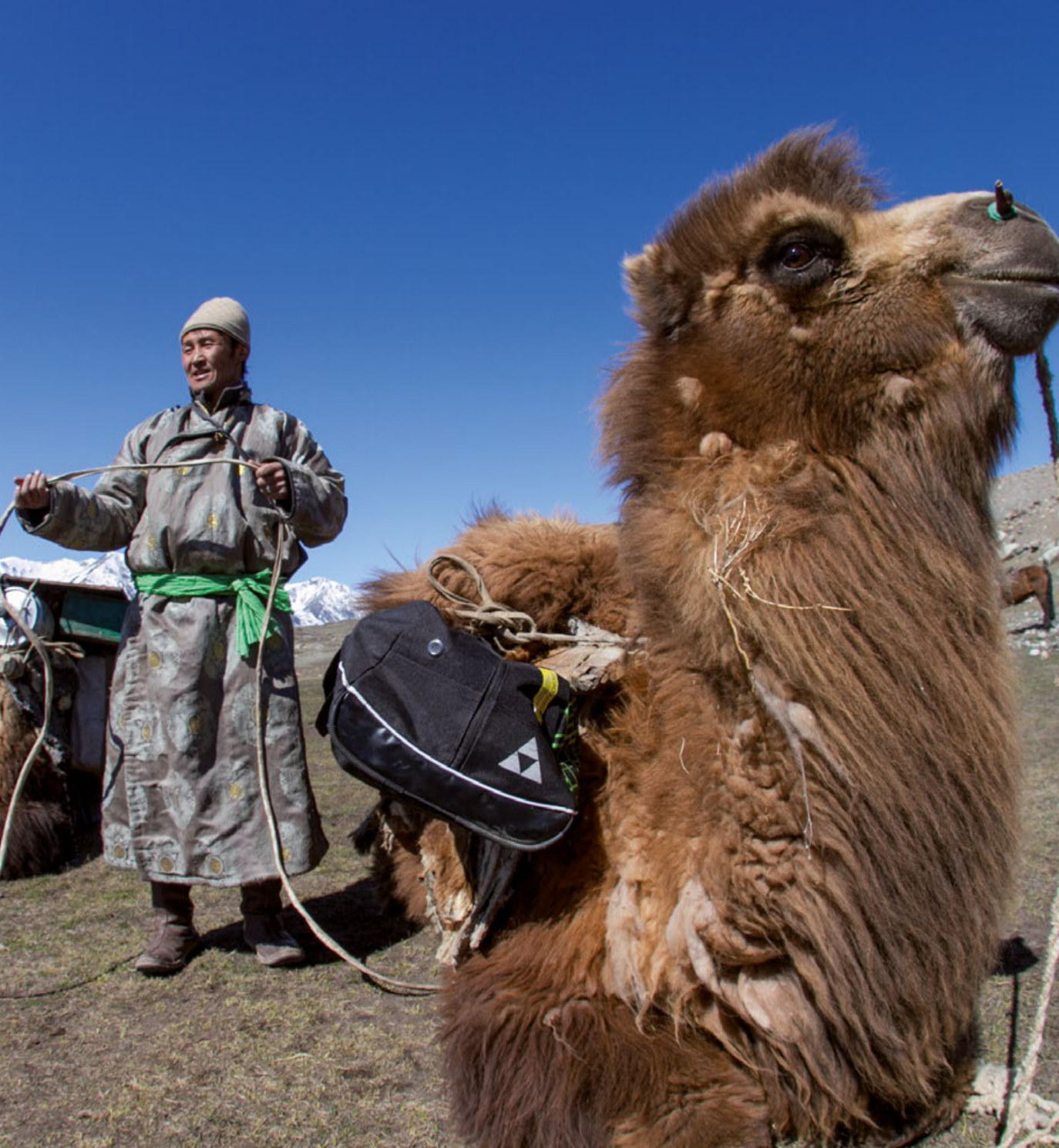
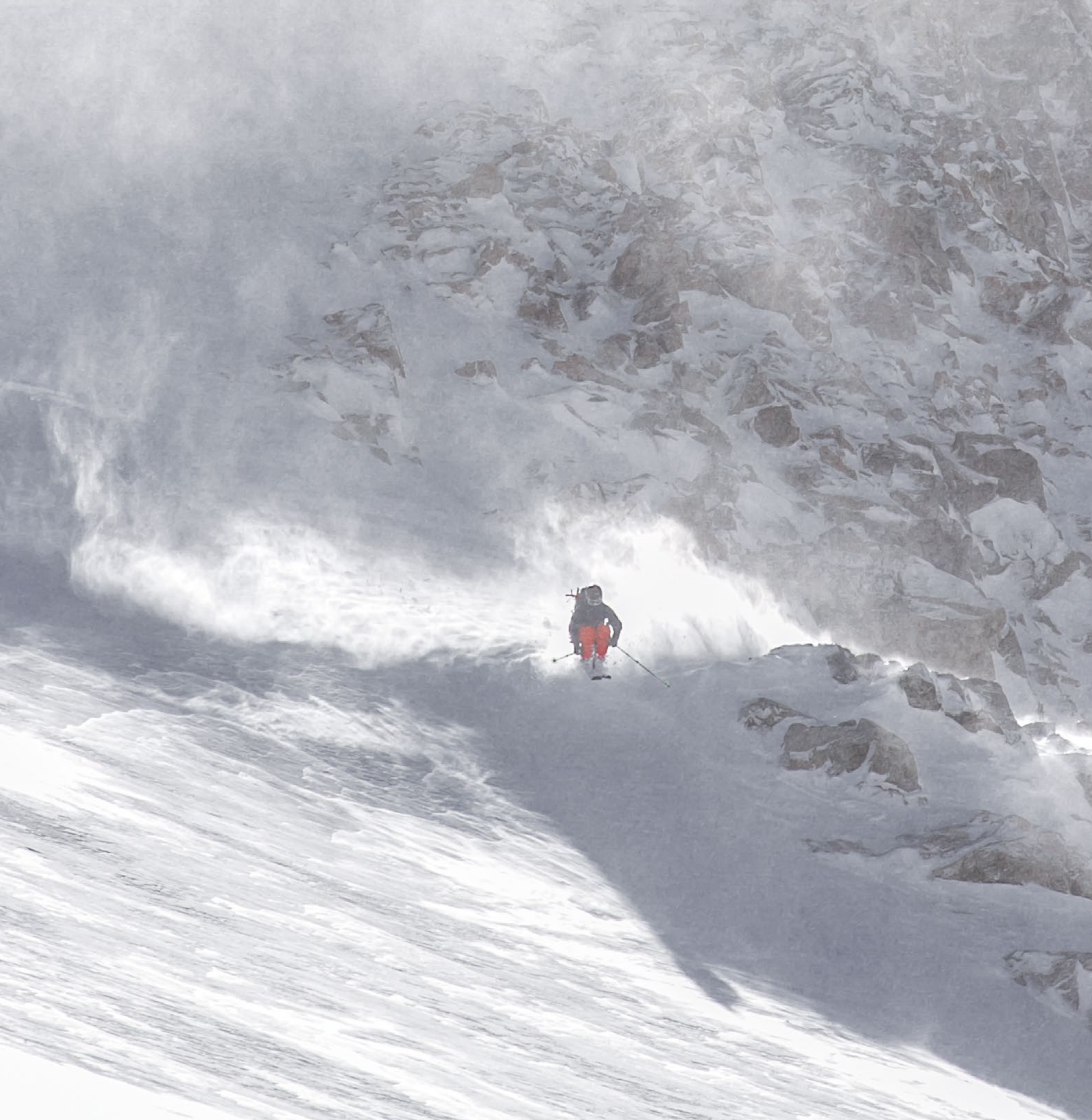
Camels took our gear up to base camp as we started the six-hour hike, regularly stopping wide-eyed and drooling while scoping the mountains. Bigger, icier, wider, colder, and windier than anticipated. Preparing for the Tavan Bogd range was difficult. The only map we had was a blurred Russian printout from 1969. Literature was rare: As far as we knew the first time a ski touched these areas was only ten years ago. We relied on our eyes, judgment, the daily weather report from Innsbruck via satellite. Snow conditions were different than expected; the exposure and hard winds coming in from China greatly affected the snowpack. The skiing, honestly said, wasn't fun.
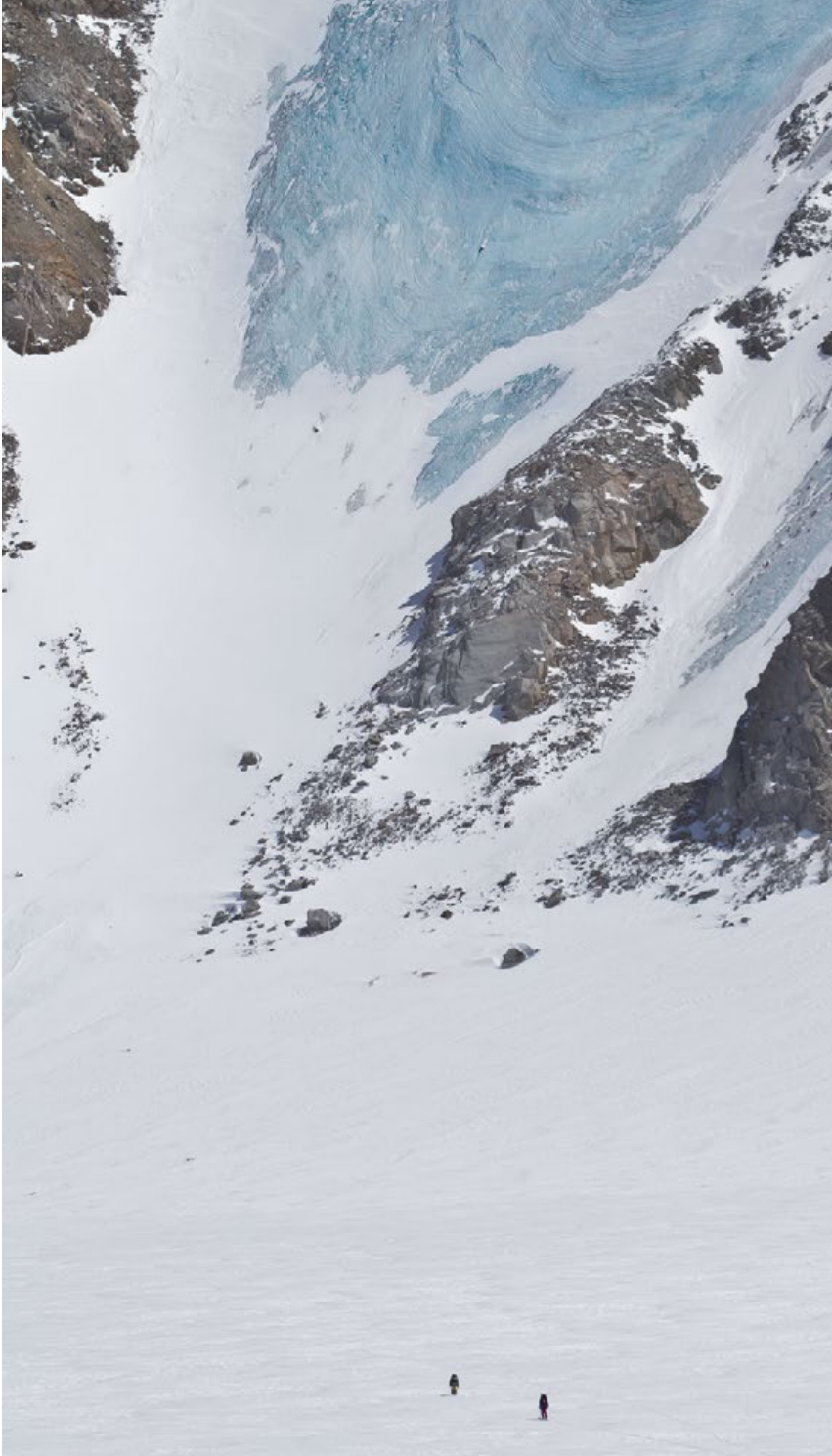
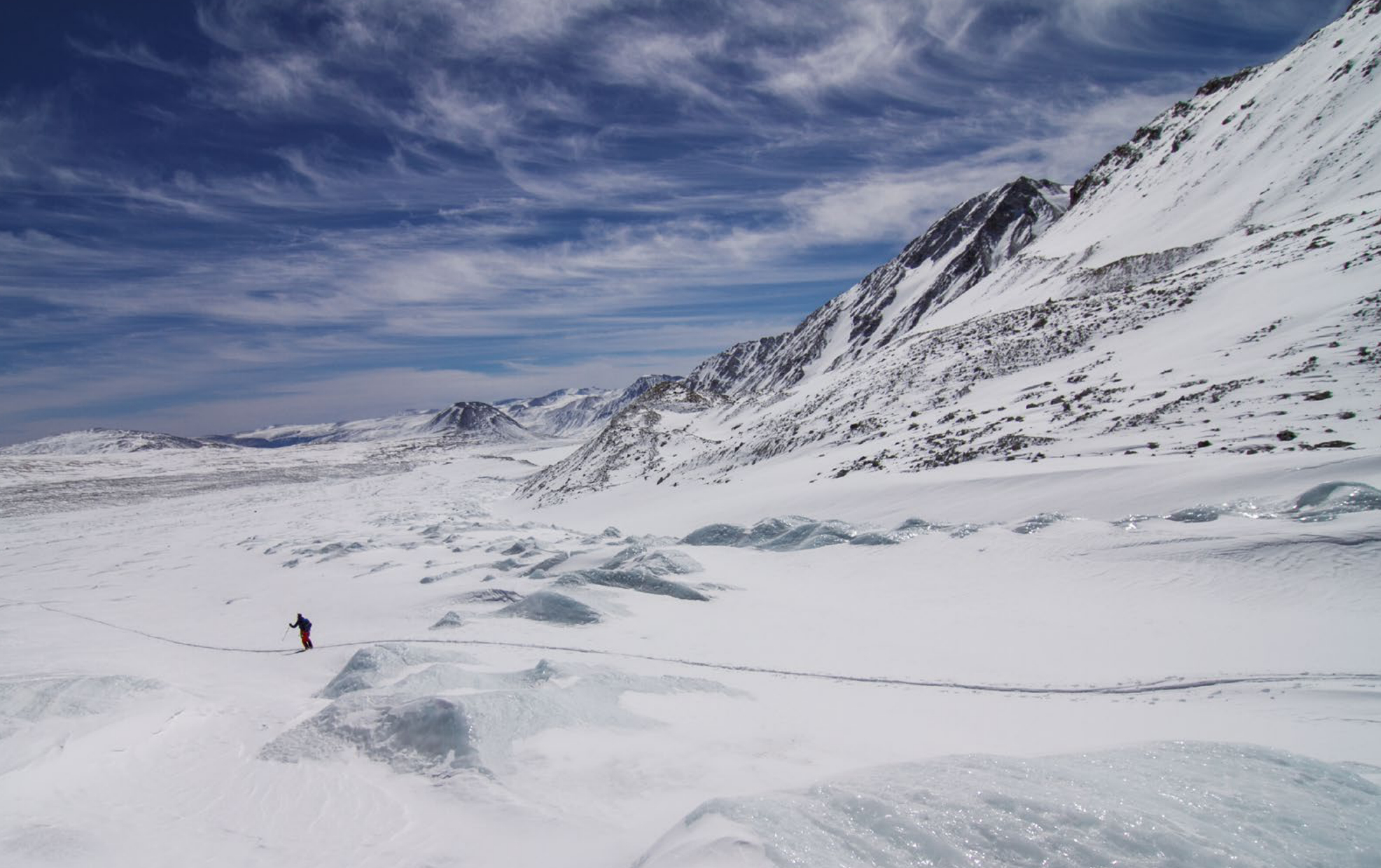
We set up camp at just below 3,100 meters altitude, behind the moraine of the gigantic Potanin glacier. Life at base camp meant getting used to constantly living in various layers of down jackets, eating horse meat and discussing how to deal with the thick sheets of ice that covered pretty much every mountain face we looked at. At least the latter was going to be partly solved by the snowstorms that were to hit us later. We started exploring the area by climbing the mountain furthest away from base camp, Nairamdal. This peak is an easy but long hike to the end of the Potanin glacier and marks the border between Mongolia, China, and Russia.
That's about the only interesting thing to say about it, apart from the fact that the view is nice from up there. Russia to your right, China to your left, that is pretty special. But finally we got down to the serious business of freeski mountaineering. Not so much focusing on the actual summits, but on interesting lines that we spotted on their faces. We started with obvious but intriguing couloirs on Burgit, the mountain across from our base camp, and then ventured on to Naran, a beautiful mountain located between the Potanin and Alexander glaciers. We climbed those couloirs alone or in small teams.
Each single climb and descent added to the sensation of being far away from civilization and possible help, but also intensified our awareness and the overall experience. After five days in the camp snowstorms hit the mountains. We spent two days with crisis management, debating weather reports, moving our base camp to a Ger – a sturdy Mongolian tent – playing cards and hiding in the sleeping bag. When the skies finally cleared it got even colder, the snowpack was deeper and wind-blown. We stoically skied big faces that looked good on film but turned out to be fairly difficult to ski. And finally, on our last day, we left camp early to hike up Hüiten and ski its impressive northeast face. Hüiten is Mongolia's highest peak with 4,374 meters.
The forecast promised a sunny, albeit cold and windy day. It turned out the weather report was only partially right. When we reached the summit ridge after a seven-hour hike, another snowstorm hit us from China. We did the only smart and responsible thing and surrendered just below the summit, naturally frustrated at the very moment. A few days later, we returned to Olgii with a mixed feeling of achievement and failure. Of course it was neither. In reality, it was an unbelievable trip to a unique country.