Italien · Dolomites (Sexten / Pustertal)
It is What It is
Issue 2020 · Words: Anton Brey · Photos: Anton Brey · 5 min read
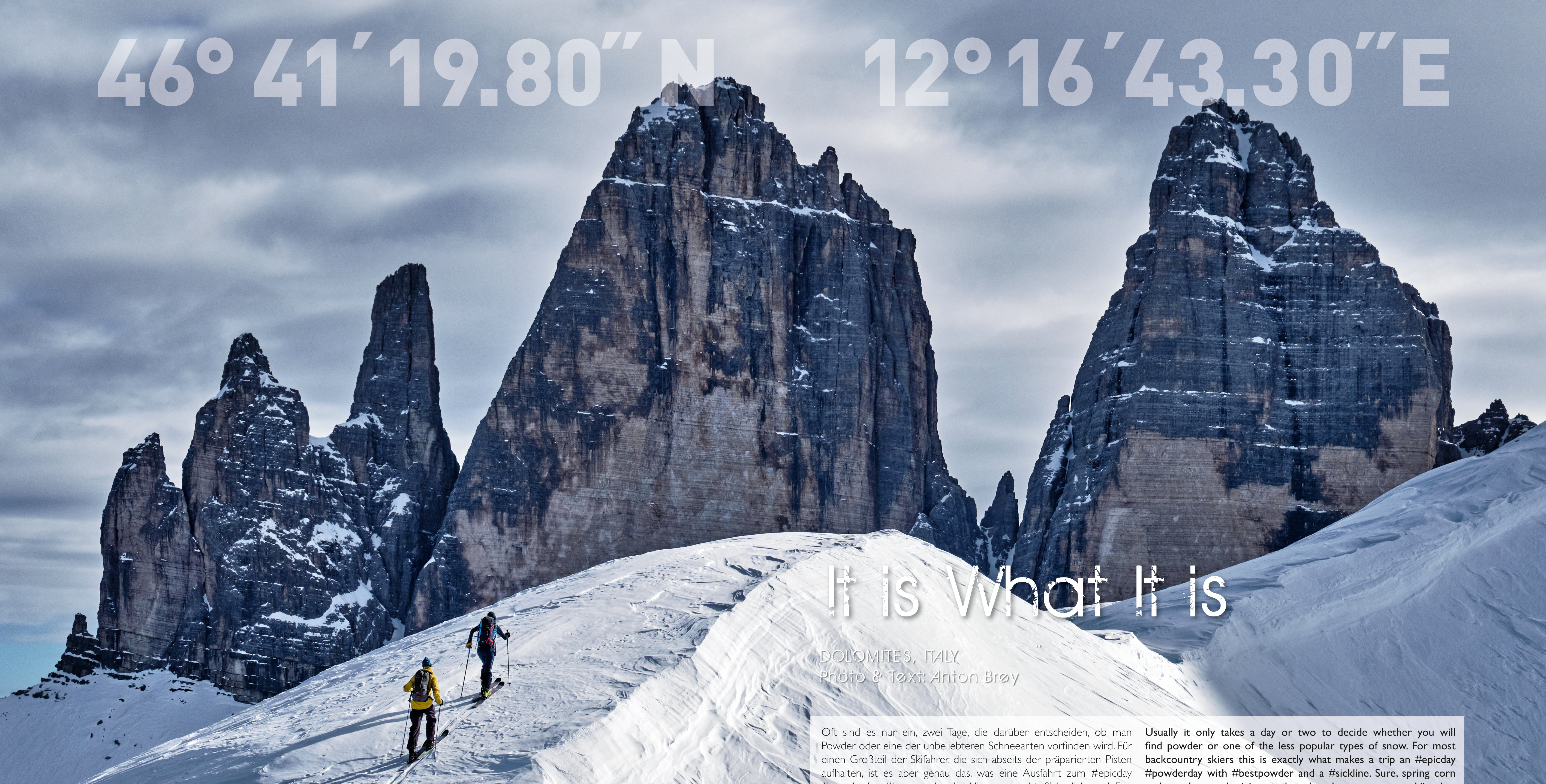
Usually it only takes a day or two to decide whether you will find powder or one of the less popular types of snow. For most backcountry skiers this is exactly what makes a trip an #epicday …
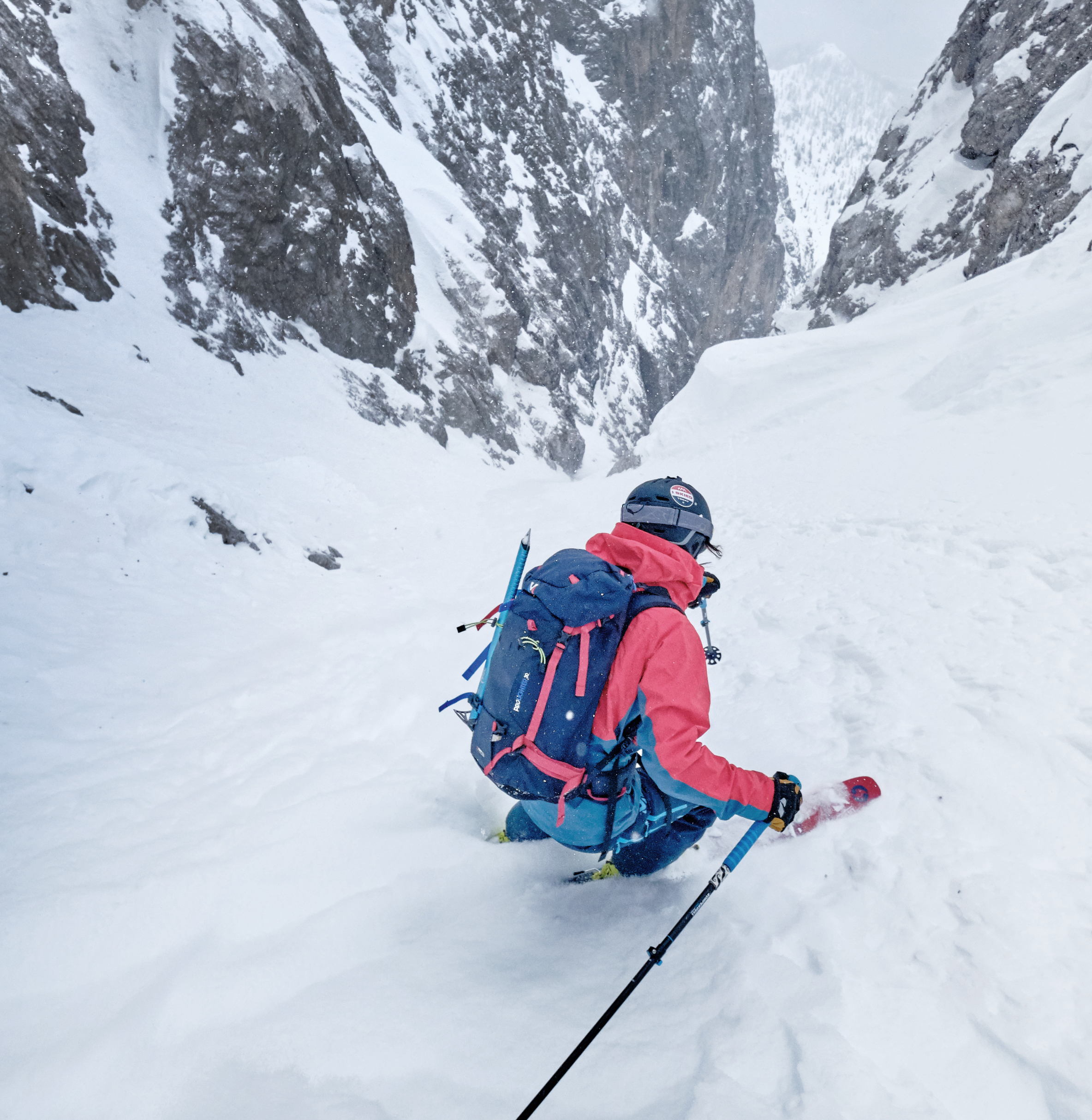
Usually it only takes a day or two to decide whether you will find powder or one of the less popular types of snow. For most backcountry skiers this is exactly what makes a trip an #epicday #powderday with #bestpowder and a #sickline. Sure, spring corn and powder are the icing on the cake when you are out skiing, but isn't there more about it? Isn't it the adventure itself? An adventure in a unique alpine scenery with all its challenges? Doesn't that count most in the end? Every day on skis is a good day. According to the motto: "There is no bad snow, but no snow at all is truly bad," we left for the Sesto Dolomites in Val Pusteria, Italy, in mid-February.
When you plan a multi-day trip four weeks ahead, two factors are always uncertain: the weather and the snow conditions. You never know what you'll get. But we quickly found out one thing: There won't be any fresh snow – goodbye, powder dreams. Our destinations are the Sesto Dolomites south of the Val Pusteria, the eastern part of the Fanes, and the Cadini range. I picked a motorhome for the trip, which offers all the comfort we need. The nine meter long RV leaves nothing to be desired: It even has a small heated rear garage that could also accommodate two motorcycles, now serving as a drying room for our boots and gear. Four sleeping berths, a kitchen, a bathroom and a sofa – what else would we need? The town of San Candido is my first port of call.
I meet Eva Walkner and Rene Barth in the afternoon and we plan tomorrow's tour. According to the weather forecast, the last days saw rain up to 1,600 meters. We assume that we should find acceptable conditions above the snow line. In the morning we put on the skins and start hiking. Our destination: Haunold. The snow is as tough as concrete. In the beginning the terrain is flat and easy to track. But when we reach the slope up to Lahner Riebel, it's crampon time. A first flavor of what the next days would have to offer, but we are not losing our vigor. Above 2,000 meters the cement-like snow is improving a little bit. We take a rest, drink a cup of tea and discuss our options.
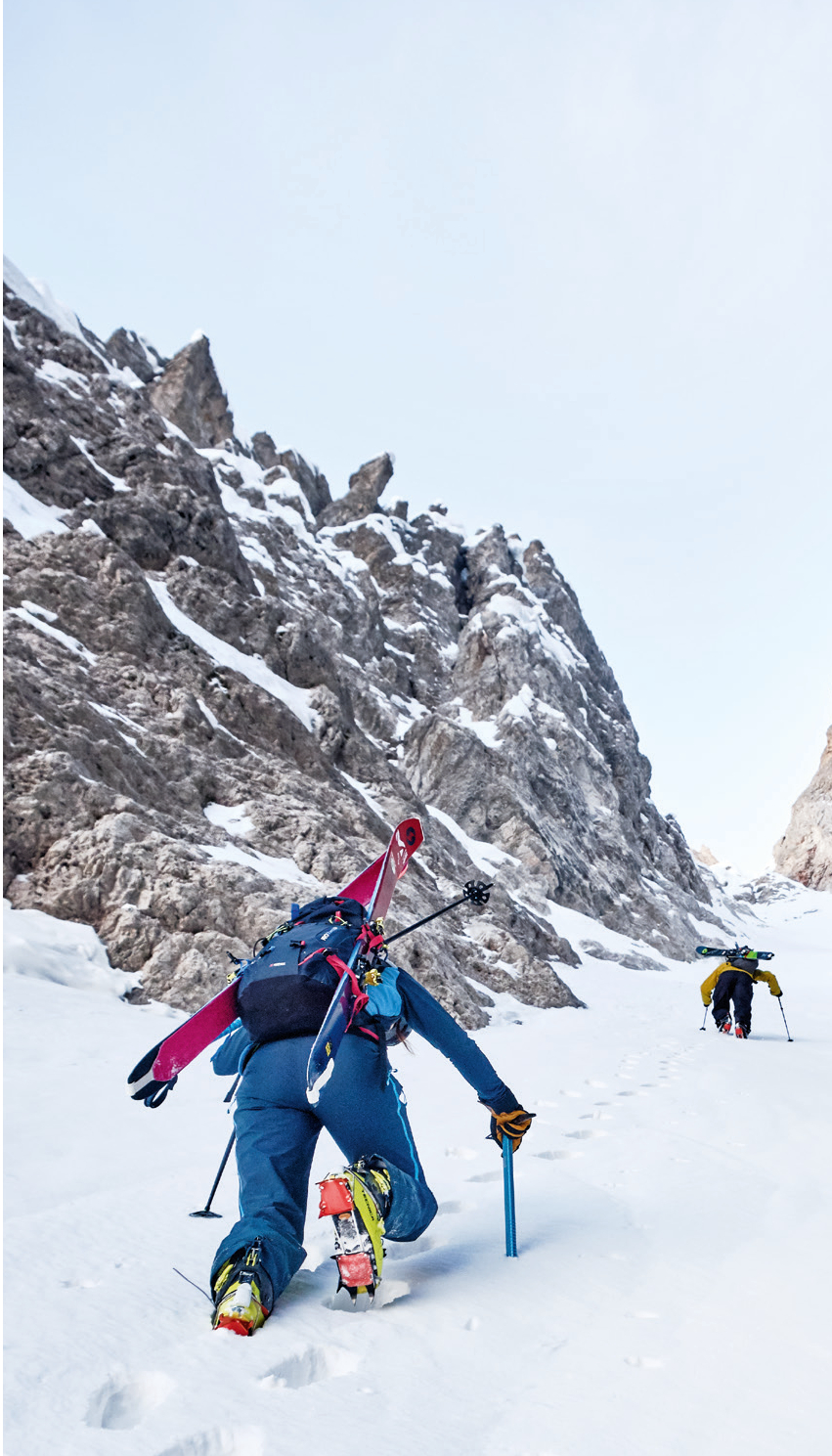
While the rain has ruined the snow further down earlier this week, the wind has done a similar job up here. We have another 900 vertical meters ahead of us and decide to climb through one of the gullies of the northeastern face of Haunold. As soon as we get out of the trench and into a labyrinth of ravines, the snow is finally getting better. We are unsure whether the route we have chosen will lead to the summit or end at the foot of a rock wall. At some point, the gully is getting too narrow to continue on skis. We attach them to our backpacks and boot pack straight up in good, stable snow. The last meters get a bit steeper and then we finally reach the ridge after a bit of climbing. The view is fantastic.
The wind is blowing a bit harder, lifting some heavy clouds our direction from the west. There is no way to know how the weather will develop. To avoid skiing down in flat light or fog we rip off our skins, get ready and drop in. After this first experience we have a good idea of what to expect from the snow. We know that we need to climb above 2,000 meters to find acceptable conditions in wind-protected expositions, with a chance of corn snow on the southern side. Weather-wise, the first day was the worst of the trip. According to the forecast the next few days will be nice and a bit warmer. If you associate freeriding with powder this sounds like a nightmare. For those who enjoy the outdoors, nature and skiing, it sounds more than ok.
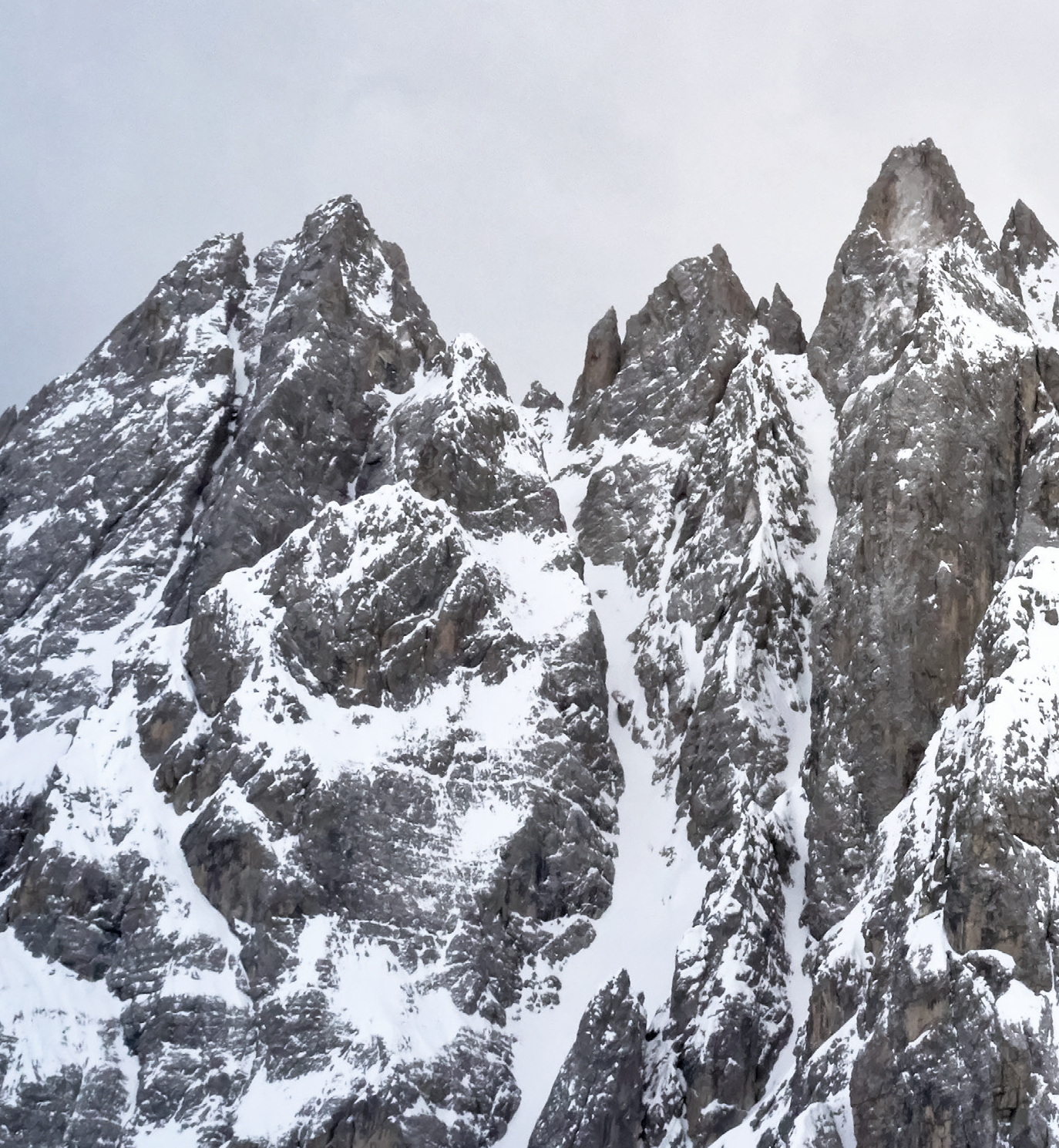
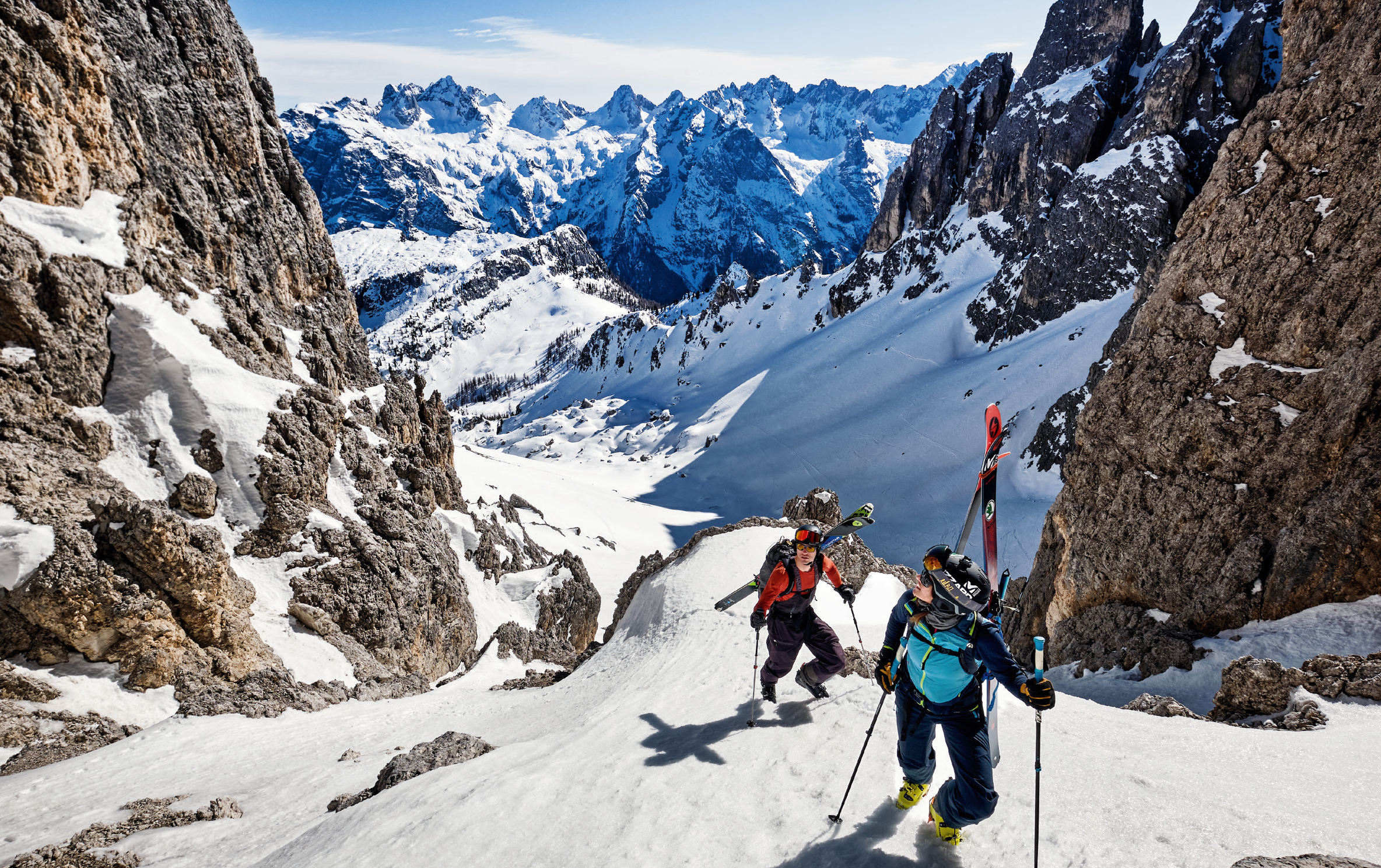
A new day, a new chance. As we approach our route through the Innerfeld valley, we realize that the initial plans would not be viable under the current conditions. We pass the Dreischusterhütte and continue to the end of the valley, proceeding westwards to Schwabenalpkopf. Eva and Rene picked out a couloir between Morgenkopf and Schwabenalpkopf as a good alternative to what we planned. Both peaks are not necessarily famous, but a few old tracks, still visible in places, indicate that they see some visitors every now and then in winter. Today, however, we enjoy the tremendous views of the Alps' main ridge to the north all by ourselves. As we ski out of the couloir and onto a small plateau, we catch a first glimpse of the Tre Cime to the south.
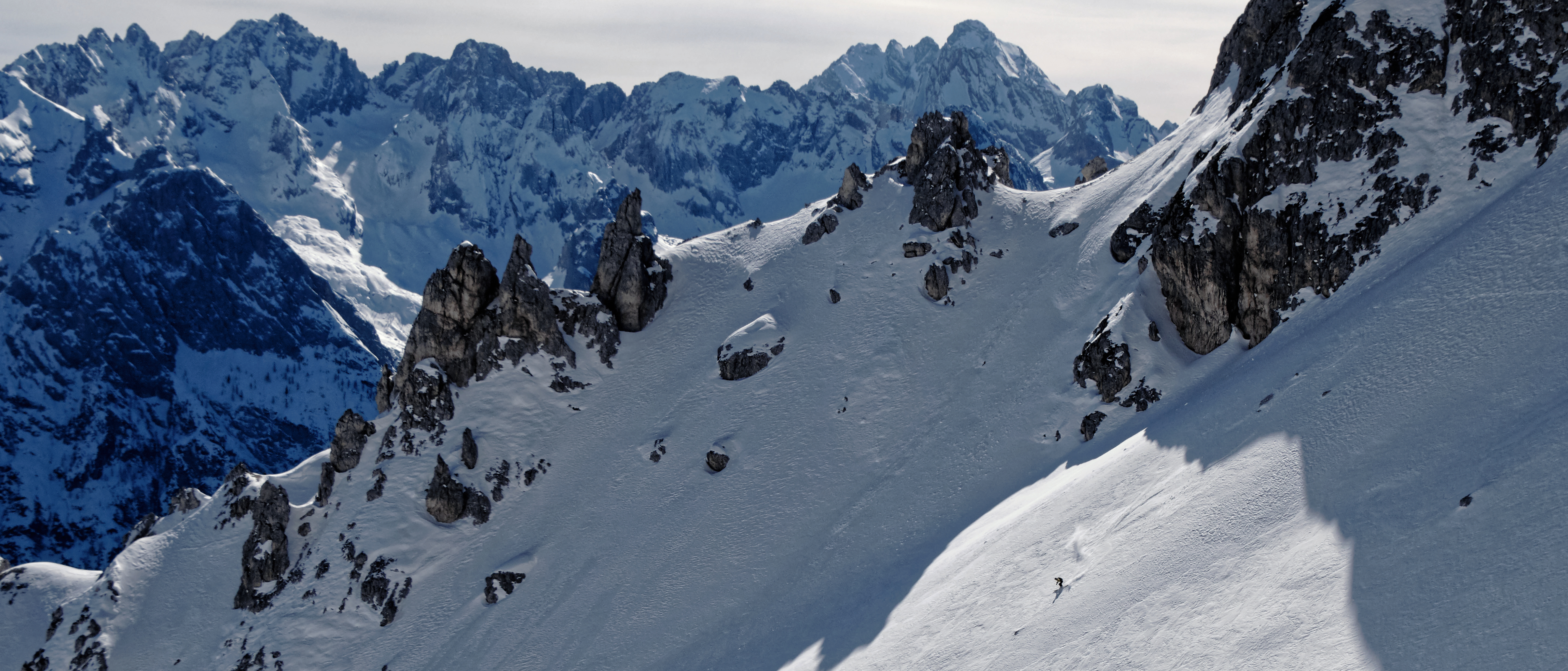
At first only their summits, but as we reach the saddle, the stunning mountain range becomes fully visible right in front of us. It's the exact picture you know from postcards. A sublime moment that makes us stop and reflect. The following run turns out to be all but easy due to the conditions. We have to caress the snow with our edges, read the surface carefully to see the line where the frozen crust won't crack. Eventually, we make it back to our motorhome. Our plan to find better snow conditions in the Cadini group turns out to be just as unsuccessful. On the otherwise rather overcrowded ski route we are the only ones who dare to be out that day. Windblown, crusted snow, dull old powder, and corn – could we ask for anything more?
At least we know that we should choose southern slopes the next day. We decide to try the eastern Fanes. The beautiful thing about a motorhome is that you are already there. Sure, you have to drive there first, but the search for accommodation and the early morning transfer to the trailhead are unnecessary. Wake up, have breakfast, get out of the car, put on the skins: And off you go! On our last day, we finally make peace with the conditions. After three totally mixed days we finally get rewarded with the finest spring corn on our tour to the Dürrenstein. This brilliant day embodies exactly why I love skiing. But that's not always the case, and saying "no" is also part of the game. It is what it is.