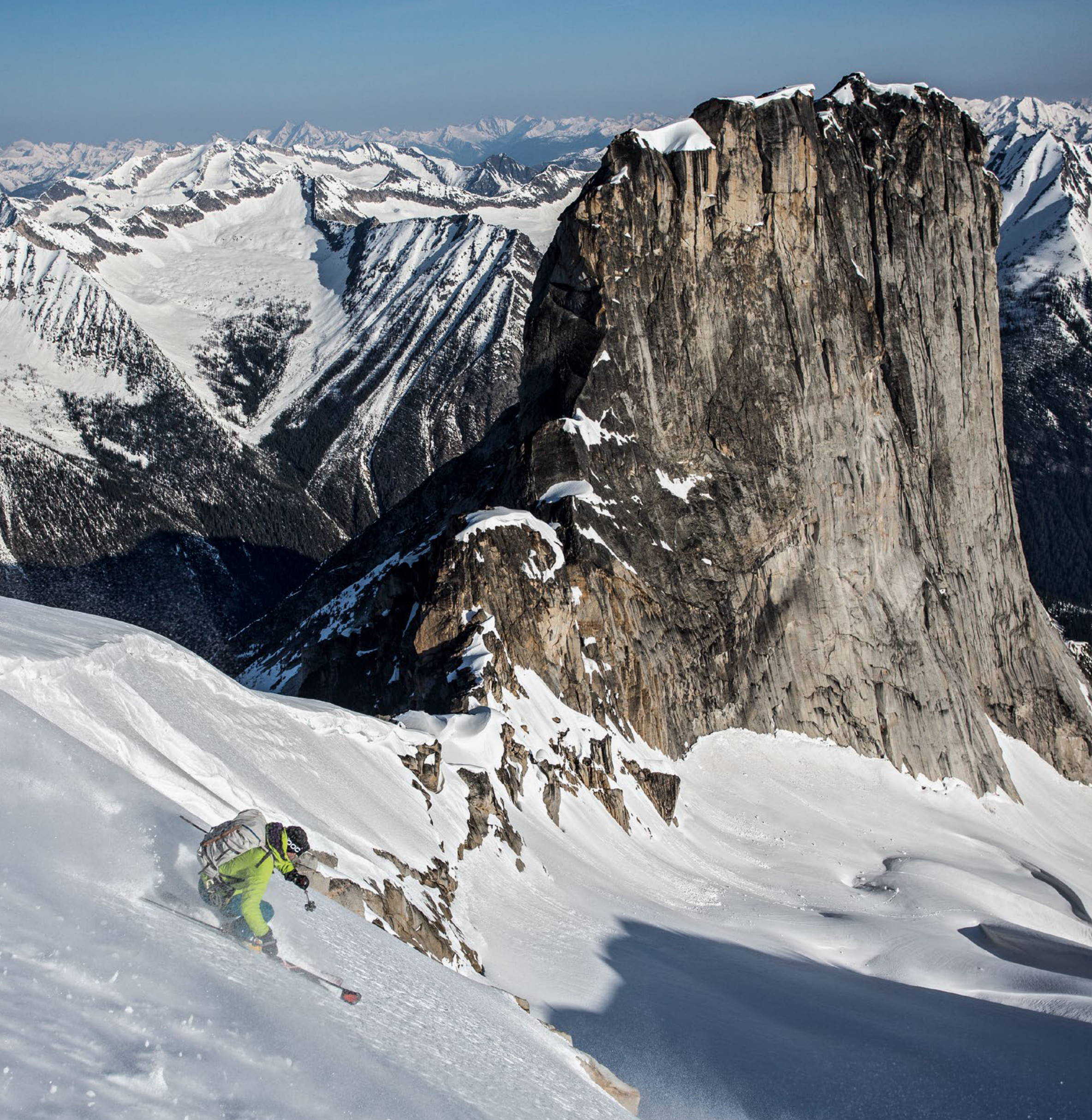
Kanada · Purcell Mountains
Journey into the Wild
Issue 2015 · Words: Steve House · Photos: Christian Pondella · 5 min read
For me, a good journey is defined by a lasting feeling of peace, belonging, and the connection to place, one another, and one's self. I believe that discovering your own core is a process requiring …
For me, a good journey is defined by a lasting feeling of peace, belonging, and the connection to place, one another, and one's self. I believe that discovering your own core is a process requiring simplification. It requires movement, sweat, blisters, physical strain, and sacrifice. We are defined by these quests, whatever they may be. They allow space for self-examination, and we live by the resulting convictions. Vince and I have climbed together in many of the world's greatest mountain ranges. In September 2005, we did Nanga Parbat's Rupal Face, the world's biggest mountain wall, carrying everything we needed and relying on no one but ourselves.
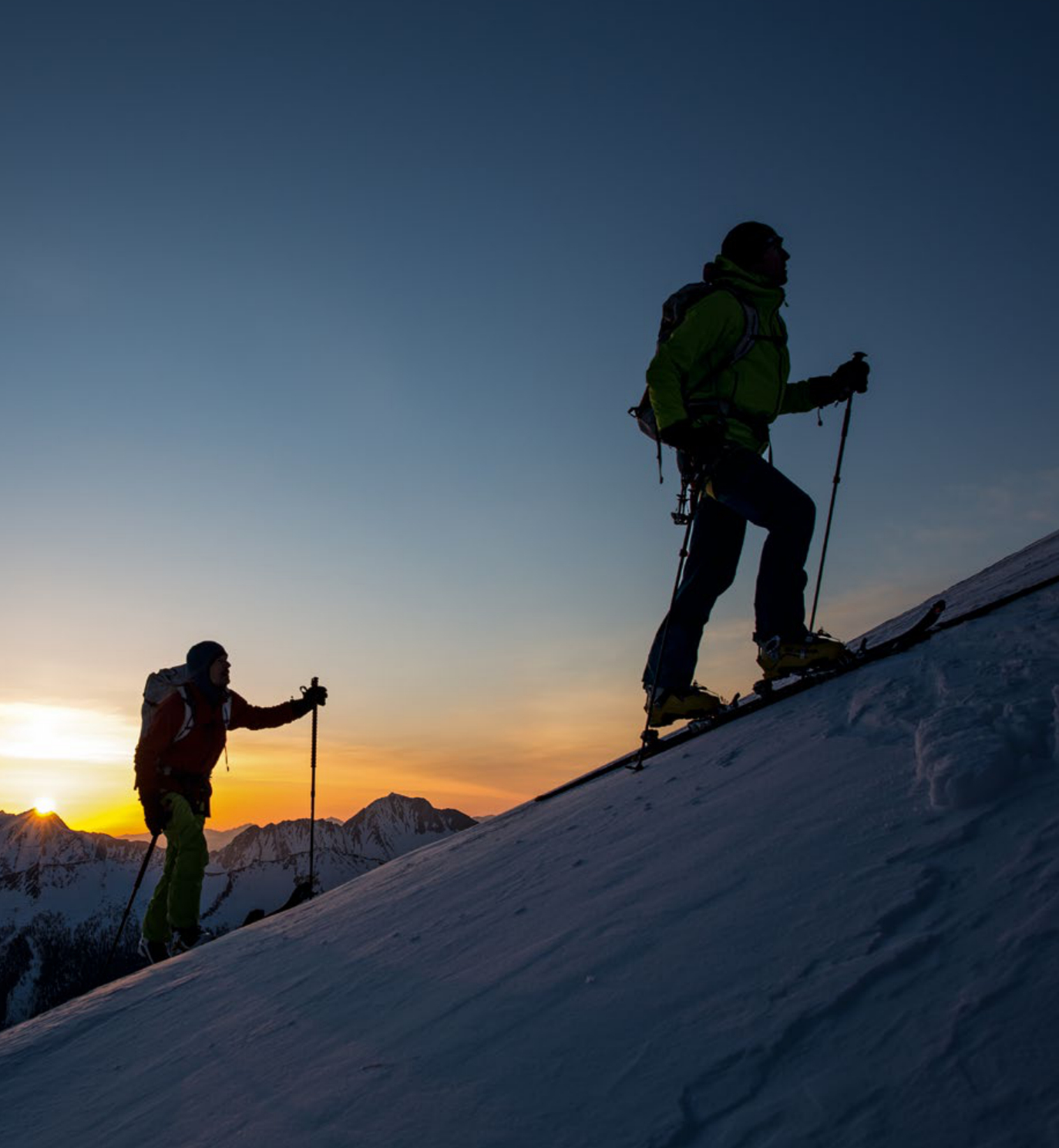
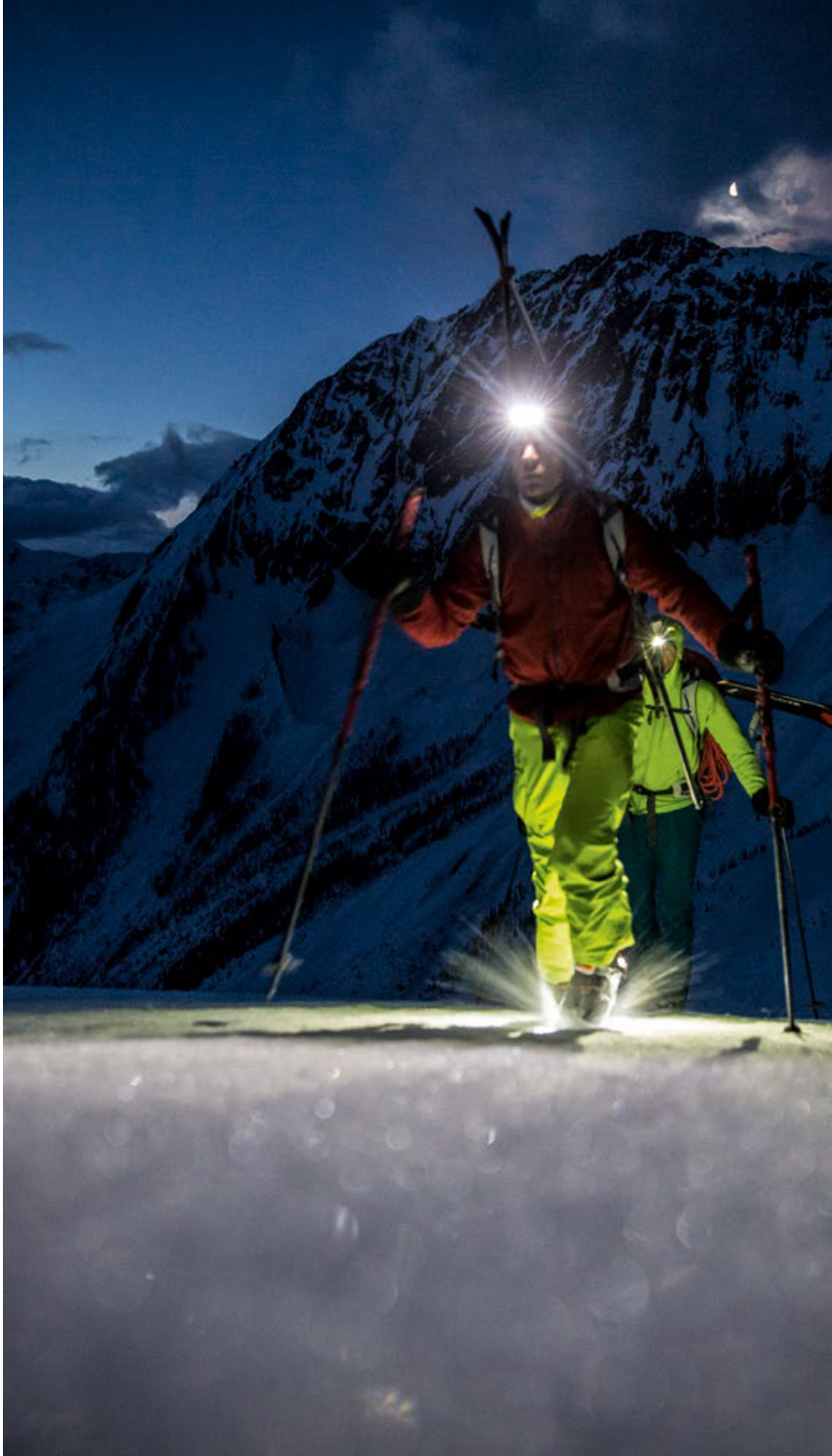
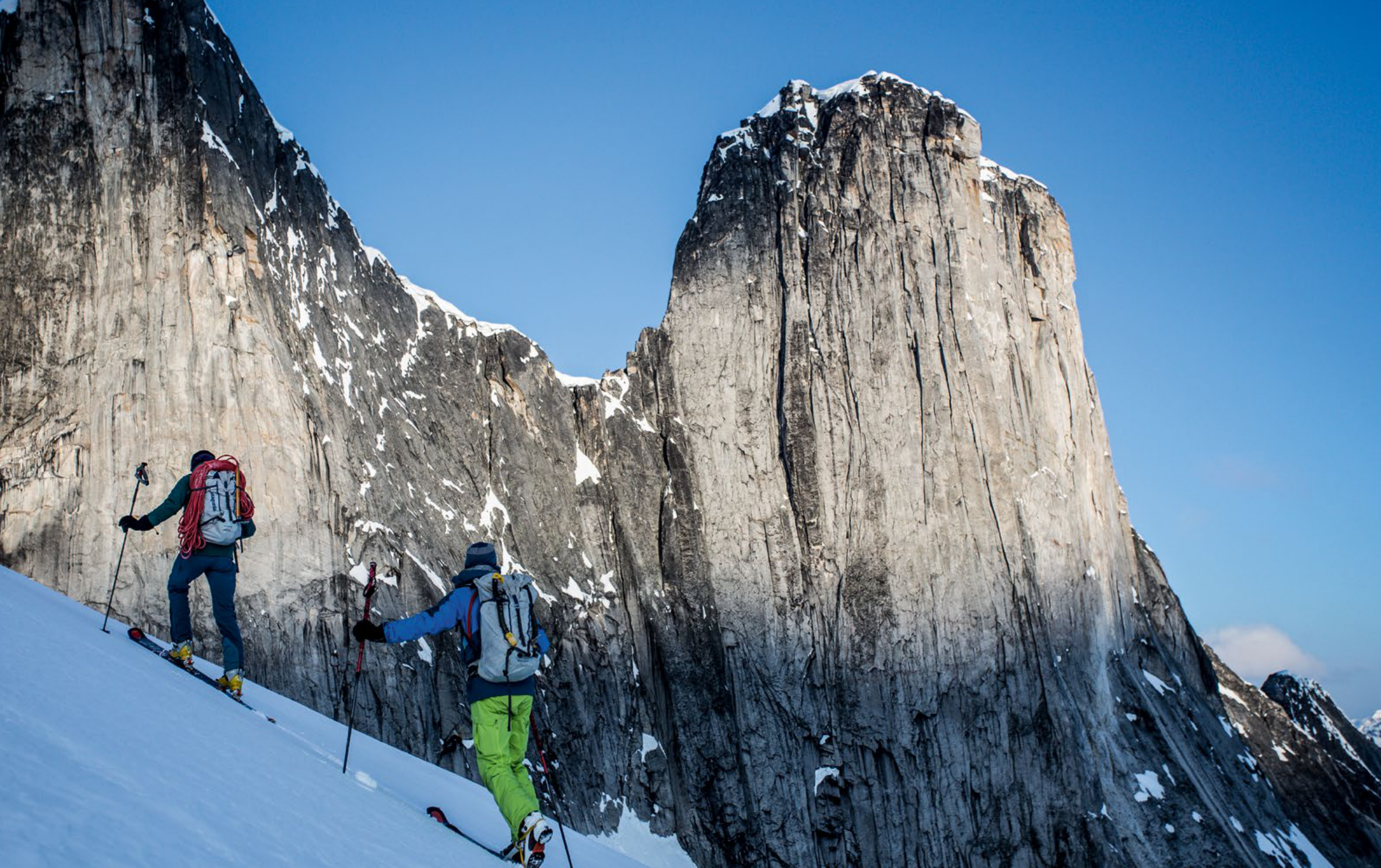
All of those journeys may stand as successes, but on this trip to the Purcell Wilderness Conservancy, I could feel the reward of the memories burned into our hearts. We woke at dawn, fired the stoves, ate, and packed up. Uphill from camp we crossed stream braids, throwing packs and skis ahead of awkward jumps and slippery log-walks. We gained an unnamed col, sparse and barren save for one lone set of Lynx tracks and the white-granite towers we saw for the first time; our objective was to climb these towers and ski from the summit. We slid off downhill, and across. No glorious, magazine-worthy turns, just traveling.
We hugged the contour lines, holding an awkward traverse with our uphill legs burning as we swept left far into the remote, trailless valley toward our final camp. My skis slid across the glacier's surface and settled under the weight of my step. An eon's worth of snow compressed to ice, the surface barely dented by my passing. Minutes ago I'd pressed my swollen feet into tight ski boots and gulped down instant coffee. It had taken us four days of hard travel to arrive at that camp. The first day snow drifts blocked the road to the trailhead. Our packs were loaded high and wide, pushing 40kg each, stuffed with gear, ropes, shelter, food, and fuel. We slopped through mud, jumped streams, and skied wherever there was enough snow.
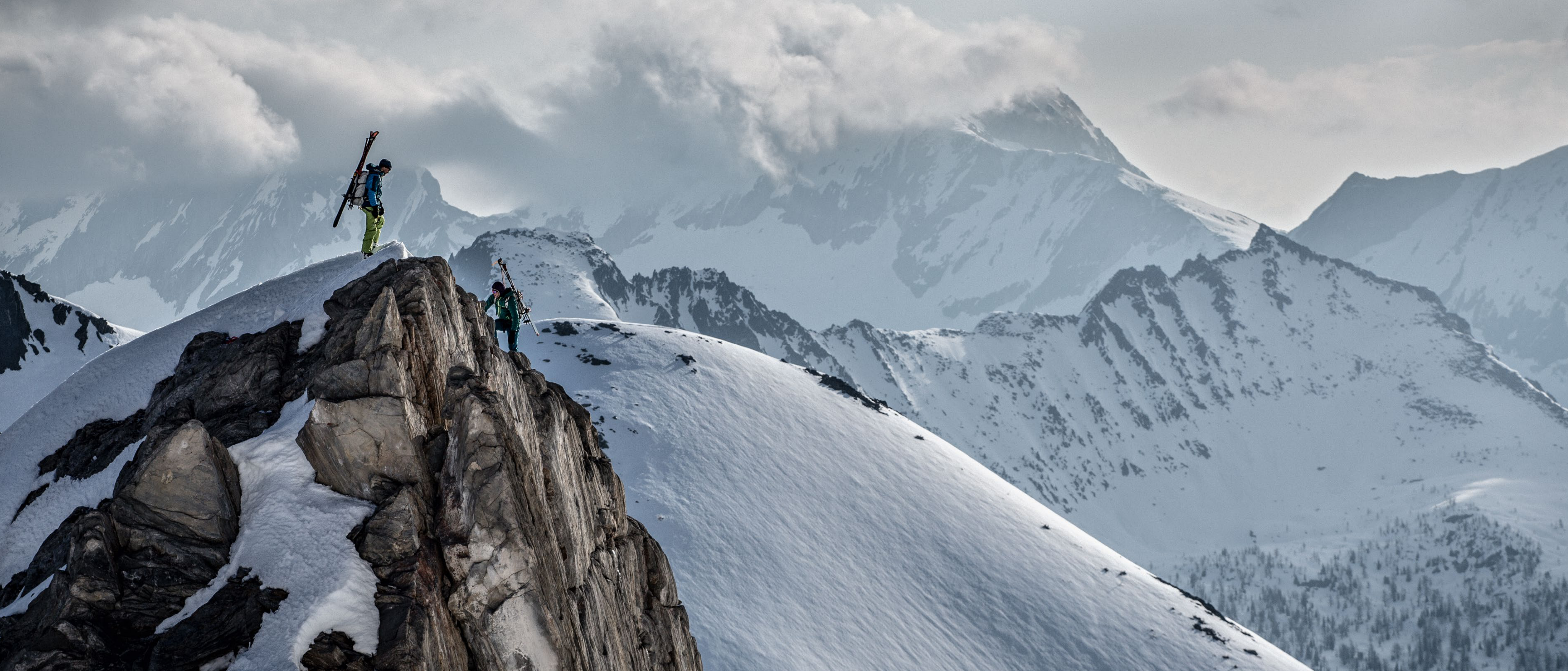
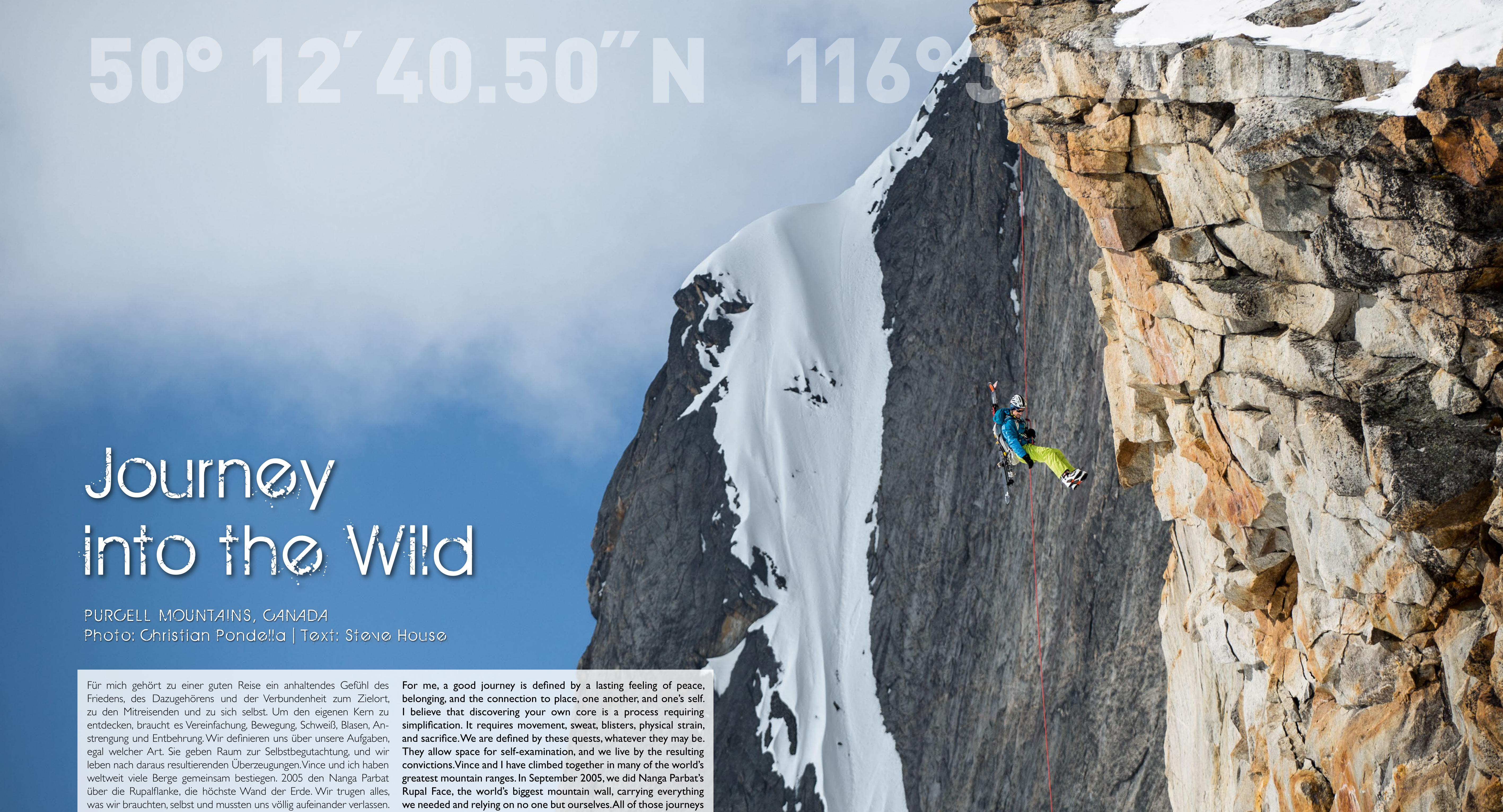
It took eight hours to make seven miles before we set our tent near the open river we'd have to cross in the morning. I slept with a can of pepper-spray propped in my boot in case a recently awakened grizzly might find our camp intriguing. At dawn the next morning, we scrambled into the first col with our skis on our now-light packs. As we topped the blocky ridge, we glanced right to the steep snow couloir we hoped to ski down later. The ridge narrowed, and we snapped steel crampons onto our ski boots; cornices of snow hung far over the East Face, and we avoided them by a wide margin, sticking to rocks stripped of snow. The granite blocks reared up in front of the summit so we didn't know when we'd arrive until we finally stepped onto to the top.
No more mountain to climb; we steeped ourselves in the still air, soaked in the views, wondered about the names of mountains, and savored the lack of any visible sign of humans. Not even the contrail of a jet. The feelings that envelop me on this remote summit, floating here above this raw expanse are relative only to the difficulty of our journey. A goal easily attained holds little value; imparts slim impact. We cry out to be dwarfed by the jumbo wild, to fulfill a common human need to experience the incomprehensible. Metal before the forge hammer is shapeless. The mountains are our forge, our journey the hammer, our selves re-shapen, tempered against the unknown, unseen challenges ahead. The snow is thin over the rocky couloir we'd hoped to ski.
Obeying my nerves, I rappel 45 meters down to where the couloir opens wide onto steep, unbroken powder. I watch with not a small amount of awe as Vince skis what I had just rappelled, billy-goating down the couloir, jump-turning around stones, slipping quickly over thinly snowed rock slabs. Exiting the couloir, he's rocketing. He punches hard into the tails of his skis and launches into a sharp turn to slow himself. Rooster-tails of powder settle as a fine dust around me. I pack our rope, check my boots and bindings. Back at camp we pack our packs. Our food is nearly gone, and now we must go. We start by climbing up, and out of the valley, quickly riding back to the river, which we cross barefoot, legs numb.
A few kilometers down valley we find a large natural hot spring, the pungent waters steaming as we dip in just as the first raindrops start to fall. We soak, hoping not to see a bear, until we're refreshed enough to continue, but I don't want to leave this feeling, this solitude, this towering forest that has never witnessed an axe. We all feel that we're a small part of something large and incomprehensible. That by being here, by being so far away, I'm closer to my true self, and that feels so neglected. Society has become a meritocracy with success based on approval; all linked to getting noticed; doing something new; being a better climber or skier, being more stylish, smarter, or having more Instagram likes.
The subtext is that if you aren't rad enough, or rad anymore, you won't get the recognition, the money, the fame. Here that's unimportant. I'm with good friends, struggling together and admiring each struggle. We're a team because we need to be to travel here. Soaking in the water, listening to the rain hit the pool, I reflect that it's necessary to have one foot in the world of achievement but another foot in a counterculture that is in tension with the achievement ethos. This journey into the wild has helped me to reassert a balance, a balance I think we all re-discovered in the process of becoming a team. As I slip out of the water and back into ski boots, I sense everyone moving in harmony. We've recovered an unconditional appreciation for one another, and that's as close to grace as humans can be.