Russland · Kamtschatka (Tolbatschik)
Kamchatka – The Peninsula of Fire and Ice
Issue 2013 · Words: Anders Wingqvist · Photos: Fredrik Schenholm · 5 min read
Not even twenty thousand tourists visit the Russian peninsula of Kamchatka every year to go heli-skiing, fishing or hiking. With no interest in meeting brown bears, hooking salmon in the streams or a …
Not even twenty thousand tourists visit the Russian peninsula of Kamchatka every year to go heli-skiing, fishing or hiking. With no interest in meeting brown bears, hooking salmon in the streams or a big budget for heli-skiing, photographer Fredrik Schenholm, skier Oscar Hübinette and I traveled in the best "Do-It-Yourself" fashion, with the goal of skiing volcano Tolbachik. Russia's most eastern corner exceeded the expectations of an endless flow of vodka, king crab dinners and buildings made of grey concrete. It was also an unexpected adventure including ski touring, hot lava, crazy cyclones and a ten-day waiting game. Join us for a breathtaking, beautiful and dangerous trip to the peninsula of fire and ice.
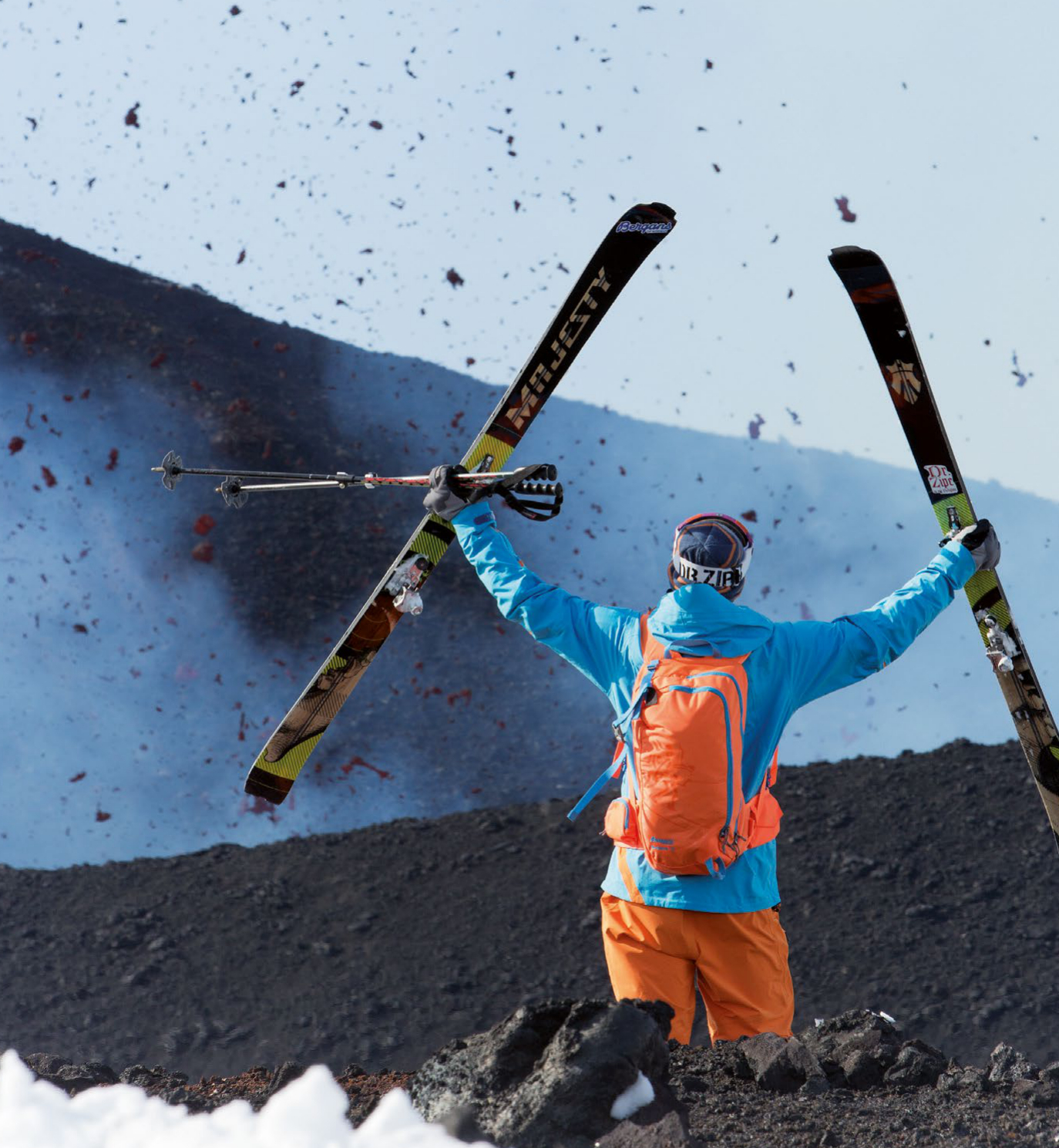
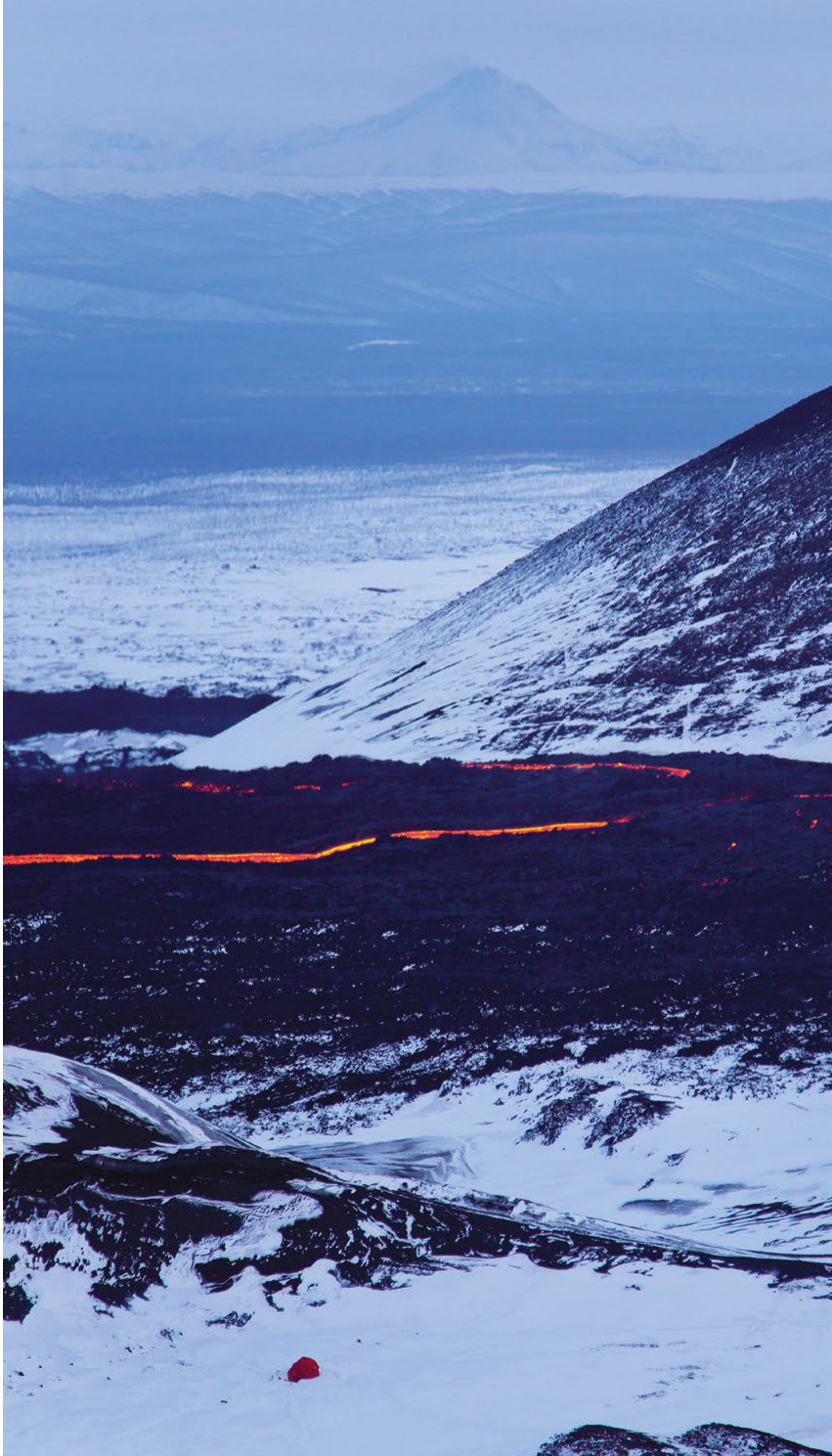
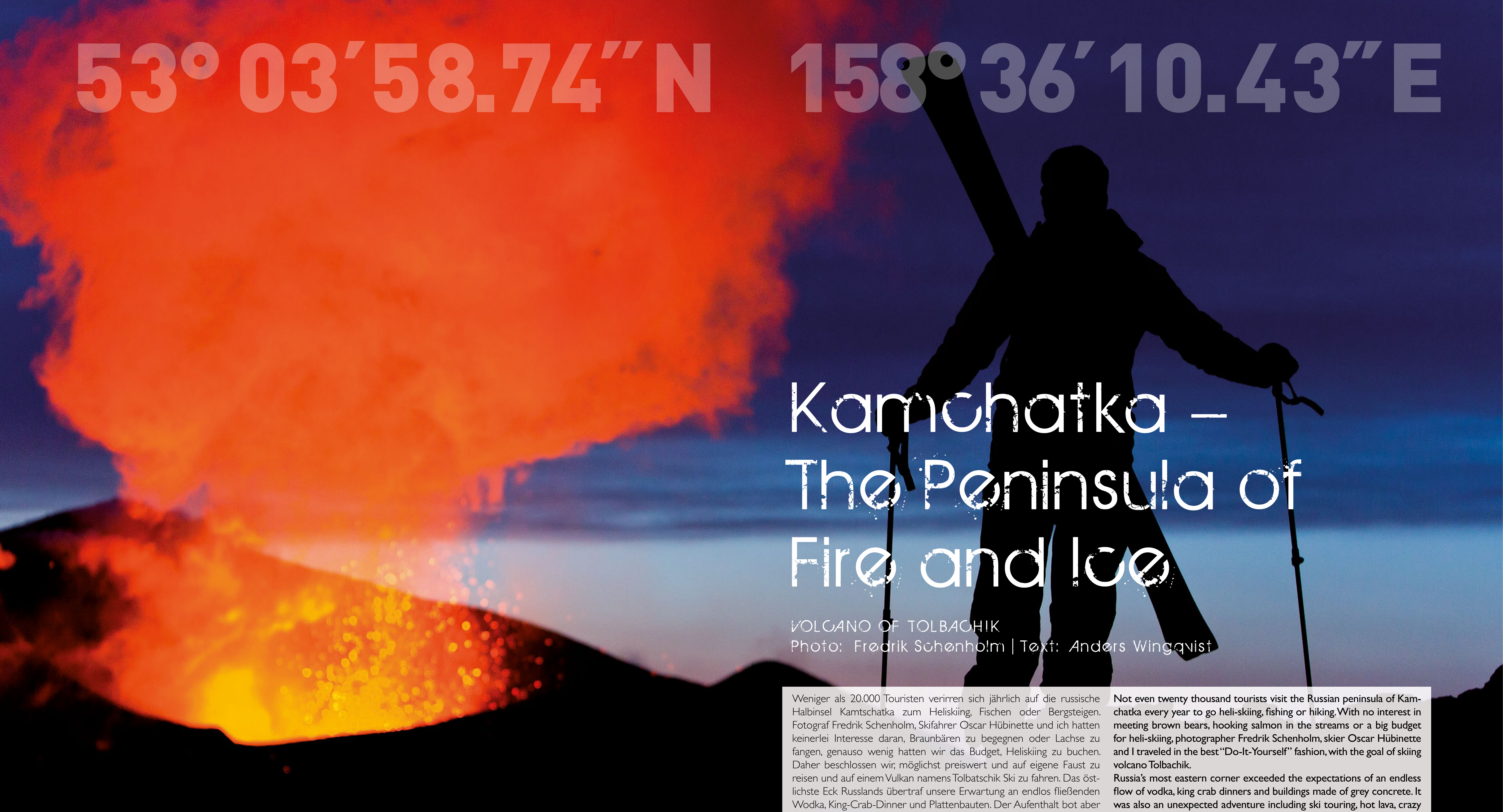
After the large Russian M18 cargo helicopter has touched down at the foot of Tolbachik, rising 3,682 meters above sea level, we unpack our gear at base camp. The active volcano with its white steam column looks breathtaking, beautiful, and dangerous. Flying with us were the Russian mountain guide Alexander "Sasha" Bichenko, who is ranger in Tolbachik Park, and his three clients. Sasha immediately heads towards the lava flow a few hundred meters away. We follow. Red lava of molten rock flows in front of us. Sasha puts his solid iron stick into the lava and brings up a lump, putting it next to us. It acts like honey. While Sasha is playing with it, one of his boots starts to melt. Sasha turns to us and smiles an infectious, child-like smile.
It's difficult to comprehend that this fifty-year-old man has climbed Mount Everest. He also climbed the 4,750 meter high Kljutjevskaja Sopka, the highest of Kamchatka's 160 volcanoes. When he reached the crater rim, the volcano had a minor eruption. Sasha was hit by rock and lost a few teeth. He laughs as he tells us the story. As night falls over the volcanic landscape, we head towards Tolbachik's active crater. We stand silent as the sun sets and magma emerges from below. Once molten rock blasts out of a crater, its name changes to lava, finding its way down the mountain in red veins. It's a raw natural experience. A process of creation. Liquid rock. Heat. Hell. Earth's interior. This is not a TV documentary. This is real.
We are in Kamchatka, in Asia's northeastern corner, far from home. After a week on the Russian volcanic peninsula of Kamchatka, with off-piste skiing and easy ski touring around the Moroznaya resort, dinners with king crab and local vodka, and sight-seeing in Yelizovo and Petropavlovsk, our volcano skiing adventure finally starts. We decided to go to the 464,275 square kilometer peninsula after watching Kamchatka's part in the "Wild Russia" TV-documentary advertising snow-capped volcanoes and magical landscapes. If Kamchatka were a separate country it would be the world's 75th largest in terms of surface, closely followed by New Zealand. We wanted to stay in a tent and go ski touring near volcanoes.
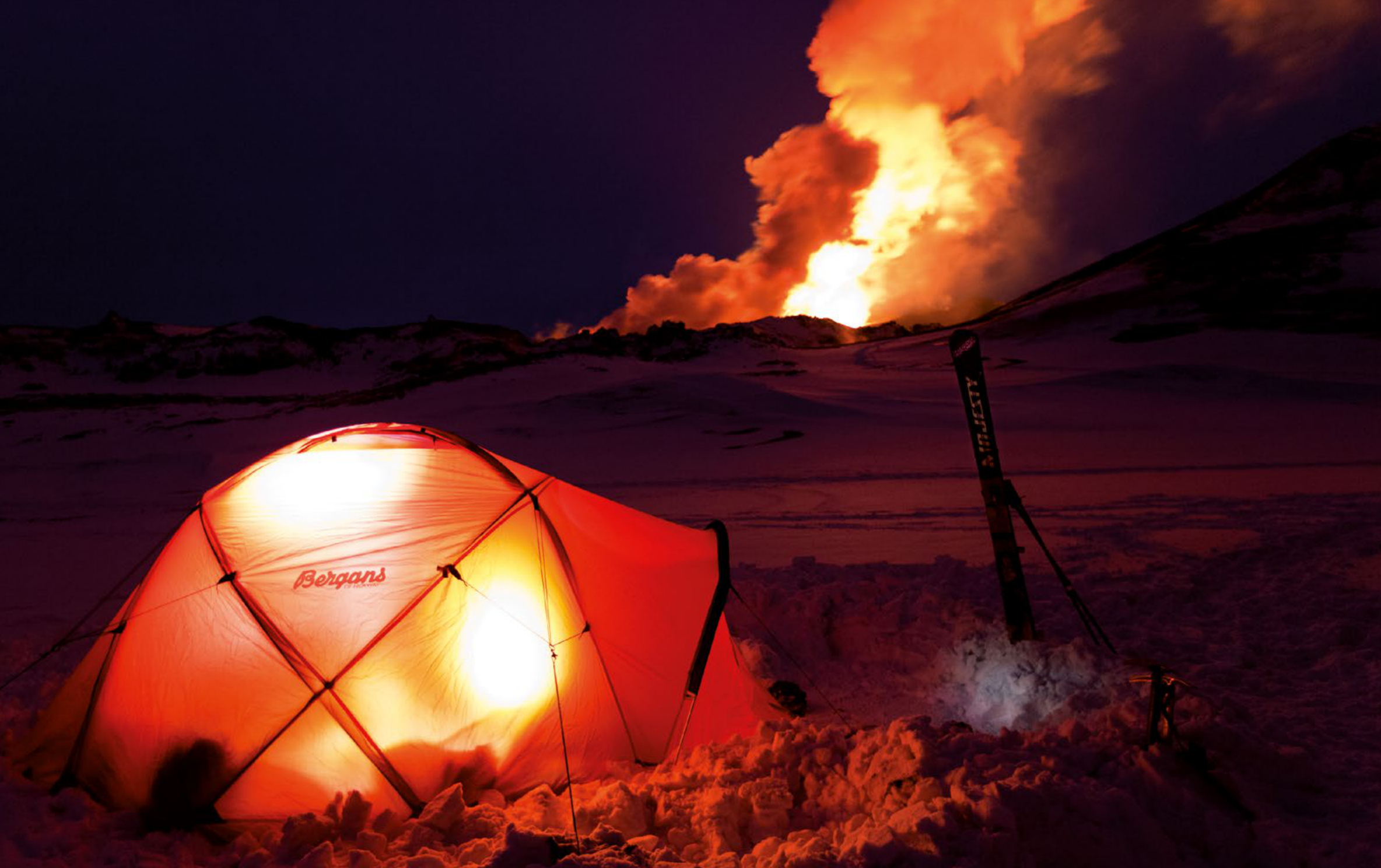
Since we preferred to travel by ourselves, without a tour operator, the adventure started with lots of preparation. Valuable information in English was difficult to find – we ended up being fulltime users of Google translate. The difficult research is long forgotten when we wake up after a freezing night in the middle of March with temperatures down to -30 degrees Celsius. However, sleeping was no problem with double sleeping bags, underwear and beanies. We start the day with breakfast, soon realizing that we have a couple of problems: our boots are rock-hard and the water bottles completely frozen. We grab boots and bottles and put them near the hot lava. Problem solved. Then we do what we came here for – we go skiing.
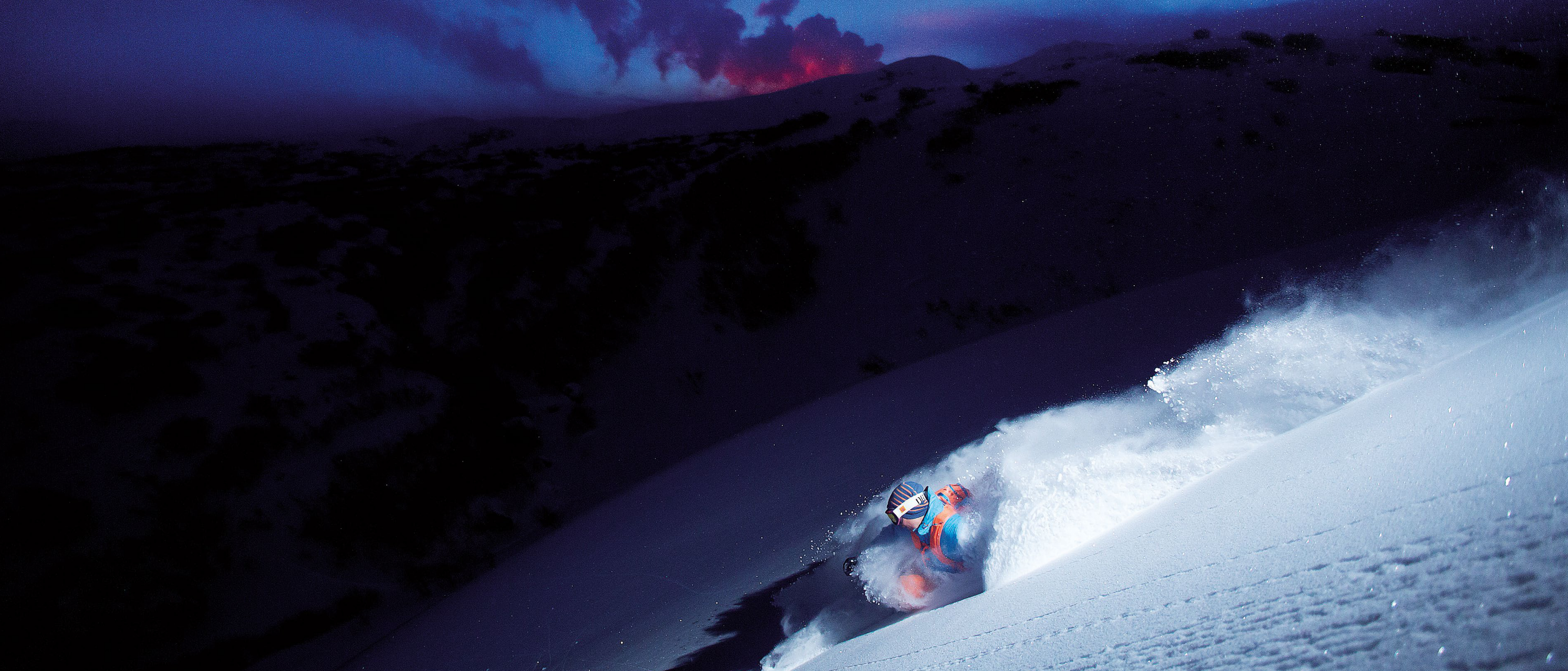
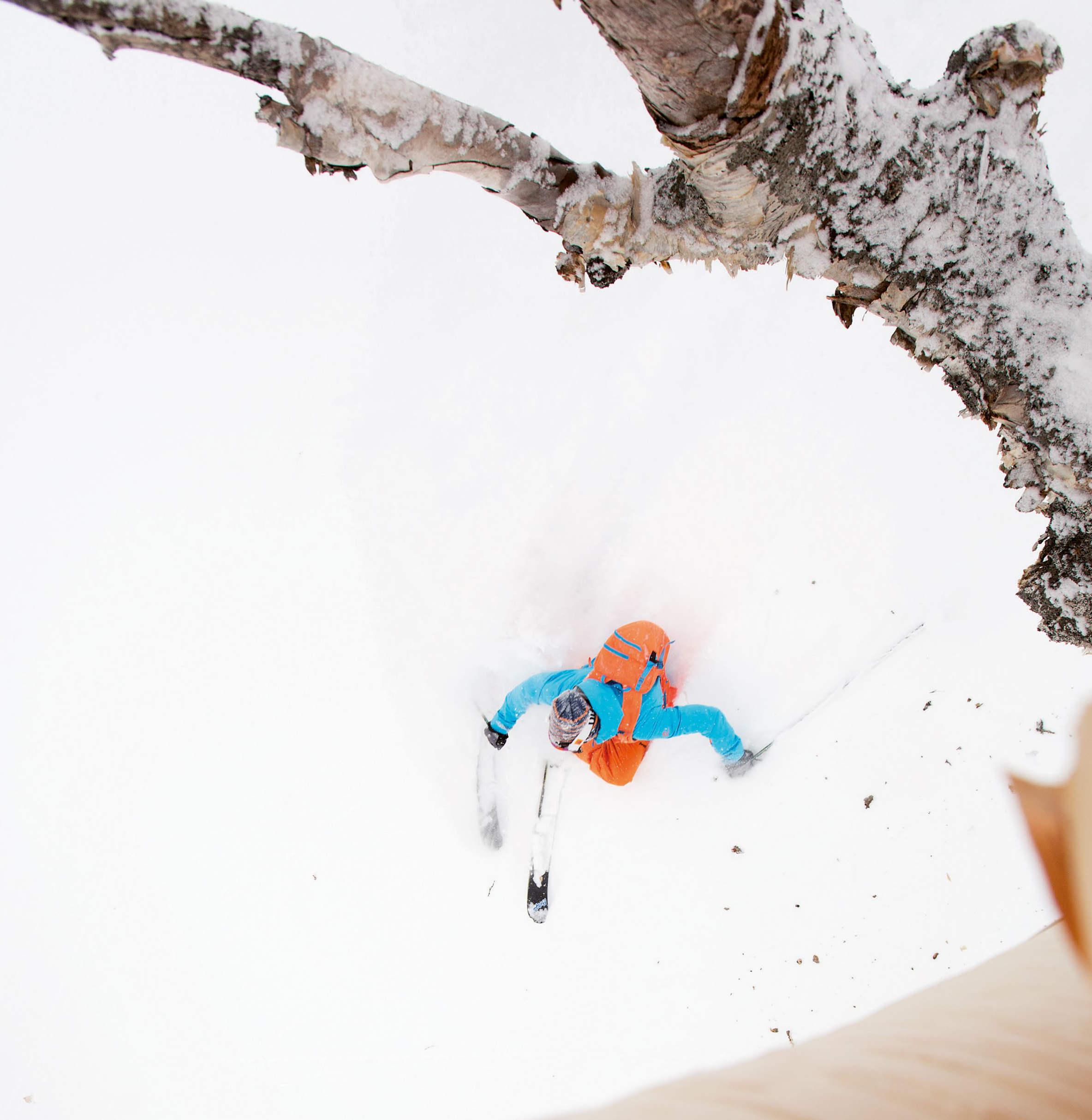
We set course for Tolbachik's towering peak. The color of the snow changes from white to black. The newly fallen ash creates stunning patterns. We go easy on our skis to avoid unnecessary wear on the skins. Ash is like crushed glass and hurts the equipment. The active crater rumbles constantly as we gain altitude towards the high summit crater of Tolbachik. Clouds build up and by twilight we turn around without reaching the summit. Skiing down is surreal. In front of us a lava-spewing crater, under our feet perfect powder. Fire and ice. This is the beginning of hell in Kamchatka. The winds pick up at night and by early morning, we are hit by a cyclone. Tent poles break and tents collapse.
We try to fix them but soon realize that it's a game we cannot win. Luckily we are not alone so we move into Sasha's tent. We barely sleep with the wild winds roaring outside, throwing volcanic gravel and sand against our shelter. The storm is gone when we wake up the next morning. It's silent. The helicopter is scheduled to pick us up tonight. Over satellite phone, we find out that a new storm is heading towards us and that the heli won't come. The remaining tents will not make it through another windy night, so we decide to break camp and retreat to the Tolud hut 13 kilometers further down the mountain. The hut is used by Russian geologists, who study the ongoing eruptions of Tolbachik.
The cyclone hits once again, this time only minutes away from the hut. Wind and snow limit visibility to a meter. We are happy to reach the cabin. Four Russian geologists sit around an old wooden table and greet us. "Vodka?" asks one of them. The warmth of the hut is soothing, but the aftertaste is bitter. It's the first of ten days being isolated, sleeping on a hard and cold floor, vanishing food supplies, playing cards, and learning basic Russian. We had planned to spend three or four days exploring Tolbachik. In the end, we are stuck for fourteen days. The heli operation did a poor job arranging a timely pickup, but they were very creative when it came to excuses: no pilot, no helicopter, bad visibility, too windy...
Finally around lunchtime on one of the last days in March, we hear a rotor. Is this for real? Our taxi circles over the hut before finally touching down. We rush to the M18 and finally we are back in the air, leaving Tolbachik and its white steam plume behind us. Breathtaking, beautiful, and dangerous.