Norwegen · Troms District (Reinfjord / Lyngen)
Lines Upon the Water
Issue 2017 · Words: Antte Lauhamaa · Photos: Mikko Lampinen · 5 min read
I was standing on the ship's deck watching the mountains grow larger from the sea as we approached the shoreline. "Opal," our Icelandic two-mast schooner, was plowing the sea quietly as our crew …
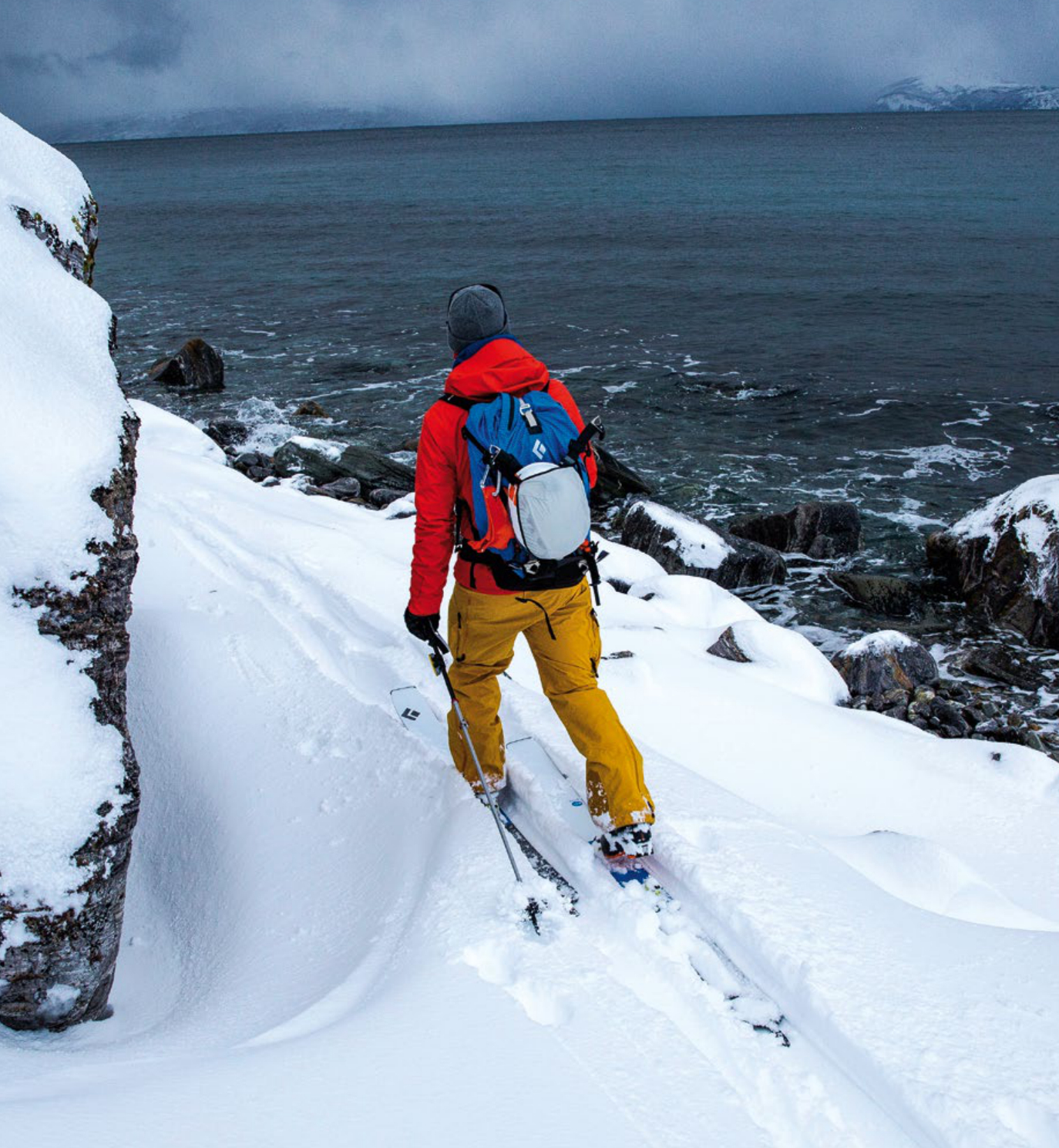
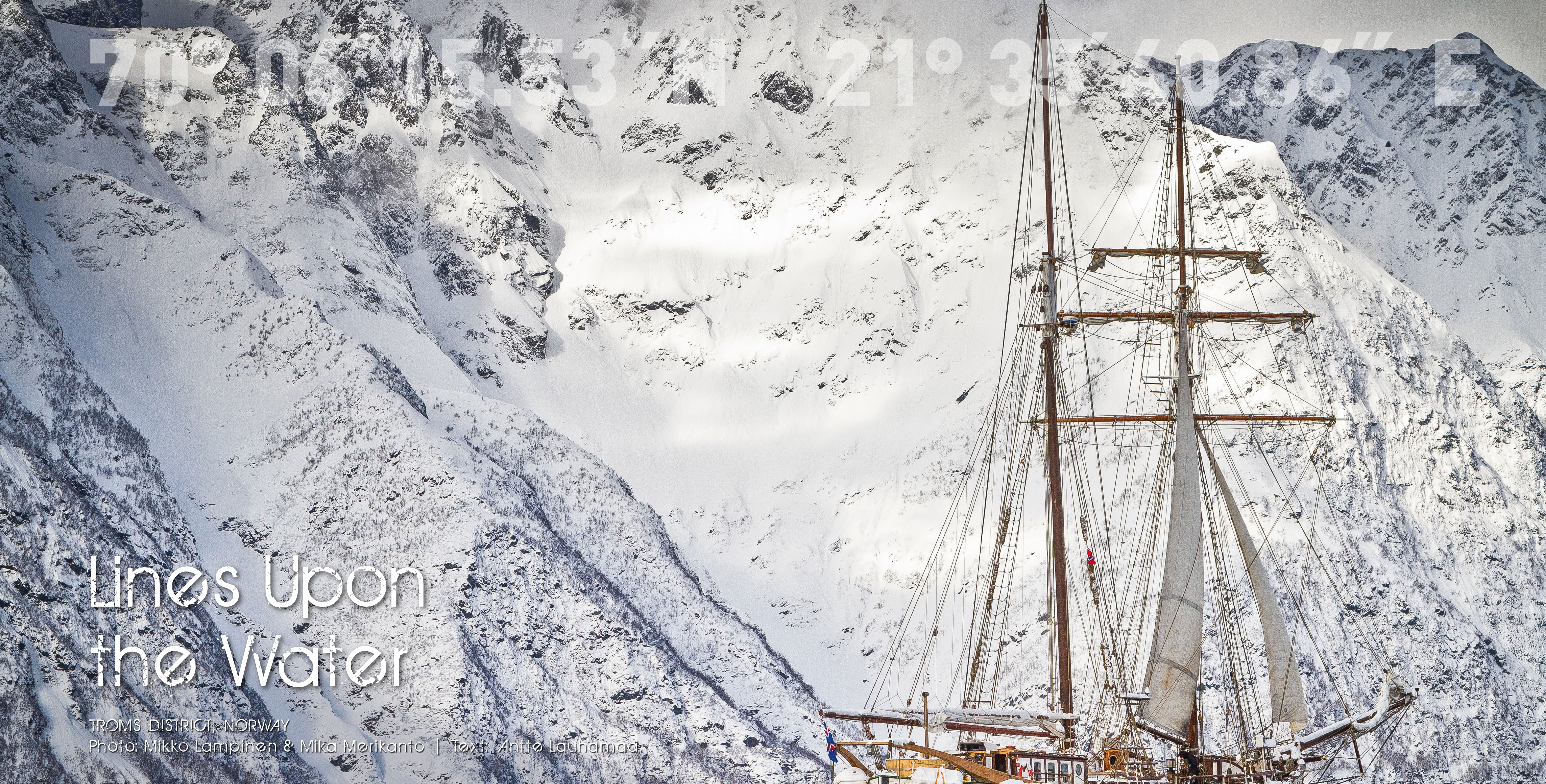
I was standing on the ship's deck watching the mountains grow larger from the sea as we approached the shoreline. "Opal," our Icelandic two-mast schooner, was plowing the sea quietly as our crew prepared to land close to the couloir we had spotted beforehand on Google Earth. There was no other way to reach this spot, and I felt fortunate. There's enormous potential for never-ending ski adventures in the Northern islands close to Norway's Finnmark. What makes it difficult is the access – the only way to get there is by boat, and considering that you sail the Arctic Sea, you really need to have a fully rigged vessel.
Opal, equipped with both an electric and backup diesel engine (along with the possibility to use sails), was our ticket to these abandoned shores. We had started our expedition in Lyngseidet, Lyngen. The mission was to sail north and look for new places to ski, which was a dream come true for me. I have been skiing in the Lyngen area since 1998, but I never had a chance to get to the Northern islands, which are covered with coastal mountains. The biggest challenge turned out to be the weather. Our journey started with a full-scale storm, bringing in avalanches that buried three cars on the main road leading to Tromsø. After the storm, it started to dump snow for real.
We began the trip skiing waist-deep powder in a birch forest in Kåfjord because there was no other way to get down the mountain. The un-skied couloirs were waiting, but it looked like they would have to wait another year or so. When you plan an adventure, you always hope for blue skies and perfect weather, but lately, it has become clear that there is no way to know what to expect. There have been more storms around the Northern Polar Cap in one winter than I can ever remember. January was exceptionally warm with temperatures ranging between +5 and -30 degrees Celsius. From my point of view, it's clear that the climate is changing fast.
The weather forecast was giving green light for the rest of the week, but we knew we had to deal with potentially unstable snow in a location none of us had ever been before. After a pit stop in Skjervöy, we sailed east heading to the small village of Reinfjord. There are eight people living in this village, and the only public access is a speedboat that comes in once a week from Skjervöy. After docking in the old harbor that was once used for fishing boats, we wanted to go skiing. The streets were filled with snow, and there were no tracks anywhere. The houses seemed to be empty, but when we skied along the village's main road, we met an elderly couple that greeted us from the balcony of their house.
They said there hadn't been any traffic in two weeks in the village because the weather had been so bad that the speedboat couldn't come. In sketchy conditions, it's nice to find a location that provides as many options as possible, and that's why we picked Reinfjord. Once we saw this beautiful place, we knew that we are in the right spot: you could explore it for weeks without skiing the same slope twice. We decided to ascend Boazovuoncahca, an easy peak south of the village to get acquainted with the local snow conditions. Once we made our way to the top, the weather finally cleared and we could see the surroundings.
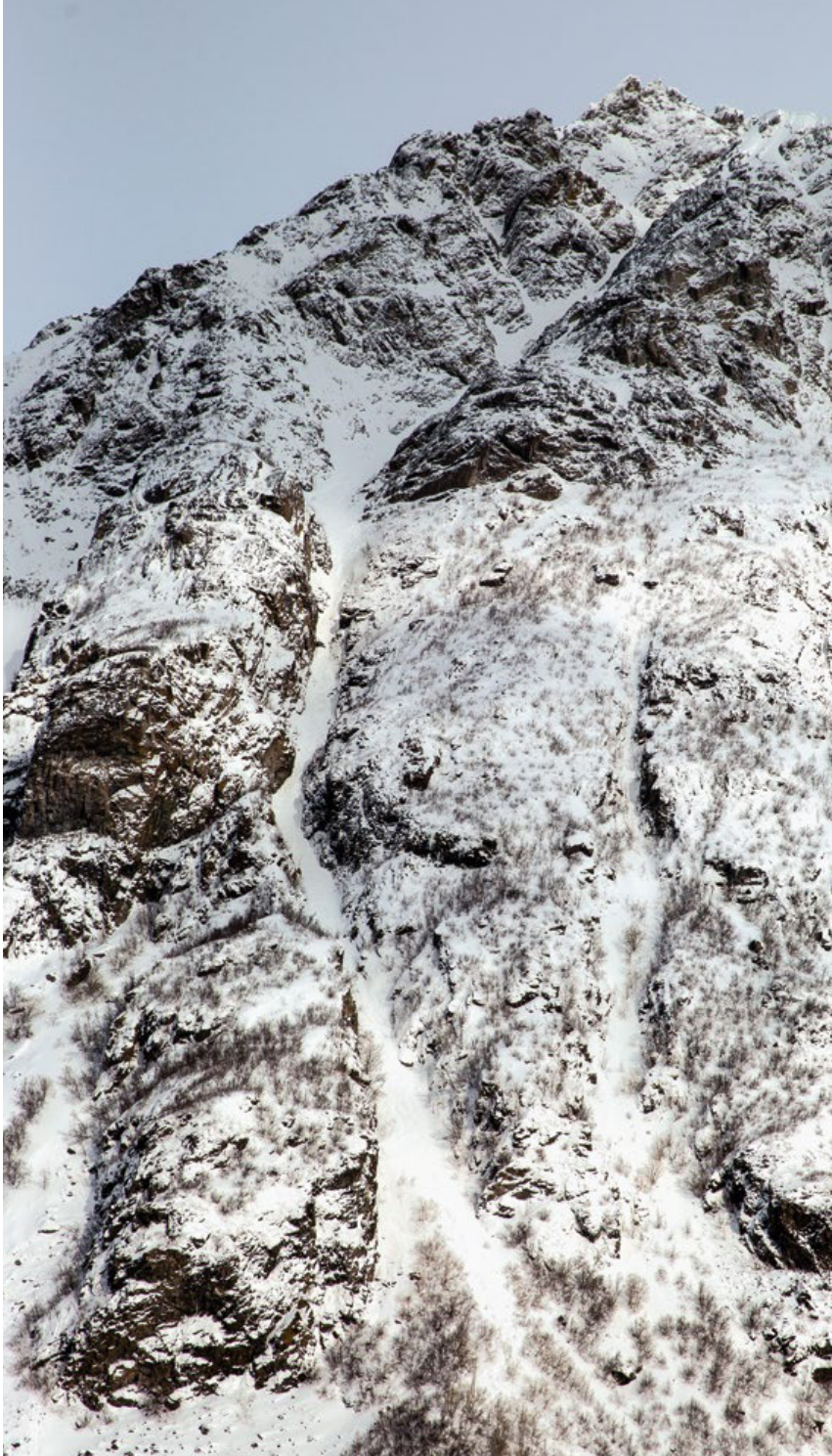
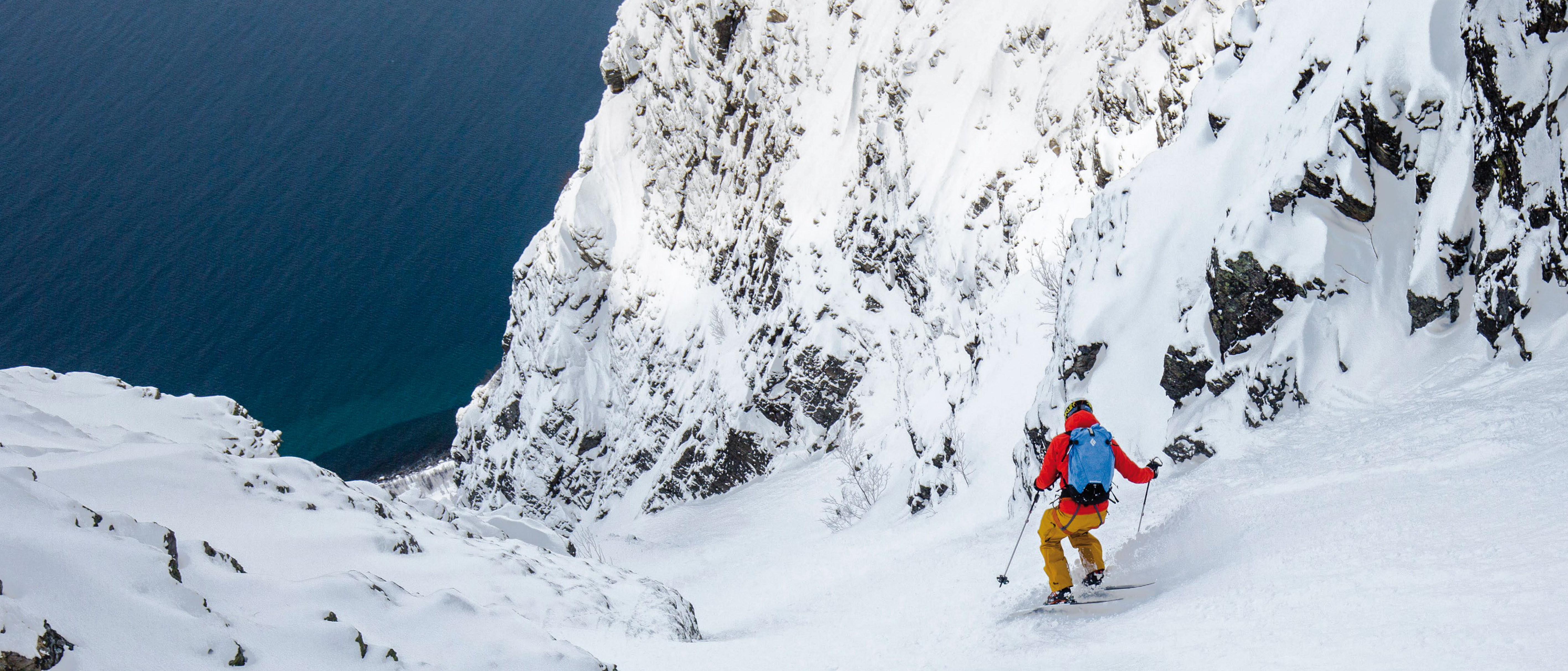
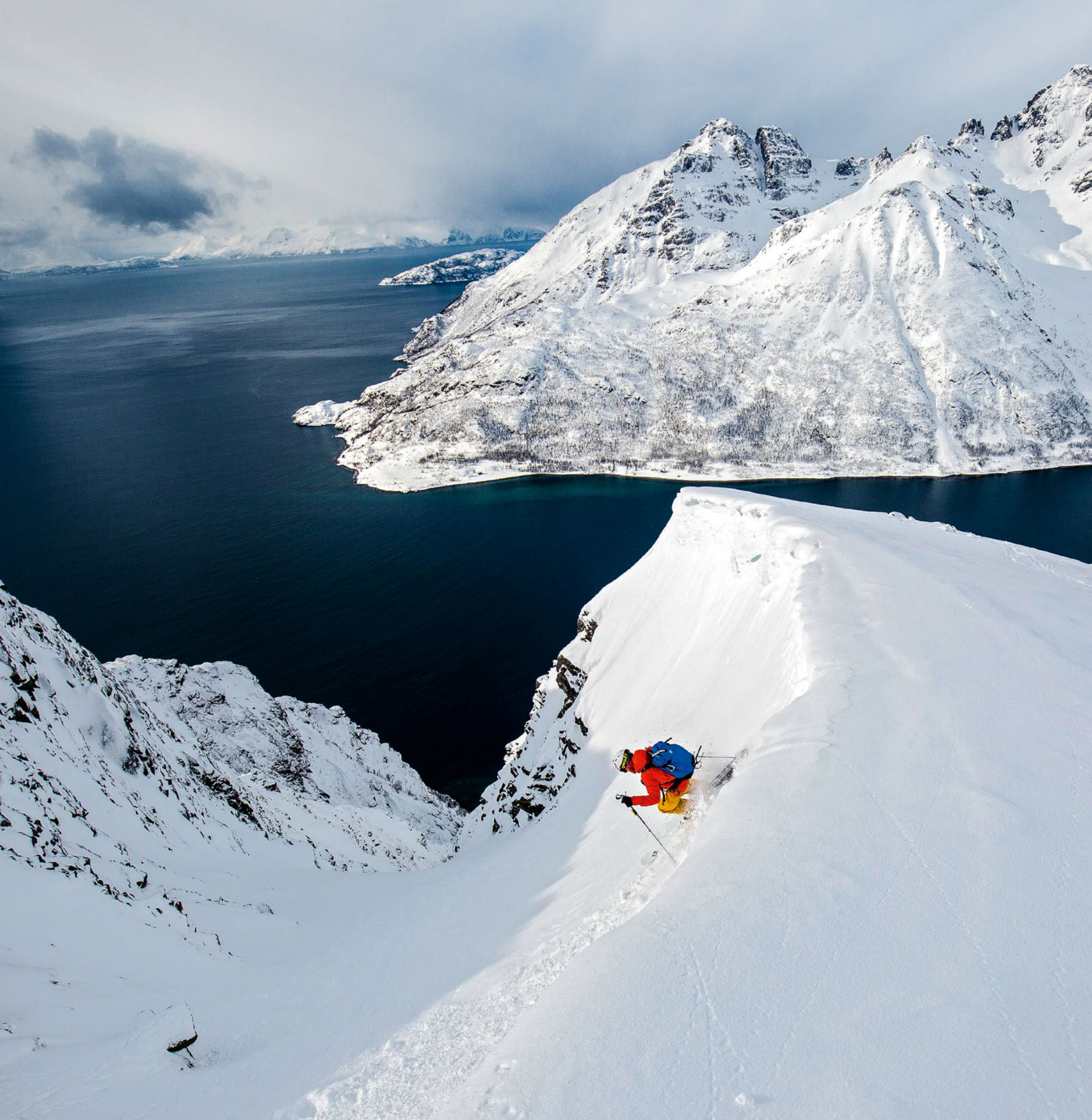
From the boat, we had spotted couloirs that run on the western side of the mountain all the way down to the shore, so we decided to check out how they looked from above. After a careful evaluation involving a rope, it looked like one of the main couloirs would be skiable, and we decided to give it a try. It provided roughly 500 meters of vertical, steep skiing. We had big smiles on our faces when we reached the shore. When we got back to our boat, the sun was shining and it was time to plan the next day. Wanting to check out how the terrain looked a bit further down the fjord in Jökelfjord, we enjoyed a beautiful evening cruise to get there. The next day proved once more that you can't count on the weather.
Wind was blowing from the east and it snowed hard. We docked in the old harbor of Jökelfjord, a two-hour sail from Reinfjord. It became clear that there wouldn't be any skiing that day, so we spent our time spotting avalanches on the other side of the fjord. On our way to Jökelfjord, we had passed this beautifully looking couloir leading down from Aibmadasgaisa. I had my eyes on the very same couloir on Google Earth when pre-planning the trip, so we made plans to ski it the day after. Considering the conditions, it was a bit sketchy, but it looked like it could have been sheltered from the wind. The next morning, we moved our gear to shore. It was reasonably safe and easy to approach the couloir from below.
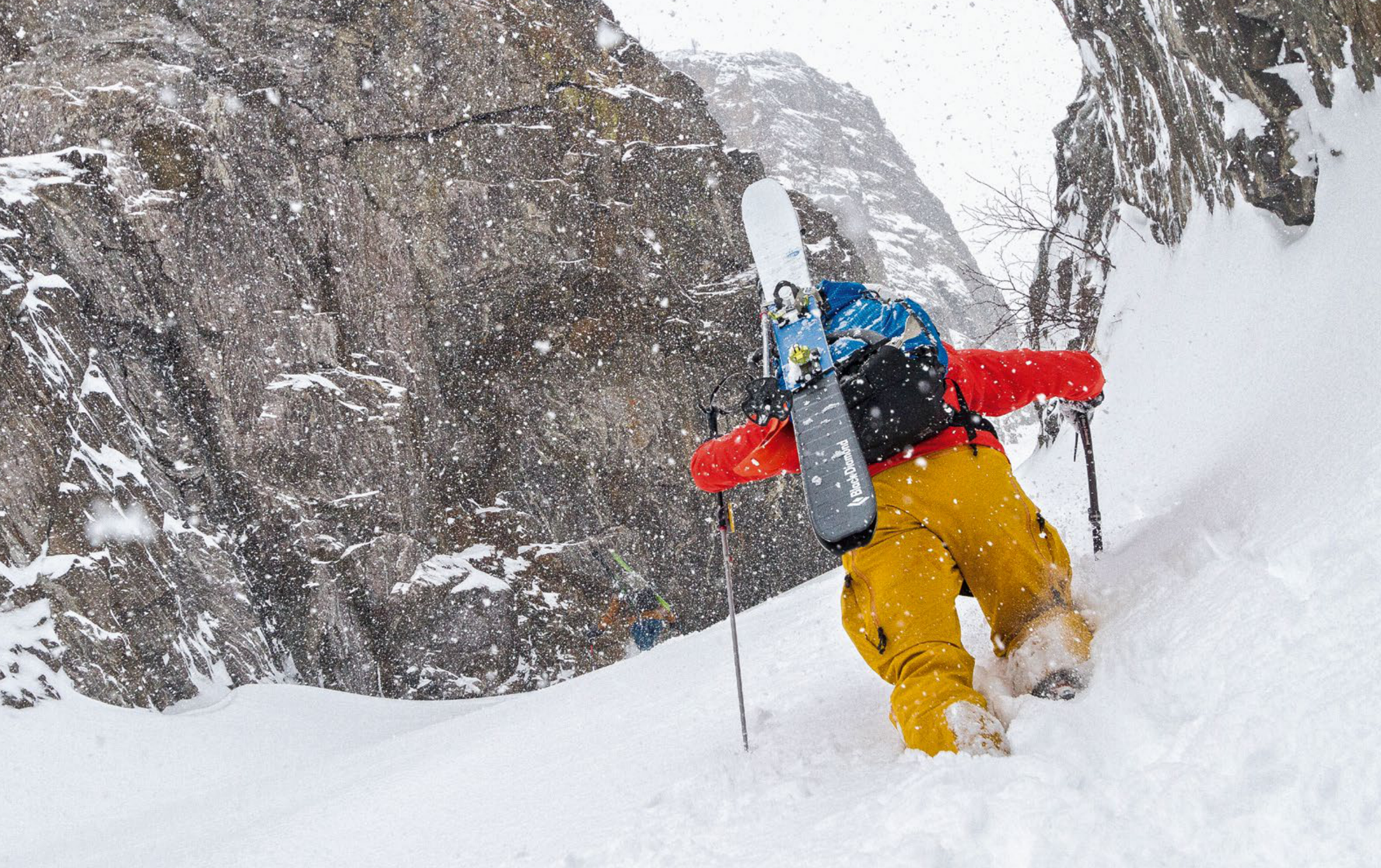
We tested the snow on our way up and got confirmation that it wasn't affected by the wind. In fact, it turned out to be full of light powder just beyond the icy entrance at the top. The skiing was the best that I've ever experienced! The boat was waiting for us below as we were making turns in the sunshine. Due to the difficult access, this was probably the first descent of that couloir. We took the privilege to name it "Opal," the name of the wooden lady that had safely shipped us to these beautiful Northern islands of Norway.