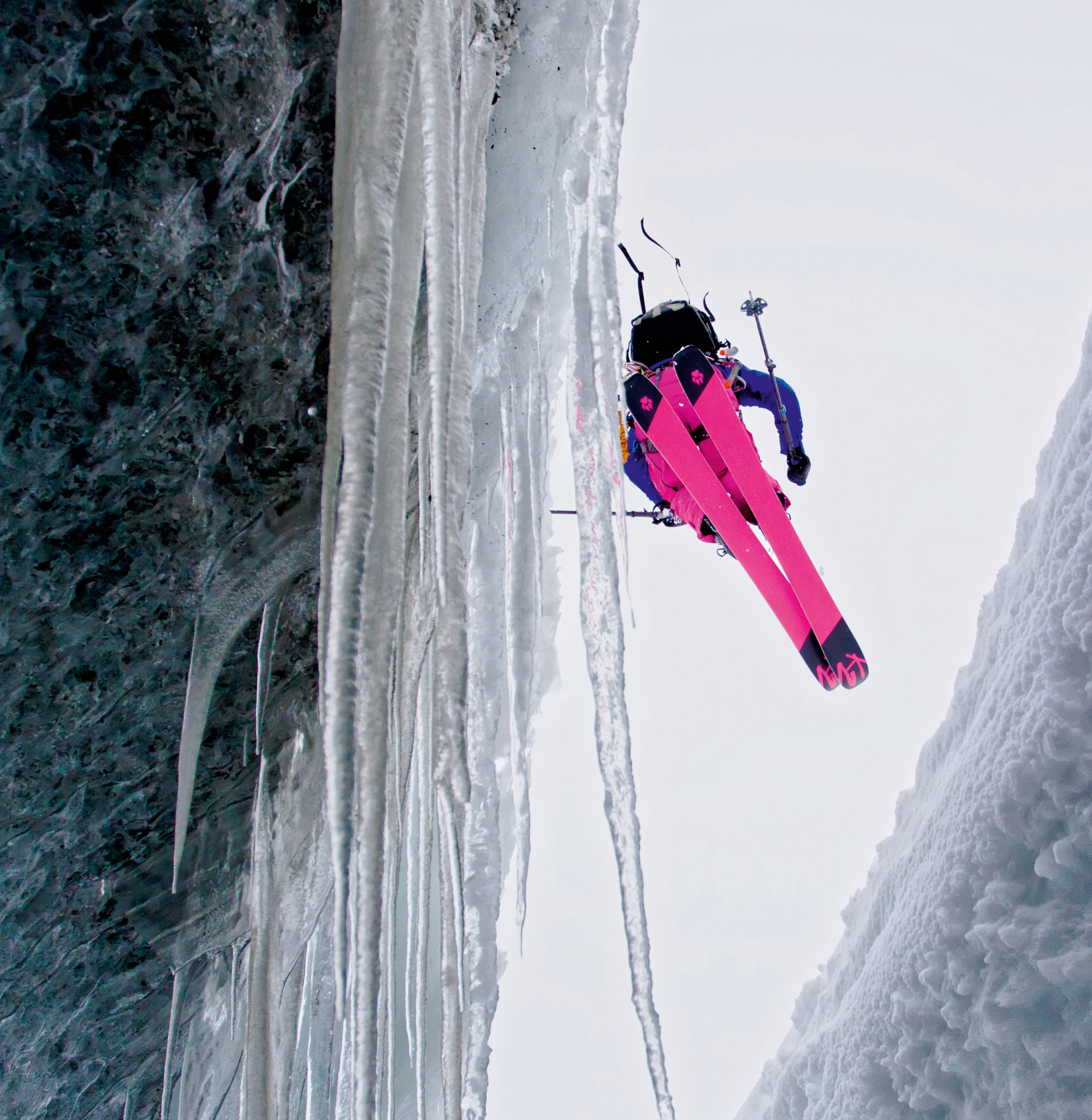
Kanada · Kluane & St. Elias Mountains
Lost and Found
Issue 2020 · Words: Ryan Stuart · Photos: Alexander Mackay · 5 min read
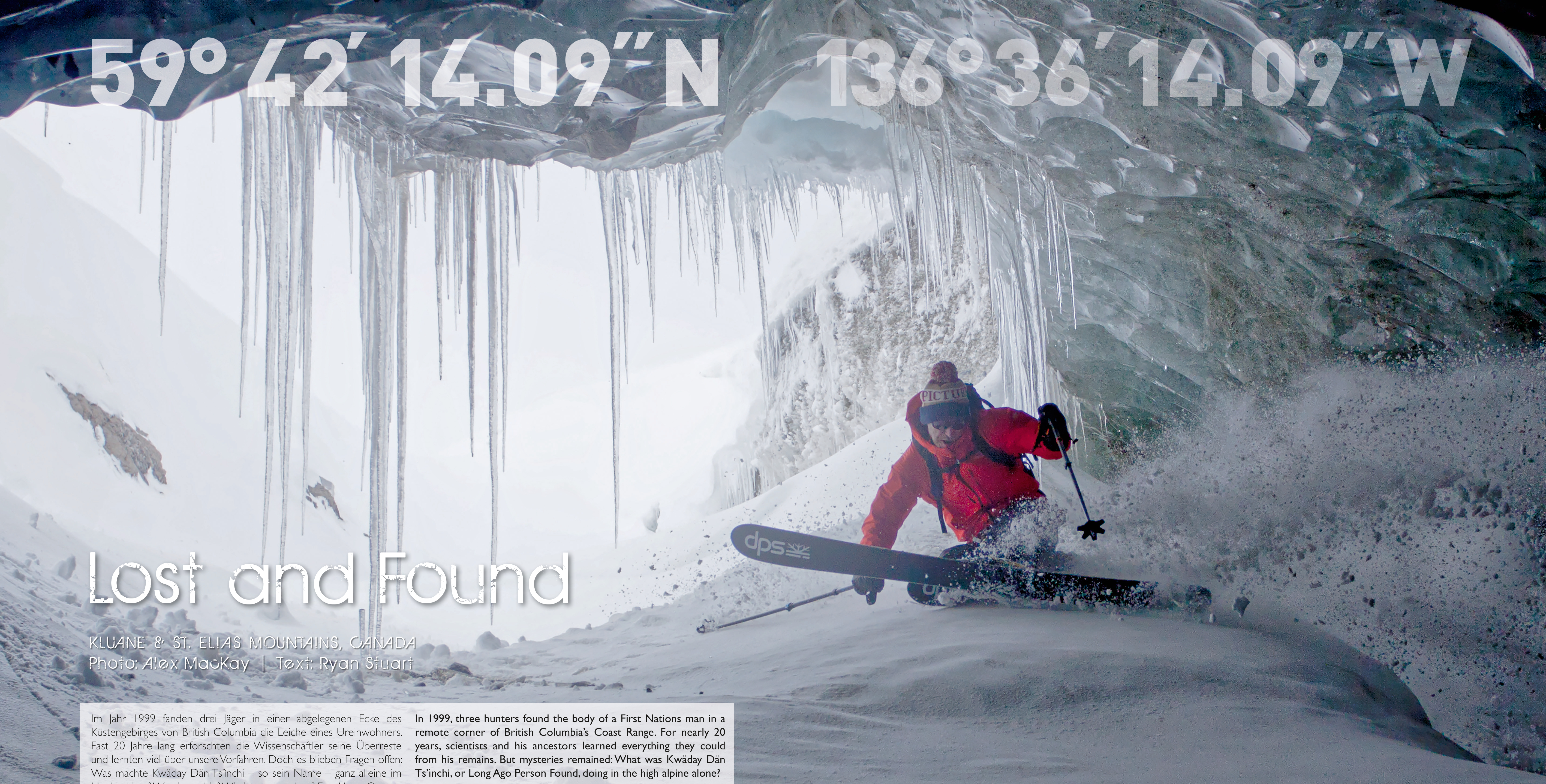
In 1999, three hunters found the body of a First Nations man in a remote corner of British Columbia's Coast Range. For nearly 20 years, scientists and his ancestors learned everything they could from …
In 1999, three hunters found the body of a First Nations man in a remote corner of British Columbia's Coast Range. For nearly 20 years, scientists and his ancestors learned everything they could from his remains. But mysteries remained: What was Kwäday Dän Ts'inchi, or Long Ago Person Found, doing in the high alpine alone? Where did he go? And how did he die? A small group of skiers decided to see if they could find the answers – as well as a few first descents – by traveling deep into the B.C. mountains towards Kwäday's final resting place. Along the way, they found a trail revealing forgotten knowledge, plenty of adventure, and a deeper understanding of human nature and the mountains' draw. I'm lost.
I know I'm standing 100 meters above the tongue of Samuel Glacier. We'd just gone for a short ski to find a route from our base camp through an old glacial moraine down to the glacier, our highway to couloirs and steep faces on the B.C.-Yukon-Alaska border. Going down went smoothly. We slid away from camp in boot-top late-April powder and found ourselves in a playground of intricate ridgelines and cornices. Getting back requires a more convoluted route finding. My mental map isn't lining up with reality on the ground. We've crested the moraine, but I don't see any sign of camp. Sky, snow, slope, tracks blend into one. I can feel panic creeping up. I suddenly feel a lot more compassion for Kwäday Dän Ts'inchi.
Three hundred years ago, Kwäday was traveling through the same mountains when something bad happened. Maybe he fell in a crevasse or perhaps, like me, got lost in a whiteout. One way or another, he died and ended up entombed in snow, high in the northern Coast Range. The ice preserved him until in the summer of 1999 three hunters found his remains. Seventeen years of intensive study unearthed treasure of information about how indigenous people lived in the north before contact with Europeans – and challenged my ideas about the history of mountain adventures. I think of exploring mountains as a first-world pastime. If you hunt and gather for a living, you probably don't waste much time and energy on hiking for fun.
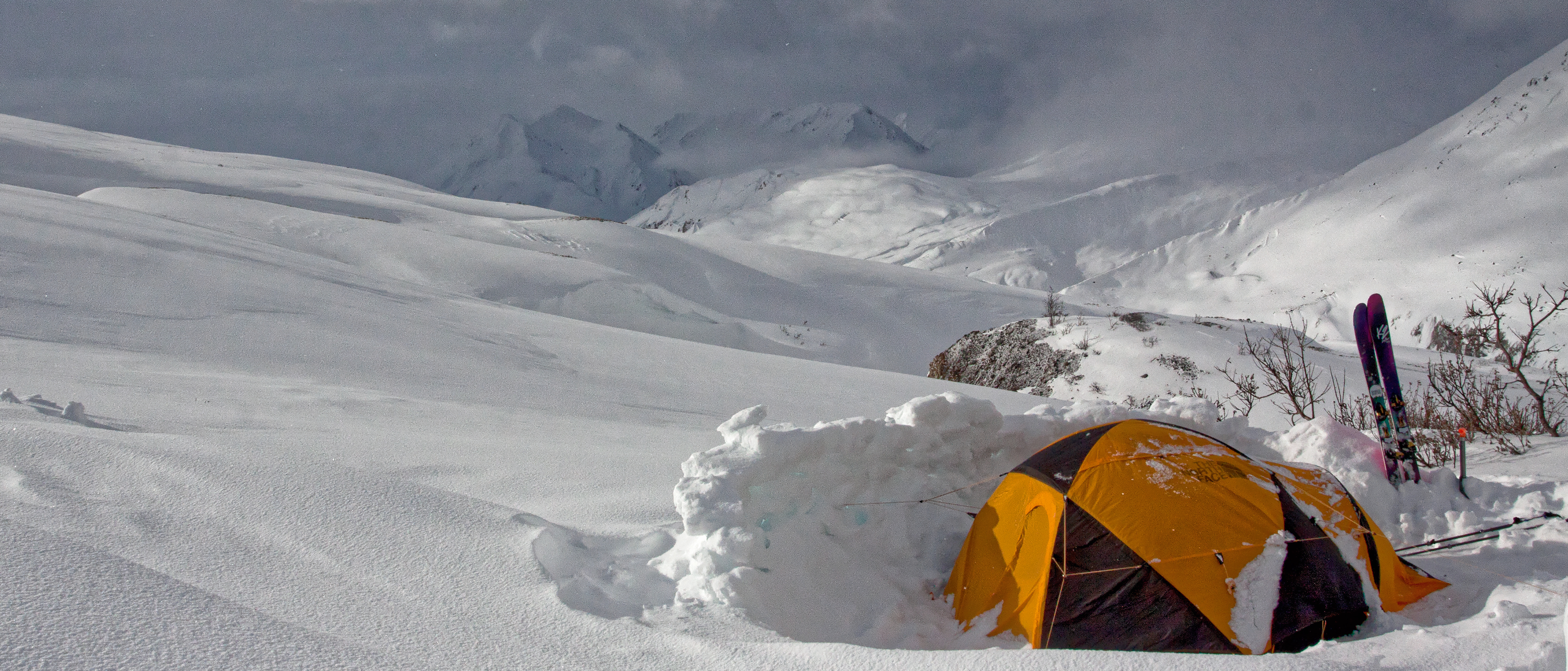
But research showed that Kwäday was an experienced wilderness traveler who wandered far from standard routes. I wondered why and decided to visit his final resting site. The fact that it's in a giant mountain playground, littered with exceptional unskied lines, only made the adventure more compelling. The Samuel Glacier wasn't easy to reach in Kwäday's day, and it still isn't. Our team of five met up in Whitehorse in Canada's Yukon territory. Four hours of driving later, we pull into a parking lot in the vast openness of Chilkat Pass near Haines, Alaska. After a long approach, we set up camp on a hillside overlooking the glacier's tongue.
As we build snow walls to protect our tents from the wind, the clouds play around the summits revealing glimpses of numerous couloirs and faces tumbling onto the gentle glacier. Beyond, hidden in the clouds and mountain faces, is Kwäday's resting place. It looks like more than enough ski fun to fill six days. But it's serious terrain. I wouldn't enter it without skis, glacier travel and avalanche gear, GPS, topo map, and a few buddies to rely on should things go wrong. Kwäday had none of that. After the hunters found him, an archeological team removed his remains from the ice. They worked closely with the local Dän, Tlingit and Tagish people, groups belonging to the southern Tutchone First Nations, who have lived in this area for millennia.
Kwäday Dän Ts'inchi means "Long Ago Person Found in southern Tutchone". The University of Victoria published a 688-page book on everything they learned about Kwäday. I could use the reading material the next day. We sit in camp, waiting for the wind to die and visibility to improve. Late in the afternoon, it finally does, and that's when I get lost. I know camp should be right in front of me. How could I have gotten lost so easily? I slam my pole into the snow. Then one of my buddies skins right past me and I finally see the tents, right in front of me. Could this have happened to Kwäday too? This possibility comes a little clearer when the sun finally makes an appearance three days into the trip.
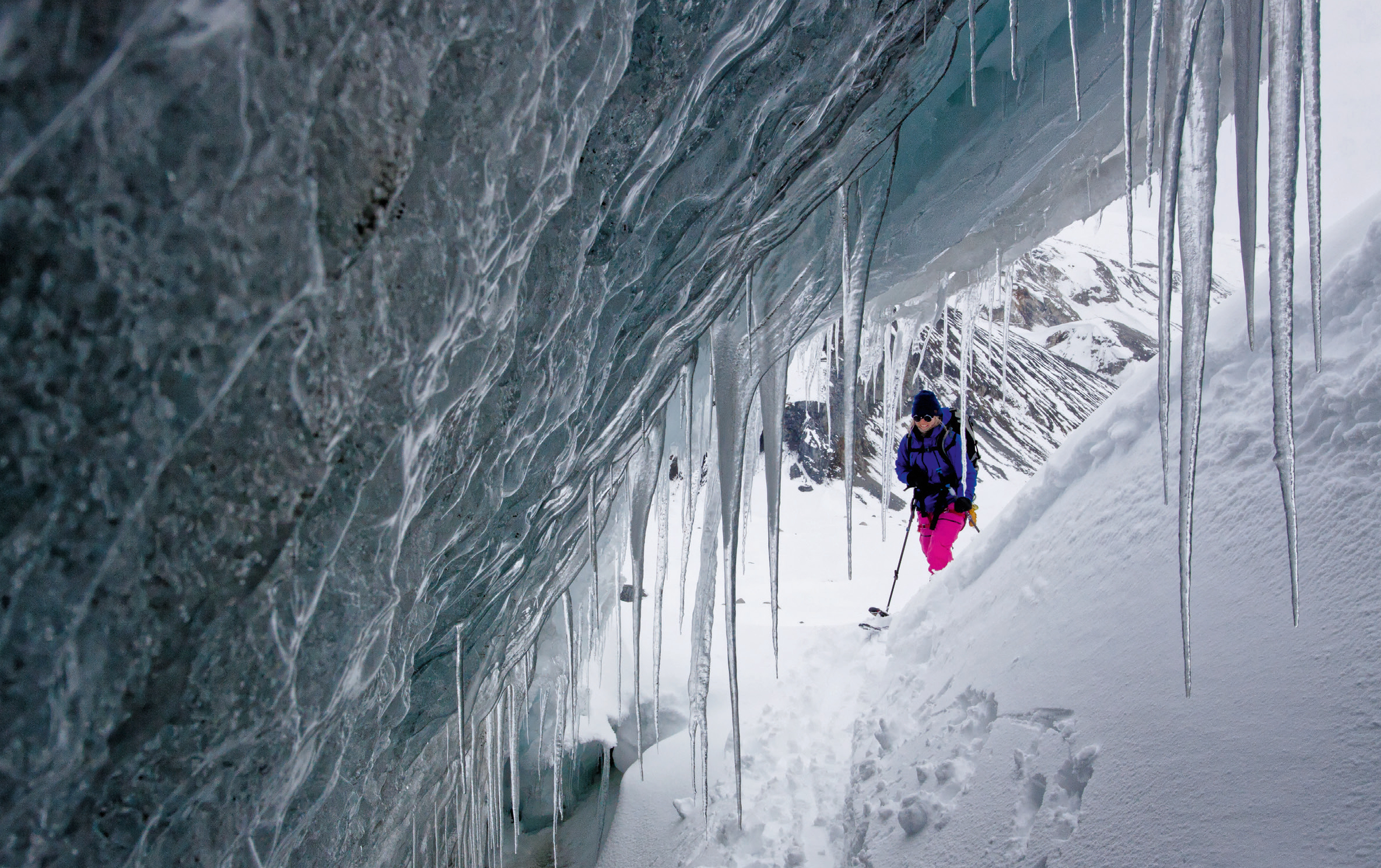
We get up early and follow our tracks to the glacier, past where we built a jump over a crevasse, and start climbing towards one of the lines we've been fantasizing about. But before we get there, the clouds roll back in. We pull out a topographic map. While considering the options, we trace the route Kwäday probably took to get to his final resting place, somewhere hidden in the clouds above us. By sampling the food remains, pollen and minerals in his gut and sleuthing around on the ground, scientists were able to connect the dots along his route. He would have passed right by where we are standing. It's hard to fathom on a day like today. I look around. That's the last we see of the Samuel Glacier.
The next morning, we wake up to more stormy weather and no break in the forecast. Maybe Kwäday doesn't want to be disturbed. We pack up and look for turns on the dryer, east side of the range. That night we hike up a couloir right above the Haines Highway. Sitting at the top watching the sun set very slowly over a panorama of peaks, I'm awed by the massive expanse of the mountains. But I look at it with different eyes. Where I used to see untrammeled wilderness, I now see the world Kwäday once occupied. There are plenty of theories about what he was doing in the mountains 300 years ago. The tragic romantics say he was returning to his bride after asking her parents for permission to marry. I have a different theory.
As I slide into the run carving into the crusty powder, spraying snowy arcs that blow back into my face, I think maybe, like us, he just wondered what the snow's like over the next hill.