Norwegen · Hurrungane Range (Turtagrø)
Magic Moments
Issue 2016 · Words: Anton Brey · Photos: Anton Brey · 5 min read
Whether it's for work-related or personal reasons, the mountains play a major part in my life. I was traveling Norway in January 2011 when I saw a photo in a ski magazine that took hold of me …
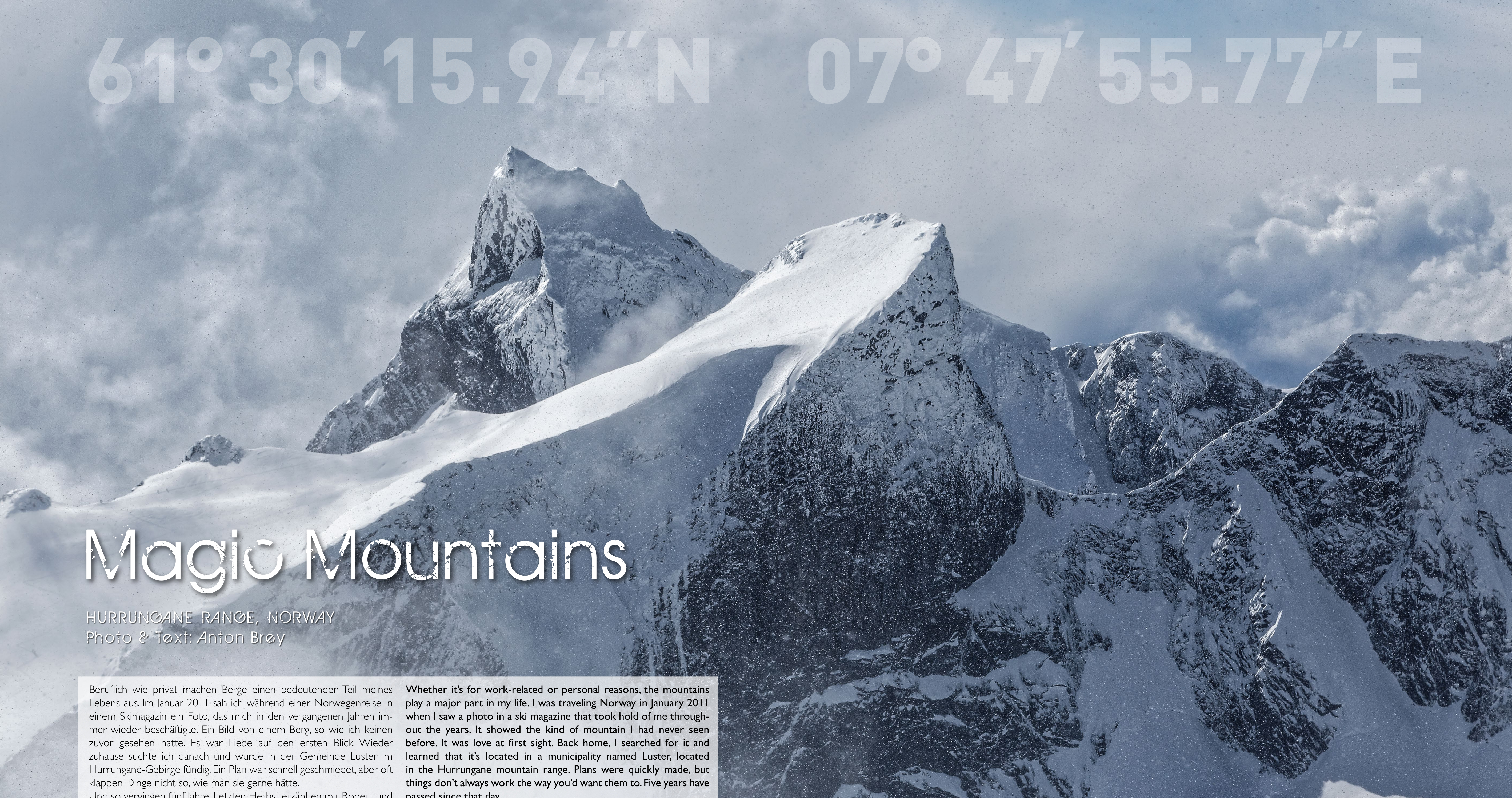
Whether it's for work-related or personal reasons, the mountains play a major part in my life. I was traveling Norway in January 2011 when I saw a photo in a ski magazine that took hold of me throughout the years. It showed the kind of mountain I had never seen before. It was love at first sight. Back home, I searched for it and learned that it's located in a municipality named Luster, located in the Hurrungane mountain range. Plans were quickly made, but things don't always work the way you'd want them to. Five years have passed since that day. Last fall, Robert and Tom invited me to go ski touring in Norway. They wanted to go to exactly that area.
I did not hesitate and made an instant decision: Yes, I would certainly join them to climb the Ringstind in late April. We take a small two-engine aircraft from Oslo to Sogndal, where we rent a car and drive to Turtagrø, located at 900 meters above sea level. We plan several tours into the Hurrungane range with the Hotel Turtagrø as our base. Due to its location and altitude, the mountain range at the end of the Lusterfjord receives plenty of precipitation, and thus also lots of snow in the winter. On the downside, the region is located above the tree line, which leaves no options when the weather is bad, except for a huge collection of alpine literature found in the hotel's library, and drinking coffee.
Usually, the first day of a trip is mostly reserved for an approach involving heavy baggage and a long, incessant haul. At the mountain hut, it's usually all about pea soup, sleeping bags, snoring hikers in the dormitory, boiling water for tea, etc. But not here. The street to Turtagrø is cleared from snow from Easter weekend, and the hotel is open for ski touring season. It's blue bird when we arrive at our destination. We check into the hotel and discuss our planned tours on the sundeck, maps on the table and the mountains straight ahead of us. After checking the current avalanche situation, we inspect the road to Årdal.
At the moment, it's open all the way to the gate, which will save us two or three kilometers of hiking the flat trail when setting out for the standard tours. Like all-inclusive vacationers, we stumble into the breakfast room at eight in the morning. The weather is perfect, and the temperatures are below zero. An hour later, we attach the skins to our skis and leave for the Store Dyrhaugstinden. It only takes about 45 minutes until we can see the Ringstind rising in the Southwest. "Wow," is all I can say. It's even more impressive in real life. The photo was deceiving. A glacier covers the Eastern face; the North face looks grim, slightly overhanging, and meeting the mighty icefall below. I have never seen another mountain like this.
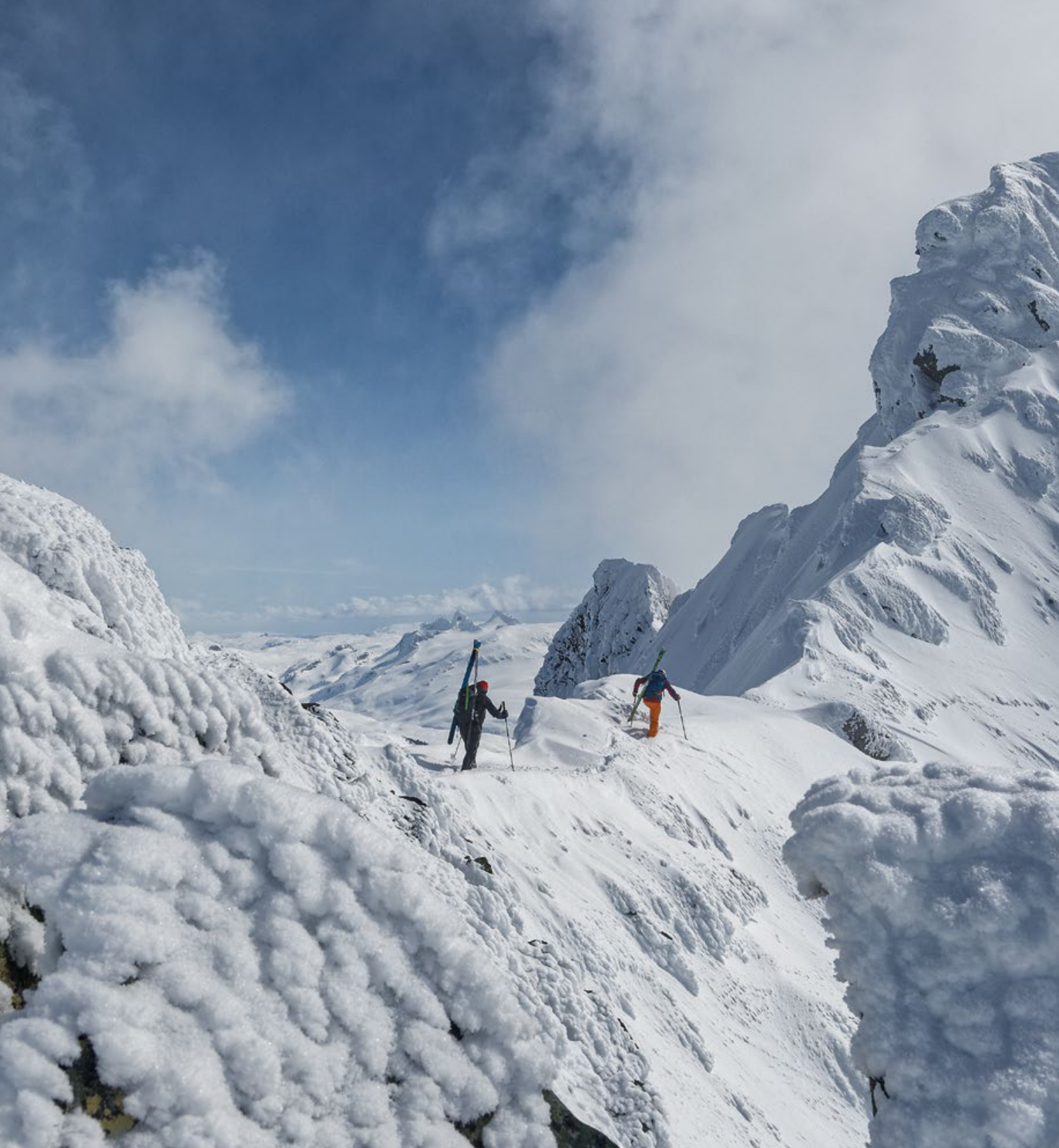
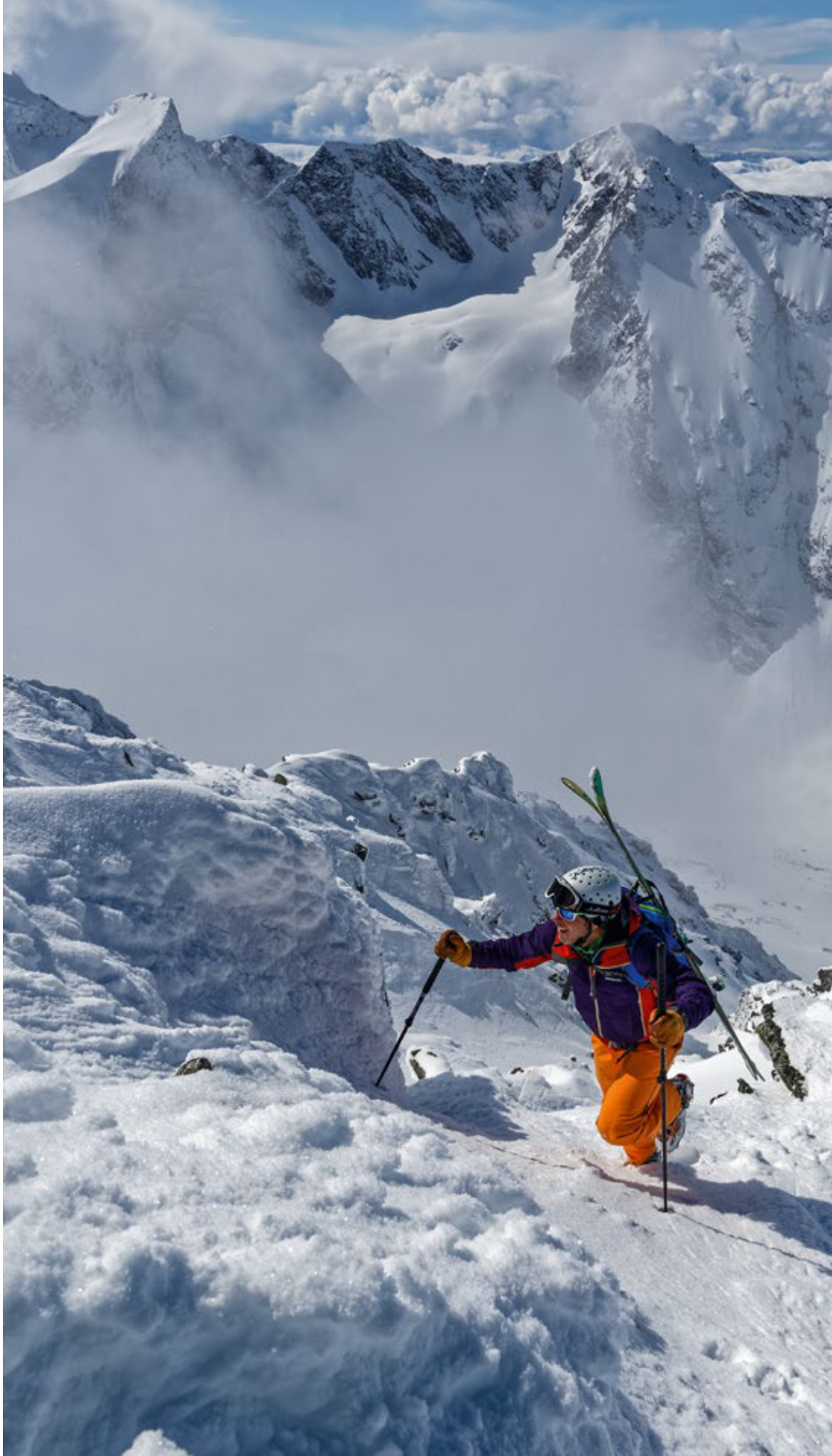
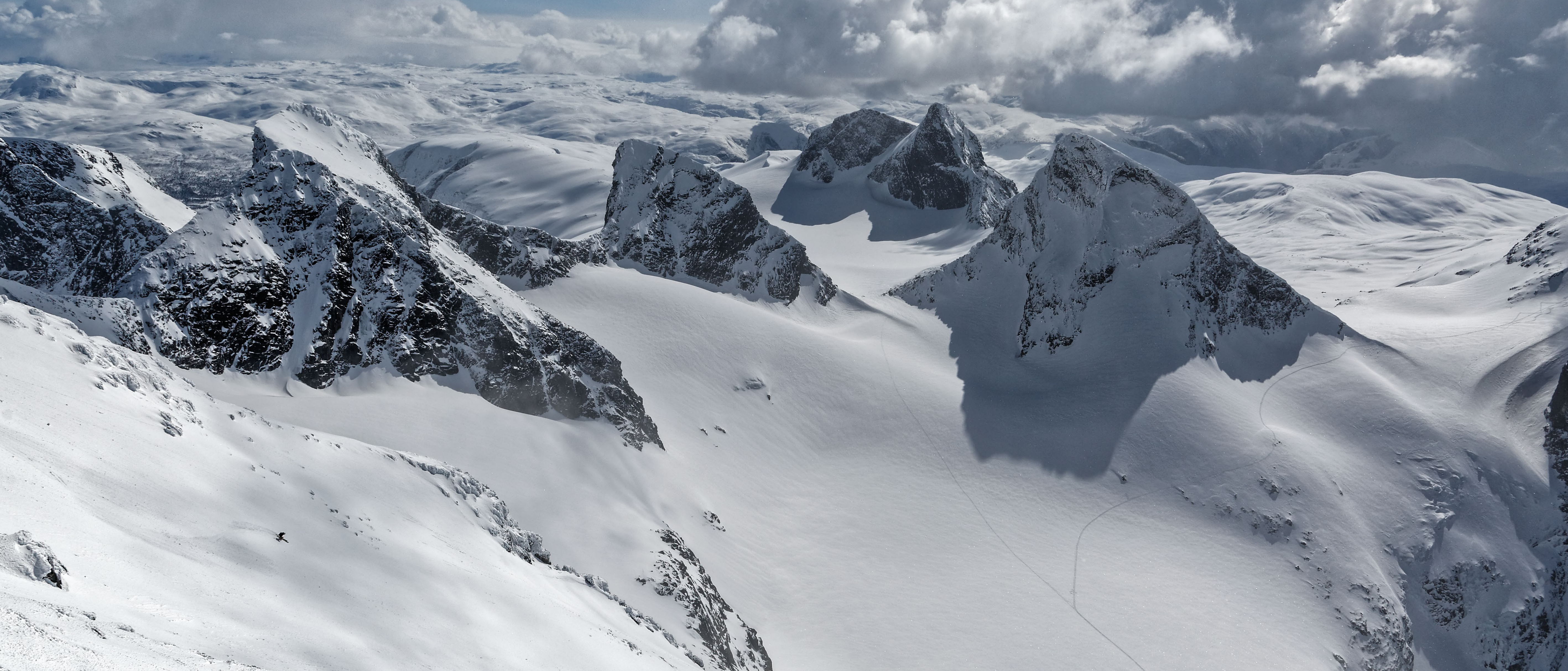
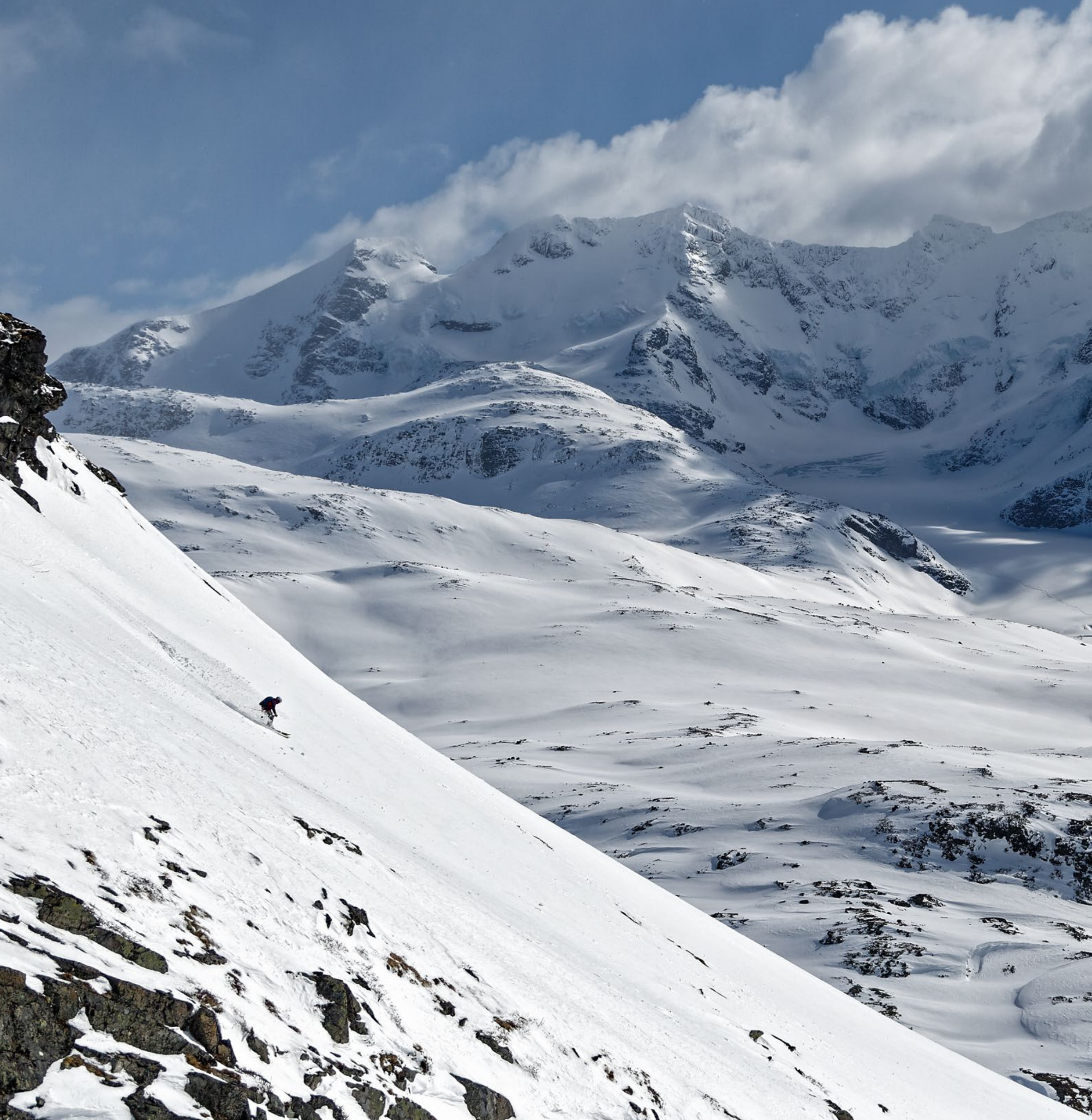
Making good progress, we soon make it to the top of the Store Dyrhaugstinden. The view is breathtaking. Store Skagastølstind to the East, Ringstindane to the South, Austanbotntind right behind it; Soleibotntindane to the West, and also Lauvnostinden with its 800-meter Eastern chute. After a short break, we ski the southwestern couloir. The snow is perfect. The flawless ski day ends with a tasty three-course dinner. We agree on tomorrow's plan: the Lauvnostinden, giving us the choice of two steep lines. We leave the breakfast buffet around 9 am and enter the comfort zone. Like yesterday, we hike a seemingly endless shoulder that, at its highest point, takes us straight onto a ridge.
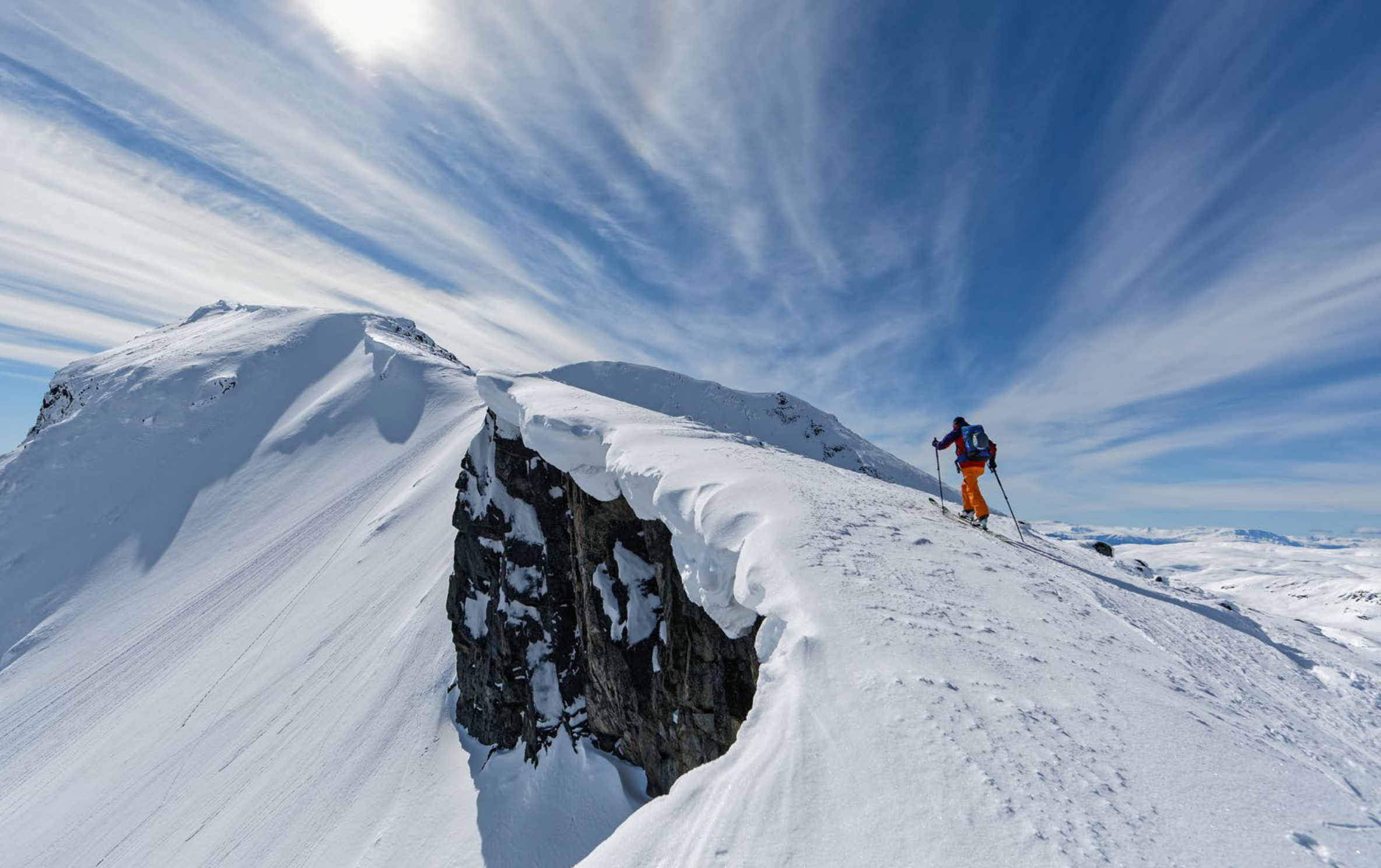
From there, the Eastern couloir stretches down into the valley – 800 inviting meters. Everything must be perfect; no mistakes permitted. Robert finds the right spot for a block test and discovers a frozen layer, 20 cm below the snow cover – exactly what the Norwegian avalanche forecast had announced. We agree to refrain from skiing the Eastern couloir and climb the last meters to the summit, then following a ridge that takes us to another chute. We see that two other skiers have already been here. At the drop-in, they impaired the weak layers, triggering an avalanche in the top part of the slope. They were lucky. The track shows that they turned around and escaped in time. You shouldn't force it when the conditions aren't right.
We decide to follow our tracks back down to the valley. The morning of day three is rather lousy. Light snowfall and flat light force us to wait until noon. Around 11 am, we get far too impatient and set out for the Dyrhaugstind. Visibility is poor. After about an hour, we realize that it doesn't make any sense. We take the skins off and ski back down. By afternoon and two beers later, the clouds finally open up. We settle with the view from our sundeck. Right about now, we understand that in Norway in April, you can set out later in the day. Sunset is around 9 pm, providing enough daylight for a late afternoon tour. On day four, we start the day with the approach through the Helgedalen to Fannåraki.
After roughly an hour, we run into a massive mountain: without further ado, we face a thousand vertical meters that have to be climbed. Reaching the top, we have to look closely to find the hut concealed by a thick layer of snow and ice. Up here, you get the best overview of the Eastern part of the Hurrungane with its hanging glaciers covering Styggedalsbreen and Gjertvassbreen. A tent city slowly forms in front of our hotel. In a few days, the "High Camp Turtagrø" will start, a ski touring festival with some 4,000 participants coming out here to hike and to party. It's time for us to leave, but not before we'd stand on top of the Store Ringstind. This summit is by far the most emotional moment of our trip – and a worthy finale.