Norwegen · Lofoten
Mountains in the Sea
Issue 2011 · Words: Bruno Compagnet · Photos: Daniele Castellani · 5 min read
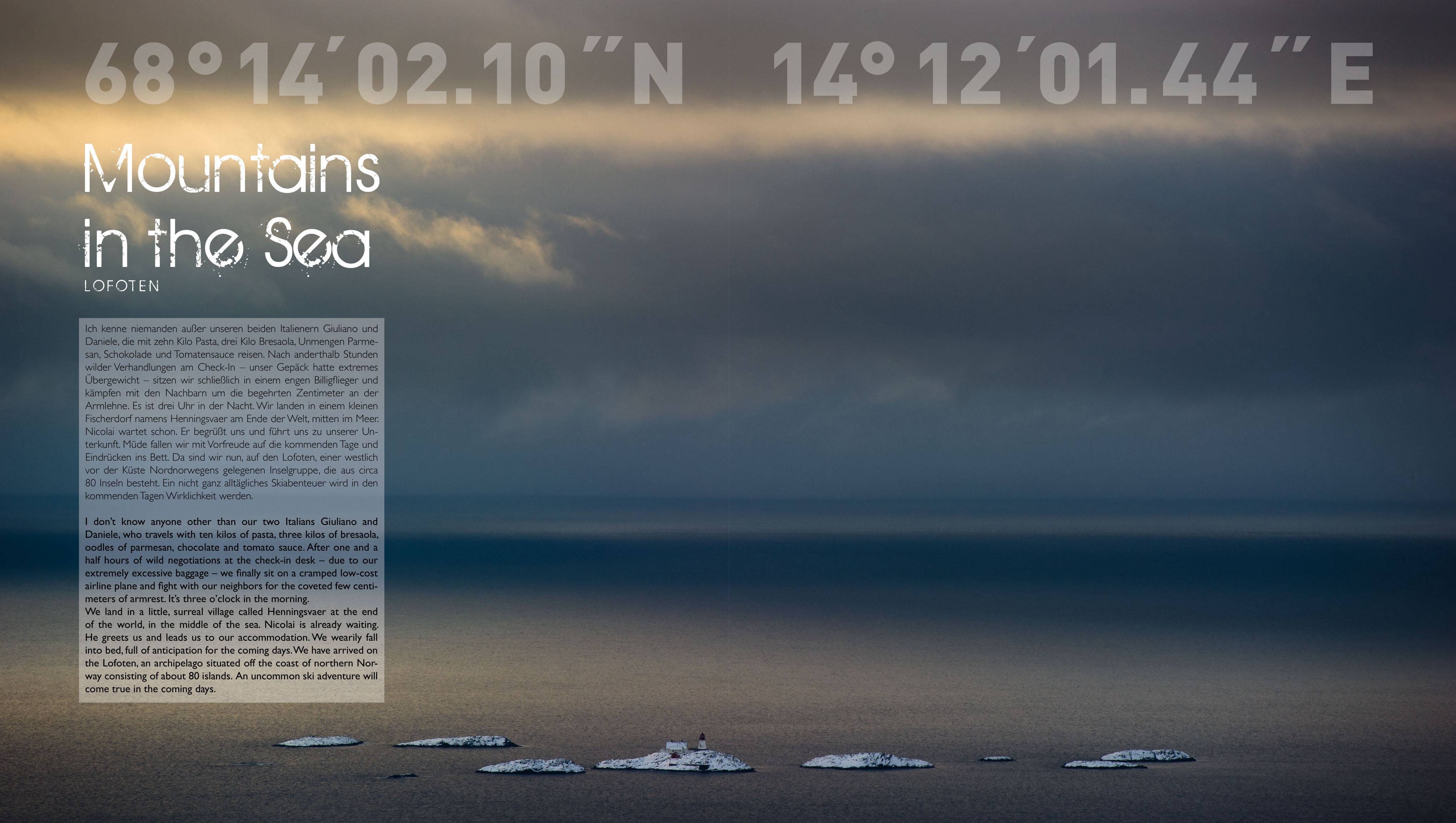
I don't know anyone other than our two Italians Giuliano and Daniele, who travels with ten kilos of pasta, three kilos of bresaola, oodles of parmesan, chocolate and tomato sauce. After one and a …
I don't know anyone other than our two Italians Giuliano and Daniele, who travels with ten kilos of pasta, three kilos of bresaola, oodles of parmesan, chocolate and tomato sauce. After one and a half hours of wild negotiations at the check-in desk – due to our extremely excessive baggage - we finally sit on a cramped low-cost airline plane and fight with our neighbors for the coveted few centimeters of armrest. It's three o'clock in the morning. We land in a little, surreal village called Henningsvaer at the end of the world, in the middle of the sea. Nicolai is already waiting. He greets us and leads us to our accommodation. We wearily fall into bed, full of anticipation for the coming days.
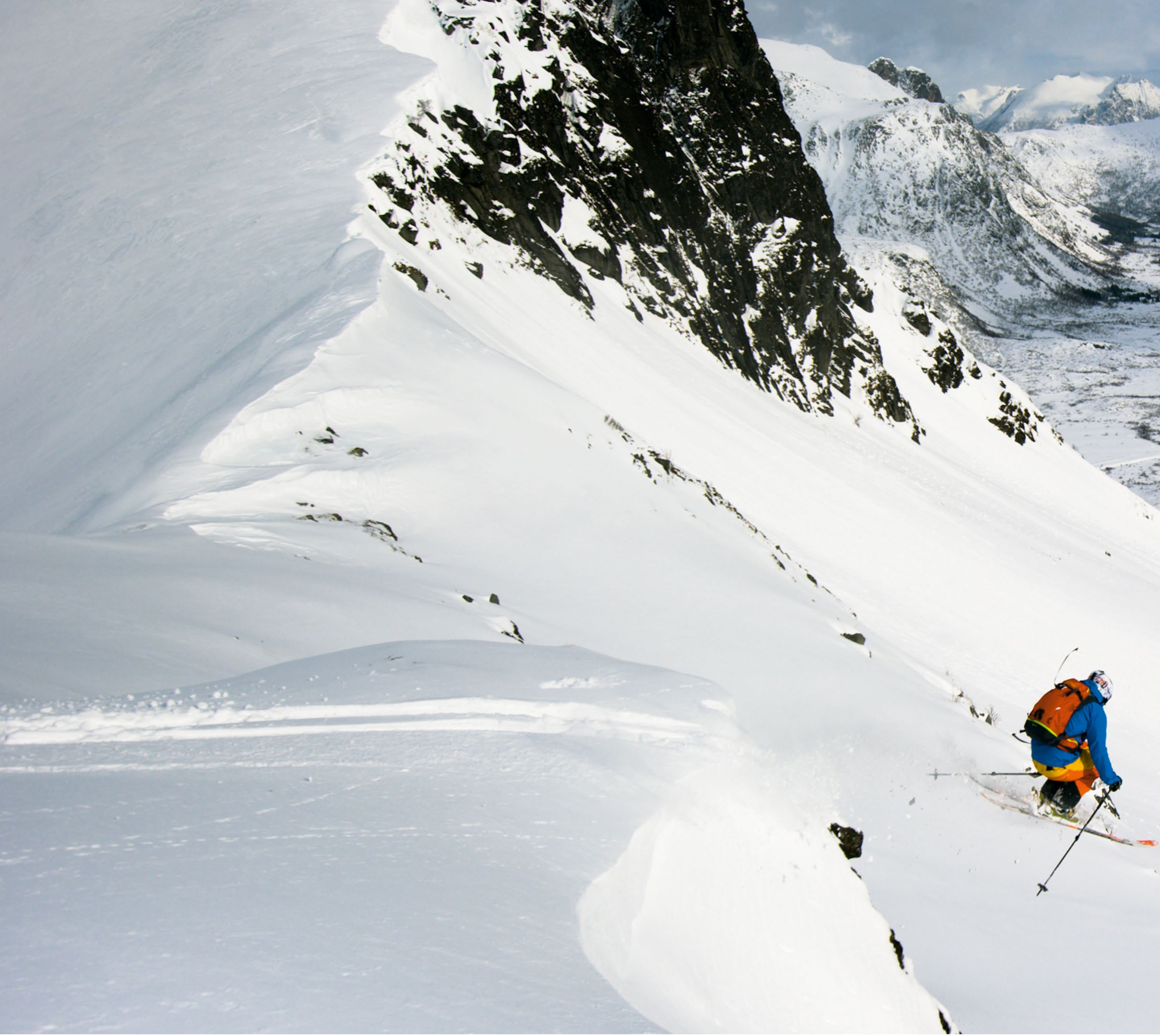
We have arrived on the Lofoten, an archipelago situated off the coast of northern Norway consisting of about 80 islands. An uncommon ski adventure will come true in the coming days. The geography of the Lofoten islands and their proximity to the sea offer unique freeride conditions rich in variety within a few kilometers. In the morning the view out of our window over the sea, as well as the preparation routine, are strongly reminiscent of surfing. Getting up, checking the weather, loading the bus, driving to the spot, and then enjoying to the fullest. However, instead of surf boards we've got skis on the roof and under our feet.
Time is passing surprisingly quickly, probably because the weather conditions change unbelievably fast, keeping our minds busy all the time. Within an hour strong snowfalls can merge into wonderful spring days, as the wind chases away the clouds and then brings snowfall again. The bizarre light differences provide moments of spectacular atmospheric conditions. Every day we get up at 5am and then let nature decide our daily plan. For ten days we abandon ourselves in this wonderful routine. The days will be engraved in my memory, some of them especially deep. On the first day we hike through fresh snow, in forests that border the sea. We enjoy the tour and also the special mood in the air. At the foot of the fjord, locals have constructed a tipi.
In the tent plain benches are covered in reindeer skins. We stay and enjoy a simple lunch. After these refreshments we climb higher up and it gets stormy; the wind lets us feel its full power. In the late afternoon we return to our host, who pampers us with tea, coffee, and delicious waffles. With a full belly and a clear head I enjoy the view from the window. I observe the raging thunderstorm, the eagles, and the ships in the harbor. We gladly accept an invitation to dinner from my friend who works on a fishing boat. We demolish a bucket of freshly caught shrimps, washing them down with a good amount of beer. Pure Norwegian hospitality. May we never be worse off. For the first ski tour we decide to set out for a snow-covered Fjord.
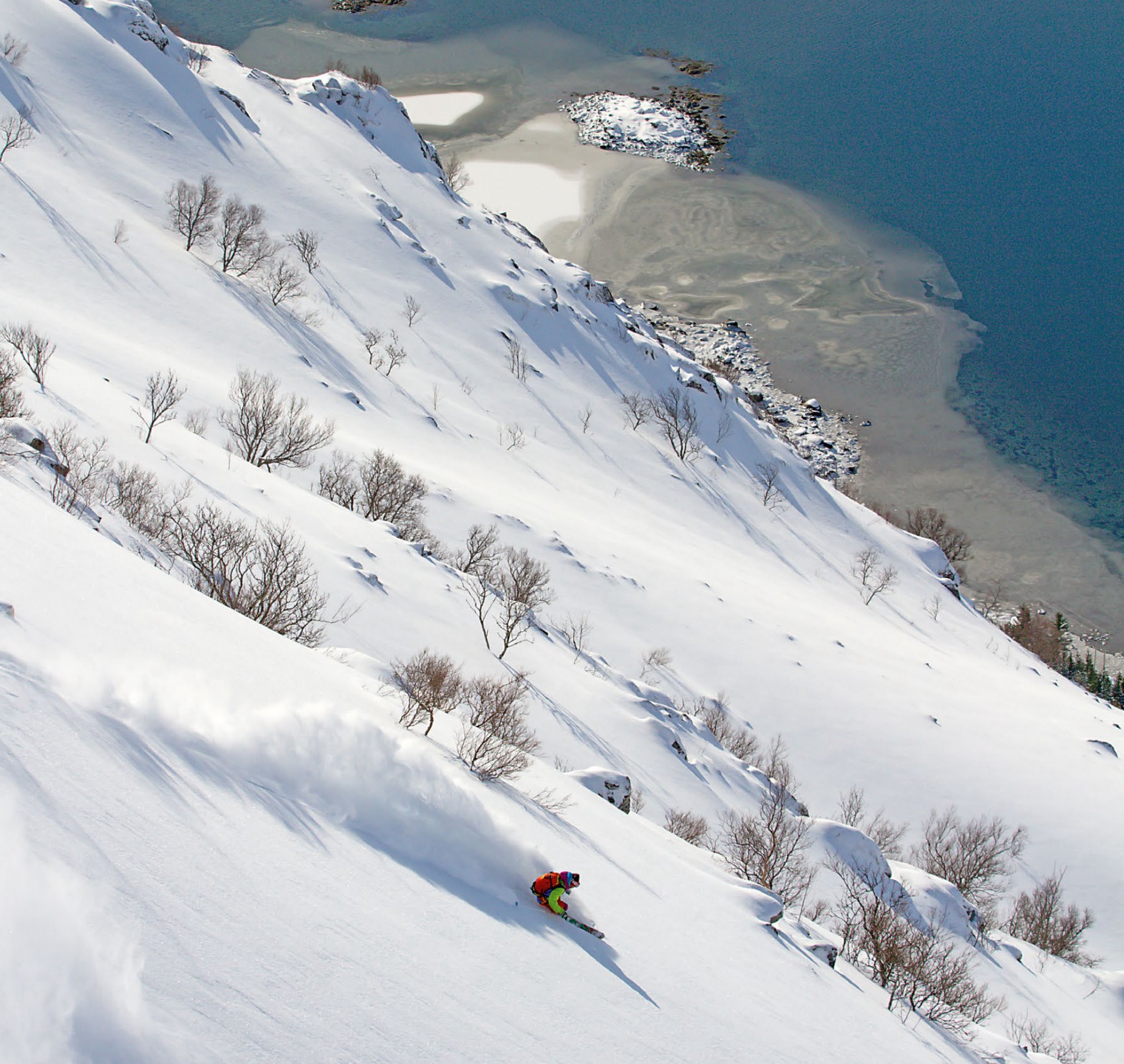
Along the way we have to shovel some snow drifts out of the way in order to get through with our bus, but eventually we reach our final destination. The high snow makes driving further simply impossible. We put our skis on and start the ascent. With increasing height the view over the whole fjord is becoming more fascinating, more breathtaking. The diverse perceptions overwhelm me. I can hear seagulls screaming, and see far away ships in the harbor. With every breath I smell the sea and on top of it all feel the anticipation of the coming deep snow skiing. It is an intense combination. Soon we are drawing lonely lines between silver birches down to the fjord. It is the icing on the cake of this unique day.
At the parking lot Giuliano fastens a rope to the car and pulls us home, by truckers who throw us bewildered and amused glances. Havard, our driver, breathes a sigh of relief when we arrive and says drily: "You have to keep to the Eleventh Commandment – don't get caught!" We laugh heartily, glad we didn't run into a police check. The mountain of the last tour is called "The Devil's Gateway". The ascent starts at the graveyard, and when I reach the chapel I ask myself if the name accounts for the climate conditions of the surrounding area, or if it's a hint at the possible consequences of this tour? I carry the camera man's bag. The ascent is precarious - 15 centimeters of fresh snow cover bare ice. Fortunately we all have our crampons.
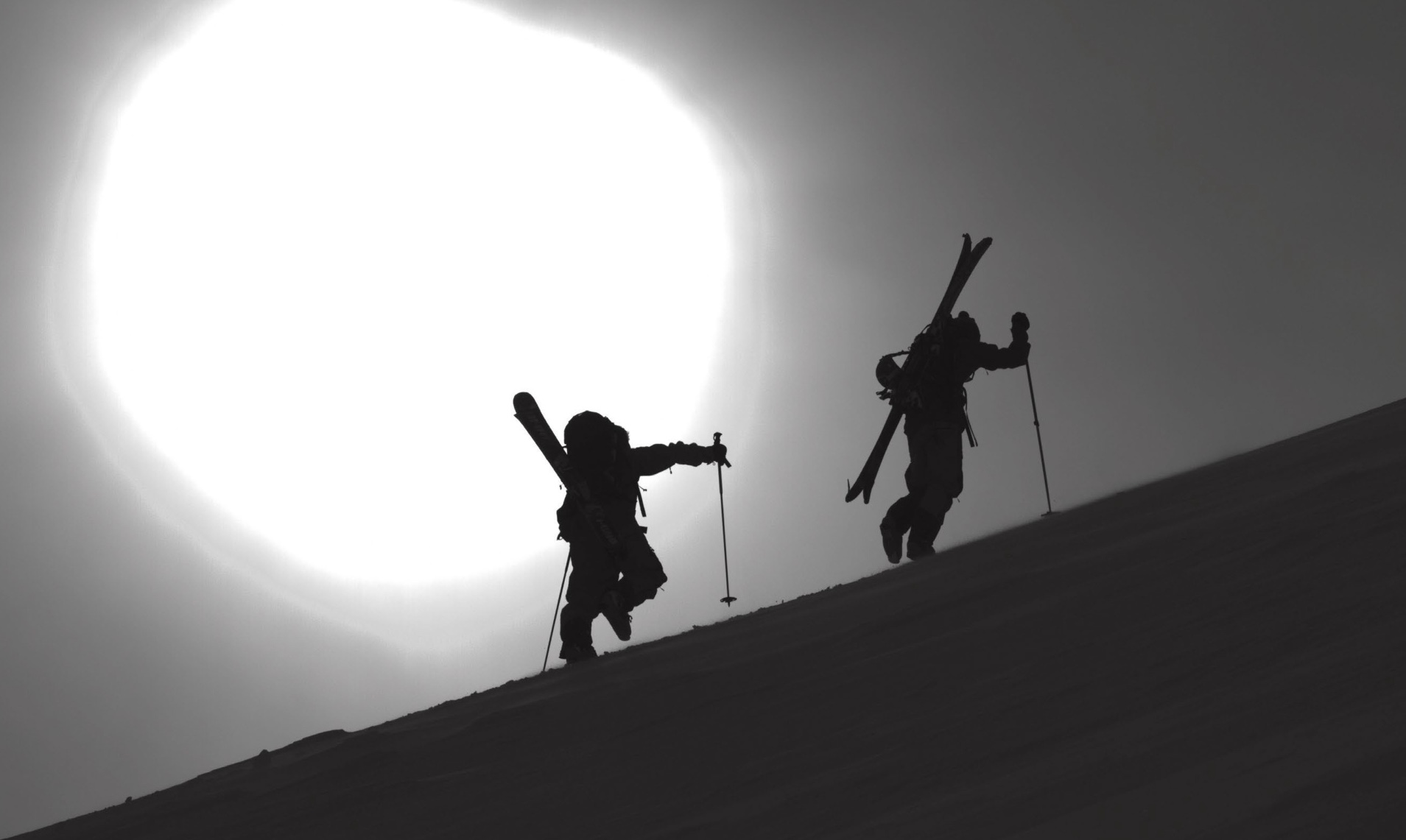
I look up at the sky, which is getting darker and darker. My lungs are burning from the cold, my legs feel numb and exhausted from the exertion of the last few days. When we reach our target, a troublesome cloud covers the summit, bringing a short spell of severe precipitation. The sun is slowly setting, but despite this I decide to climb up a secondary summit nearby. Our photographer Sverre comes with me. As quickly as the clouds came, they dissipate again. The wind dies down, the sun shines, and fresh glittering powder snow is in the air. Tears roll down my cheeks. Sverre takes the most beautiful pictures of the trip.
It occurs to me that the "Devils' Gateway" is very close to heaven, and I realize what the term might really mean: it will be difficult to top these experiences. We spend the last evening on a fishing boat. Like the good old Vikings we finally return to our apartment in the wee hours of the morning, with Nicolais' help. After a short sleep we fight again for the coveted few centimeters of armrest on the plane, marking our return to civilization.