Schweiz · Bernese Alps (Lauteraarhorn)
On the Trail of Science
Issue 2018 · Words: Ben Tibbetts · Photos: Ben Tibbetts · 5 min read
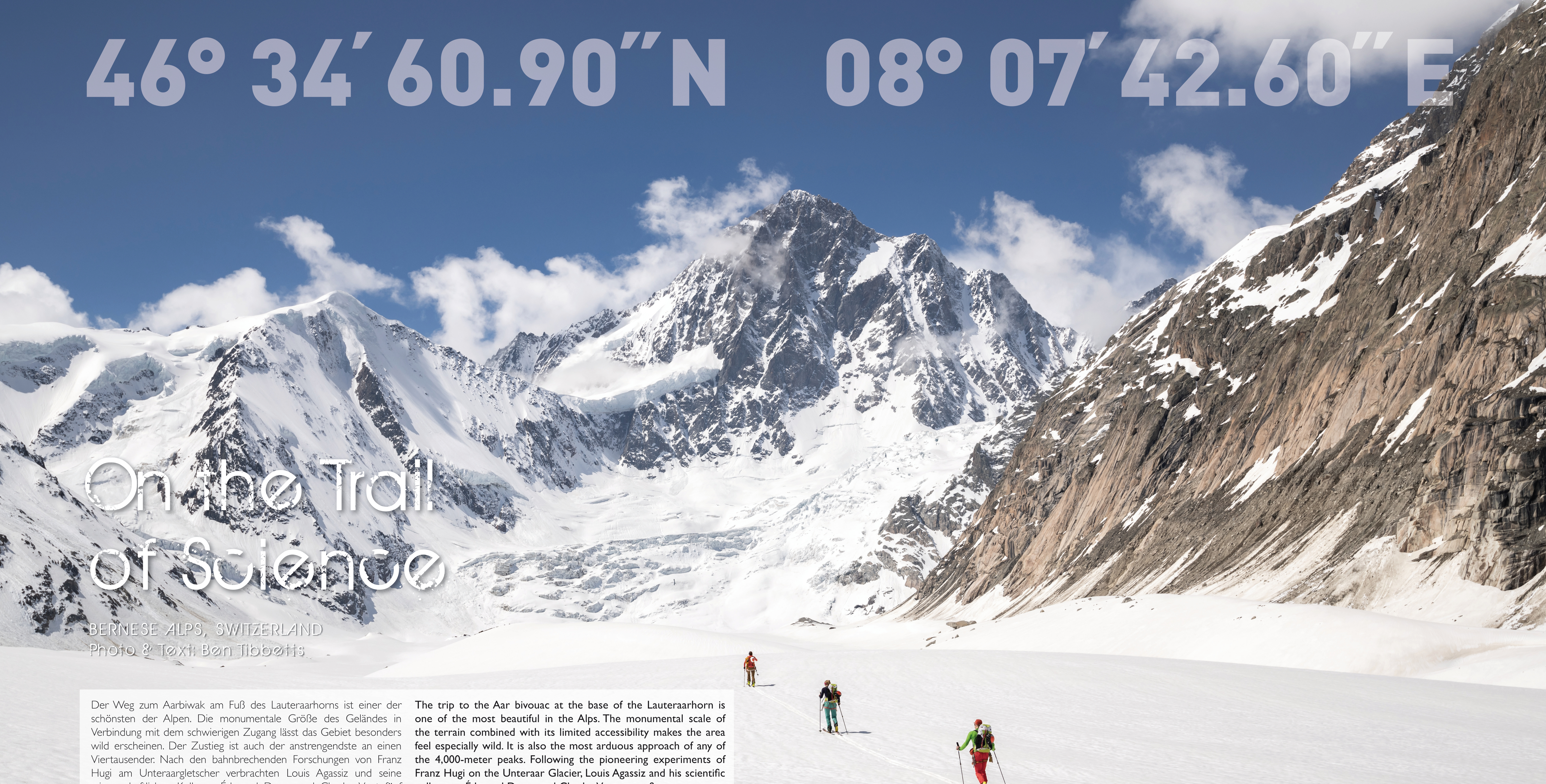
The trip to the Aar bivouac at the base of the Lauteraarhorn is one of the most beautiful in the Alps. The monumental scale of the terrain combined with its limited accessibility makes the area feel …
The trip to the Aar bivouac at the base of the Lauteraarhorn is one of the most beautiful in the Alps. The monumental scale of the terrain combined with its limited accessibility makes the area feel especially wild. It is also the most arduous approach of any of the 4,000-meter peaks. Following the pioneering experiments of Franz Hugi on the Unteraar Glacier, Louis Agassiz and his scientific colleagues Édouard Desor and Charles Vogt spent five summers on the Unteraar. From 1840, they carried out experiments on the surrounding glaciers and made several first ascents. In August 1842, Desor approached the Lauteraarhorn from the south.
The south face involves 900 meters of ascent through snow and ice and up to 45 degrees, and the final rocky ridge is a challenging scramble with exceptional exposure. May 8, 2018. Daylight emerged slowly as the four of us found our way ascending through avalanche-battered forest. Our first view of the Lauteraarhorn, across the vast Unteraar basin, was sobering. Not only did the mountain appear incredibly steep, but it also seemed to be an improbable distance to travel in one day. As we approached Lake Grimsel, I did not dare to think about the massive detour we would have to take if its water was too high. Thankfully, the level was low, and we skied down across a massive cone of avalanche debris to the flats below.
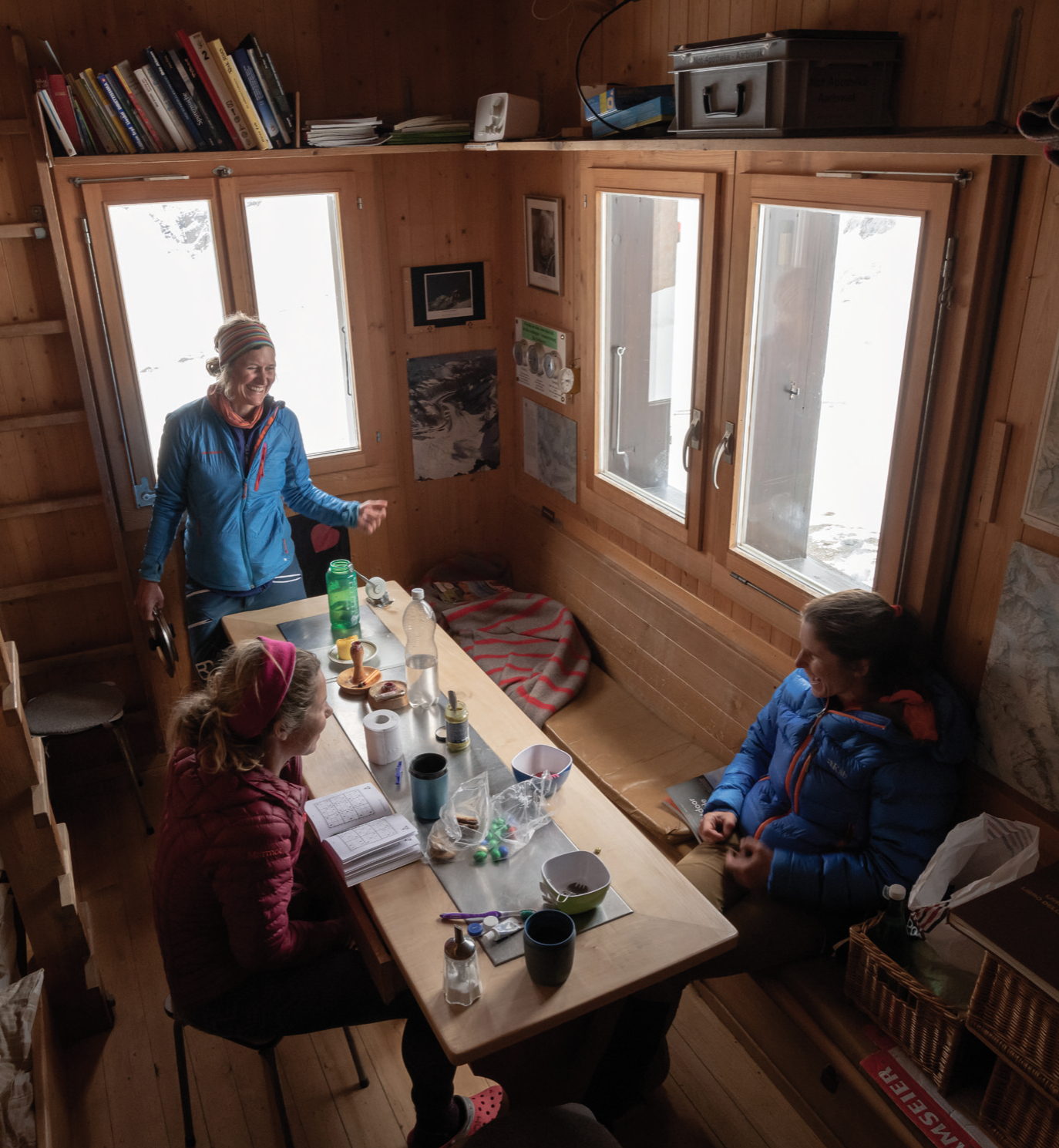
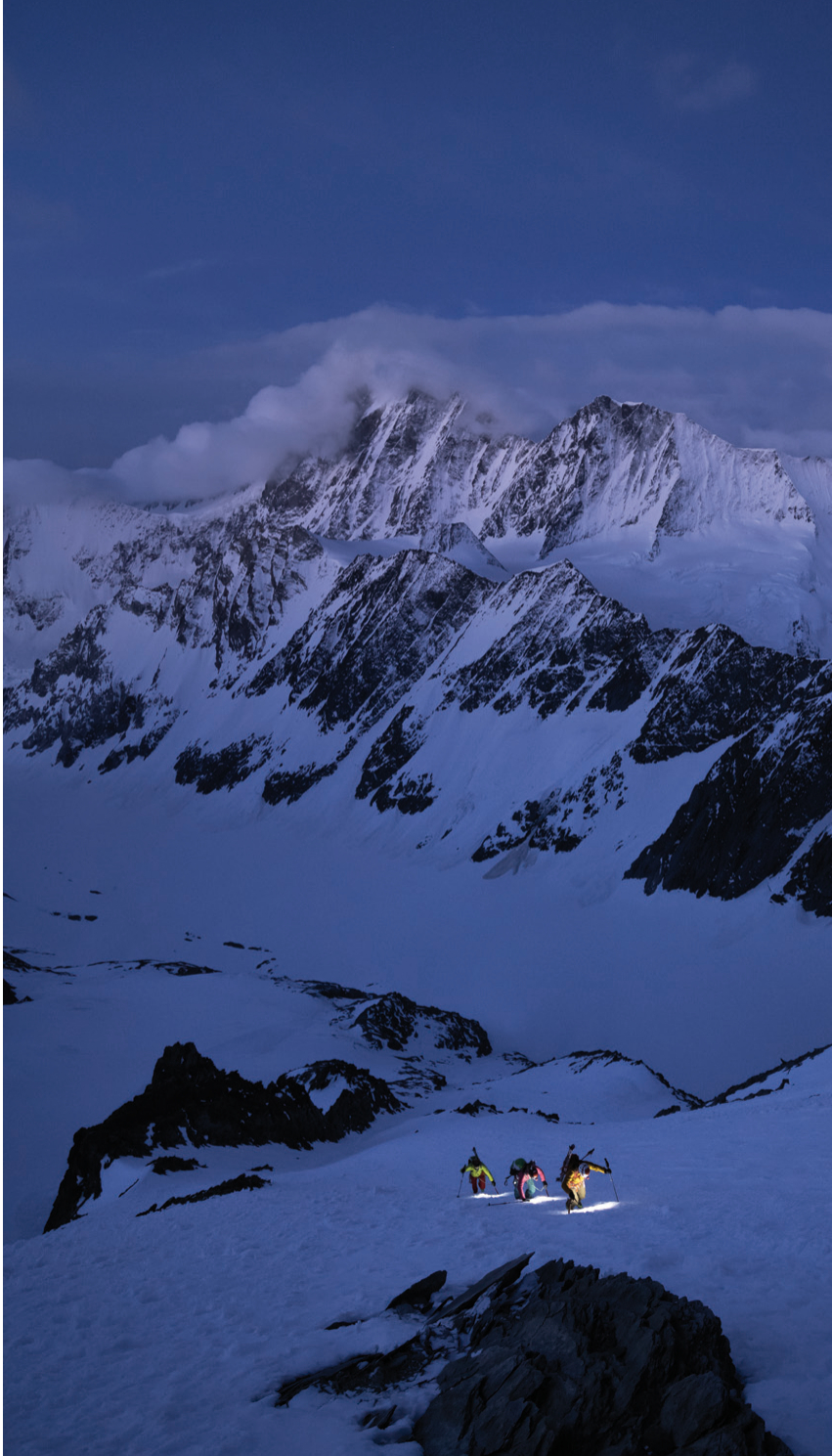
The map suggested we'd be in the middle of the lake. As we gazed around our new environment the commitment of the journey sank in. As the air got warmer, we threaded our way under the imposing cliffs of the Unteraar valley. After hours of slow progress, our boots gnawing at our feet, we finally reached the Aar bivouac at 1 pm. A quiet and secluded hut, small but cozy, hidden under the cliffs above the glacier. We left again at 2:30 am, and as we skinned up the glacier in the dark, I felt a quiet rush of excitement at the prospect ahead. The mountain loomed above us, blocking out the stars. However, I was surprised at the boldness of Desor's team, who had once set out here in hobnail boots.
After a period of stormy weather during the middle of their research in 1842, the scientists saw the weather clearing. On August 8, Desor's lead guide, Jacob Leuthold, hurried up from the Grimsel Hospiz and arrived at camp on the Unteraar at 6:30 am. "The most prudent amongst us suggested we wait for the following day," wrote Desor, "but we were carried away by the desire to execute a plan that we had put off for so long." They left in a hurry, reached the foot of the south face at 10 am and began climbing. "The ice was extremely hard and the axe only chopped with difficulty." [1] Valentine, Stuart, Lara and I wove our way up the same slope in the dark. It steadily steepened and we gained the upper couloir along with the first glimmers of light.
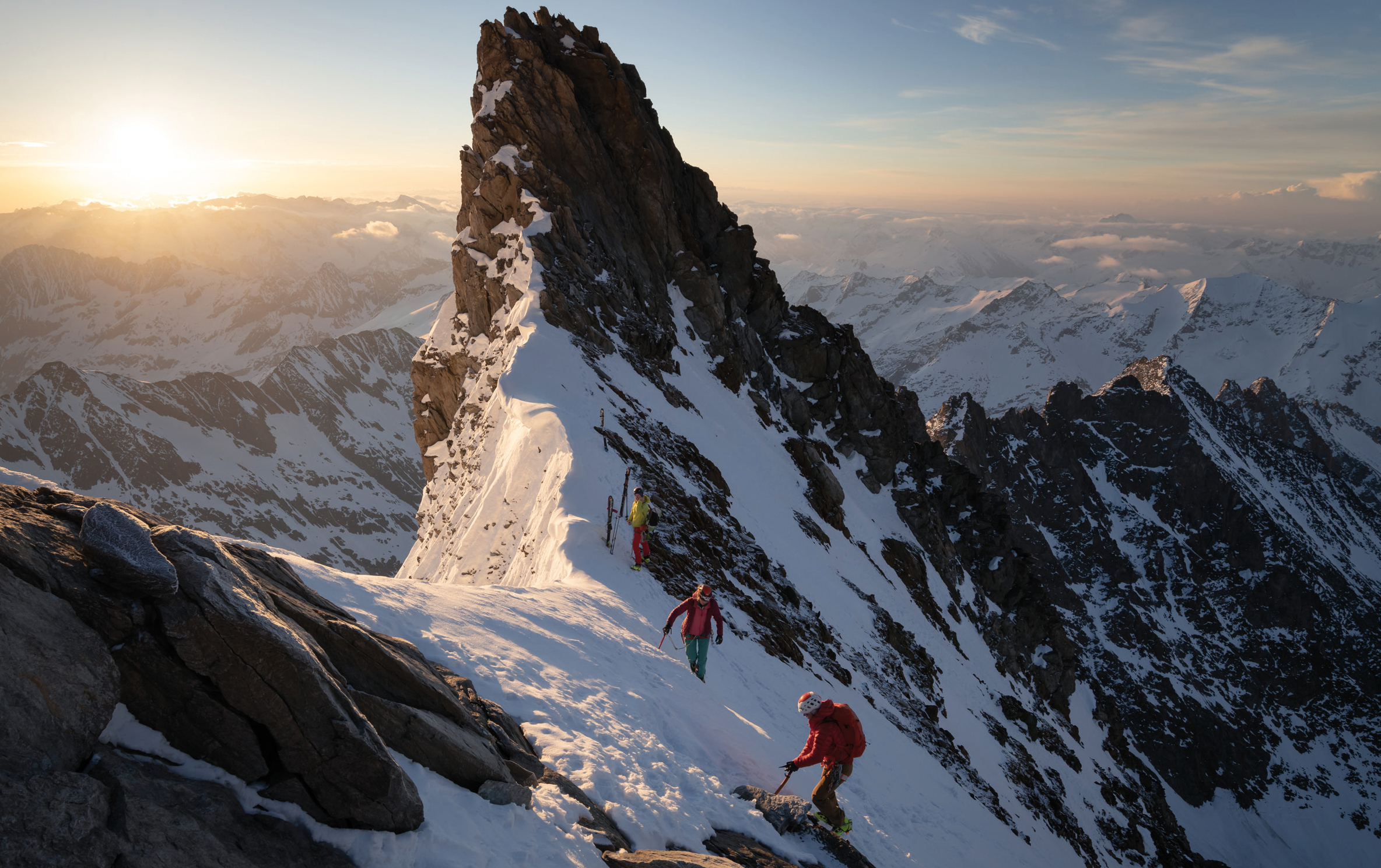
The snow was in perfect condition, deep and consolidated across the whole face. "The last section was the most dangerous and due to the steepness of the slope was genuinely terrifying," Desor writes. His team then left their axes before climbing the final ridge "taking with us just a little bread, wine and our scientific instruments... At first this seemed quite amenable; however having climbed a hundred metres, we found ourselves suddenly at an overhang of rock separated from the main mountain by an abrupt notch of three or four metres that barred our way... It was the most beautiful moment of our route, as the summit was there before us just a hundred metres away."
[2] Having read modern descriptions of this final rock ridge, graded a mere II+, I was expecting a quick scramble to the summit. I was in a frenzy of excitement over the gorgeous morning light, and Valentine and I rushed up the crest to get more photos. We soon reached this same overhang and peered over the edge with surprise. I vaguely remembered that this tooth could be bypassed to the south. However, the overhanging side seemed well scarred by crampons, so I carefully rolled my legs over the edge and lowered myself down the few delicate moves into the notch. We were even more surprised when the ridge above continued to provide delicate and sustained climbing. Thankfully the rock was impeccable.
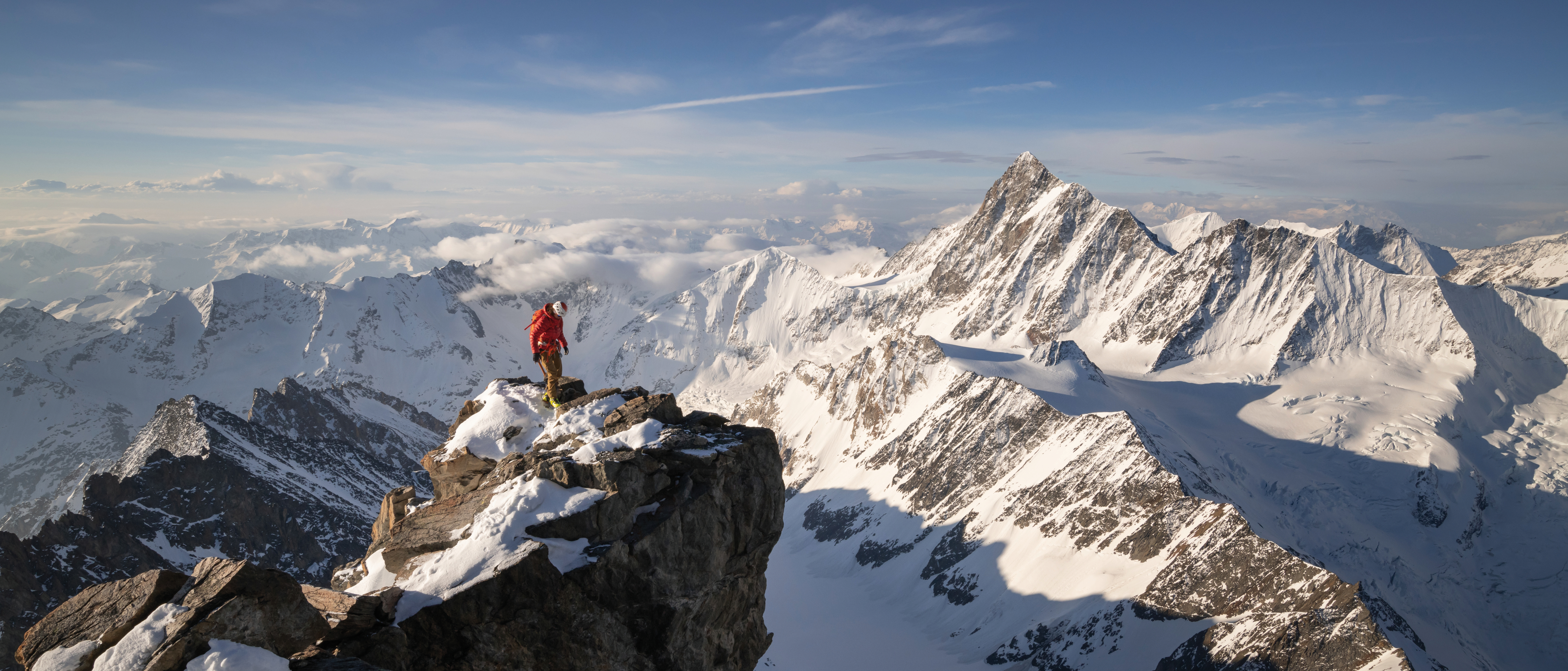
Valentine and I climbed carefully without a rope and arrived at the summit at 7:30 am. We wrote our names in the summit book and sat down and relaxed in the sun for half an hour, enjoying for once the lack of urgency. In front of us was the south pillar of the Schreckhorn that, coated in ice, had given us such trouble the previous summer. My eyes were drawn down the long Unteraar Valley and the distant hill we needed to climb to get back out. We scrambled down carefully, using the rope around spikes to protect our descent. We could see our friends emerging from the bottom of the couloir then making lazy turns down the glacier until they disappeared out of sight.
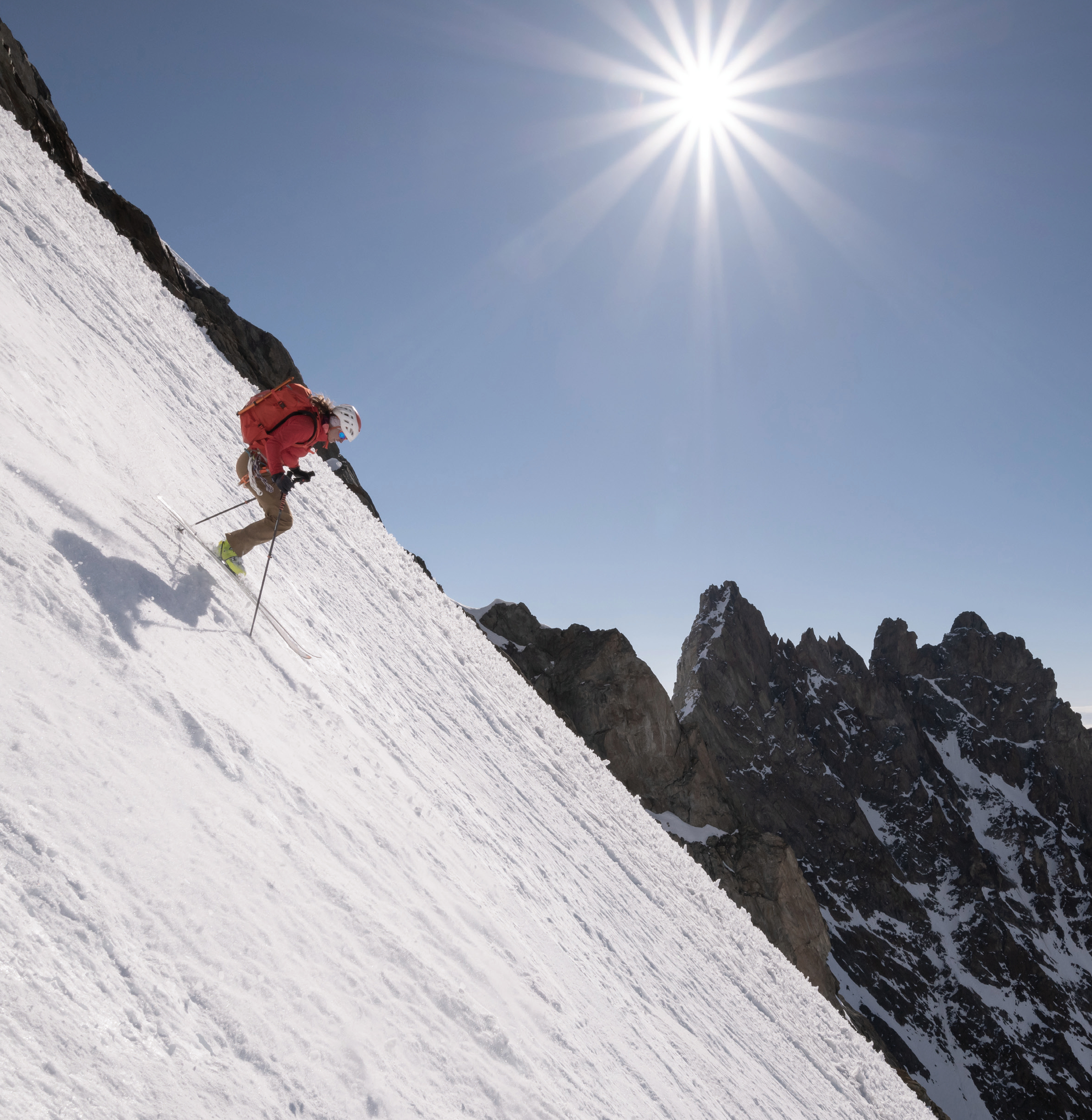
During the night, as we climbed up, the snow on the south face had indeed been grippy and even coated with a dusting of fresh snow from the previous evening. I began to work through the timings and wondered whether we too might descend directly and still get past Grimselsee before it was too warm. At 9 am, Valentine and I clipped into our bindings at 3,900 meters and began to ski. I came last, and as the others had scraped the snow away with their edges, the first narrow couloir was forbiddingly steep and icy. I pulled my axe out and side-slipped my way down cautiously. The slope soon opened up, however, and as the angle eased slightly, it became exhilarating rather than nerve-wracking. It is rare to have the privilege of skiing such a grand face in such a wild setting, though all too quickly we were down.