Österreich · Schobergruppe (Hohe Tauern)
Patience is a Virtue
Issue 2023 · Words: Tom Gaisbacher · Photos: Tom Gaisbacher · 4 min read
The mountains of the Schober range, nestled in the Hohe Tauern National Park, are only known to a few. It's the neighboring Glockner range that attracts people more with the summit of Austria's …
The mountains of the Schober range, nestled in the Hohe Tauern National Park, are only known to a few. It's the neighboring Glockner range that attracts people more with the summit of Austria's highest mountain, the Grossglockner. However, once you learn about the potential of this small range, all other hikes in the region are put to shame. In an area covering just 160 square miles, a whopping 53 peaks tower over 9,800 feet into the sky. The mountains are affectionately called the "Western Alps of little men" by the locals. Lined up close together, they offer the perfect playground for ski touring. A true natural jewel away from the crowds. Growing up near the foothills, I discovered the benefits of this area at a young age.
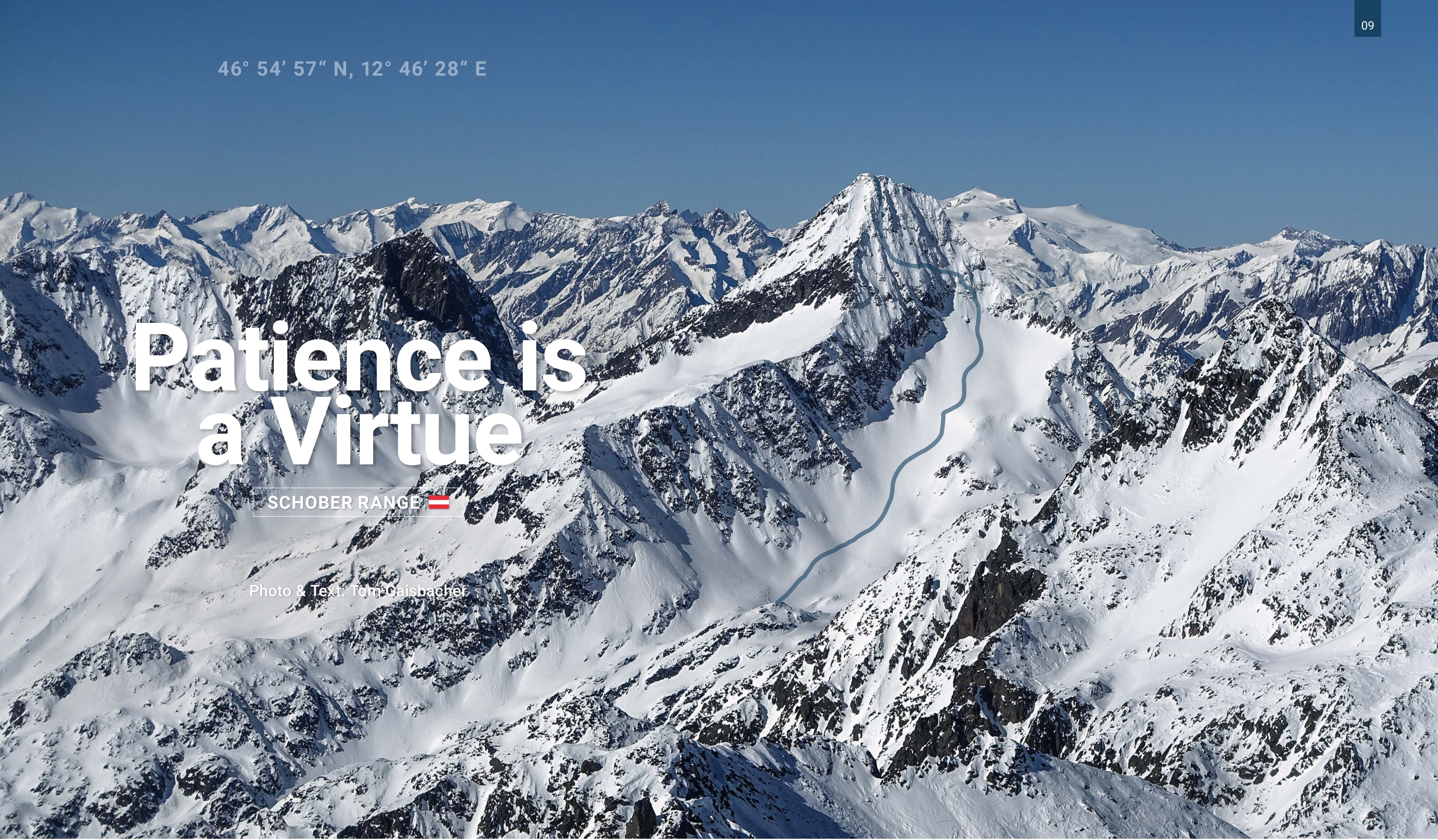
My constant companion was a guide book by Robert Zink. Year after year, I tried increasingly difficult lines – most of them first skied and documented by Robert. This gave me an eye for new climbs and possible descents. The steep exposed flanks of these mountains held many adventures. One rocky peak, however, literally jumped out at me. From almost every summit, you can see the imposing rocky flanks of the Glödis, due to its shape also called "The Matterhorn of the Schober range." Looking at this black rock pyramid, the question kept coming up: Is it possible to ski it? Throughout the years, I tried to find information about a possible first ascent, but to no avail. No one had ever dared to ski this mountain.
Nor had anyone ever seen enough snow for such an undertaking up there. Only one photo, hanging in the Lienzer Hut, a refuge at the end of the Debant Valley and the starting point for the ascent of the Glödis, made me stick to my plan. It showed it in a deep snowy winter dress and suggested a line. However, I never encountered such conditions. The years passed, and Glödis' flanks remained empty. One day, I received a phone call from Robert Zink. He got word of my plan and was intrigued, as he had been observing this line for several years himself. I promised to share all the details of the undertaking with him during a first ski tour together. Four years later, the time had come. Robert and I set off on our first joint tour.
With us was Thomas Mariacher who had discovered extraordinary conditions on the Glödis during a reconnaissance ski tour. The weather – a northern orographic uplift with a lot of wind from the northwest – caused the northeast side of Glödis to fill completely with snow. Due to the warm temperatures, the snow clung to the rock and a continuous, skiable line was formed. While tracking through the never-ending Debant Valley, we realized that this potential ascent of the Glödis would be the last "big one" in this mountain range. Passing the Lienz hut we caught sight of the northeast face – a chute filled with too much snow, enthroned above a huge vertical rock face. Only a narrow horizontal band of snow connected the gully with the snowfield below.
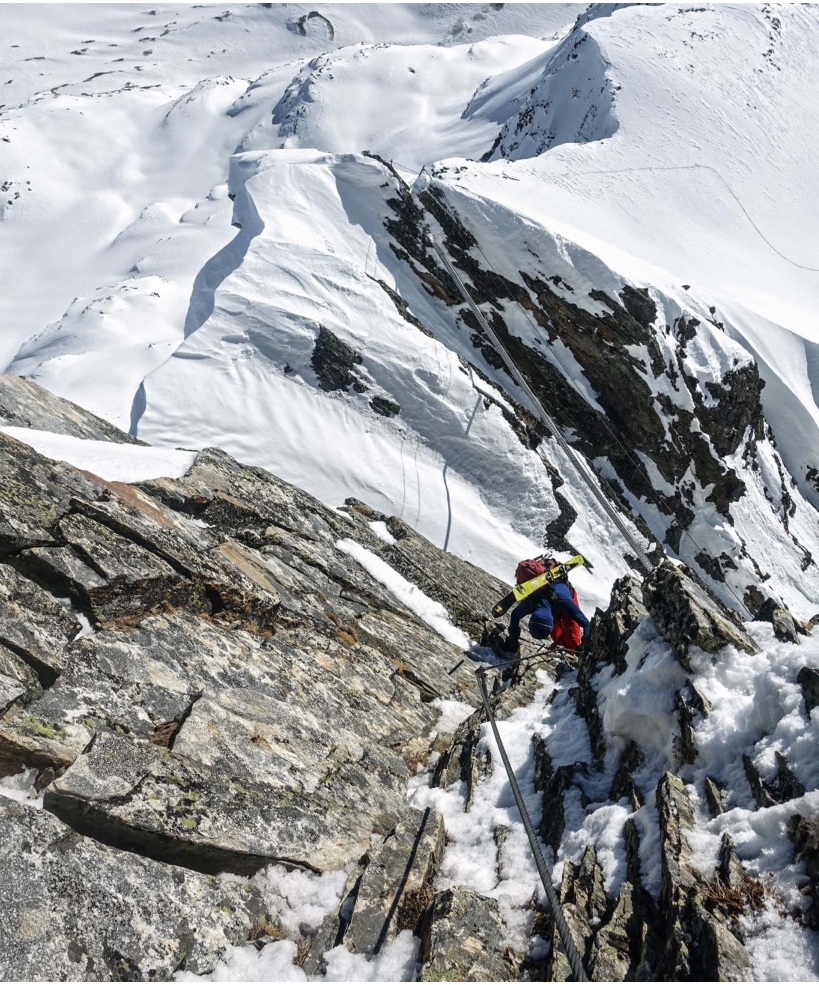
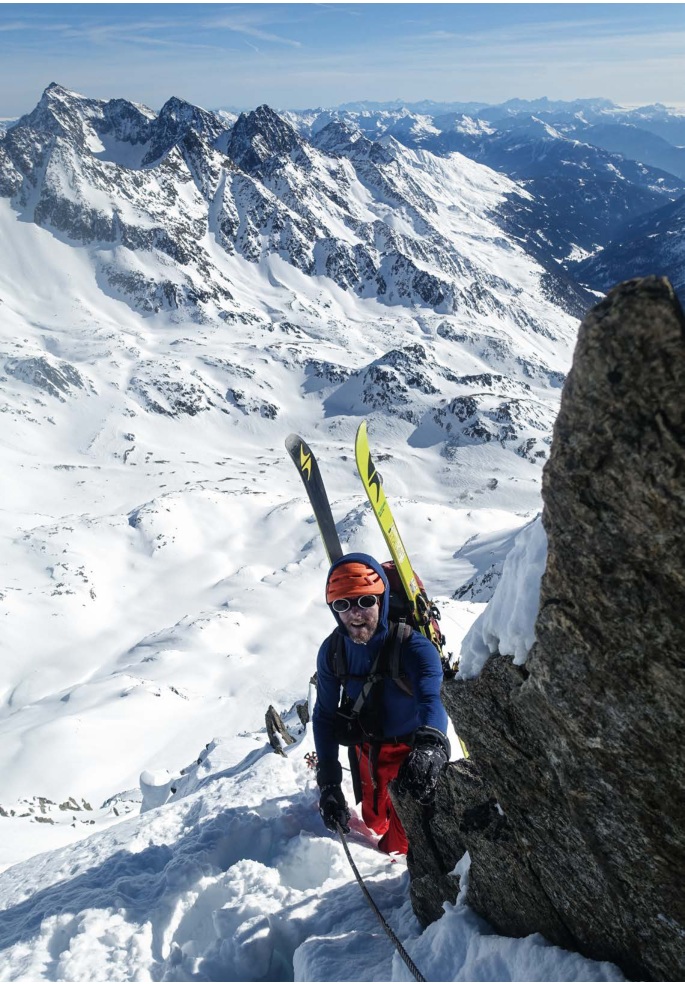
Each of us knew what that meant: A maximally exposed traverse, and no turning back. We discussed our approach. An ascent via the planned downhill line was impossible. A small snow slide in the upper part, exposed rock slabs in the traverse – not worth the risk. It came down to an ascent via the east ridge, used both in summer and winter. The temperatures were remarkably mild and put us under time pressure. Over and over again, we got glimpses of the northeast face. Sometimes it seemed easy and light, sometimes rather scary and dramatic. A roller coaster of emotions. Arriving at the top, a cold wind from northeast gave us some relief. The snow was not heated any further and we could take some time to assess the situation. All signs were set for "Go!"
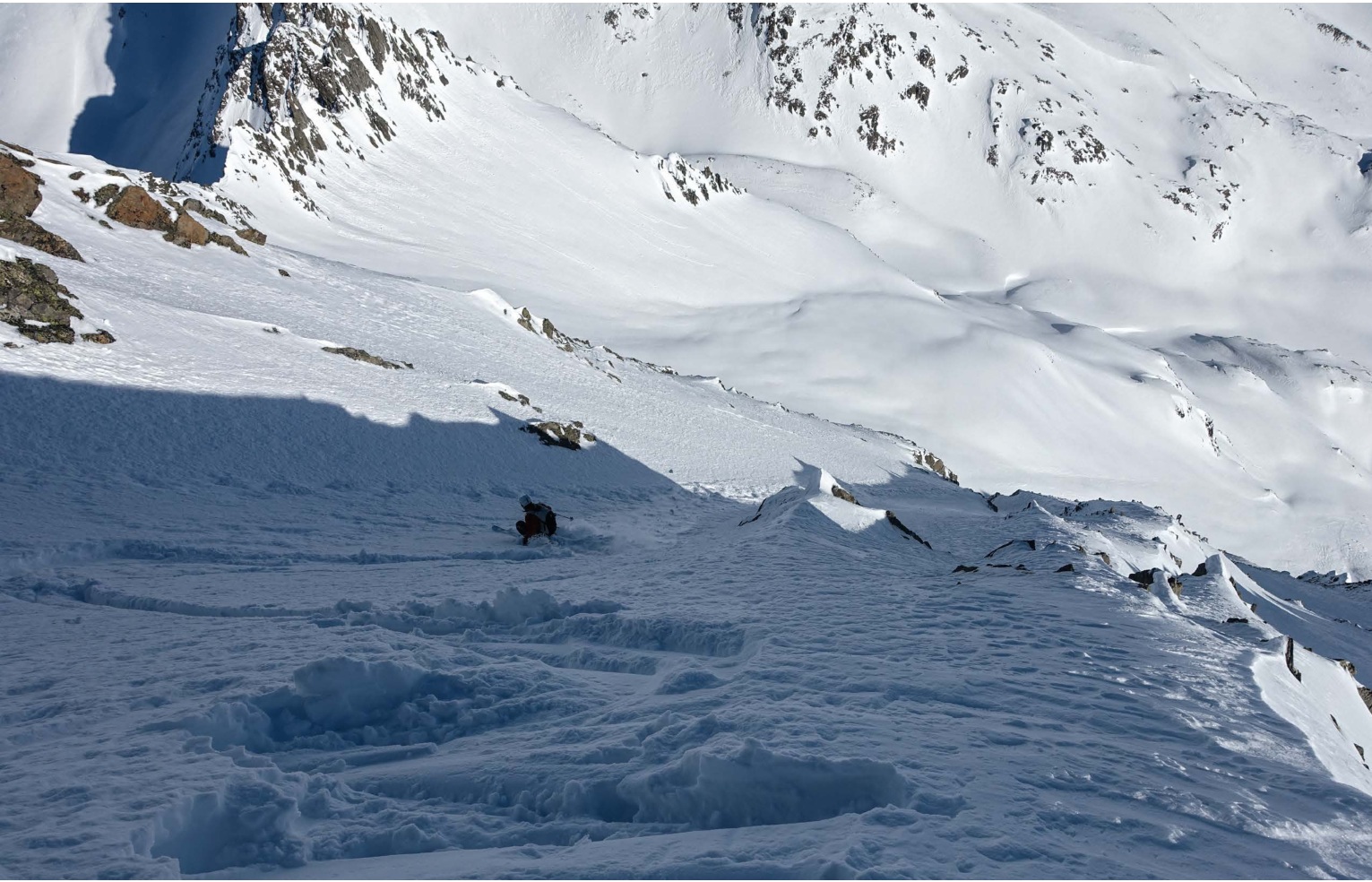
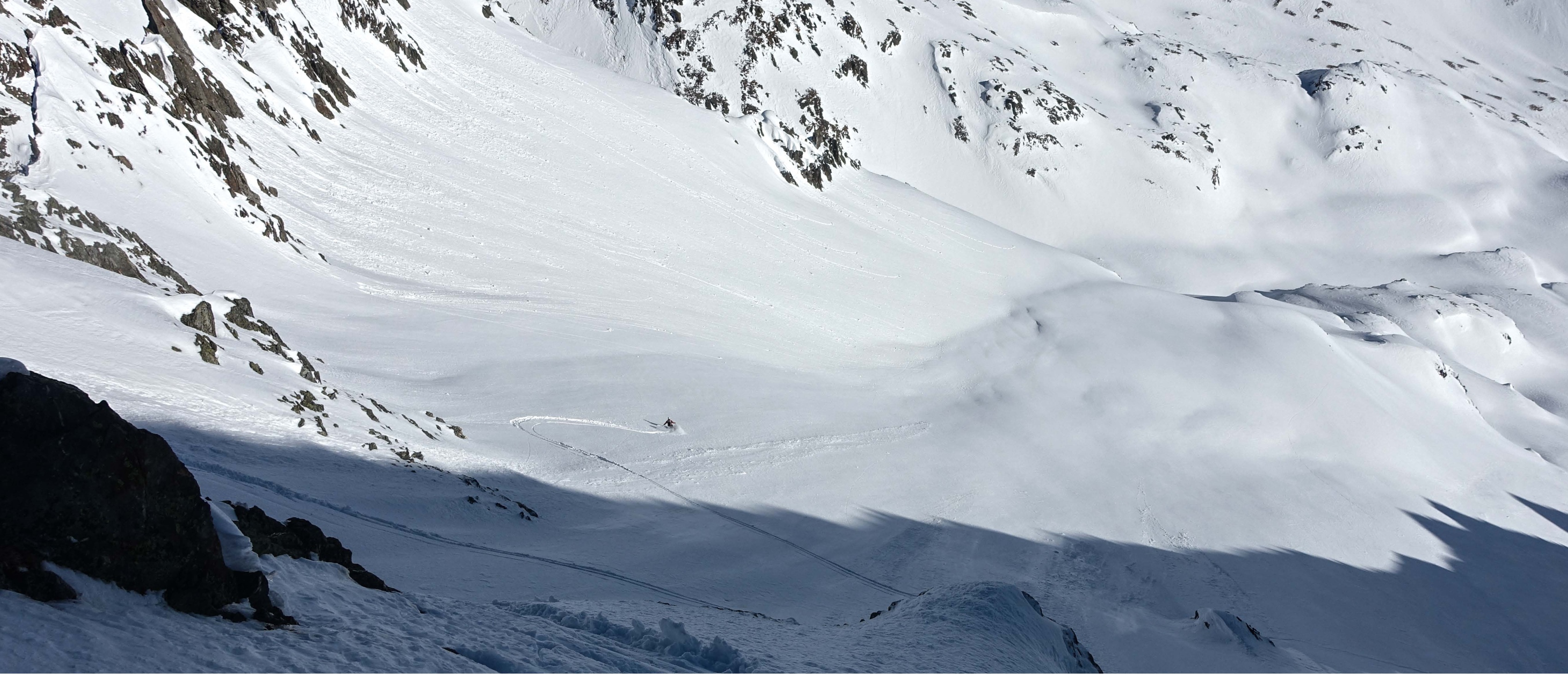
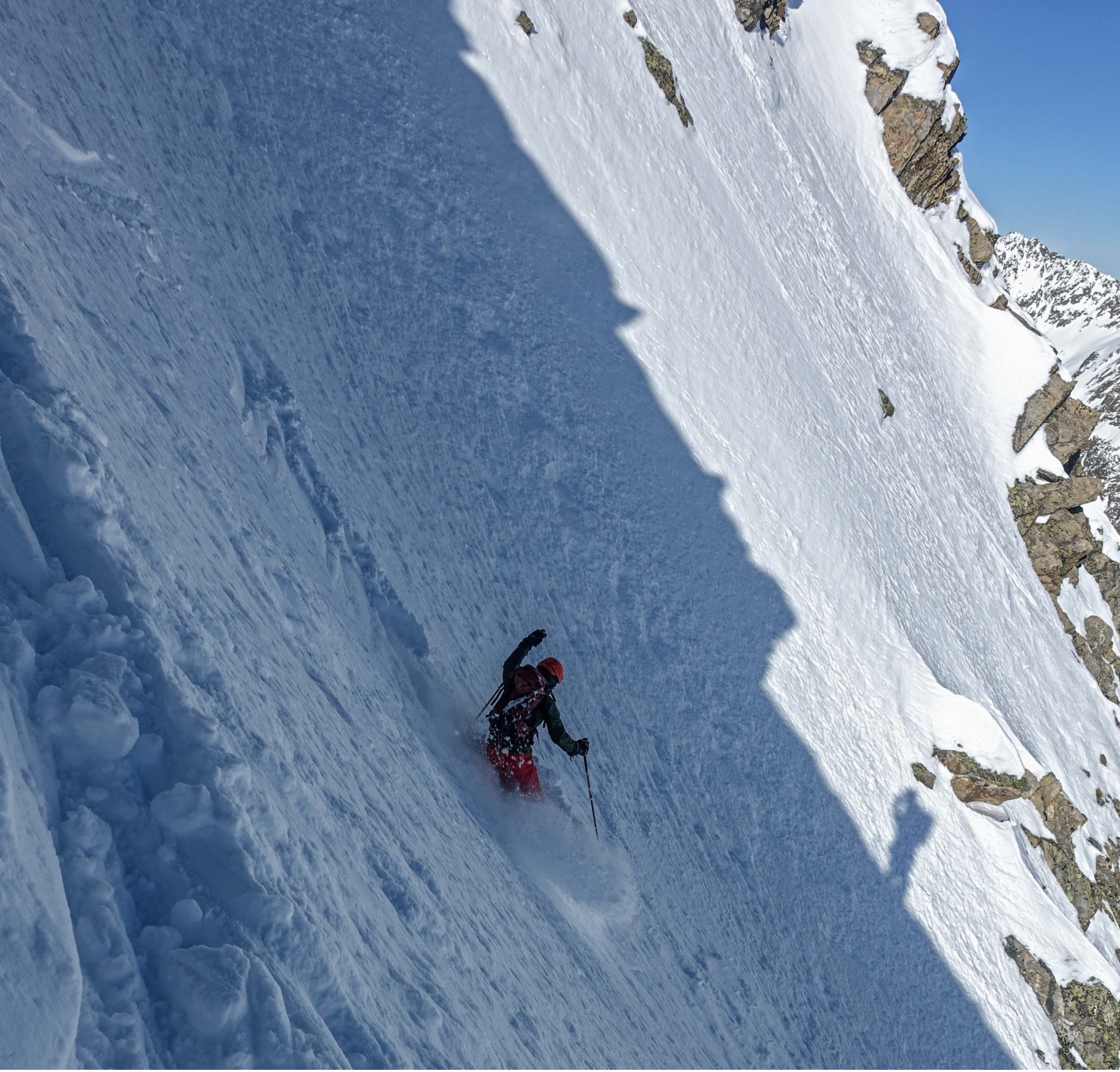
I dropped into the narrow gully. Knee-deep powder, without any tension. Thomas and Robert followed one by one. Once we reached the edge of the rock face we set off for the traverse. This part was the key section because of its steepness and thin snow cover. Wide powder runs ensued. When we arrived at the bottom and looked back we almost couldn't believe it. We had actually done it. Since the beginning of my skiing career I had speculated on this adventure; and now, together with Robert, my mentor, I actually did it! Our first tour together, to the last unskied mountain of the Schober range. The wait had been worth it.