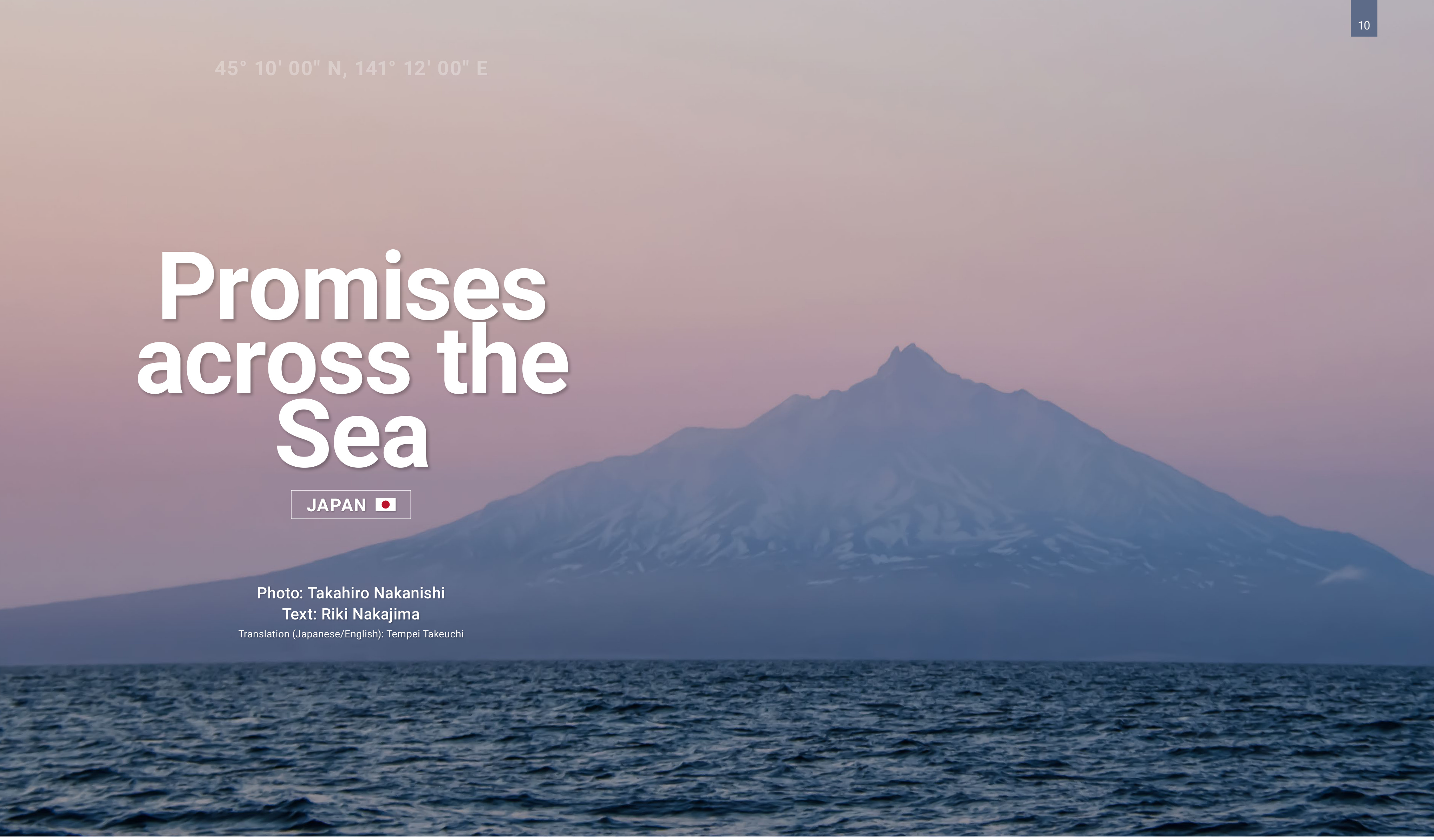
Japan · Mount Rishiri
Promises Across the Sea
Issue 2025 · Words: Riki Nakajima · Photos: Takahiro Nakanishi · 4 min read
While the world came to a halt during Covid, planes remained grounded and borders were closed, my horizons narrowed to the coastlines of Japan. I packed my surfboard and spearfishing gear into my car and began driving down the coast, bay by bay. One day, I met a young couple who lived on a …
While the world came to a halt during Covid, planes remained grounded and borders were closed, my horizons narrowed to the coastlines of Japan. I packed my surfboard and spearfishing gear into my car and began driving down the coast, bay by bay. One day, I met a young couple who lived on a sailboat. Something about that image stuck with me. I had spent years constantly on the move, paying rent for a house I hardly ever lived in. Suddenly, it all became clear to me: live where the elements determine your everyday life. I found an old 34-foot catamaran in a forgotten harbor in Hokkaido and restored it. As a skier, I had the idea of looking for mountains that I could climb from the sea. In Japan, most snow-capped peaks are connected to the road network.
But way up in the north lies the island of Rishiri – with a 38-mile coastline surrounding a single volcanic peak that rises 5,646 feet vertically from the sea. Known as the “Island of Wind,” this is a place where ferries and flights are often at the mercy of the weather. For me, the appeal was clear: sail into seclusion, ski from the sea to the summit, and put to-gether a trip that only the wind could set in motion. In April 2024, I moved my boat from Hakodate, at Hokkaido’s southern tip, up to Otaru over several days – threading the trip between work commitments. I had always relied on seasoned sailors in the past, but this time, I was at the helm alone. As we left the harbor, dolphins surfaced alongside, escorting us out like a blessing.
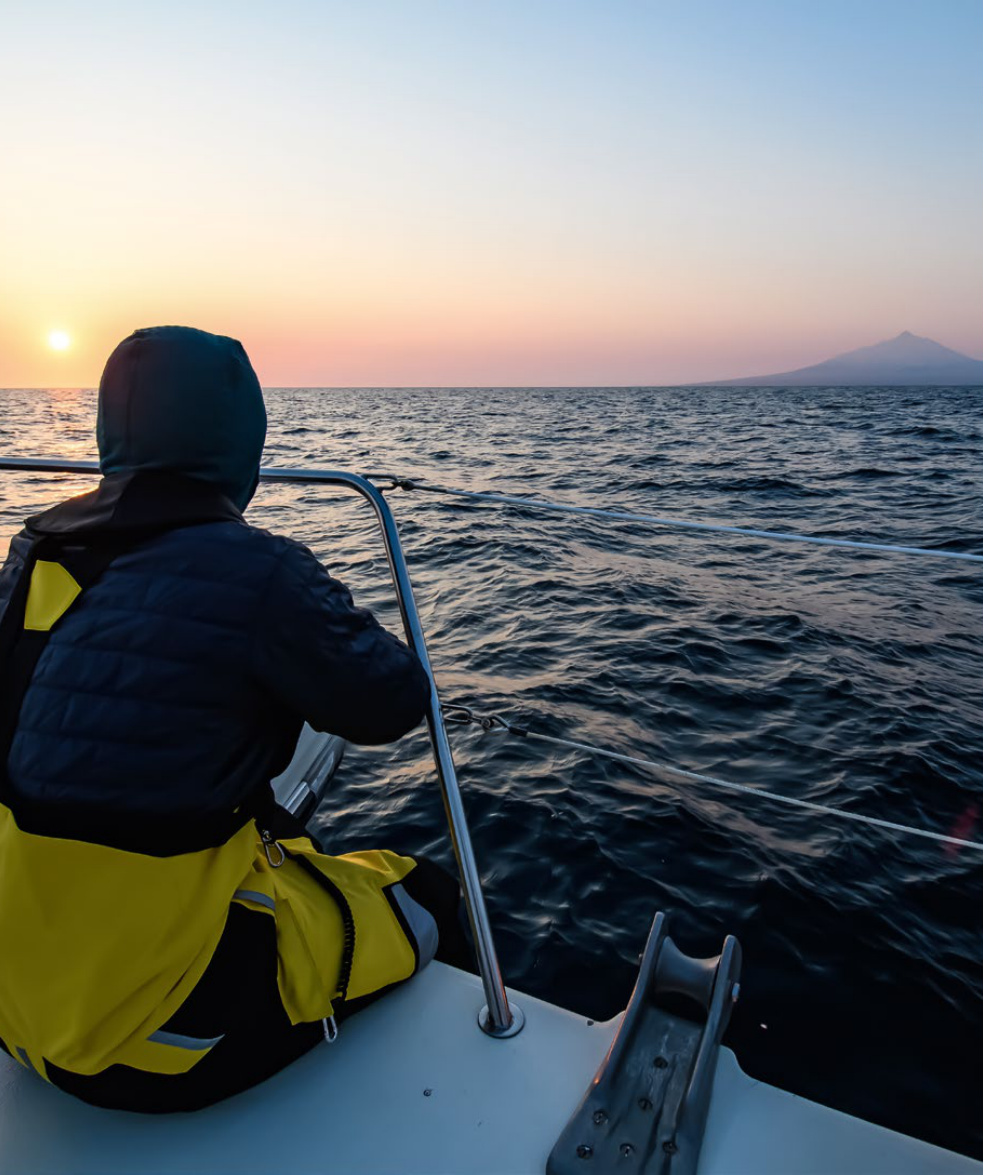
The journey that would take four hours by car stretched into four storm-battered, rain-soaked days at sea. By April 30, I set sail for Rishiri. A few years ago, this would have been prime spring skiing. But recent winters had ended abruptly, and this year, a warm, unyielding wind was accelerating the melt. A storm was forecast in two days. I had to move fast. When the winds picked up, Rishiri finally appeared on the horizon. Just in time. Bathed in the pink light of sunset, the mountain grew taller with every wave. My chest tightened; my pulse quickened. By the time I reached the southern shore, it was deep night. Exhausted in body and mind, I collapsed into sleep. At 3 a.m., alarms dragged me up again. The storm was closing in. I motored around to the island’s northern side, where the harbor would be more sheltered and access to the mountain
easier. Even in the lee, the waves heaved and the wind clawed at me. I made it into port just ahead of the blow – any later, and I might not have. Years earlier, I’d promised two close friends who had moved here that I’d one day arrive on my own boat. That winter, one of them died in a skiing accident. I was too late to see him again, but here I was. Standing on the dock, I whispered, “I kept my promise.” Still, the mountain was not yet mine. Galeforce winds hammered the island for days. I watched the snow shrink under the warm blast, yet patterns began to emerge – a sheltered slope here, a ridge holding its line there. My friend who still lived on Rishiri and I mapped out a route. I strapped the skis to my pack and started up a bare trail.
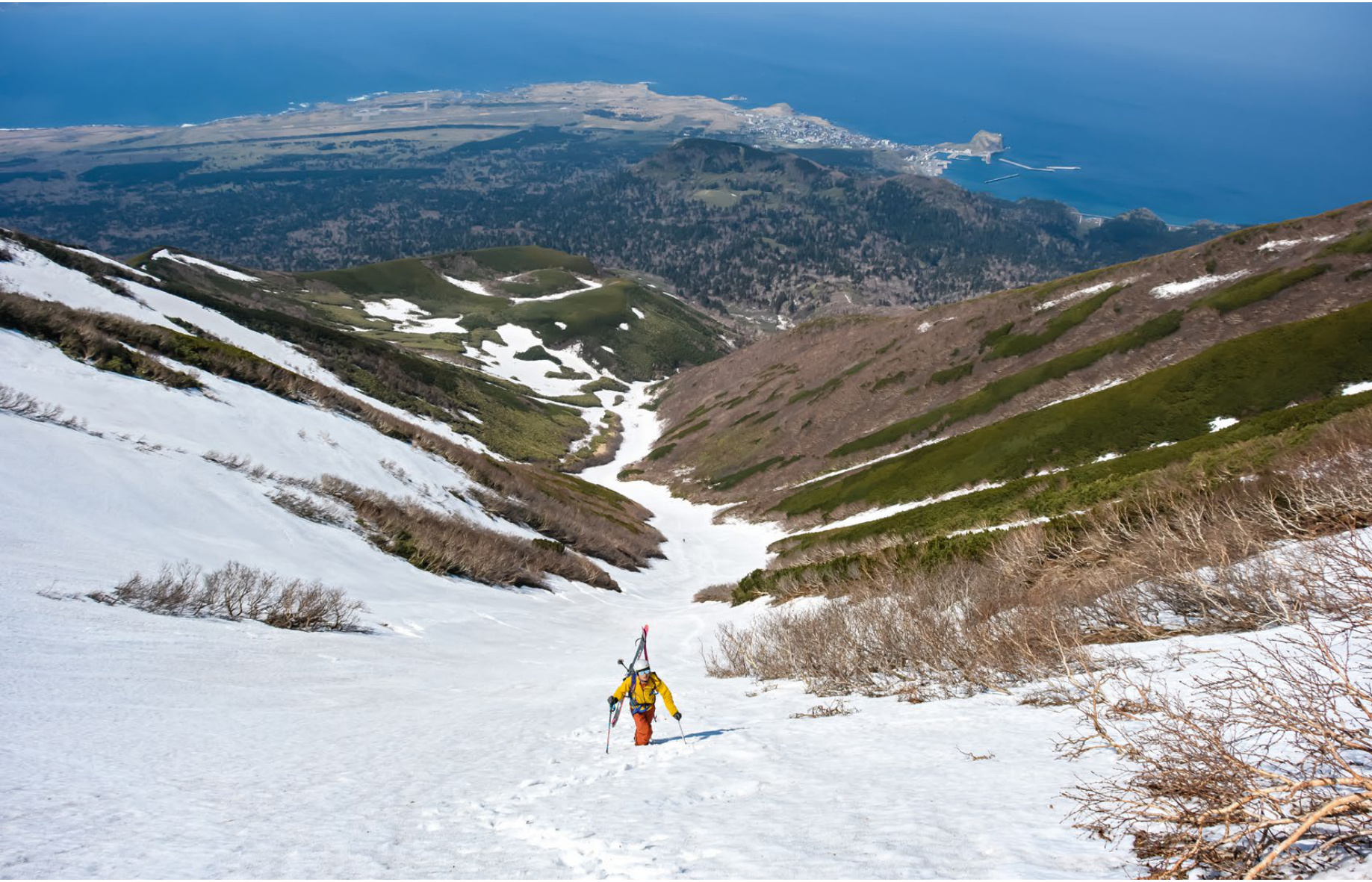
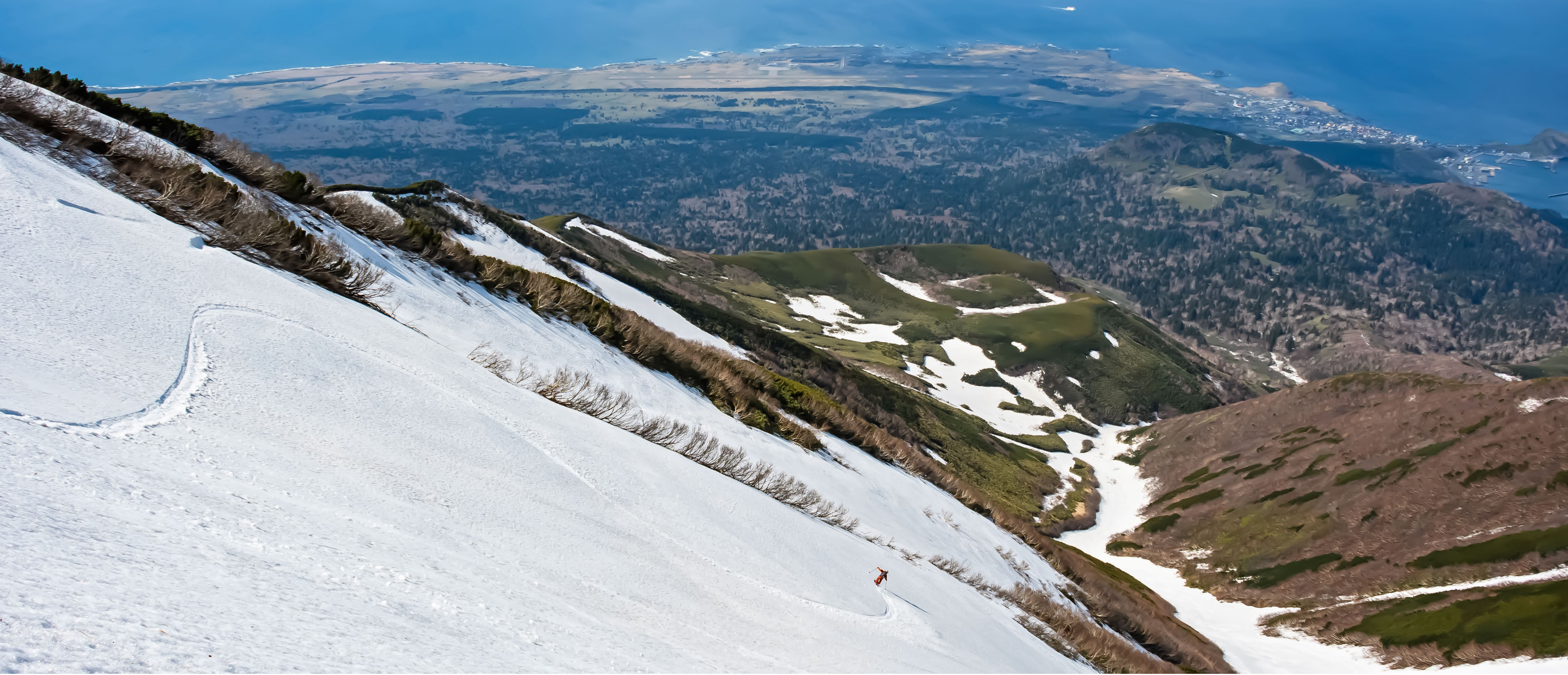
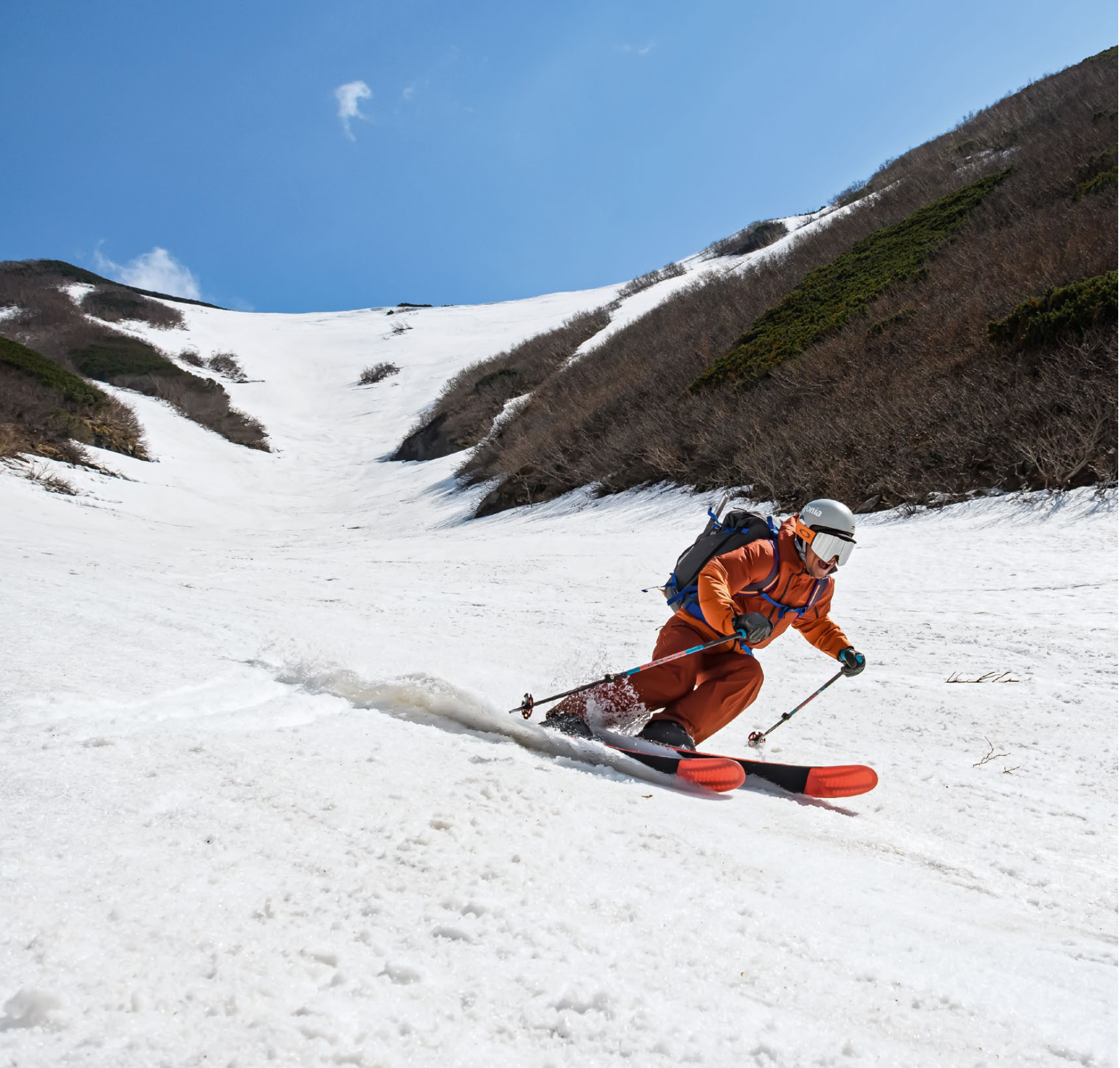
Higher, I left the path, pushing through thick underbrush until the first patches of snow appeared. From there, I skinned upward, climbing onto a broad, sun-softened face. The snow beneath was still hard, firm enough to demand crampons. Inside the gully, the world went still. No wind. Just silence and the crunch of my boots. At about 4,000 feet, I reached the top of the gully and stepped into the main ridgeline, where the wind howled again. Below me, a clean white line traced from my position all the way to the harbor—and my boat waiting. I dropped in. The spring corn was perfect – smooth, fast and even. In Japan, they say it’s
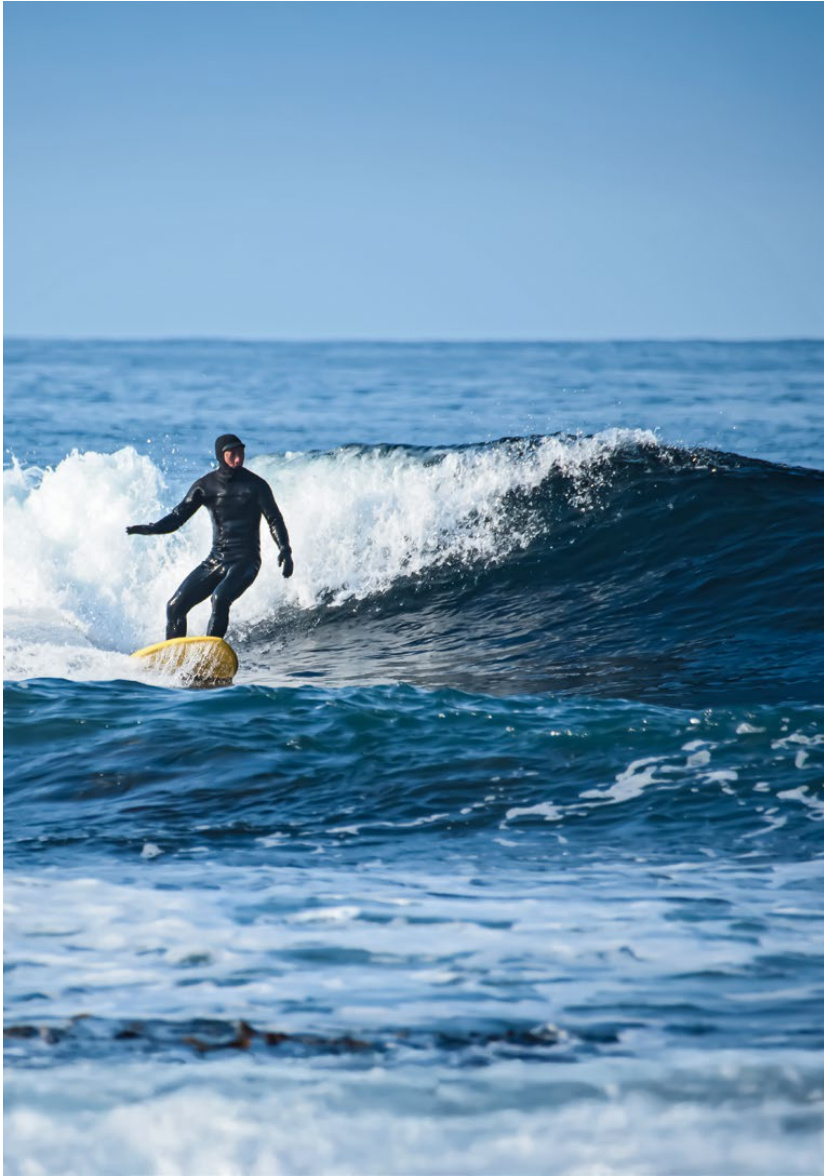
harder to find truly great spring snow than deep powder. That day proved it true. At sea level, I opened a bottle of Irenka wine, named for my boat and taken from the Ainu word for “hope” or “ideal.” By then, the mountain had vanished into a cloud. I had made it just in time. As the sun fell, I walked down to the shore. The waves looked inviting. The next morning, I paddled into the cold northern sea with my surfboard. I had done everything I came here to do. Maybe my friend had arranged it all from above. I pressed my palms together, whispered a prayer for his peace, and told him the story of the crossing. Then I turned the bow south.