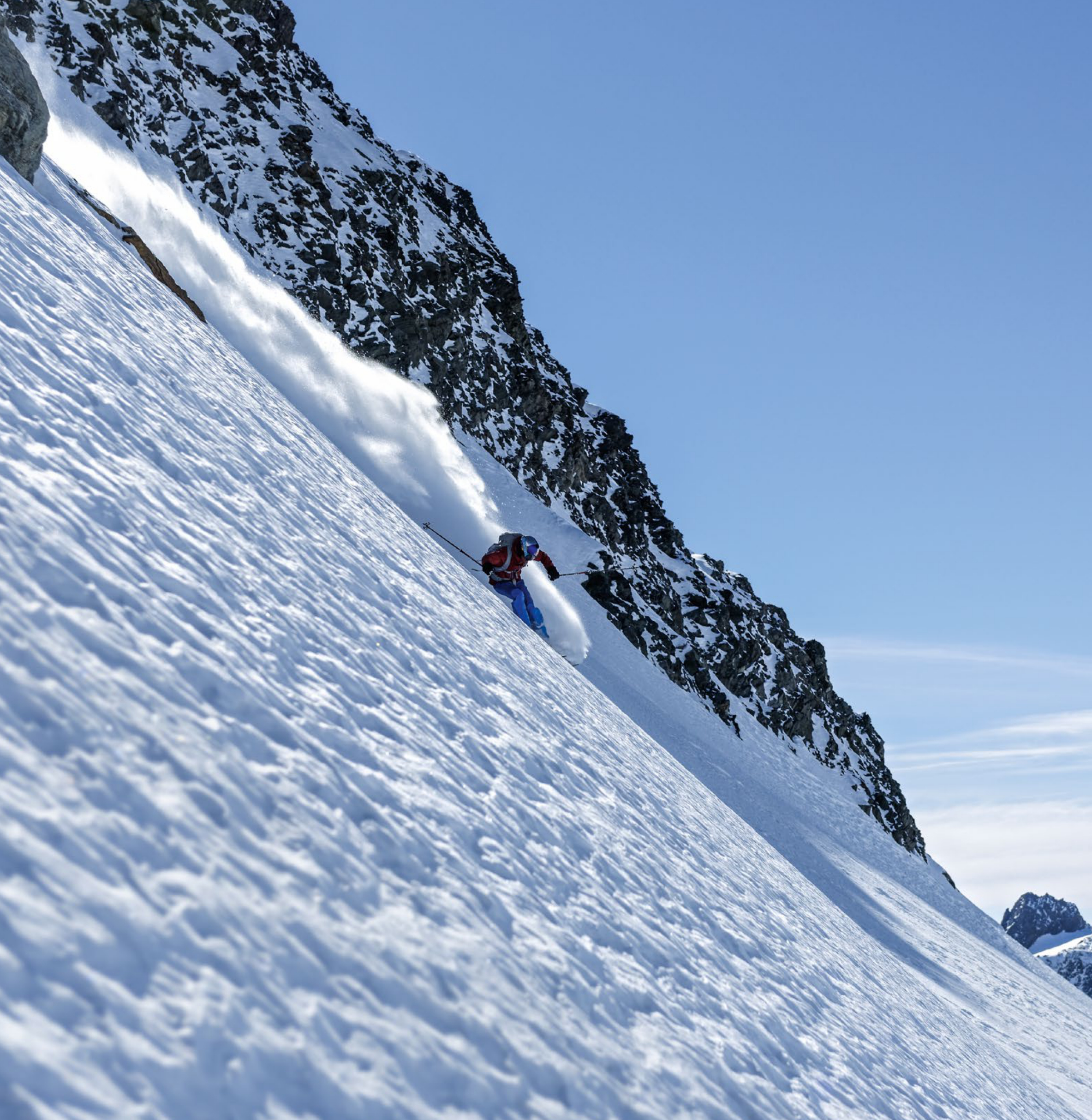
Österreich · Tyrol Alps
Steep Love
Issue 2016 · Words: Johanna Stöckl · Photos: Manuel Ferrigato · 5 min read
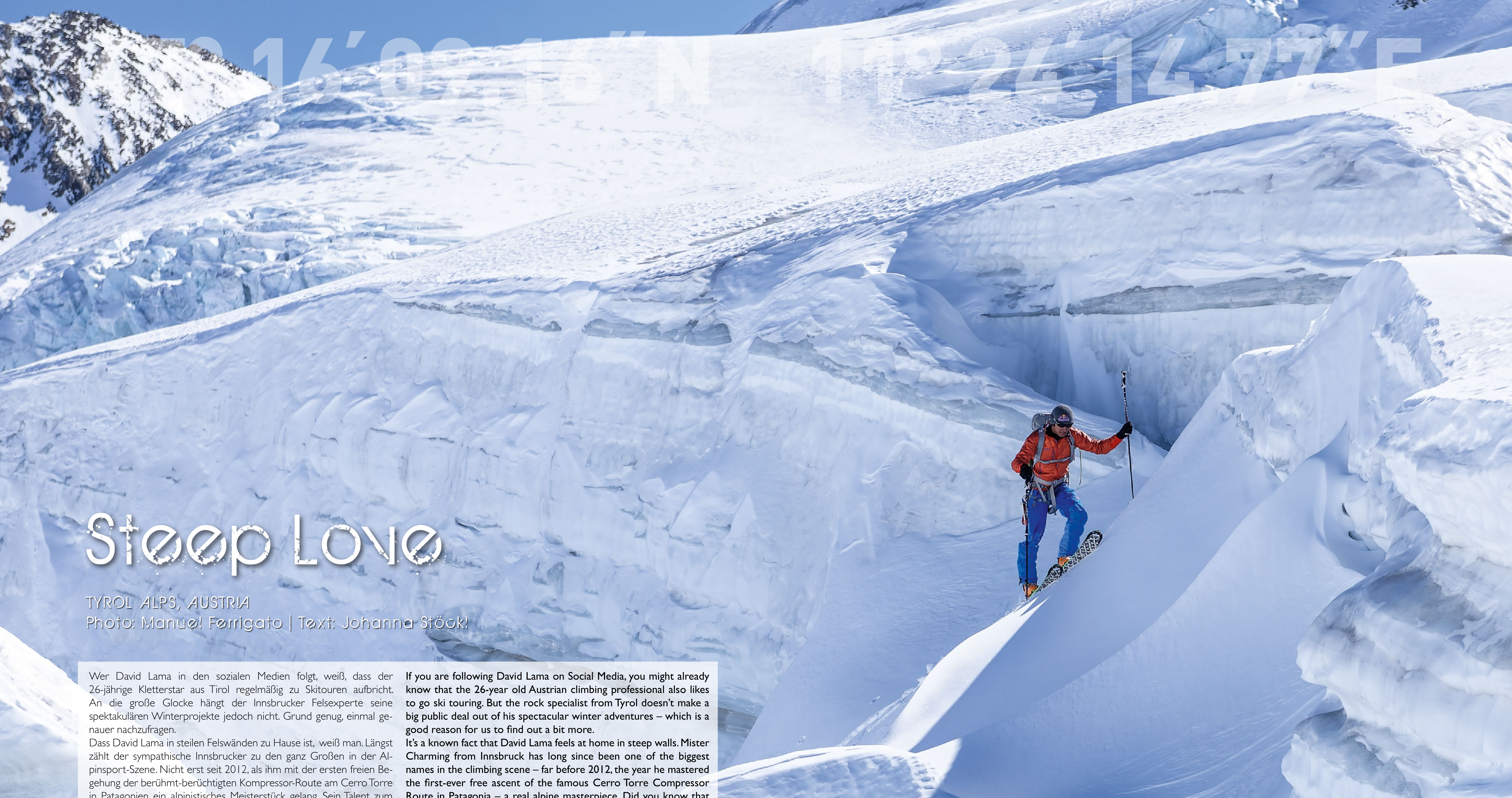
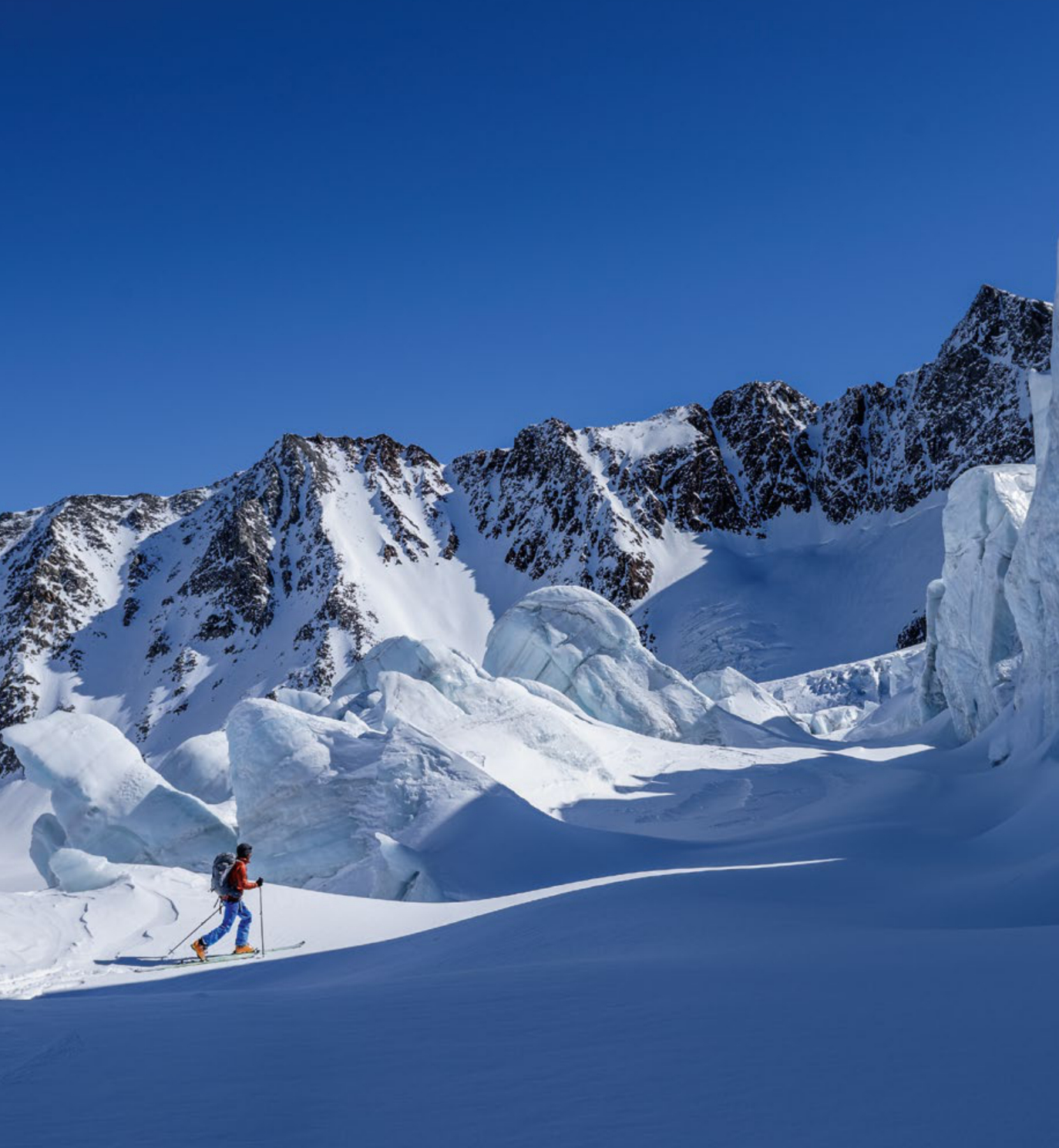
If you are following David Lama on Social Media, you might already know that the 26-year old Austrian climbing professional also likes to go ski touring. But the rock specialist from Tyrol doesn't …
If you are following David Lama on Social Media, you might already know that the 26-year old Austrian climbing professional also likes to go ski touring. But the rock specialist from Tyrol doesn't make a big public deal out of his spectacular winter adventures – which is a good reason for us to find out a bit more. It's a known fact that David Lama feels at home in steep walls. Mister Charming from Innsbruck has long since been one of the biggest names in the climbing scene – far before 2012, the year he mastered the first-ever free ascent of the famous Cerro Torre Compressor Route in Patagonia a real alpine masterpiece. Did you know that Peter Habeler discovered his climbing talents?
The legendary mountaineer from Austria's Zillertal made sure that David was accepted into Reini Scherer's OEAV sports climbing group in Innsbruck. David was six years old. The rest is history. Lama's first experiences on skis date back even further in time. "That's such a long time ago; I can barely even remember," David says and laughs when we meet for the interview. "I was three years old when my parents took me skiing for the first time." He was first introduced to ski touring when he was five, also by his parents. Many off-piste adventures with his mother's father followed. And because it's a really nice story, here's a brief digression: Why does David have a Nepalese family name?
"At some point, my mom went to Nepal with some girlfriends to go trekking. My dad was their trekking guide. A few months later, he found himself on a plane to Innsbruck". Despite the fact that David Lama had always loved the Alps, his successful indoor climbing career inhibited his backcountry skiing ambitions for a while: "I simply did not have enough time because of my training and the many tour stops." In 2010, Lama quit the professional climbing circuit. Ever since he is looking for new, exceptional challenges by setting out on demanding climbing expeditions.
A welcome effect of his relatively open training schedule: During the winter months, he can now spend more time on his old passion: "I am so much more flexible with my time, and thus I can go ski touring in the winter." He is setting out with a handful of friends on a regular basis. Last winter, however, he spent a lot of time alone in the greater Innsbruck area or Eastern Tyrol. Is ski touring only a winter training for climbing? "Ski touring and extreme skiing are definitely good workouts for future climbing expeditions. After all, you are making lots of altitude with a massive pack on your back".
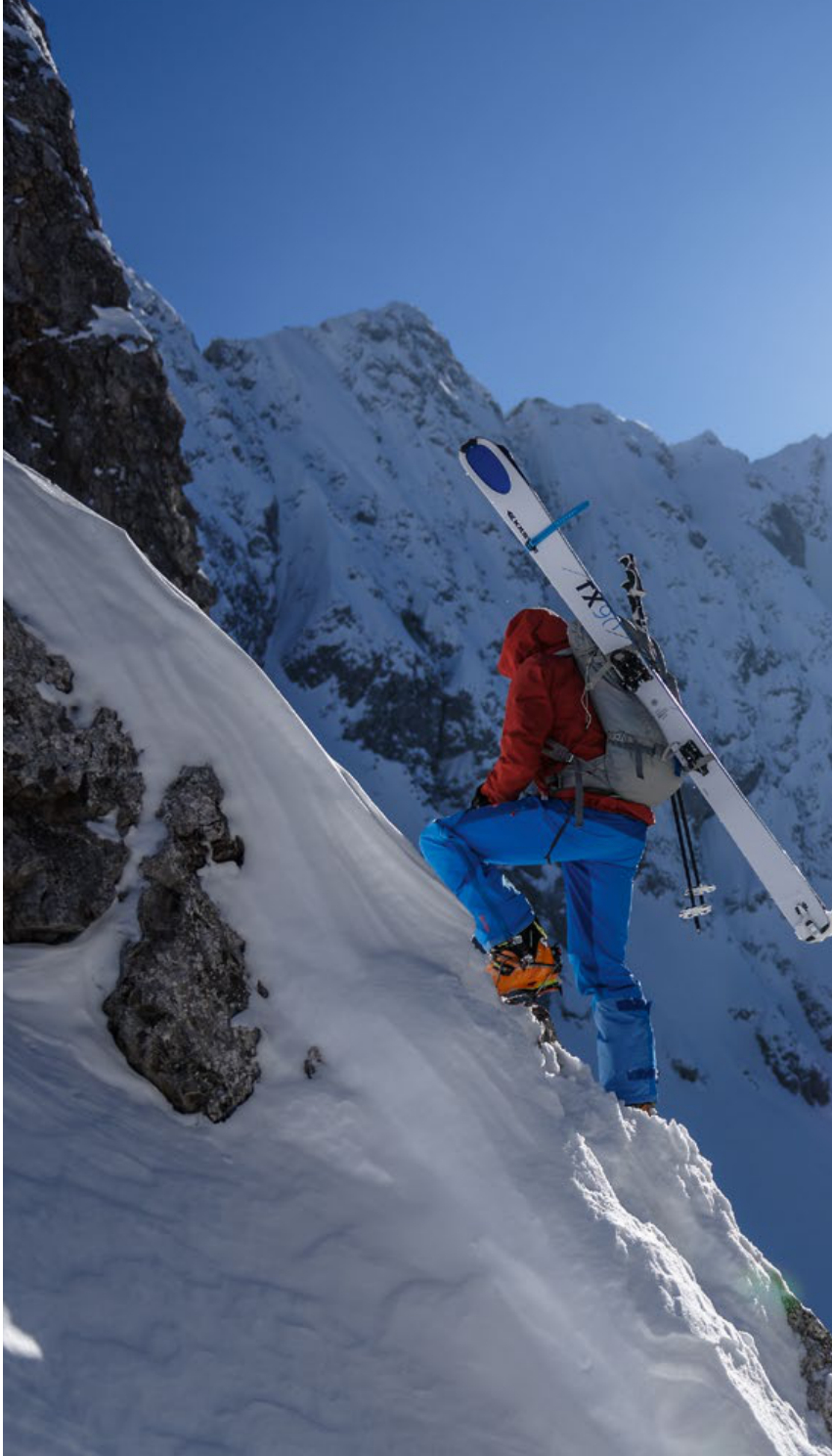
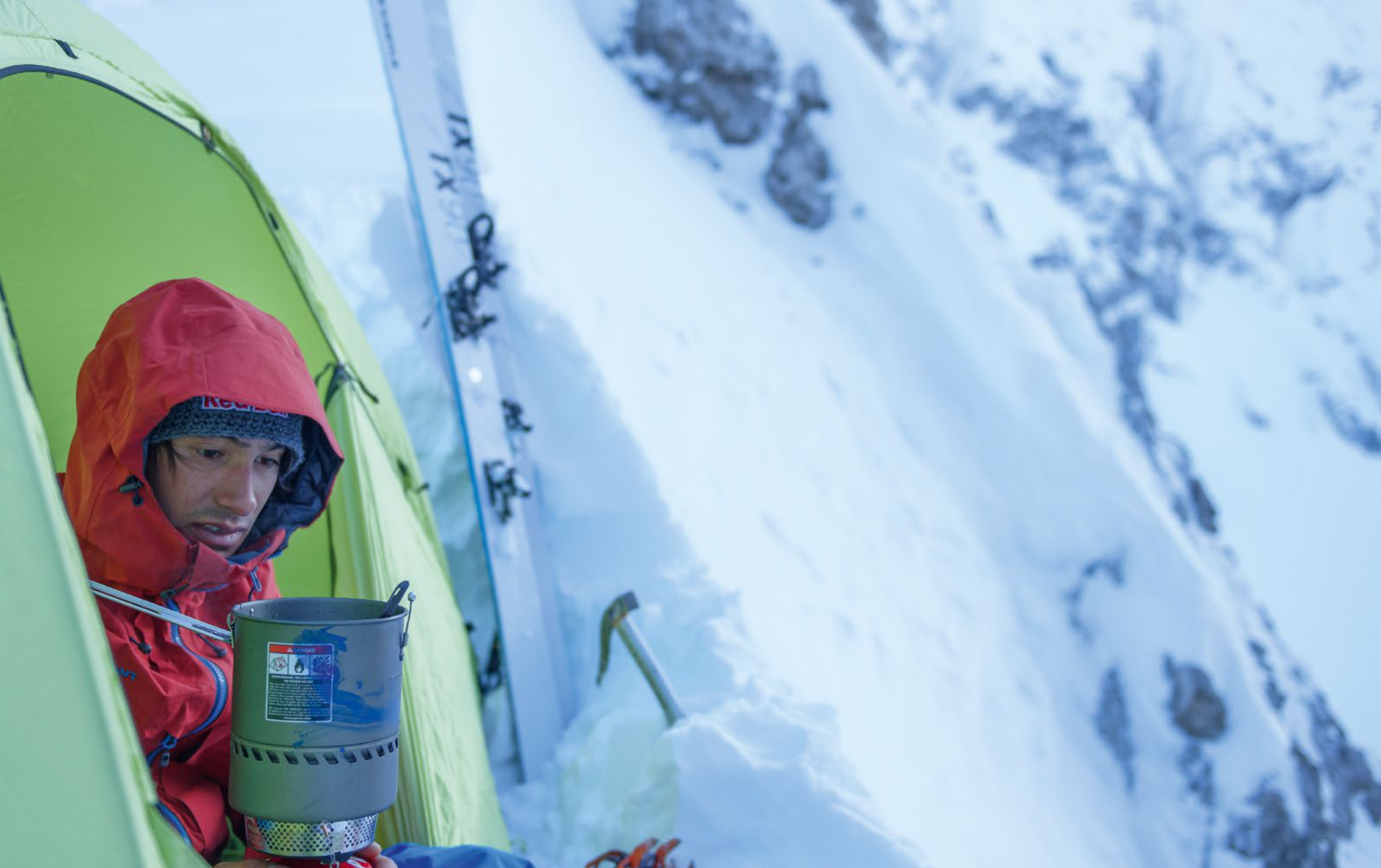
Going more into detail, the fitness alibi doesn't count for David: "I look out the window in the morning, and Innsbruck is covered in thick clouds or fog. Next thing I know, I'm climbing a steep slope with crampons, heading towards the sun, then I ski back down". Nothing could probably beat that. For Lama, it's not all about the rock, but also the snow that gets him going; however: "I am not fascinated by a specific element. Summer or winter, I am simply captivated by lines". As a mountaineer, he inspects alarmingly slick and mostly heavily overhanging walls for details relevant for his climbing: "Where do I start? Where do I secure? Where do I stand? Where will I bivouac"? Skiing is very similar.
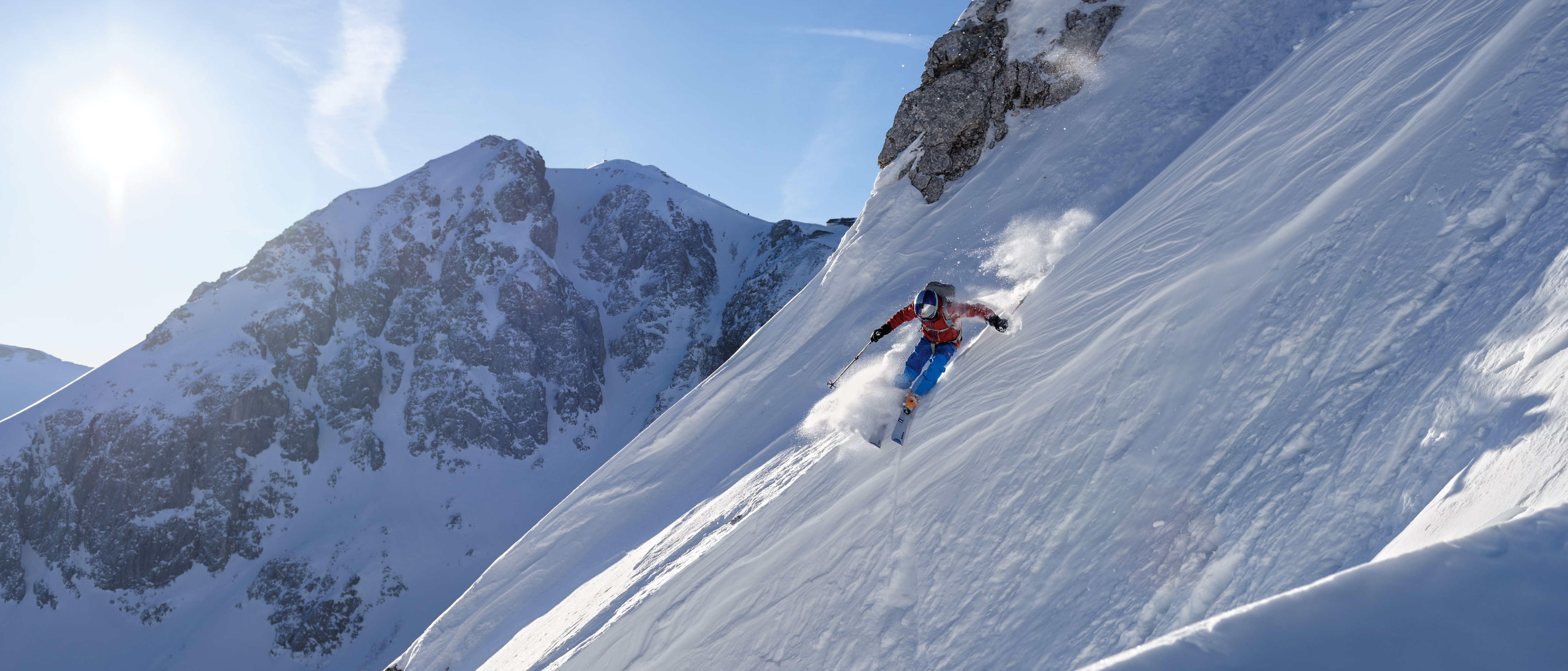
Lama is specially drawn by steep runs, especially when no one else has skied them before. It's all based on one vision: The idea of a route that can be climbed or a visionary line for skiing. Do you need any examples? In 2009, David and Daniel Steuerer skied Kesselspitze's 45-degree northern chute located in Austria's Stubai Valley. Lama describes the line as "not necessarily difficult, but brutally impressive, and comparable to the Canale Holzer near Passo Pordoi." He even managed to ski two impressive parallel lines at the Sagwand in the Valser Valley in 2001: the 50-degree northern chute together with his former climbing coach and mentor Reini Scherer, and the northern face, solo.
Last winter, David was first to solo ski the southeastern channel of Hochplattig in the Mieminger Range, involving 1,600 meters of ascent and a 50 to 55-degree and 800-meter descent. Once having made a first descent, the young alpinist experiences a profound and long-lasting satisfaction – despite the fact that the run itself never lasts longer than a few minutes: "When I return to such a location in summer, I look up and think: Wow, you've skied this!" Successfully skiing a wall or slope creates a close relationship with the respective mountain just like it does when he climbs a new route. This intimacy is David's motivation. A successful descent leaves something sustainable, a long-lasting emotion, or (using more romantic words) eternal joy.
That's why difficult climbs and daring runs give David much more than regular off-piste skiing. He says that it's a much greater investment compared to taking a lift to enjoy a great powder run. His math is simple: "The more you give, the more you will receive in the end." That's why traditional freeriding and off-piste skiing are not really David Lama's preference. He is not seeking the flow or rush of powder skiing. These are rather pleasant side effects that come with his adventures: "I am less of a skier, despite the fact that I am traveling on skis," he explains. "I find the alpine challenge far more appealing." Of specific importance for this exceptional athlete: The "how," meaning the style.
But he doesn't condemn freeriders who use a helicopter to reach a summit. In his eyes, it's an appropriate instrument for skiing as many fresh lines as possible in the least amount of time. "It's each person's individual choice." Heli-skiing in Alaska may be a great adventure, but Lama has a different approach: "It's about the overall experience; and for me, this includes a demanding ascent."