Schweden · Sylarna (Jämtland)
The awesome Awls
Issue 2015 · Words: Anders Wingqvist · Photos: Fredrik Schenholm · 5 min read
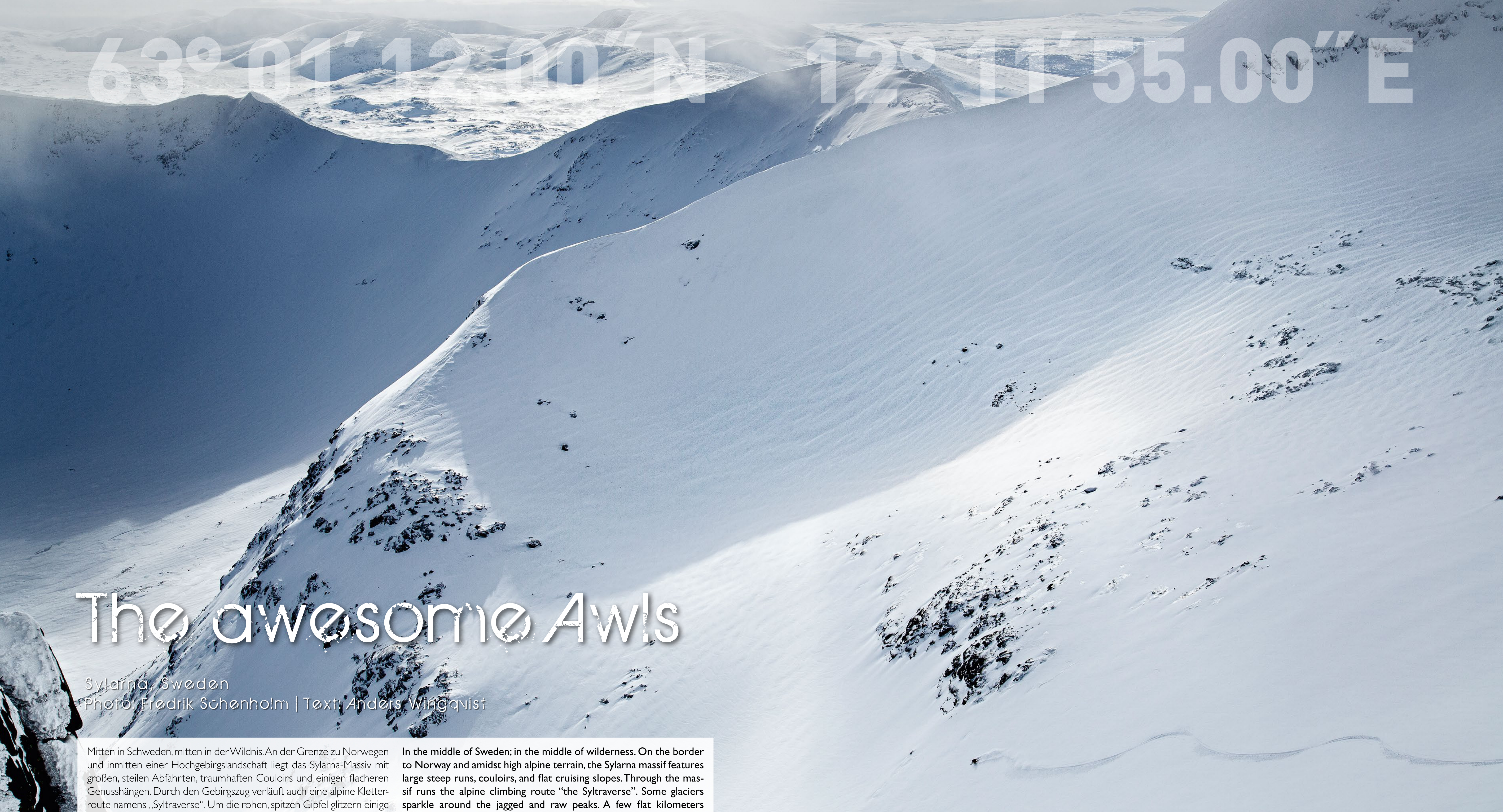
In the middle of Sweden; in the middle of wilderness. On the border to Norway and amidst high alpine terrain, the Sylarna massif features large steep runs, couloirs, and flat cruising slopes. Through …
In the middle of Sweden; in the middle of wilderness. On the border to Norway and amidst high alpine terrain, the Sylarna massif features large steep runs, couloirs, and flat cruising slopes. Through the massif runs the alpine climbing route "the Syltraverse". Some glaciers sparkle around the jagged and raw peaks. A few flat kilometers beyond the foot of the massif lies a cozy mountain lodge. This is the perfect starting point for those who want to explore the most southern high alpine area of Sweden. We install ourselves in the Swedish Tourist Association's mountain lodge "STF Sylarnas fjällstation".
My legs feel stiff after several hours of travel – first a flight to Östersund in the middle of Sweden, next approximately two hours by car to the west and passing Åre, Scandinavia's largest ski resort, and finally one hour by the "Fjällexpressen" all-terrain vehicle from Storulvån to the fjällstation. The mountain lodge offers around a hundred beds. None of the Swedish snow-capped peaks are visible through the windows. A blizzard is raging outside the lodge. I fantasize about what kind of alpine skiing and climbing adventures could lie ahead of us. Travel companion, skier, and outdoor designer Niklas Kull disturbs my daydreams. "Wow, check out the picture," he says, pointing at a wall. We look at an amazing photograph showing a grandiose mountain.
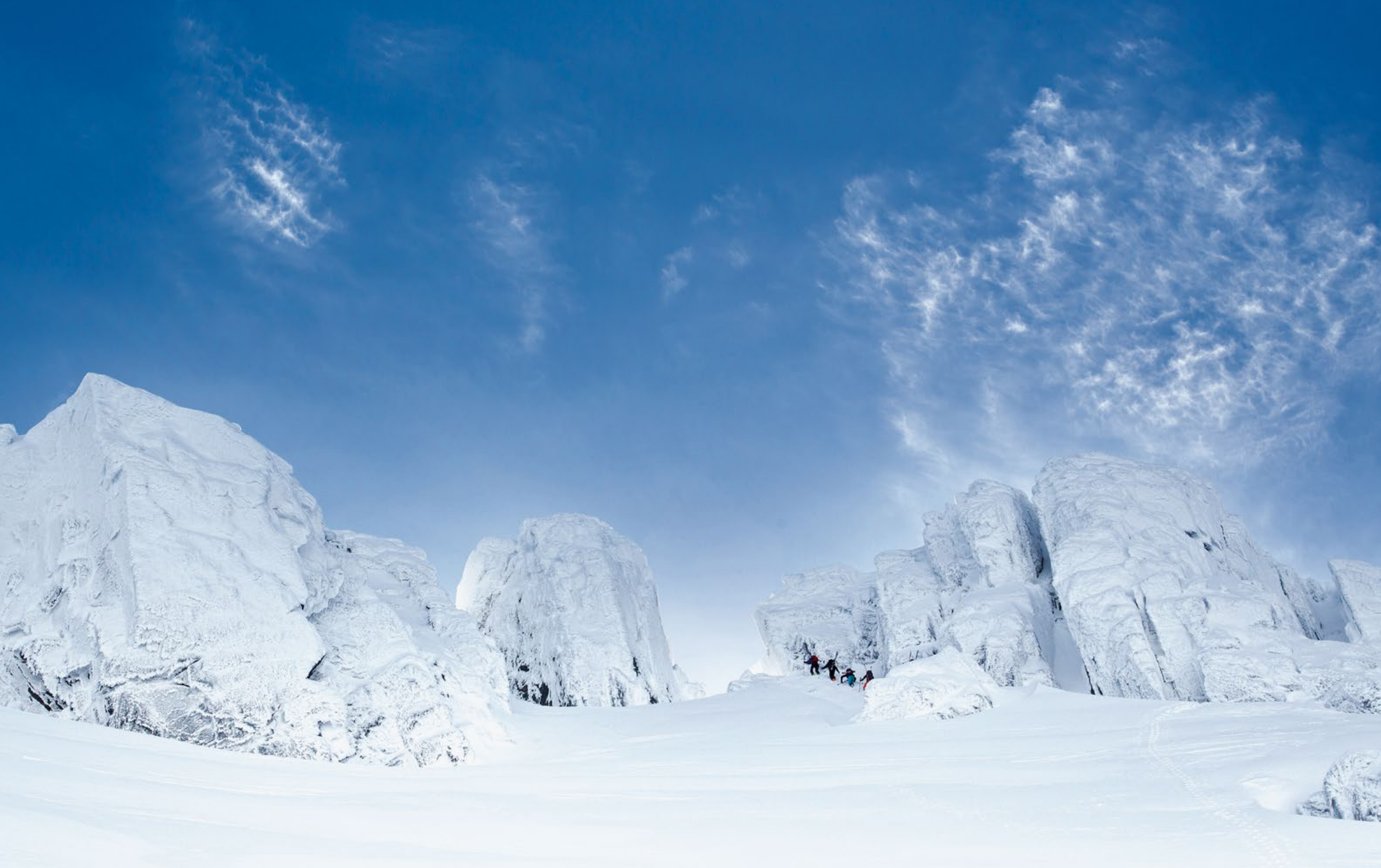
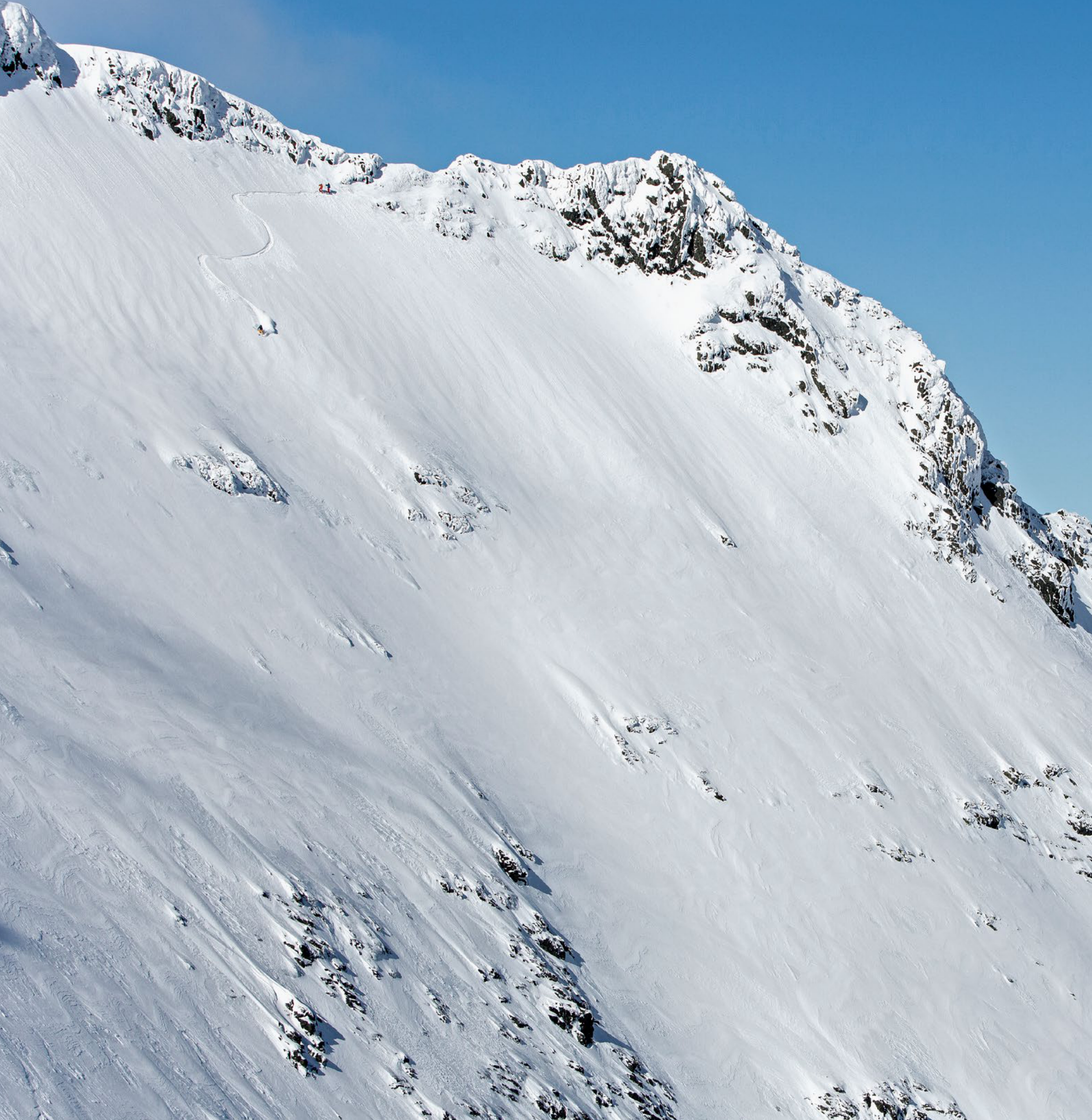
It looks typically Swedish with its cauliflower-like appearance, a silhouette created by snow and wind. "It looks like Mordor, and the ridge looks like a sleeping dragon," Niklas says as we take a closer look. The sleeping dragon is the start of a popular alpine climbing route called the Syltraverse. Besides the bizarre snow formations, we also notice a couloir cutting the mountainside. It is hard to say how long or steep it is, but later that evening we find out more. It's named Tempelrännan, a classic run in this area with 200 meters vertical and a steepness of 45 degrees. Suddenly, my legs feel restless, and all I want is to get out and ski.
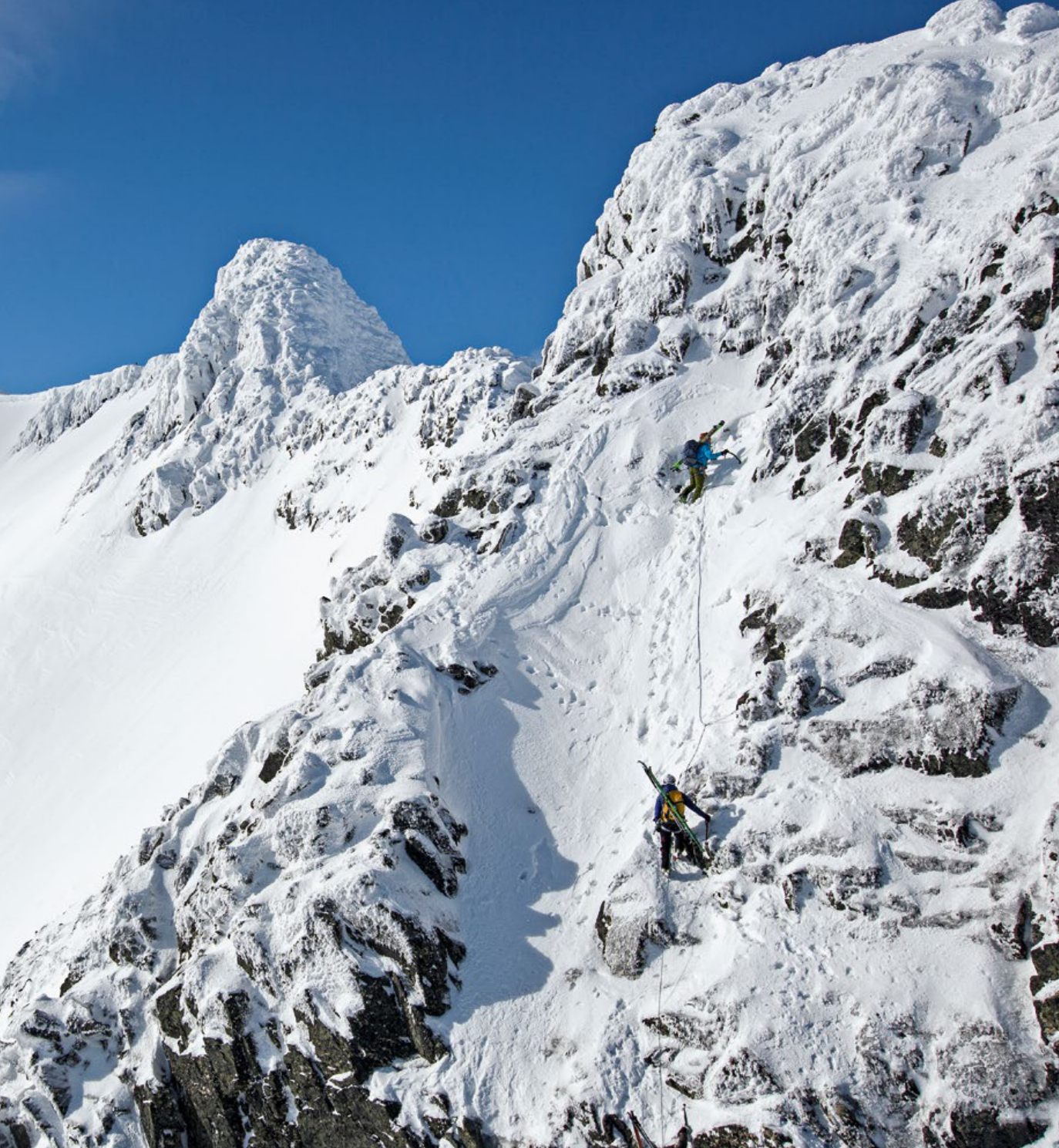
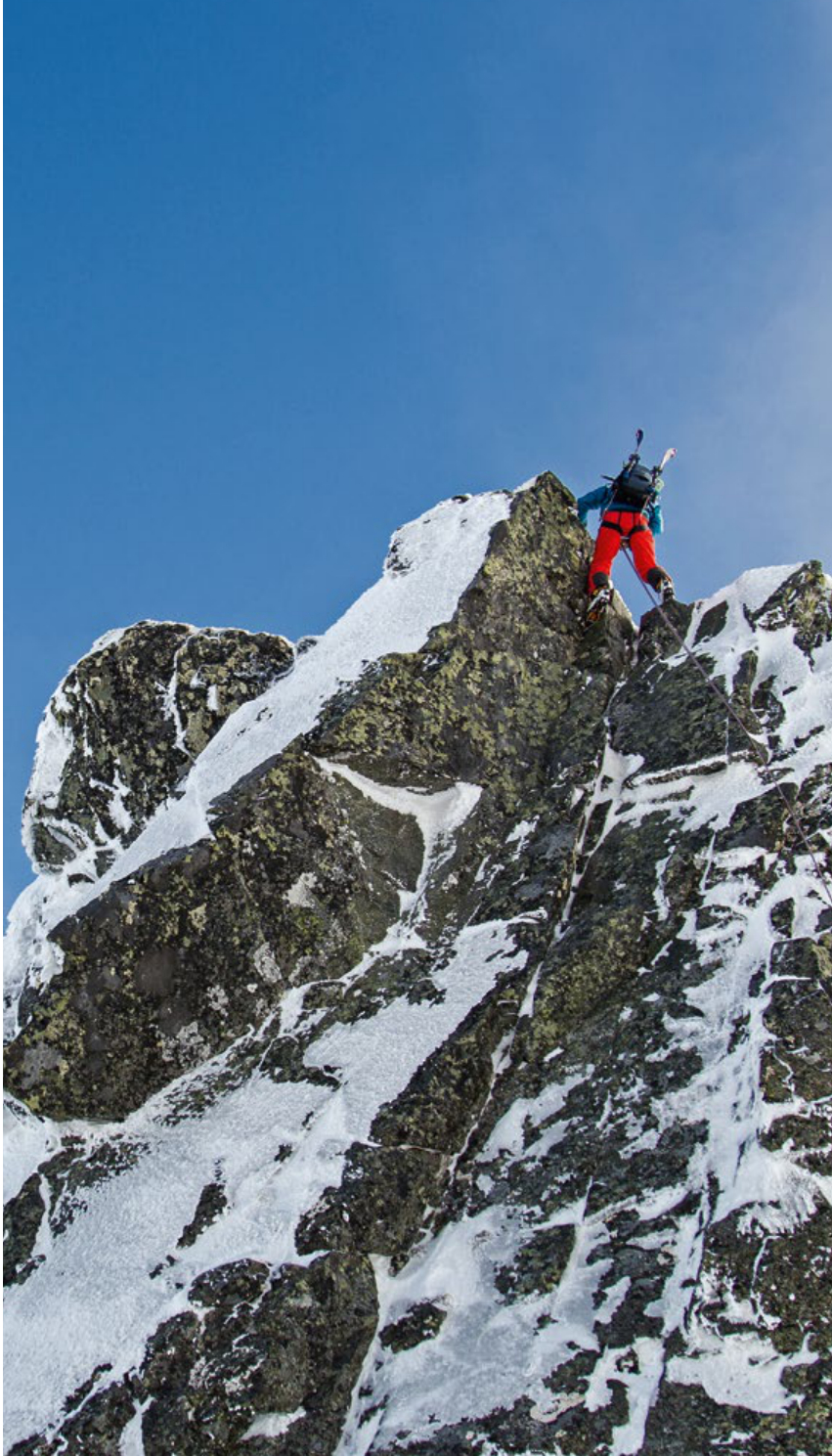
But I will have to await the end of the snowstorm and get some sleep before we can even think about our first day of ski touring. In the middle of Sweden, in the middle of nowhere, next to the Norwegian border to the west. We are blessed with fine and clear mountain weather the following three days. The storm settles after our first night. Plenty of fresh snow, and the wind – as so often in the Swedish mountains – moved the weather front to the eastern side of the mountain. We set out every morning from the lodge, making the tedious but beautiful hike towards the Sylarna massif while slowly gaining altitude. The ascents are mainly done with skins, but ever so often it gets too steep, and we switch to ice axe, rope, and crampons.
The ridge that Niklas and I stared at is located in the central part of the Sylarna massif. The first peak, seen from the north, is Lillsylen. The next stop on the ridge is the highest peak of the massif, the Storsylen with 1,762 meters; then the ridge continues several kilometers before reaching its end just after the Tempelrännan. It's a big playground for alpine climbers and skiers. The Sylarna massif is an excellent area for those who intend to stay a few days or even a few weeks as it offers several interesting runs of various difficulties. Sylarna in Jämtland is like Sweden's Chamonix: high mountains with glaciers, steep and large ski runs to all directions, awesome couloirs, but also easier cruising runs. CLUNK!
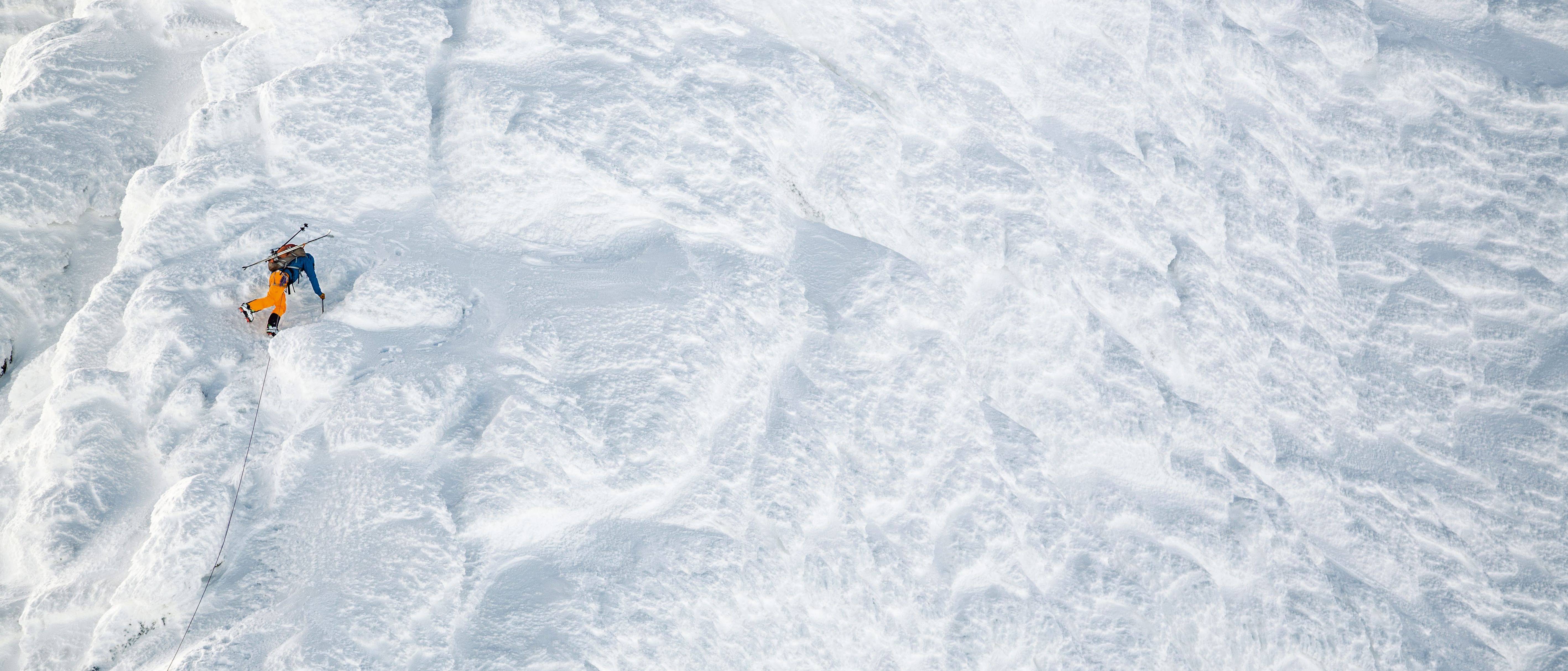
My ice axe bounces back from the surface on the glaciated first part of the Syltraverse. The mountain's windswept ice and snow structure was too tempting not to climb it. Our goal for the day is the east side of Templet. I raise the ice axe over my shoulder, making sure it gets some speed while aiming at a spot where the cauliflower snow looks slightly thicker. SMACK! The ice axe gets a solid grip while the rope flies back and forth between us in the wind. The jagged mountains in the Sylarna massif are known for unpredictable and stormy weather, often the reason for accidents, with fortunately not too many fatal ones. The most famous accident in the Sylarna massif had an extremely fatal outcome though when 3.000 people died in a raging snowstorm.
In 1718, General Carl Gustaf Armfeldt led an expedition from Jämtland with the intention of attacking Trondheim in Norway. The orders of this attack came from the Swedish warrior king Karl XII. However, the king himself was killed in late November in the border city of Halden. When the news of the king's death reached General Armfeldt after Christmas, he decided to retreat with his 6,000 soldiers, the so-called Caroleans. The shortest way home was over the mountains and the peripheries of the Sylarna massif. The retreat ended in a disaster as the soldiers were hit by a snowstorm. 3,000 died and were left behind. More soldiers died on the last march to the Swedish town of Duved, located just west of Åre.
A third of the 2,000 surviving soldiers became disabled for life. According to the legend of "the Carolean death march", the Norwegian farmers living close to the Sylarna massif equipped themselves with the dead soldiers' guns and ammunition in spring 1718. "Wow, check out that mountainside!" Niklas shouts at me through the wind while pointing towards the steep east side of Templet just ahead of us. Again, he interrupts my daydreams. The breathtaking cauliflower climb is done. This is not a photo any longer. This is the reality.