USA (Alaska) · Alaska Range
The Denali Experiment
Issue 2012 · Words: Adam Clark · Photos: Adam Clark · 6 min read
At 6,194 meters Denali towers over the already monster Alaska Range. The highest mountain in North America, and one of the Seven Summits, its routes and ridges, couloirs and faces have long enticed …
At 6,194 meters Denali towers over the already monster Alaska Range. The highest mountain in North America, and one of the Seven Summits, its routes and ridges, couloirs and faces have long enticed climbers. Denali is less known for its skiing options. The mountain was first skied in 1970 by Tsuyoshi Ueki, and since then ski tracks have been laid down its flanks every spring. Not every big beautiful peak is created for a skier's track. Many are too steep with no clean lines, or its hazards and exposure simply too great. But a flight around the Denali reveals how this mountain, though deadly in its own right, is made for skiing.
The most climbed route, The West Buttress, is a strikingly beautiful and relatively safe route to the top, with a variety of steep skiing options. When conditions are right, the West Buttress route avoids most of the objective hazards. Still, ever present dangers lurk, like crevasses, rockfall, icefall, bitter cold temps and the possibility of wild storms. But if the mountain gods smile, Denali is a skier's dream. In July 2011, an amazing team of athletes came together on Denali. Legends Conrad Anker, Hilary O'Neill, Jimmy Chin, Emilio Previtali and Jim Zellers indoctrinated relative newbies, Sage Cattabriga-Alosa, Ingrid Backstrom, Giulia Monego and Lucas Debari to the ways of high altitude ski mountaineering.
In 1989 Conrad had spent time on the mountain and saw the potential for freeskiing amidst all the ascent routes. The goal of the trip was to learn, have fun and ski. Of course, with a group like that the summit was also the goal. In the months preceding the trip, stories of death, ice, wind and cold temps filtered through the news. Our goal to "have fun and learn" would be fine in those conditions, but the skiing part – down 45-degree ice slopes at 6,000 meters - would be really hard and dangerous. In Talkeetna, small planes stuffed with bags wait for a window of weather to fly onto the Kahiltna glacier. During the 40-minute flight green slowly fades into an almost black and white landscape of snow and rock.
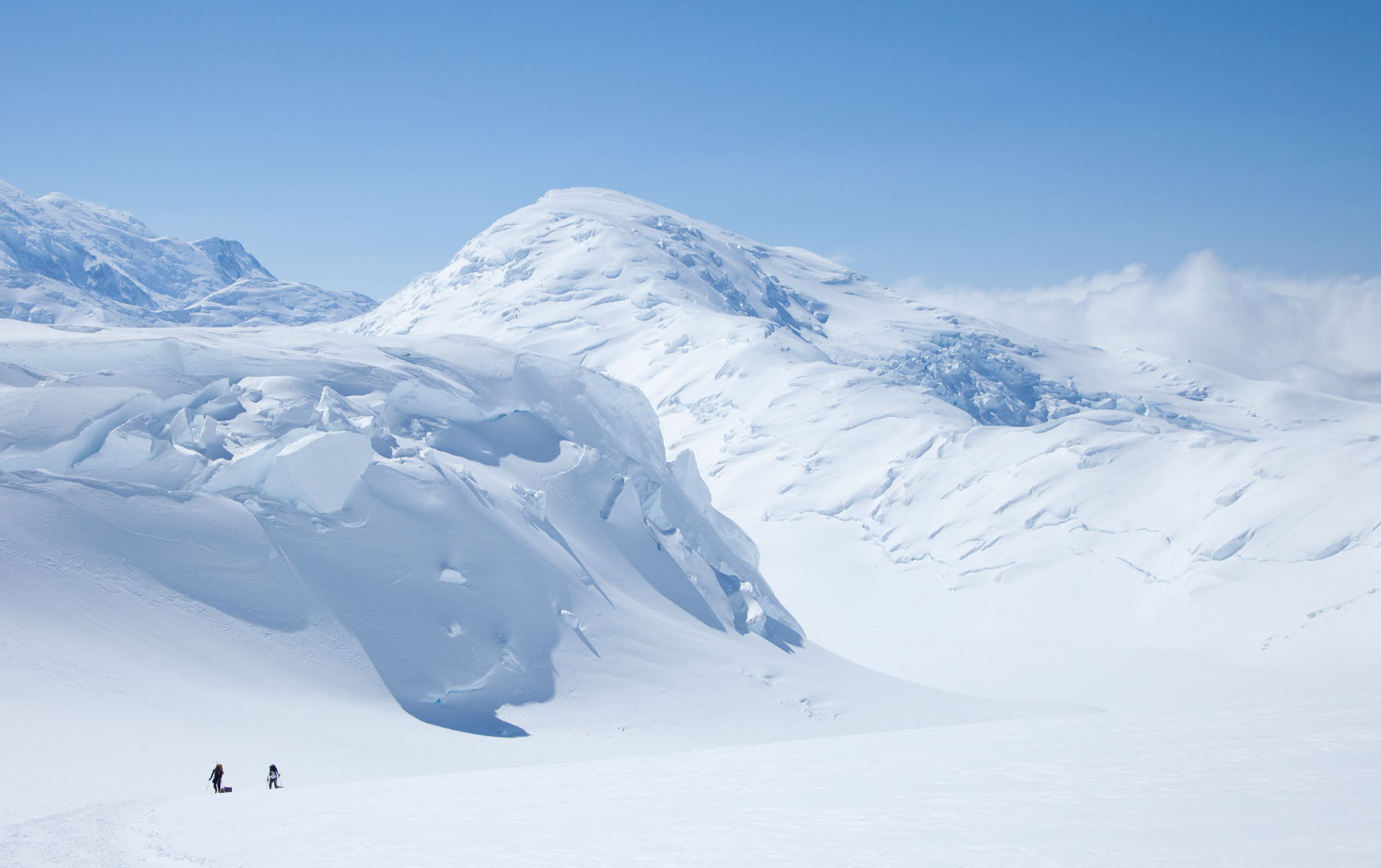
By 10 pm our gear is packed into backpacks and sleds. Tied together, we put one foot in front of the other hoping for safe conditions. The first few days on the Kahiltna glacier are spent acclimatizing to elevation and to life in the Alaska Range. Your body is tortured by heavy loads that torque on muscles you never knew existed. Days are spent sleeping in the tent as the sun melts down the glacier. Nights (when the snow bridges are strong, the snow is quicker and you won't sweat away every ounce of water in your body), are spent crossing the glacier. When the sun begins to set around 2 am the mountains, glaciers, seracs and crevasses slowly change shape with each new degree of pink and white.
Just when dark begins to take hold the pink returns, the sun begins a slow climb towards daylight and the magic happens in reverse. Hydration and food are key factors to any successful expedition. Melting water on Denali is more than a chore. It becomes a way of life. The day revolves around it. Conrad has it perfected. It's not as simple as it seems. Somehow he could always melt snow faster than anybody else. Finding clean, dense snow to melt is the most important factor. At base camp, melting water often turns into a party with everybody helping out. There is much information about how many calories you expend and need for a day of climbing and living at 4,000 meters.
It helps to plan your rations, but with so many people trying to summit Denali in May and June, and many of them turning around before their allotted days are done, a quick stroll around base camp turns up plenty of free, abandoned-calories. The key is to bring the items that nobody wants to get rid of – chocolate, cheese, meat, and anything that isn't dehydrated. Then you know you're going to use it all. At 4,000 meters you find a nice spot with a good view. Build some snow walls for the potential of 60 kilometers per hour winds and hope that your body starts making more red blood cells to attach to the limited amount of oxygen you are receiving. Then go visit your neighbors.
It's the best café for climbers anywhere in the world, with up to 300 people from every continent there at the same time. Because of its Latitude, 63° N, Denali has a much lower barometric pressure than the other high mountains, and some of the worst weather in the world. The thinner troposphere means there is less air here than at mountains with similar altitudes, which affects acclimatization. We used the 5,300 meters camp to give ourselves the best chance of summitting. We woke around 10 am and it took until noon to make water, eat a little and put all our gear on. By the time we left it was bluebird, and -26 degrees celsius. A slow, steady walk got us to Denali pass at 5,500 meters.
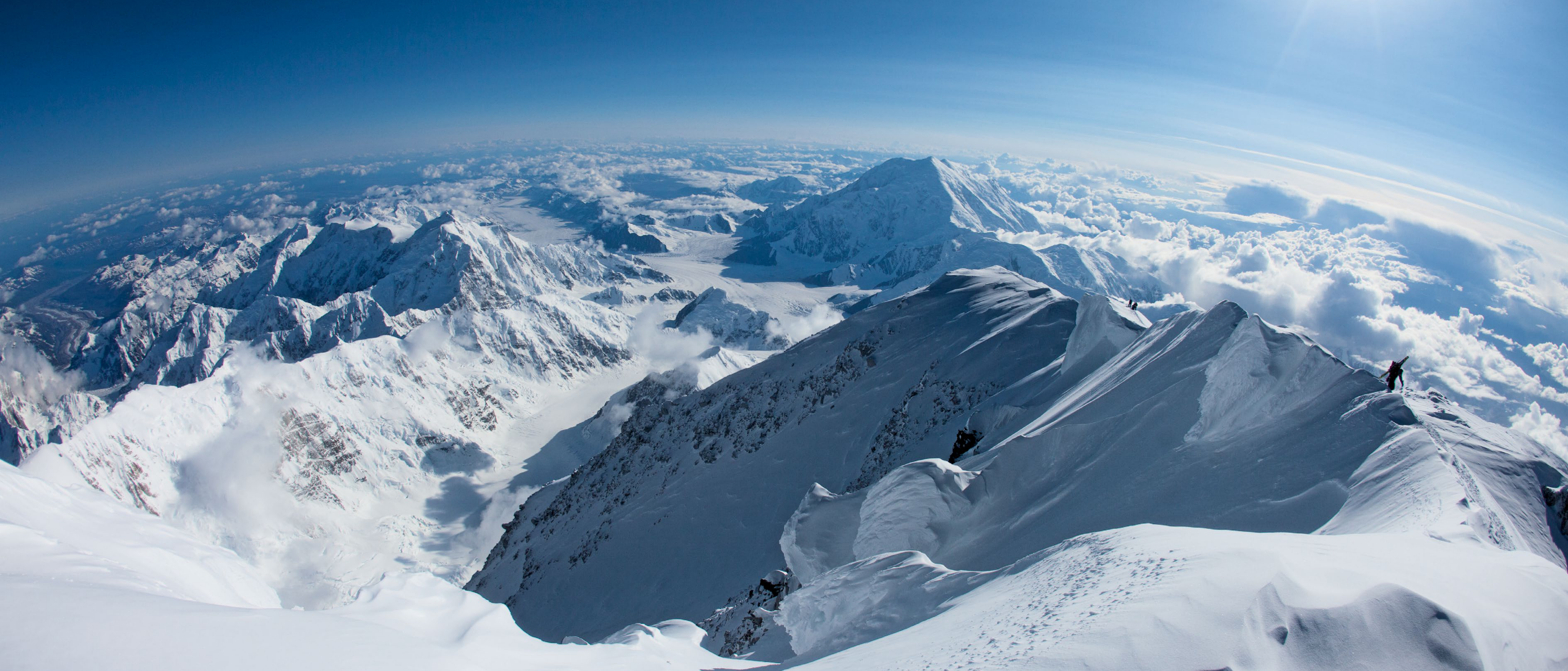
We crested the pass with 10-25 kilometers per hour winds in our face. For the next 450 meters of climbing the winds didn't let down. I don't know how to factor wind chill and elevation but it was by far the coldest I have ever experienced. Jimmy Chin, a veteran Everest climber said the same thing. As we reached the summit ridge, a 150 meters climb called Pig Hill, the wind died down, the few clouds that were on the summit vanished and it was warm enough to take off my puffy jacket. The summit ridge is breathtaking. Monster cornices strike out over the overwhelmingly huge south face. On a clear day you can see endlessly into Alaska's wilderness. The mountains that were towering above during the hike up now seem like foothills.
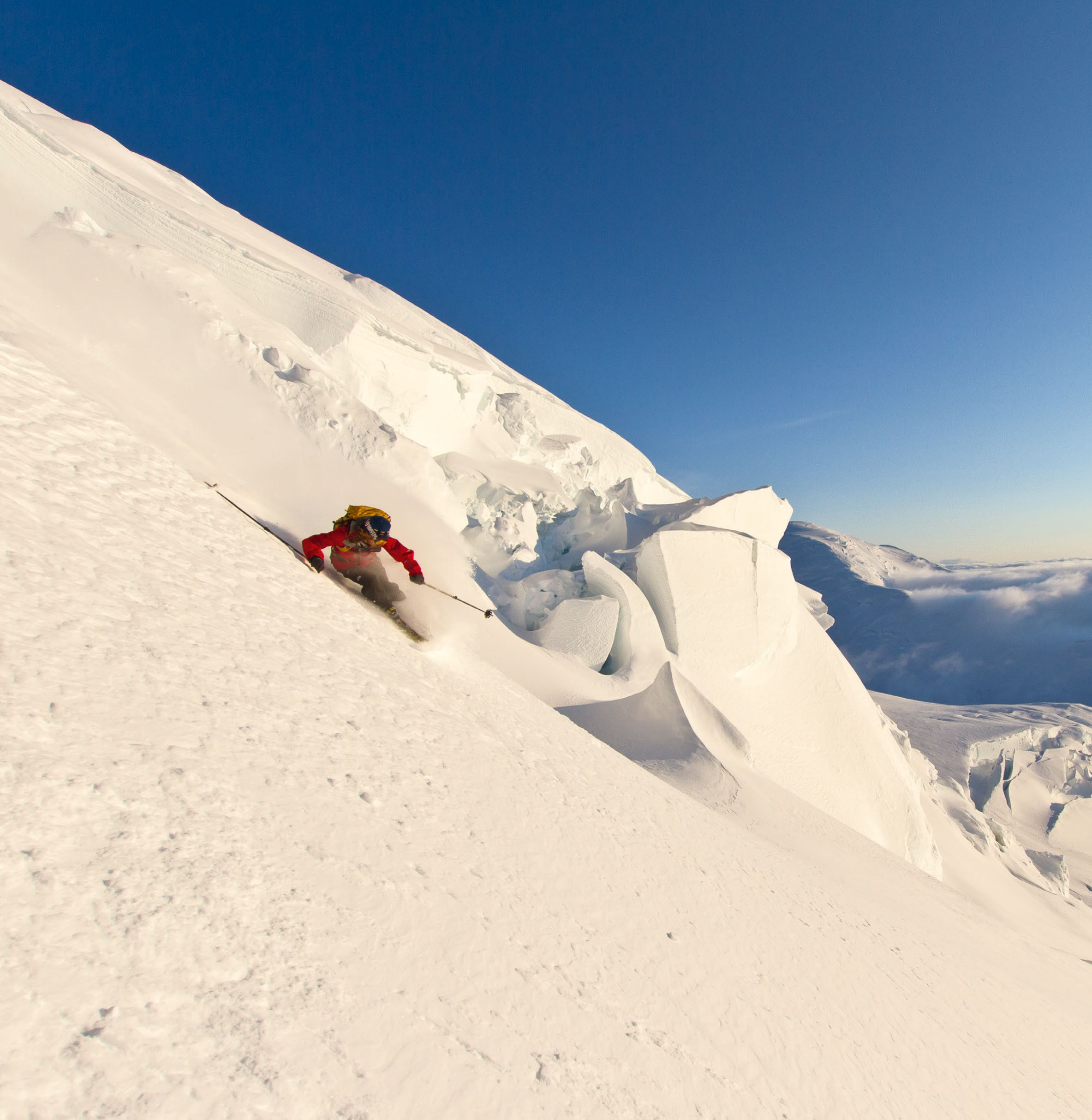
Mt Foraker, the next highest at 5,304 meters, almost looks like a normal Alaska mountain. As with most good things it's best to take your time. A lot of factors go into ski able, good snow. At high elevations the same factors count, but exponentially. As we gained altitude a few small storms came and left, leaving us the gift of warmer temperatures and light wind that let the snow stick to the icy sides of Denali. At our 5,300 meters camp after a day of shuttling gear, the slope above camp beckoned half the crews to a midnight treat of powder in the last pink light. Lucas and Sage jumped off natural ice jumps and over crevasses while the rest of the crew that hiked up hooted and hollered at the joy of skiing powder in June. Somehow we pleased the snow gods because soft snow stayed with us through all of the acclimatization and even off the summit.