USA · Chugach Mountains (Alaska)
The Fifty Peaks Project
Issue 2020 · Words: Ming Poon · Photos: Ming Poon · 5 min read
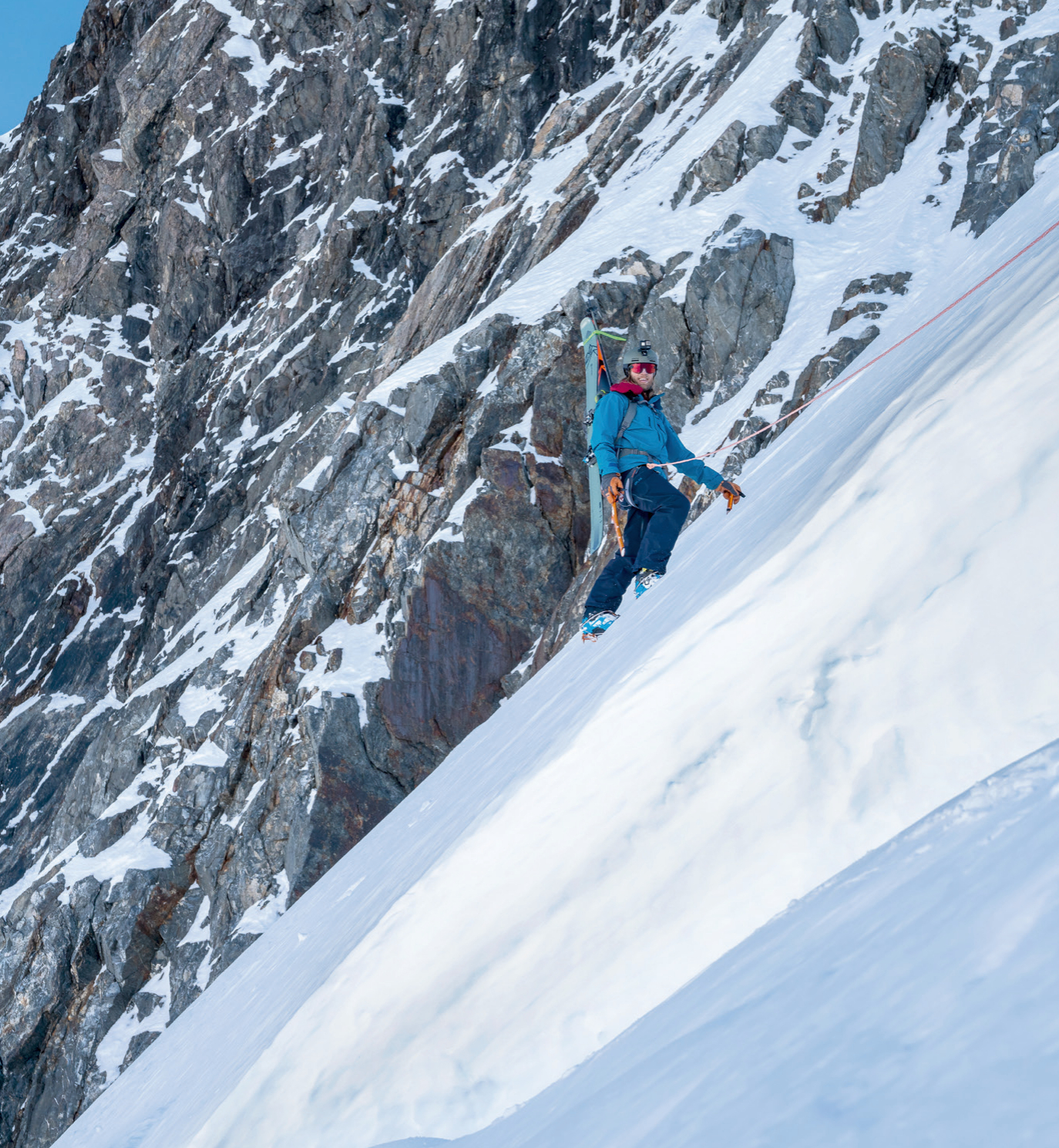
One move at a time, we moved up the steep face of Sphinx. Step, place the axe, step, place the axe. Looking down more than 1,500 vertical feet, you knew a fall would allow for a long time to …
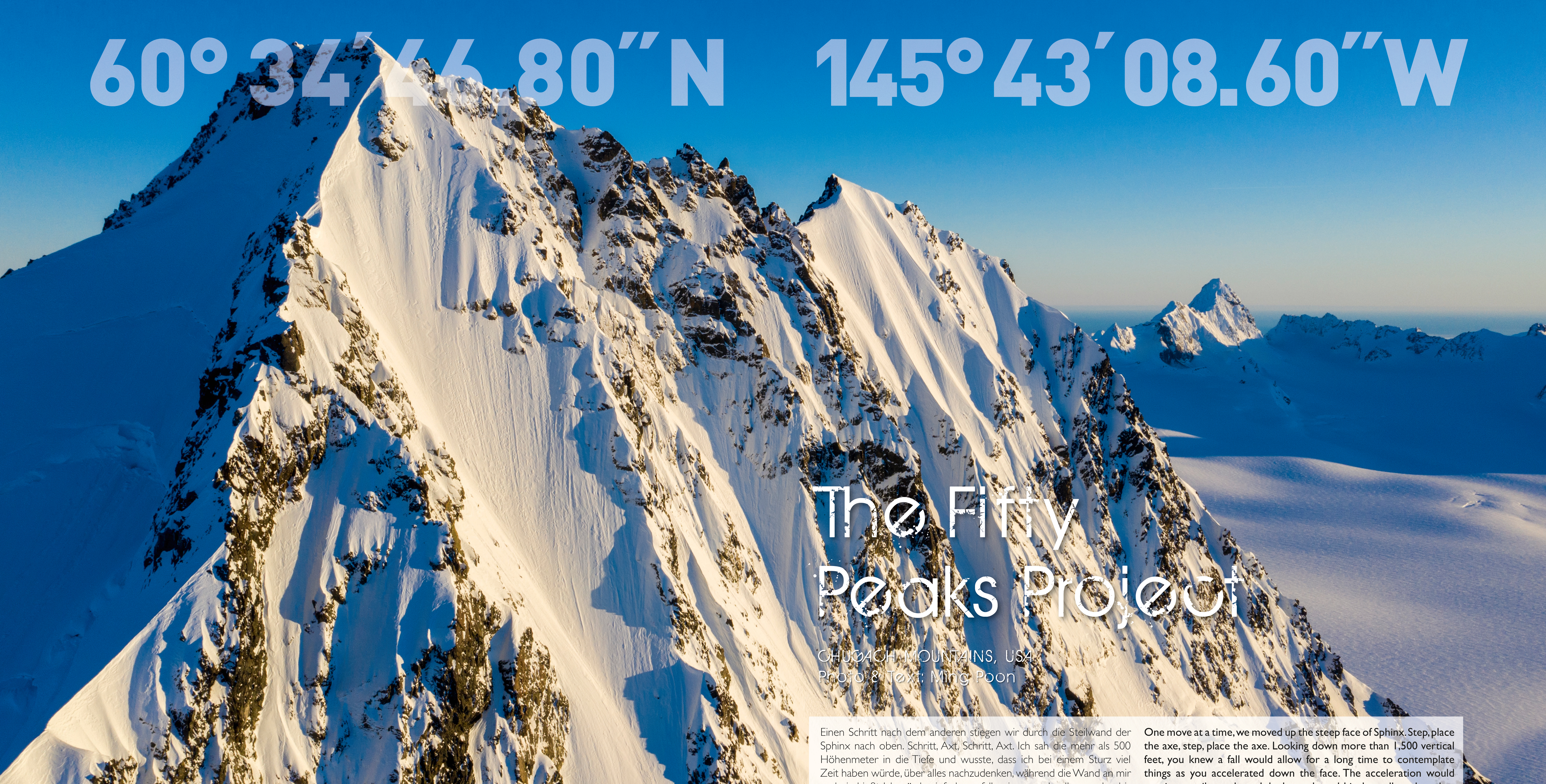
One move at a time, we moved up the steep face of Sphinx. Step, place the axe, step, place the axe. Looking down more than 1,500 vertical feet, you knew a fall would allow for a long time to contemplate things as you accelerated down the face. The acceleration would continue until you cleared the bergschrund, hit the wall on the other side, and then fell into the dark cavern separating the mountain from the glacier. This section was steep, surely near 60 degrees and covered in three-dimensional, firm snow. The acute awareness of the environment keeps you focused on one step at a time. We crested the steep section with a mantel type move, "glad that's over." Now, how do we keep going, and how do we get down?
Cody Townsend grew up in Santa Cruz, California as an avid surfer. It wasn't long until he found his passion for skiing on the nearby Sierra Nevada mountains and his future home of Squaw Valley. That's where I met him. We were both 18 and chasing the dream of skiing, snowboarding for me, always seeking the perfect powder day that upped our previous best. Fast forward 18 years. Cody is one of the most recognized skiers of all time. He's been featured in dozens of international movies, won international big mountain competitions and various awards. Not bad for a surfer from the beaches of California. In 2018, Cody and I spoke about his future in skiing. Dreams of skiing big peaks by climbing them without helicopters.
He had become obsessed with the book "Fifty Classic Ski Descents" by Christ Davenport, Art Burrows and Penn Newhard. The book features many great objectives, some we'd already done, but at the top of the list were some of the most iconic faces and mountains such as University and Sphinx. There were other bold ones, some that had killed friends, and some that had only one or two descents. The draw was too great for Cody. The Fifty Project was born! For the next three years, he'd attempt to climb and ski all fifty classic ski descents of North America along with a filmer, Bjarne Salen. For each one, he'd try to incorporate locals, friends, other pro skiers, snowboarders and photographers. I put in my wish list.
The Sphinx is located in the Chugach mountains of Alaska. It is one of the most jaw-dropping lines of the book and one of the most striking and aesthetic ones anywhere. Any big mountain skier would be drawn to this face after laying eyes on it. It has a beautiful diamond shape, a sustained 50+ degree pitch and about 1,800 vertical feet. Because of its aesthetics, many have been drawn to it. I had seen it in movies, magazines, posters and a couple of times in person while working at Points North Heli Adventures. The desire to ride it grew with every sight. A few years ago, some close friends climbed and rode it in deep powder. To my knowledge, it was the first time it had been climbed and skied or ridden – all other descents used a helicopter.
We could climb and ride it! I wanted it even more. One February evening, Cody called around 7 pm. "I've got a weather report from Quinner. Looks like the Sphinx is in. We have a small weather window. I'm flying up with Bjarne in a couple days." Kevin Quinn is the owner of Points North Heli Adventures in Cordova. Quinn, an Alaskan native, is a Chugach ski pioneer. He has firsthand knowledge of the area and the mountain and knows Cody and me well. I thought, "If Quinner says it's in, it's in!" 36 hours later, we were on a plane to Cordova. We'd attempt the Sphinx the day after arriving, Pontoon the day after that, and I'd fly home the next day.
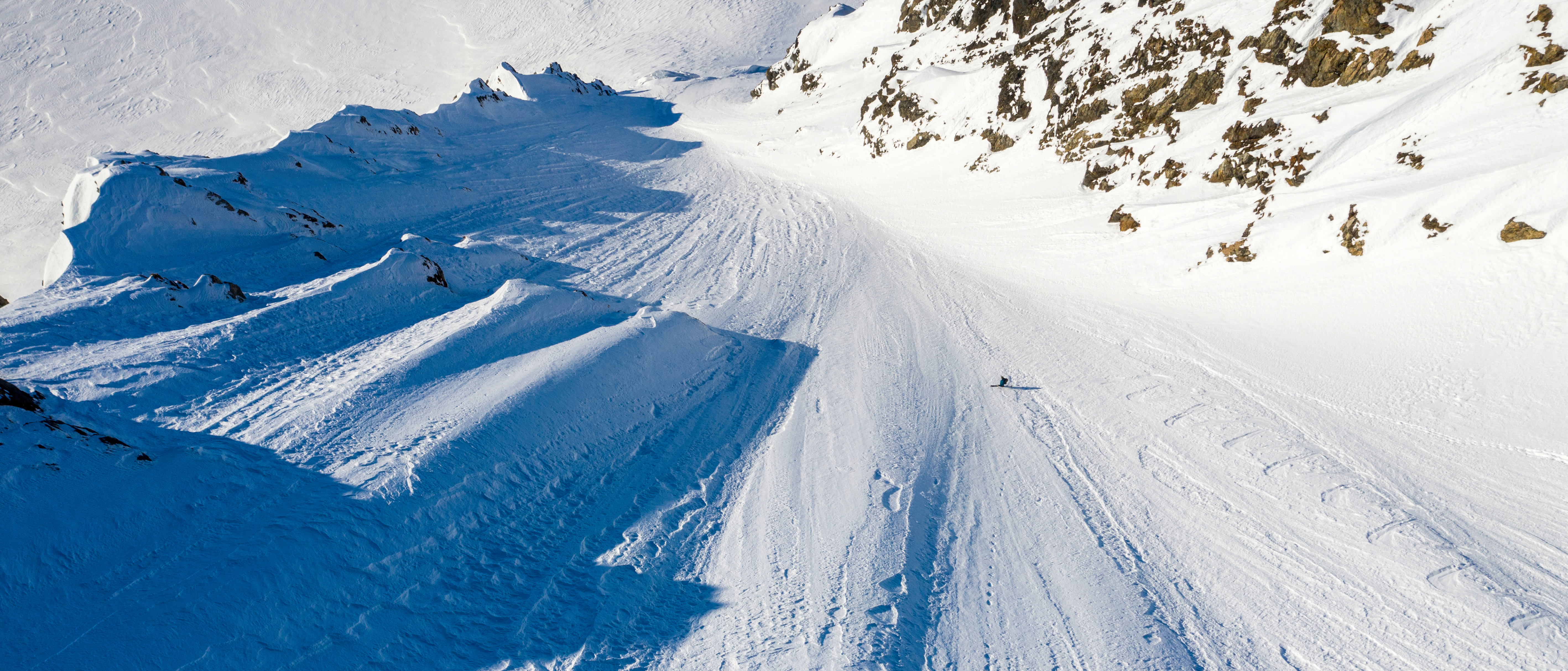
Big Chugach objectives are usually attempted in March or April when the snowpack has had time to settle, the days are long and the lines are refilled. For the big lines, like the Sphinx, some will only be ridden one or two times a year, if at all. The Sphinx is located miles up the Sheridan Glacier of the Northern Chugach. The closest town is Cordova, a small fishing town with no roads to and from, only accessible by boat or aircraft. We started climbing up the face at midday to capture the late afternoon light. We quickly climbed over the bergschrund and unroped for the remainder. We made it to the steep summit ridge in about 1.5 hours.
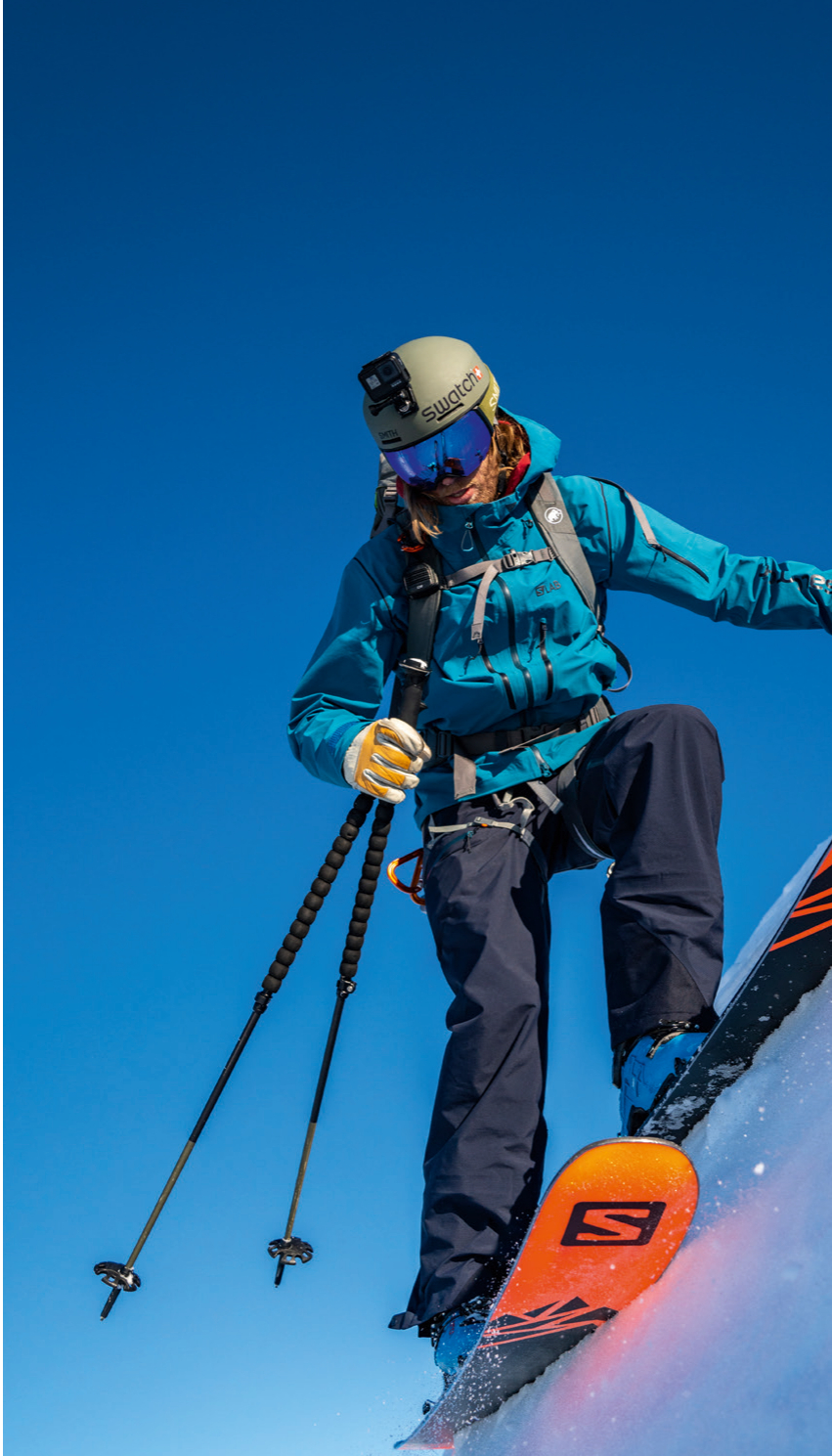
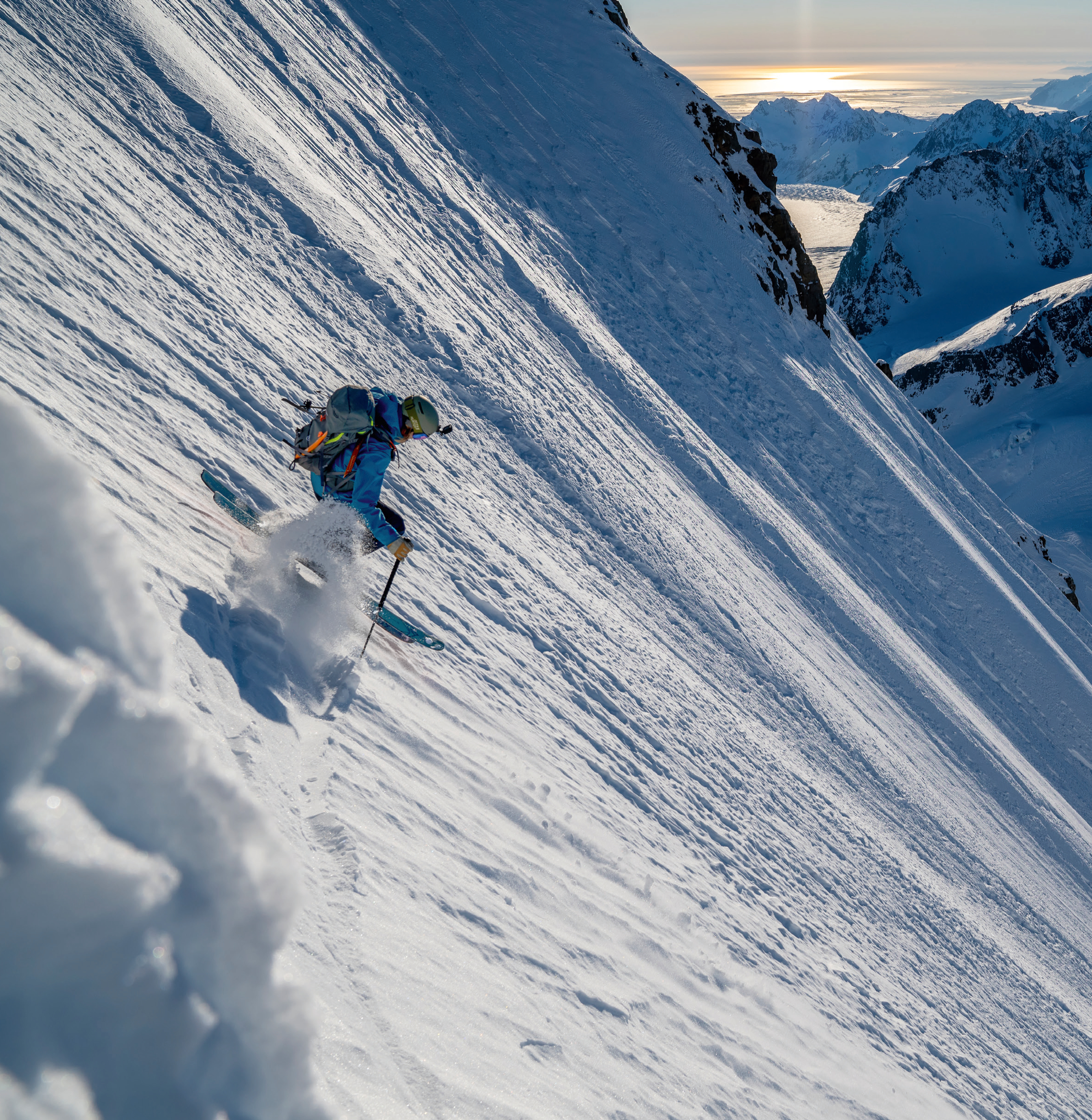
We'd climbed a steep and exposed step on the ridge, and I questioned riding the snow, especially the entrance to the face with 60-degree, three-dimensional snow. I decided this was as far as I could climb with a high degree of certainty for getting down safely on my snowboard. Bjarne and Cody attempted to go higher but ended up down-climbing to the ledge I chopped. We'd all drop into the face, just below the summit. We'd fail to ski and snowboard from the top. The first turns are always the most nerve-racking, but we had confidence as we'd climbed the face and knew enough about the snow. Cody made beautiful turns down the spectacular face in golden light. I was relieved to see him and Bjarne down on the glacier below; it was my turn to descend.
The descent was fairly uneventful, mostly slow and precise turns down firm snow. I have three rules when going into the mountains: come home, come home with friends, come home successful. We'd failed to complete the objective, but we had a great adventure on an iconic mountain. And we didn't break any of my rules. Luckily, we all felt comfortable turning around. Longevity in the mountains requires the ability to say no and sometimes make tough calls just below the summit. The next day on Pontoon peak, we again turned around shy of the summit. While we technically failed to complete the objectives, they further solidified our mountain partnership while providing confidence and building blocks, which led to many other successes for The Fifty Project and beyond.
More specifically, Cody, Jeremy Jones and Bjarne successfully climbed and rode Meteorite and Pontoon Peak just two months later. The Sphinx remains on the list.