USA · Rocky Mountains (Sun Valley / Idaho)
The Fire that Saved Sun Valley
Issue 2020 · Words: Vince Shuley · Photos: Vince Shuley · 5 min read
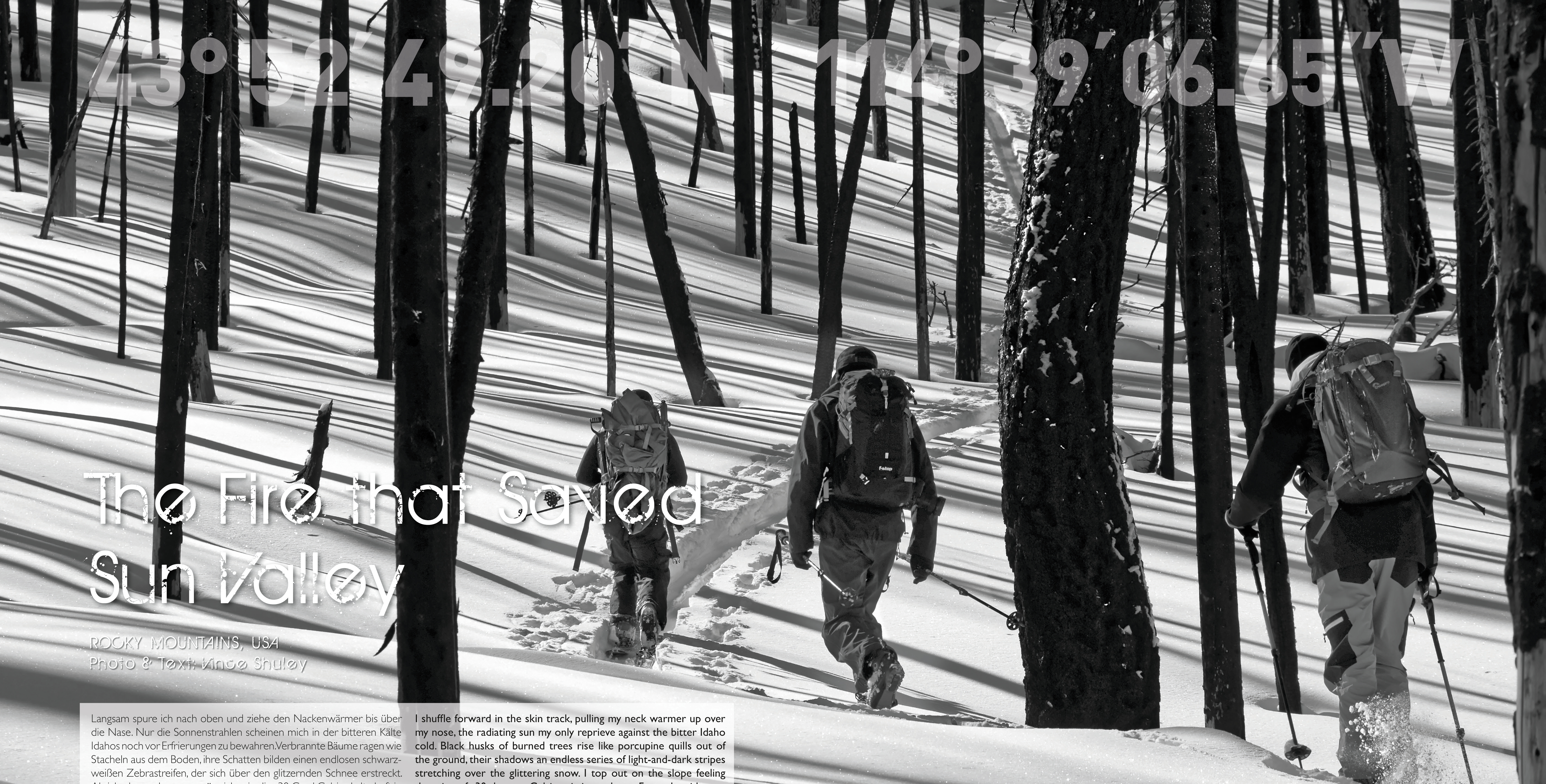
I shuffle forward in the skin track, pulling my neck warmer up over my nose, the radiating sun my only reprieve against the bitter Idaho cold. Black husks of burned trees rise like porcupine quills …
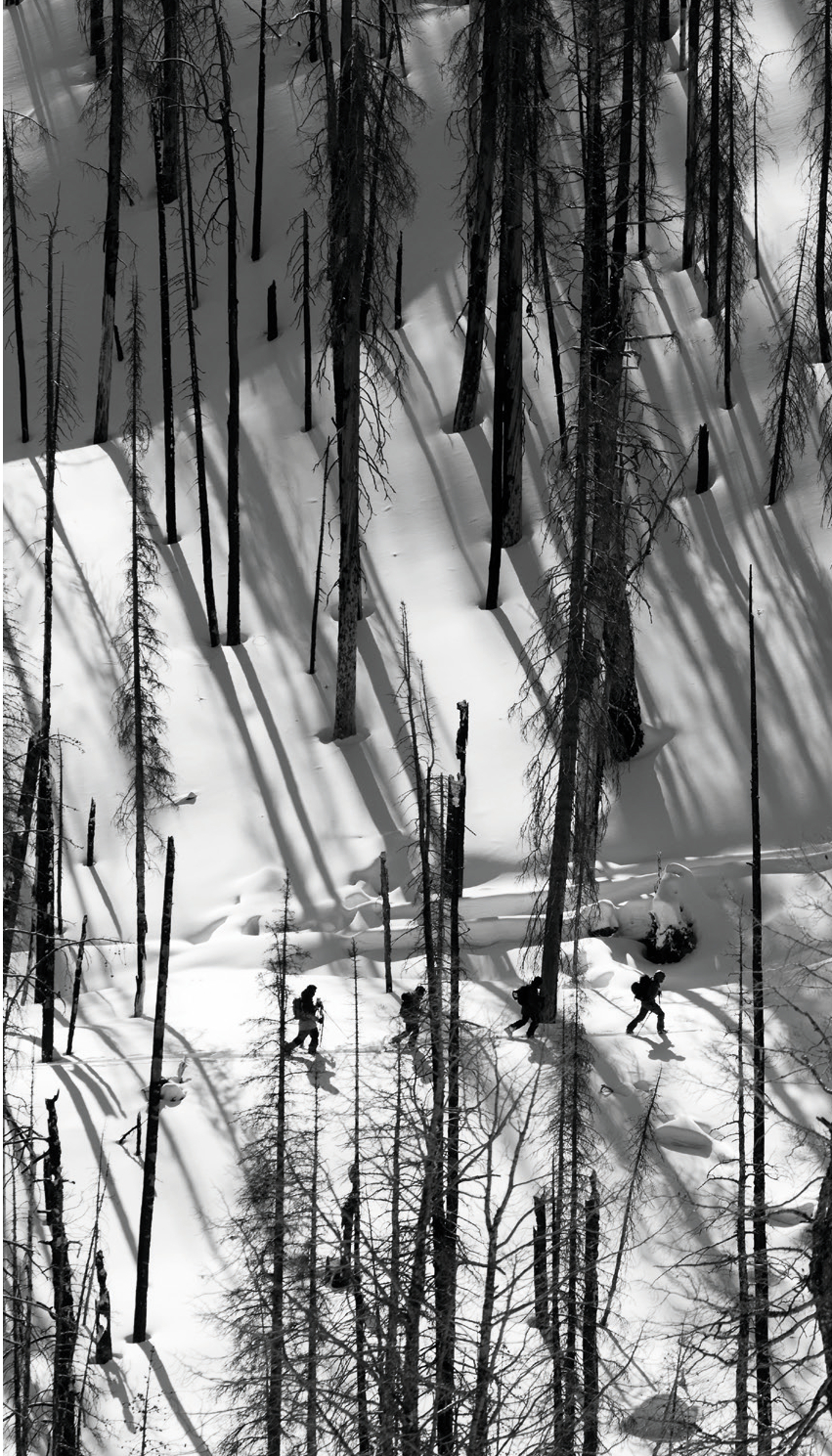
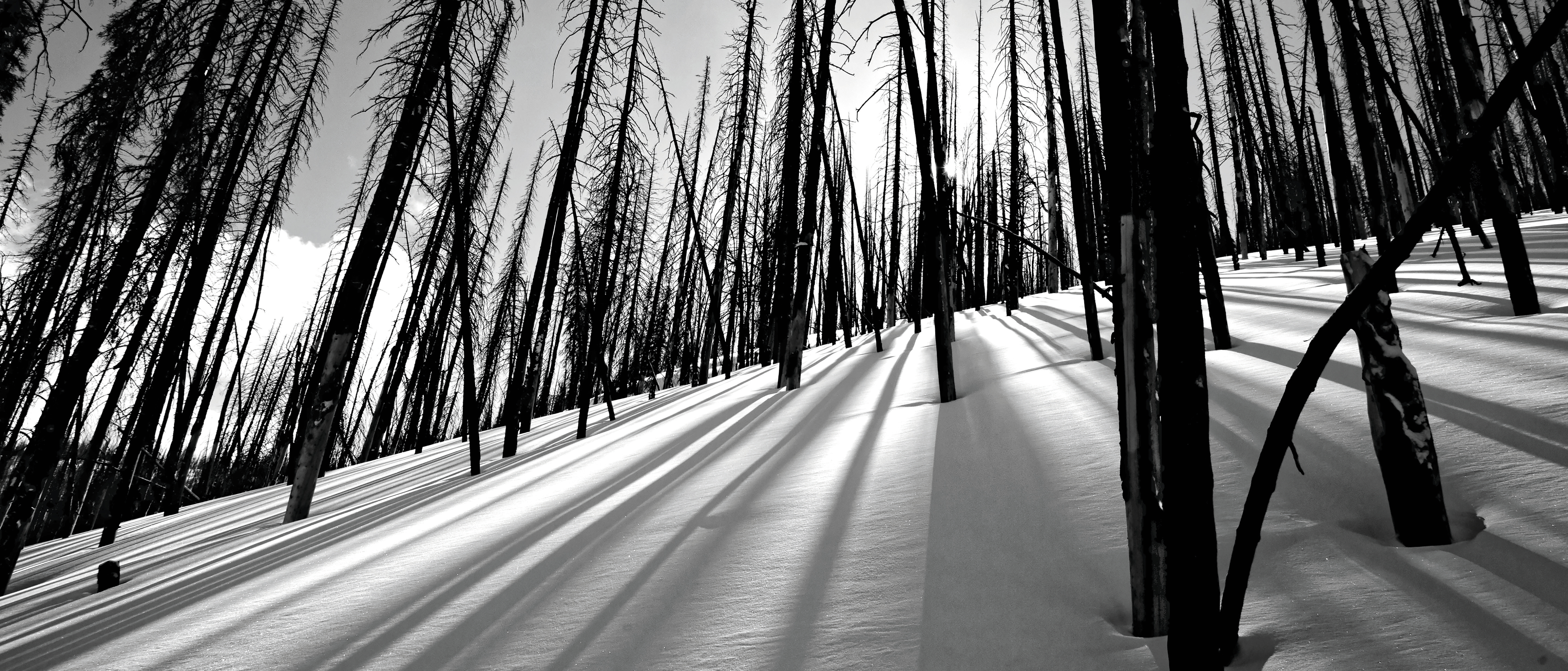
I shuffle forward in the skin track, pulling my neck warmer up over my nose, the radiating sun my only reprieve against the bitter Idaho cold. Black husks of burned trees rise like porcupine quills out of the ground, their shadows an endless series of light-and-dark stripes stretching over the glittering snow. I top out on the slope feeling the sting of -30 degrees Celsius air in my lungs. From the ridgetop, our party gains a full view of the Smoky Mountains of Southern Idaho. To the west, the steeper and more jagged Sawtooth Range juts from the horizon. To the east, the Pioneers collide with the Boulder Mountains, all accessible backcountry areas surrounding the town of Ketchum and the historical Sun Valley ski resort.
Fire scarred this landscape, but fire also played an important role in its protection. Leading our party is mountain guide Joe St. Onge, a resident of the nearby town of Hailey and owner of Sun Valley Trekking. Having spent most of his career guiding in Central Idaho, St. Onge has seen many changes in the town and environment over the decades, both human-made and natural. But the biggest of those disruptions occurred in the last 12 years with the sweeping and destructive wildfires of Castle Rock and Beaver Creek, which tore through those valleys in 2007 and 2013, respectively. The aftermath of the burn is our venue for ski touring this week. "Lightning strikes started both the Castle Rock and Beaver Creek fires," recalls St.
Onge, pointing out the flashpoints a few kilometers away from our current position. "They had to evacuate parts of Hailey in the middle of the night during the Castle Rock fire. We watched the fire creep up over the mountain, like a volcano dripping lava over its edge. It was surreal. As destructive as it was, it was a pretty awesome experience." A surprisingly beneficial aftereffect of the Castle Rock fire – which was hard for locals to comprehend when a blazing inferno threatened their town – is that the resulting burn of excess standing timber actually helped create a fire barrier for Ketchum, Hailey and Sun Valley from the fiercer, hotter Beaver Creek fire six years later.
While it's taken a while to catch on with residents, the 2007 Castle Rock blaze is heralded as the fire that saved Sun Valley. These continental mountains are infamous for their distinct microclimates, with 30 to 40-centimeter storms dumping in one area and just a quarter of that falling 10 kilometers away. Over the next few days, I began to see why locals like St. Onge chose to make their home here. Reliable weather; five distinct mountain ranges, all with their own terrain character and weather systems; a network of yurts and huts that let you escape into the backcountry multiple days at a time.
Sun Valley will forever retain its reputation as the grandfather of ski resorts in the American West, but it's the return of backcountry culture that's fueling the next wave of adventure tourism. And summer wildfires – for better or worse – are playing their part. Our backcountry destination for the next two nights is the Coyote Yurt, Sun Valley Trekking's flagship backcountry refuge in the south Smoky Mountains. We park off the highway at the Baker Creek Forest Service Road, the unrelenting cold snap dictating that we dress in every warm layer we were smart enough to bring to Idaho. Touring up the winding switchbacks, the wake of the Beaver Creek fire is evident all around us.
Fields of branchless, blackened lodgepole trees blanket the slope, the occasional toasted husks of old-growth white bark pines looming over like scarecrows in a crop field. The Coyote Yurt is the second structure to occupy this ridgetop perch; the first perished in the Beaver Creek fire six years ago. St. Onge recalls the day he attempted to save it – or save as much of it as he could. "I got a call from the U.S. Forest Services saying they were closing down the whole Baxter Creek drainage, I had to beg for access to go in," he says. "I drove up with a smokejumper firefighter from California and piled whatever I could fit into the truck." St. Onge was already coming to terms with the loss of his prized backcountry shelter.
But the yurt could be rebuilt, and less than a year later, he was skiing and guiding from a new one. The next morning, St. Onge rallies the team and leads us out towards the Alden Gulch, about an hour's skin from the yurt. While only ten centimeters of snow dropped overnight, the wind has blown over 30 centimeters of powder onto the northern aspects of the gulch. We take turns dropping in on the slope, everyone attempting to out-do each other's powder clouds, the perfectly spaced trees allowing playful turns while still anchoring the slope safely from potential avalanches. Despite everyone's exhaustion, the skin back to the yurt is alive with chat about the deepest turns of the week.
The storm clears by the next morning, the crew rising groggily to shoot at first light. The sun peeks over the Pioneer Range, bathing treed ridges in a soft orange glow. St. Onge drops in, leading our group to the sound of our ecstatic hoots and hollers. After returning to the hut, I stand outside with St. Onge admiring the panoramic view of the five mountain ranges. He points at them one by one, describing the five other huts and yurts he operates. While our skiing this week mostly took place at tree line here in the Smoky Mountains, I can see formidable couloirs in the Sawtooths, basins and alpine bowls in the Boulder-White Clouds and big mountain faces in the Pioneers.
It takes effort to reach these shelters, but staring at the sweeping terrain in front of me, I'd be remiss if I didn't return to make that effort. Global weather changes have forced skiers worldwide to adapt, evolve, and endure to keep their sport alive. But with the grit and determination of stewards like St. Onge and communities like Ketchum and Hailey, skiing in Central Idaho seems to be in good hands.