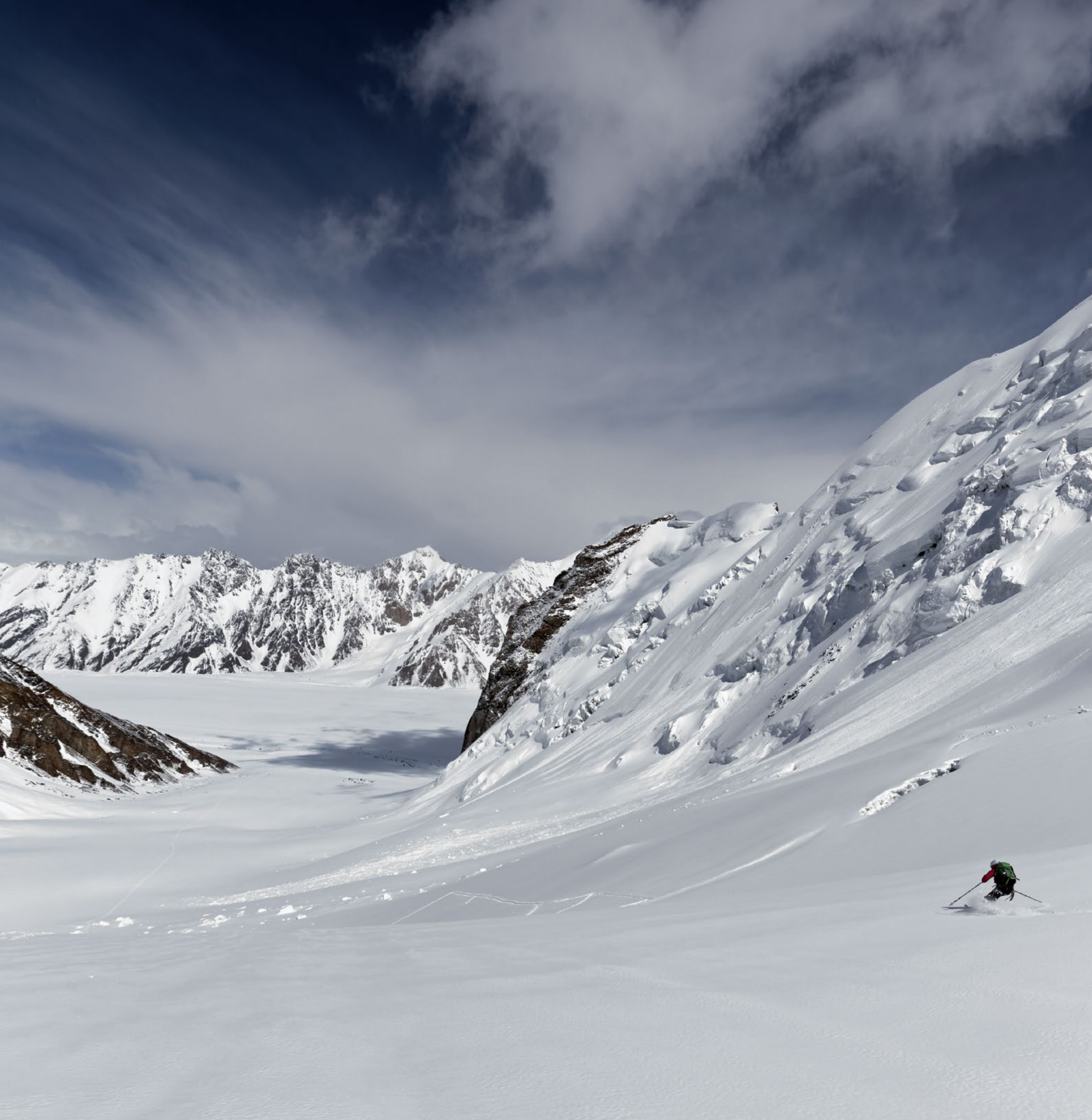
Tadschikistan · Pamir Mountains (Fedschenko-Gletscher)
The Flow of the Fedchenko
Issue 2014 · Words: Vince Shuley · Photos: Vince Shuley · 5 min read
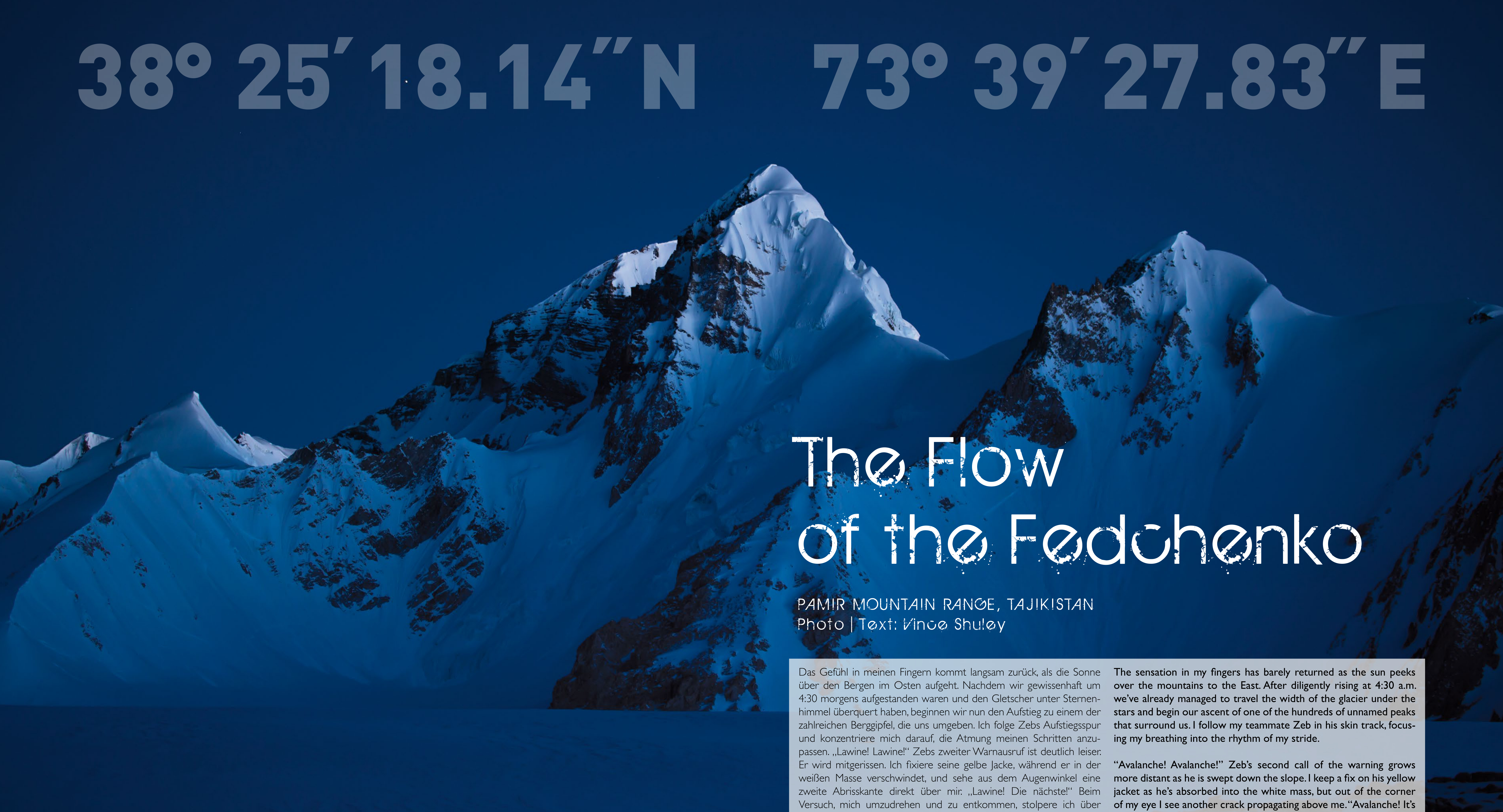
The sensation in my fingers has barely returned as the sun peeks over the mountains to the East. After diligently rising at 4:30 a.m. we've already managed to travel the width of the glacier under …
The sensation in my fingers has barely returned as the sun peeks over the mountains to the East. After diligently rising at 4:30 a.m. we've already managed to travel the width of the glacier under the stars and begin our ascent of one of the hundreds of unnamed peaks that surround us. I follow my teammate Zeb in his skin track, focusing my breathing into the rhythm of my stride. "Avalanche! Avalanche!" Zeb's second call of the warning grows more distant as he is swept down the slope. I keep a fix on his yellow jacket as he's absorbed into the white mass, but out of the corner of my eye I see another crack propagating above me. "Avalanche! It's still moving!" I flounder with my skis in an attempt to turn around and escape the slide.
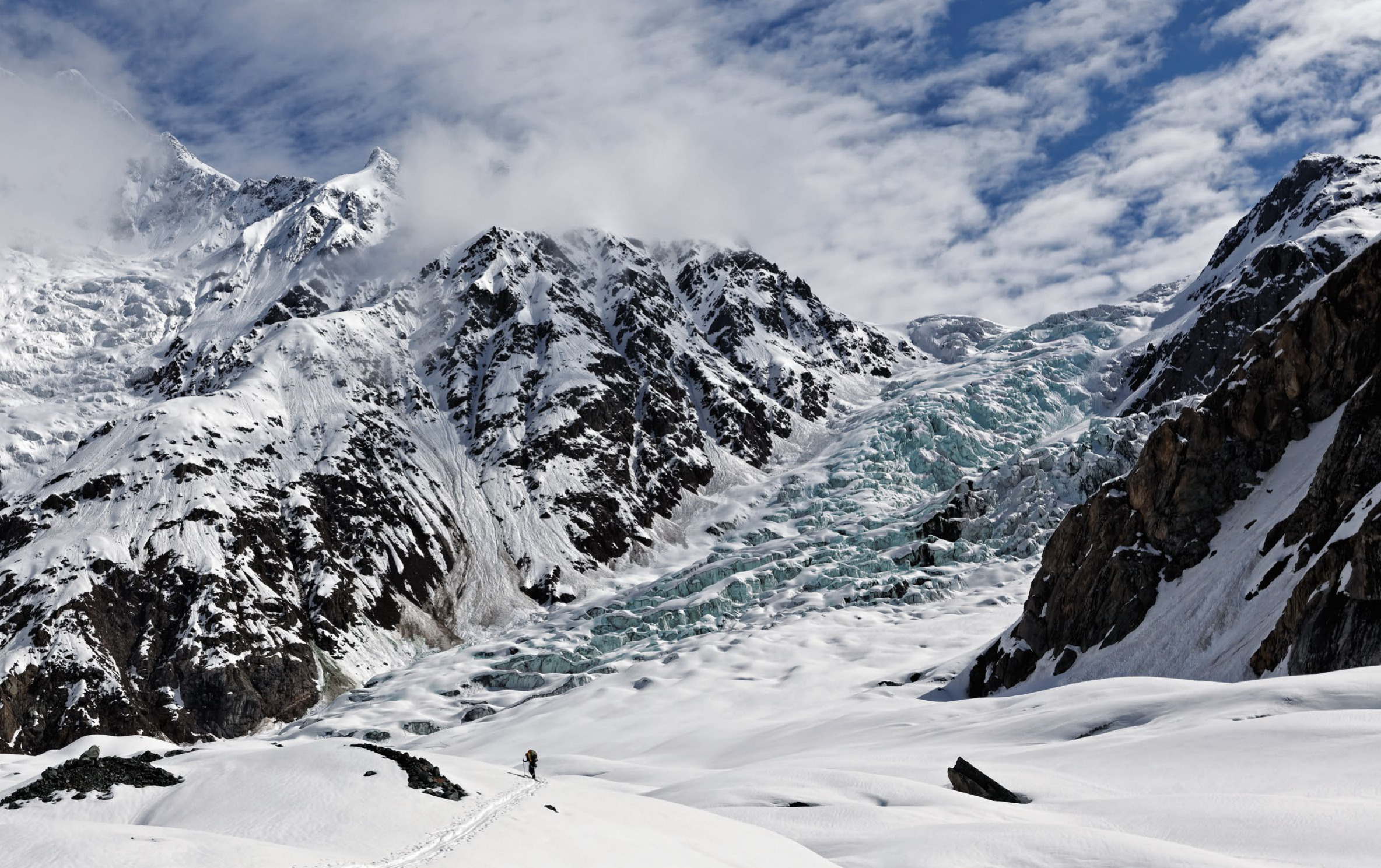
The blades of one of my crampons jam in the crusty snow layer as I brace against the imminent impact. The Fedchenko Glacier sits atop the Pamir Mountains in Tajikistan, an elusive range knotting the Himalayas with the Tian Shan, Karakoram, Kunlun, and Hindu Kush mountains. The Fedchenko is documented as 77 kilometers long, making it the largest non-polar glacier in the world, though the rapid retreat of its toe has recently called that fact into question. Hundreds of smaller tributary glaciers flow into and out of the Fedchenko, but its four-kilometer width remains consistent as it stretches north, snaking its way into neighboring Kyrgyzstan.
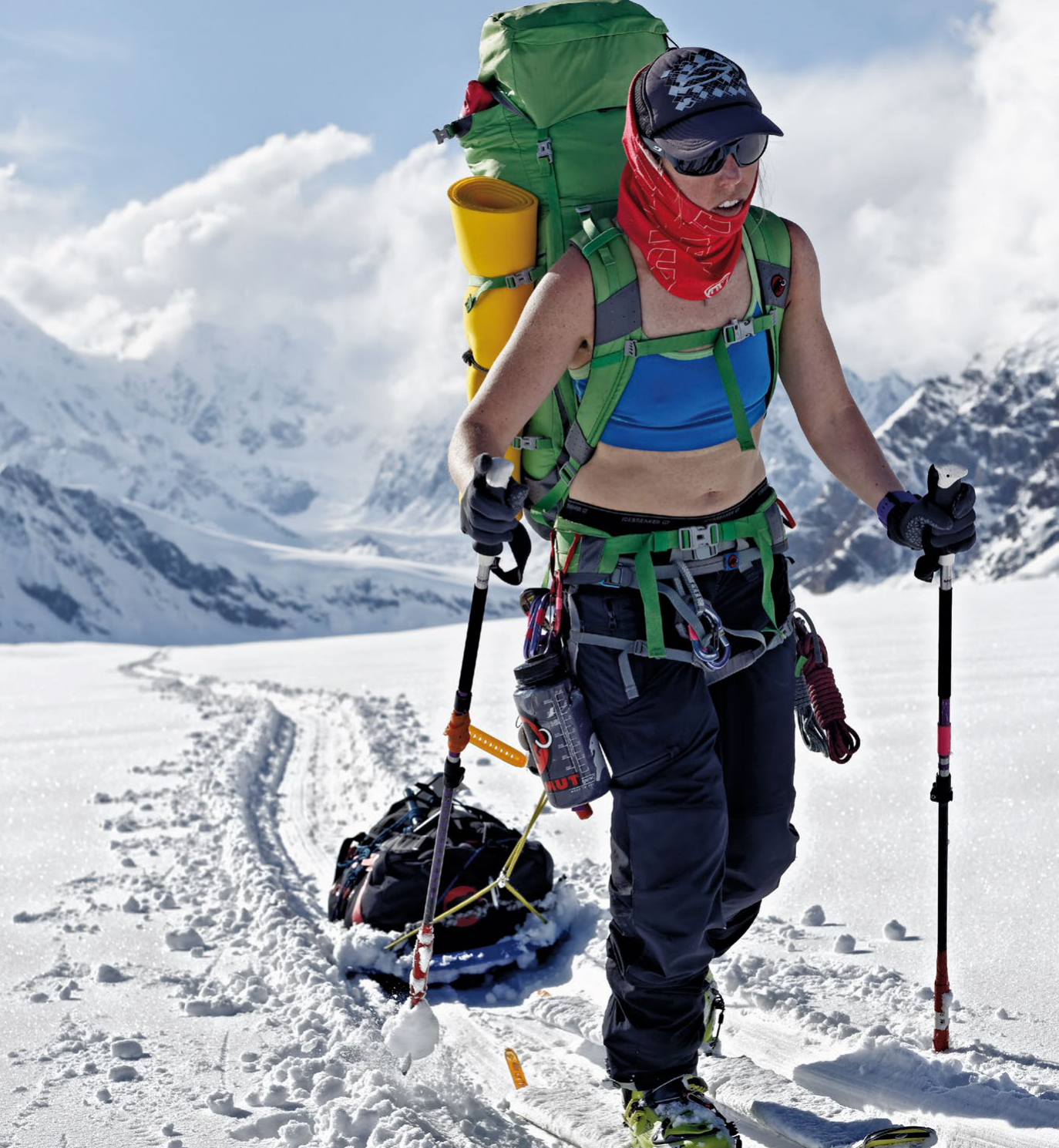
The idea was to pack enough food and equipment for 28 days, load it onto a snow sled and drag it over the Fedchenko. It sounded simple enough, but the execution was another story. Over 90 kilograms of food, clothing and equipment was the burden that each member of the team began with after unloading the GAZ-66 transport truck, the vehicle once a mainstay of the Soviet military. Upon arrival at the toe of the Russian Geographical Society glacier (RGS; our gateway to the Fedchenko), we were convinced we'd be able to gain the first ridge and make camp on snow that night. We made it about 400 meters before we had to deal with our first obstacle.
The River Abdulkahor was far too high with the glacial runoff in May, so we spent the afternoon building a Tyrolean zip line over the remains of a bridge and ferrying our supplies to the opposite bank. Our projection of a four to five day approach to the Fedchenko had been grossly underestimated. A week later the RGS had become our never-ending nemesis, but it was soon behind us. The team had been putting in 12-hour days of backcarrying to get our supplies up to the headwall, the final obstacle before we were able to strap everything onto our sleds and actually begin our traverse of the Fedchenko.
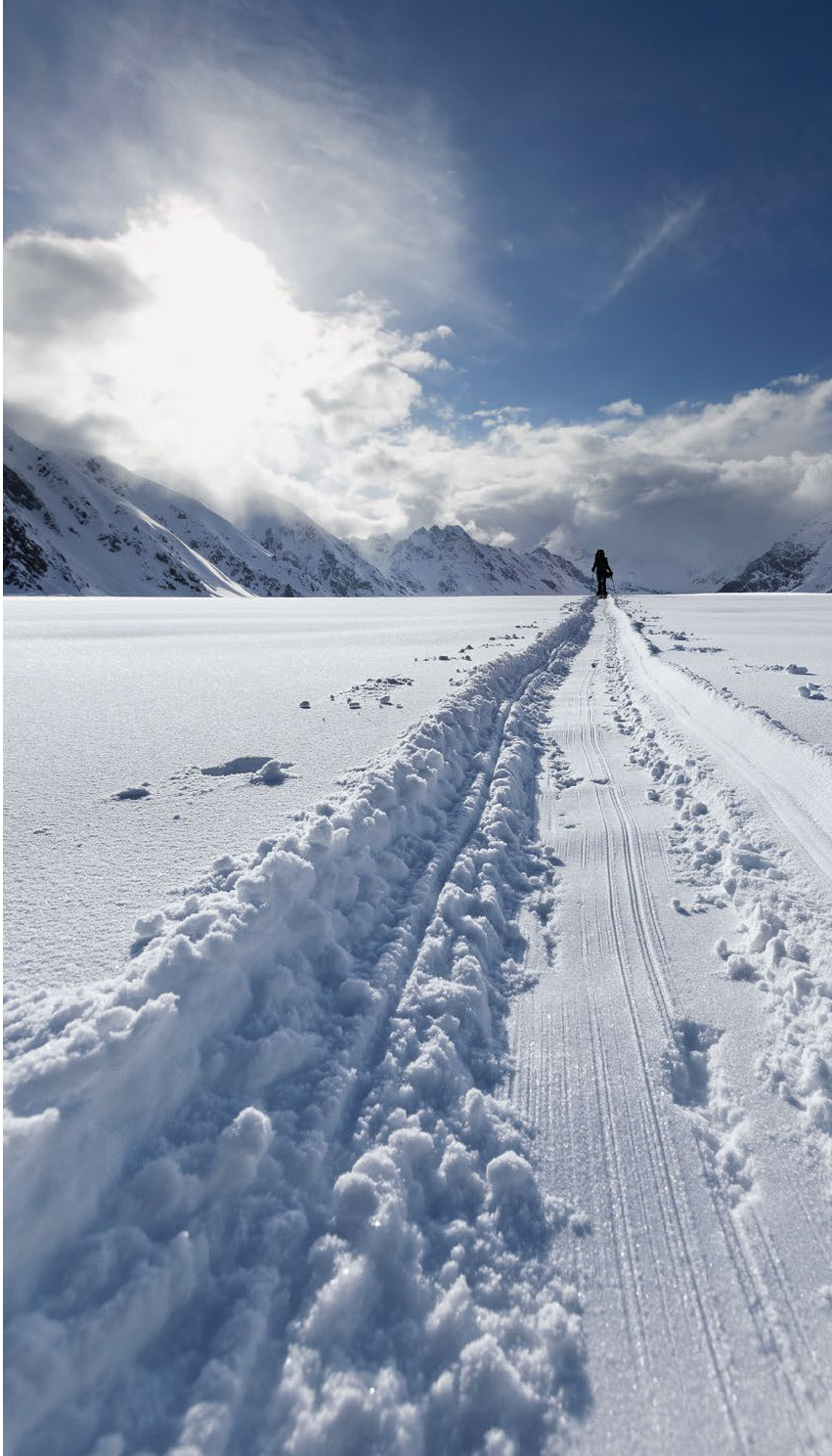
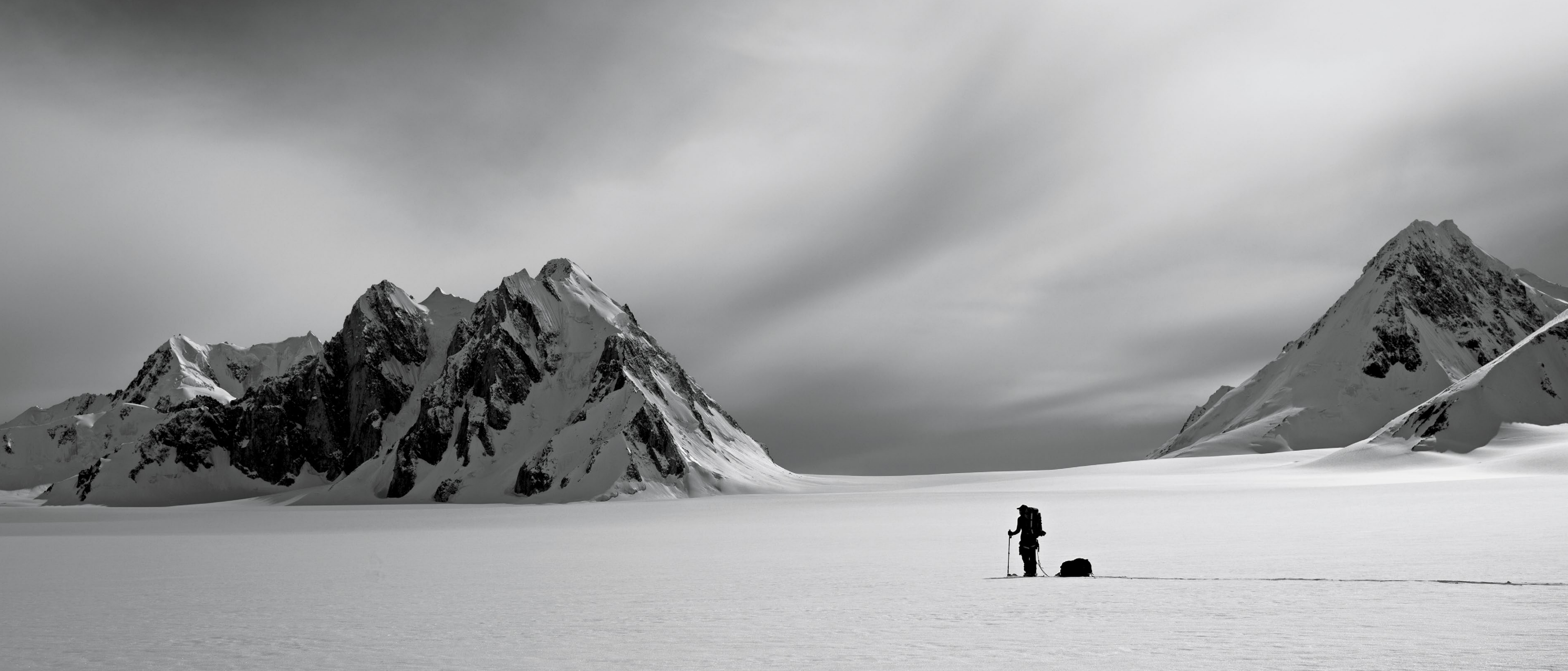
The routine of breaking camp, dragging sleds and making camp again began to grind as we spent day after day staring at distant peaks on the horizon as we shuffled along. Consensus across the team was to dig into a base camp and pursue some vertical objectives. After letting the snow stabilize for a couple days we decided to go for it. Enticing lines had been taunting us from our campsite and we figured if we got an early enough start, we could make our descent before the midday heat killed the stability. The secondary slide knocks me off my feet, but I can feel it slowing down seconds later. I'm buried up to my chest and my free arms are desperately clawing at my feet to release my boots from my bindings.
Emelie is downslope and screaming for everyone to switch their transceivers to search. At least all three of the girls were out of the avalanche path when it released, but I see no sign of Zeb below me. Selena approaches to assist me but I yell "I'm fine, go get him! GO GET HIM!" I continue to struggle with disengaging my skis. "I have him, over here!" yells Emelie. Before coming to a full stop, Zeb had managed to thrust an arm out of the snow, his fist opening and closing rapidly in a desperate attempt to attract our attention. Emelie pops out her shovel and quickly uncovers the obstructing snow. I arrive on the scene and Emelie is shielding Zeb's face as Selena and Holly continue to shovel snow away from his head in a conveyor formation.
We help extricate Zeb, who by some miracle is uninjured and we are able to recover all of our skis and poles from the rubble. The incident has likely kyboshed skiing for the remaining 13 days of the expedition, but we are thankful that we are at least able to finish the traverse. A week later we had weathered the boredom of a five-day storm, battled frostbite and acute mountain sickness and had yet to achieve our primary objective. Our hopes of first descent glory have been decimated by the rotten snowpack, making even scrambling up rocky ridges a dangerous and unnecessary risk. But we were not ready to retreat. The storm broke and the temperatures plummeted to -30 degrees Celsius the morning of our final mission.
Everything from water bottles to harnesses had frozen solid making our departure a painful process. The rising sun provided no relief from the bitter cold, but this was our last chance. Our only recourse was to keep moving forward into the frigid headwind. Selena bowed out a few kilometers from camp, her last few days of sickness not conducive to another day of high altitude travel. The remaining four of us continued the towering outline of Peak Revolution (6,954 meters) providing a much-needed dose of inspiration. After reaching the main bowl at the terminus of the Fedchenko, we decided we had time to ascend a col to the west, just to see what was on the other side.
Topping out at 5,500 meters we were greeted the vast expanse of the Yazgulom Valley, its own formidable glacier flowing westward with jagged peaks and overhanging seracs like no other mountain range any of us have witnessed. The frustration of barely skiing on this expedition faded as we realized how far and how high we had come after two years of planning and three weeks of insurmountable suffering. A five-day exit through broken glaciers, riverbeds and boulder fields awaited us the following day. Firmly standing at the head of the Fedchenko, we took one more moment to revel in our triumph.