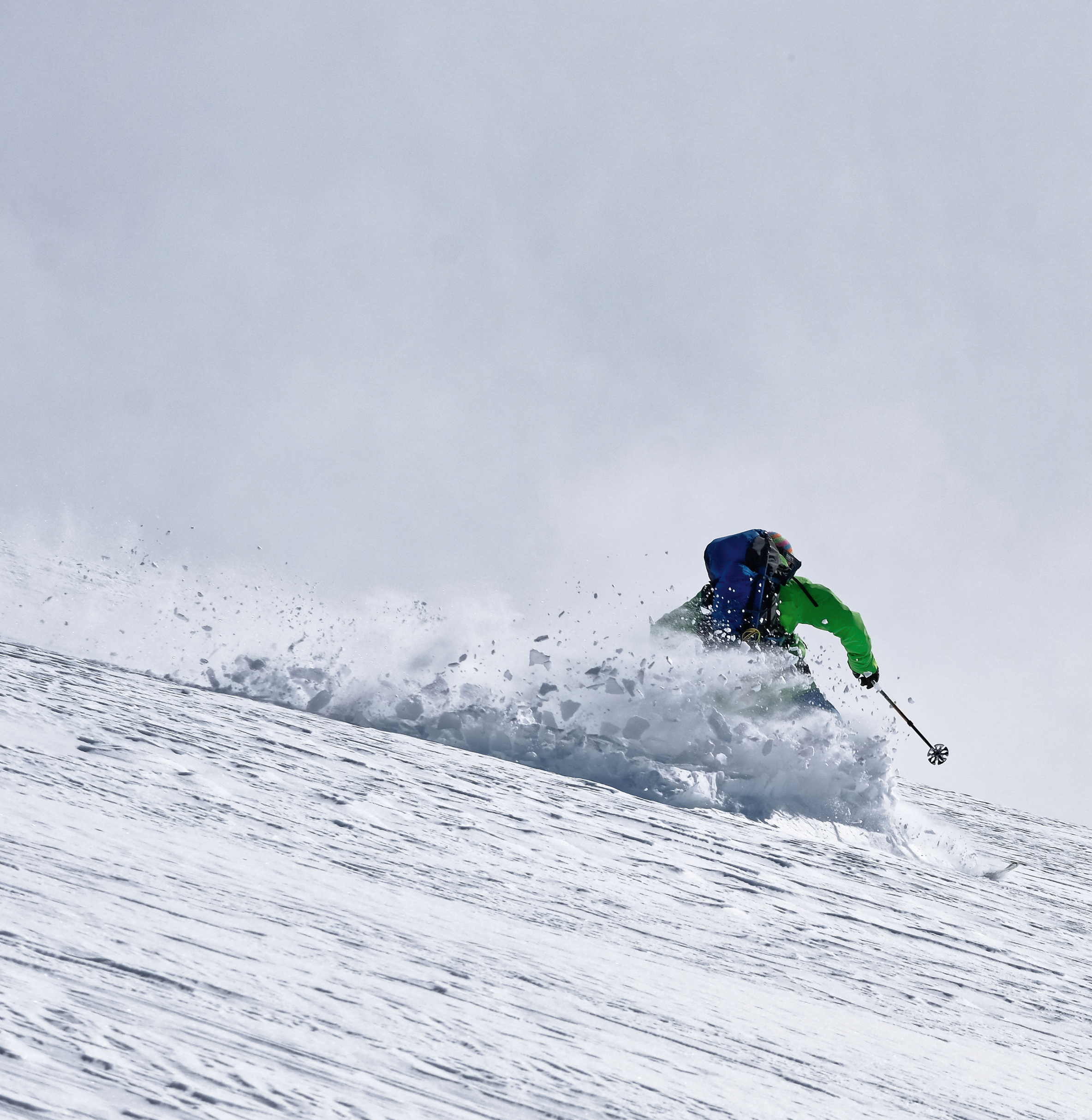
Griechenland · Mountains of Epirus
The Human Face of the Gods
Issue 2020 · Words: Alberto Sciamplicotti · Photos: Antonella Molinari · 5 min read
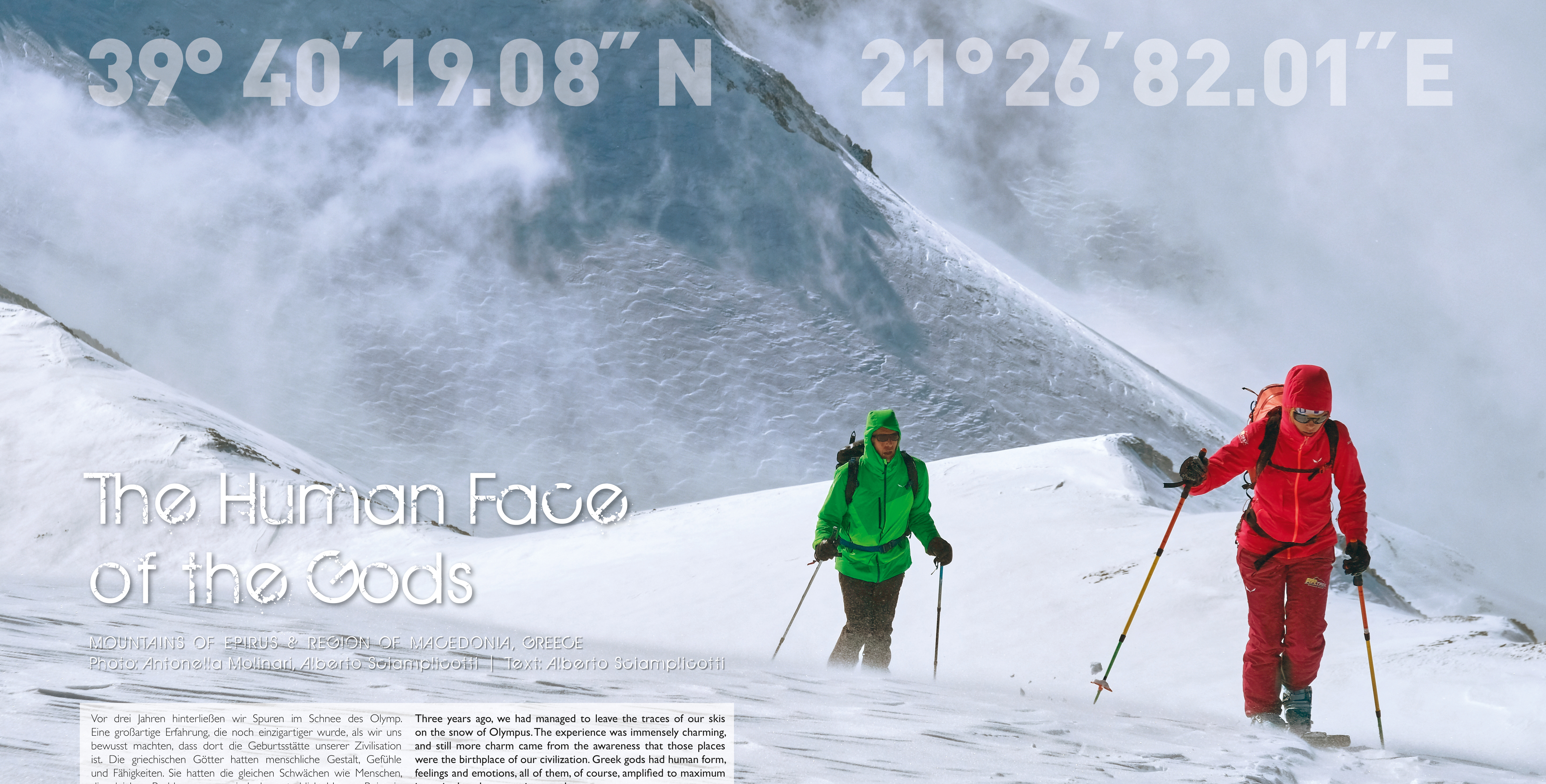
Three years ago, we had managed to leave the traces of our skis on the snow of Olympus. The experience was immensely charming, and still more charm came from the awareness that those places were the …
Three years ago, we had managed to leave the traces of our skis on the snow of Olympus. The experience was immensely charming, and still more charm came from the awareness that those places were the birthplace of our civilization. Greek gods had human form, feelings and emotions, all of them, of course, amplified to maximum intensity, but they were immortal. Returning to the mountains of Greece was also rediscovering that essential sense of being human that the world seems to have lost. At the same time, it was also an escape from all the contradictions we hate: a system that lives and continues only by inertia along defined roads which seem to be heading towards an abyss... At home, the winter had never started that year; a season never fulfilled.
So what was the point of a journey loaded with baggage, including skis, poles and skins? A trip aimed at mountains far from the alpine ones, mountain ranges whose summits are not really high, located in the middle of the Mediterranean, in a country that speaks of beaches and sea, of grey olive trees growing in the heat of summer? Navigating on a ferry between the two shores of the Adriatic Sea, we imagine, on a map, itineraries that tell of a winter sought and wanted – and, so far, not found. Slowly, a prayer is formed in the ancient gods' minds to grant our desires for life and escape. Thus, it does not seem real that on the first day, our skis are given the opportunity to slip on a white coat.
Although it is not the most beautiful skiing in life, it will be a long-lasting memory of how the joy of that skiing day was enough to make the reality of a winter never born feel less harsh. After the snows of Mount Triggia, in front of Meteora's rocky towers, we allow ourselves a day of rest. Greece is also this. Because if you really want to understand the soul of a country, you must necessarily enter every aspect of it. The opposite would mean living only a part of the possible experience into the baggage of our lived experience and depriving our soul of the true essence of traveling: which is not just seeing and trying but above all getting excited, allowing time to unravel the thread that the Fates weave relentlessly and that we don't know when it will be cut.
It is the true sense of "carpe diem": to seize the moment by experiencing what is coming. Thus, drinking Greek coffee is the full metaphor of the experience of this trip. Hellenic coffee is served very hot. It cannot be drunk quickly like espresso, it must rest to allow time for the infused powder to settle on the bottom of the cup: in small sips, without tilting the cup too much, it should be drunk slowly. It is strong, and it must be savored to perceive its aroma. Following this idea, we follow a path and reach the base of the pinnacle on which the Varlaam monastery stands. The track climbs steeply until it reaches close to the wall.
We enter a cave and walk through it, getting into the bowels worked by the water and sometimes filled by ancient collapses. We climb, following glimmers of light that come from above, and reach a rocky balcony. The view opens onto the valley that, from the town of Kastraki, climbs up among the Meteora mountains. We just have to enjoy the moments that donate us great times. We grew up with Greek myths: the erotic adventures of Zeus, the jealousy of Athena and Aphrodite, Herakles, and his legendary labors. And yet, the story that most of all fueled the fire that illuminated the way of our little explorations was that of a man who always tried to find his way: Odysseus, or Ulysses.
For us, he resembles the curiosity that overcomes the stasis, the desire to see and try, the attempt to discover beyond the horizon of the visible the meaning of our wandering on this earth. Ulysses was the inspiration that put us on the road several times to distant mountains, to countries with cultures and languages different from ours. The difference with Ulysses's events is that we are sailing in seas formed not by waves but by snow and ice: a navigation made with sliding wooden boards underfoot. A wandering that sooner or later could only lead us to the mountains of Greece.
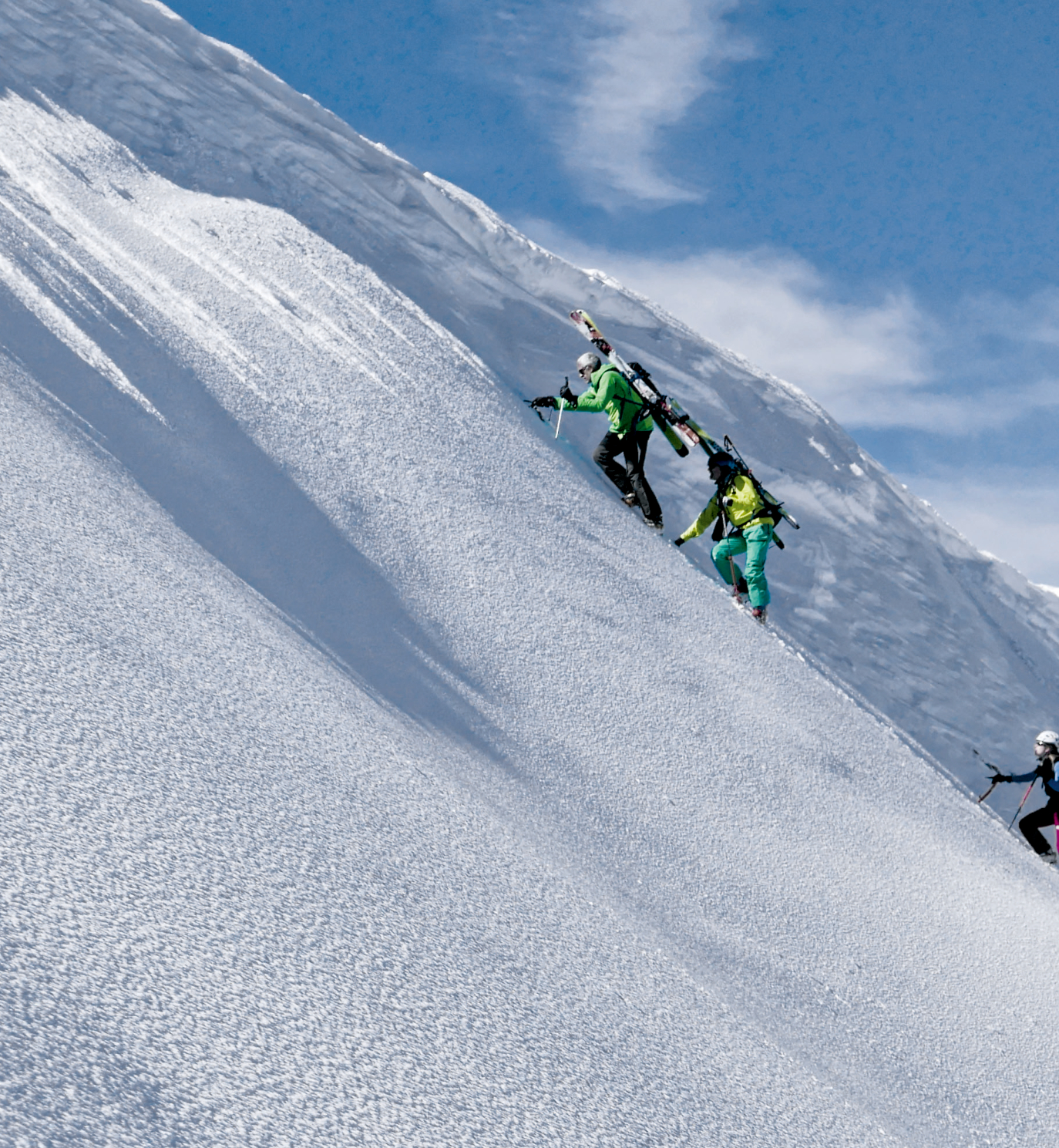
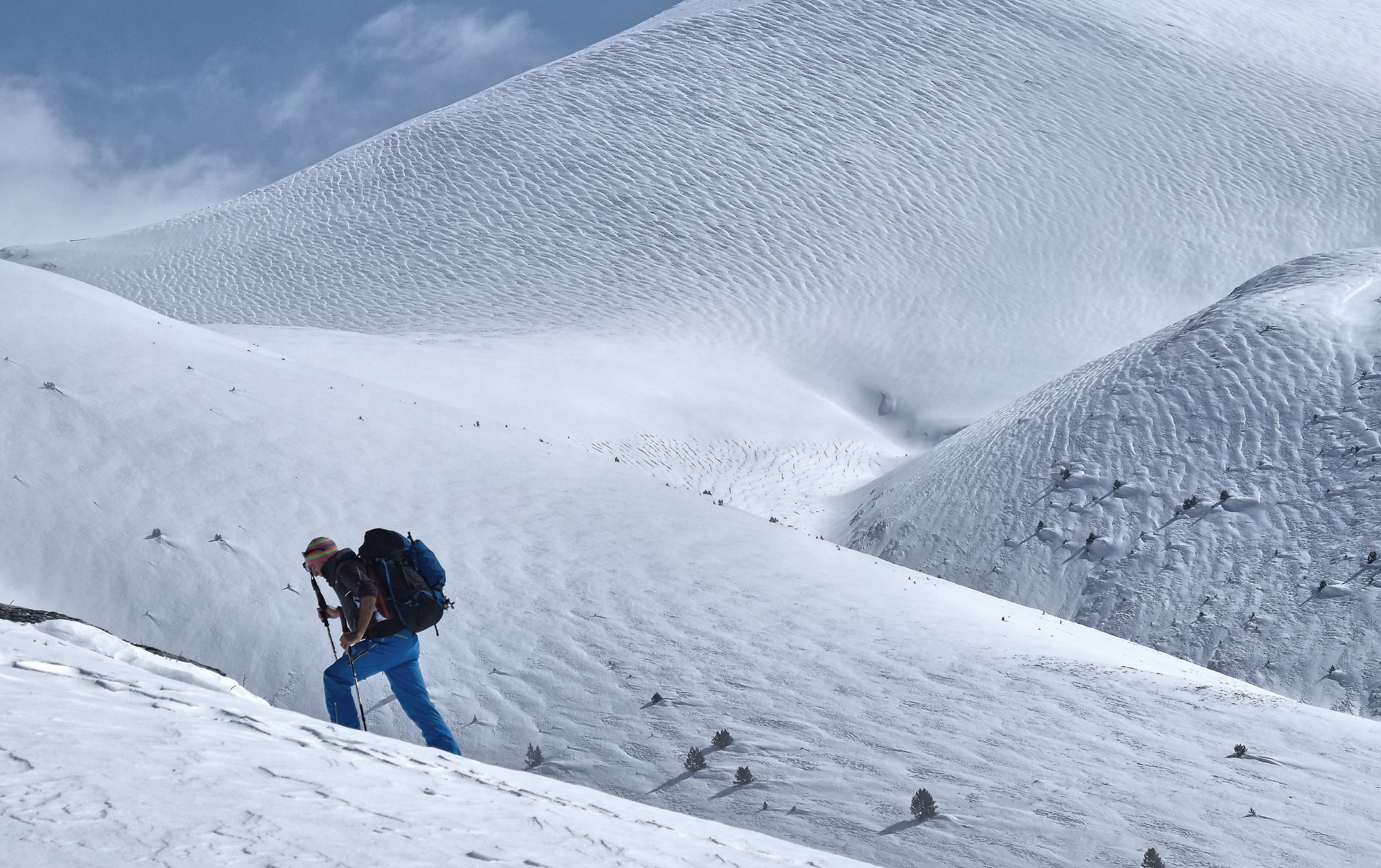
In this closing circle, we hike up to Skolio, the second peak of Olympus, guided by the same desire to discover and see that was proper of Odysseus; like him, in our ascending, we have to deal with the humoral and different characters of the various deities. The fog and the strong winds are created by the gods opposed to our intrusion. While the skis leave a trail immediately covered by the snow and our eyes try to penetrate the milky layer that envelops us, another fight is taking place above us, on the rocky Mytikas. Who of the gods is against, who in favor of our access to a world which is not ours? We do not know.
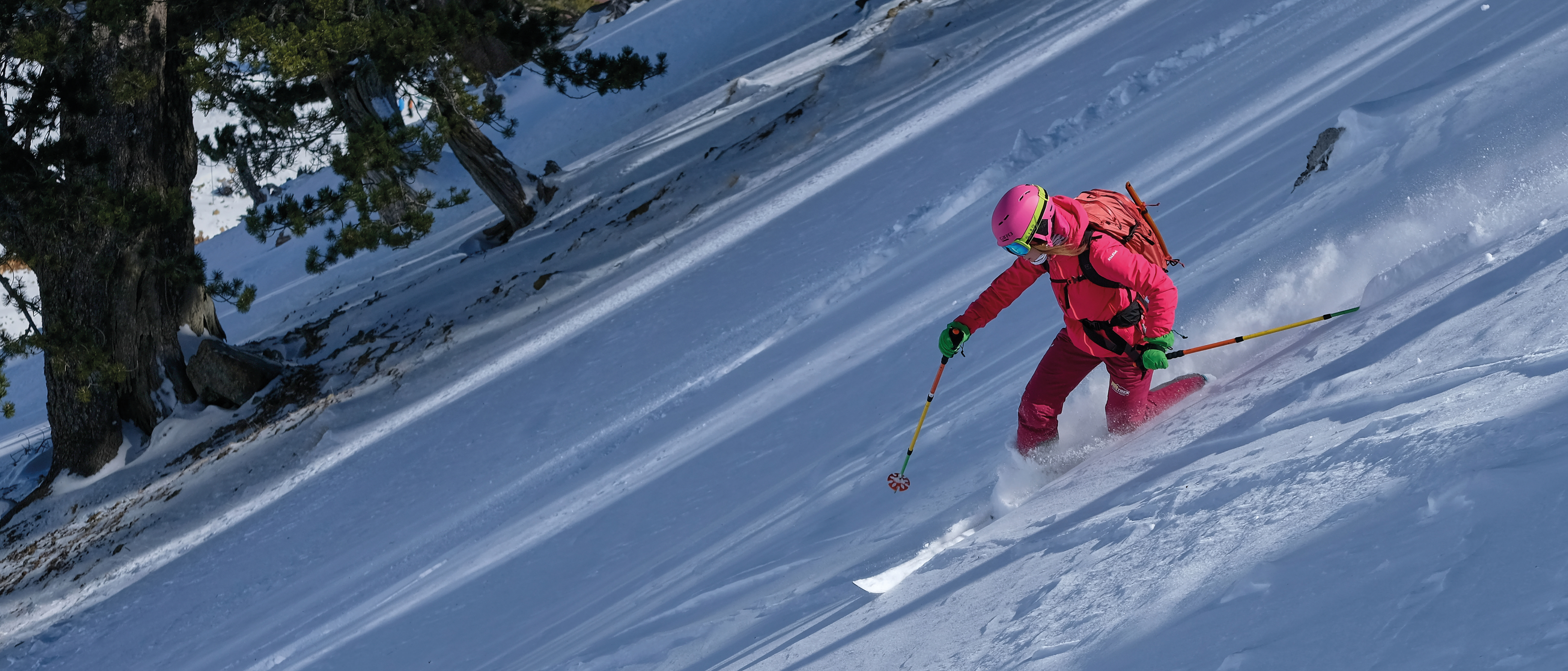
However, we can imagine Zeus smiling, looking at our progress, nodding, and a large gesture of his arm putting an end to the quarrel of his children to let us enter his house through the front door. In fact, on the top of the Skolio, the wind stops, the fog clears, and the sun joins us in our descent. The skis follow the ridges and slopes previously traveled uphill, happily dancing the same dance that Odysseus danced when he arrived in Ithaca, reunited with Penelope. A dance of joy and happiness. Not an arrival dance, because the desire to seek and try has no end. And that's why we will soon pack our skis again and follow the call of the adventure.