USA · Cascades (Glacier Peak Wilderness)
The Painted Traverse
Issue 2015 · Words: Jason Hummel · Photos: Jason Hummel · 5 min read
With 894 square miles of wilderness, it's not hard to discover corners of Washington's Glacier Peak Wilderness I've ignored. That being said, I've seen a lot of it. Months of my life have been spent …
With 894 square miles of wilderness, it's not hard to discover corners of Washington's Glacier Peak Wilderness I've ignored. That being said, I've seen a lot of it. Months of my life have been spent hiking and skiing her peaks and valleys. Yet, like a princess in a ballroom, she suffers as most regions do that are dominated by a volcano. Everyone wants to meet the princess, and most potential suitors take the quickest way they can to get to her, flying like an arrow to the center of the room, fighting to gain her attention. But go a few steps in any other direction and you'll find yourself meeting the shy and intelligent, subtler beauties. I am reminded of the ancient proverb that purports,"...an old broom knows the corners best."
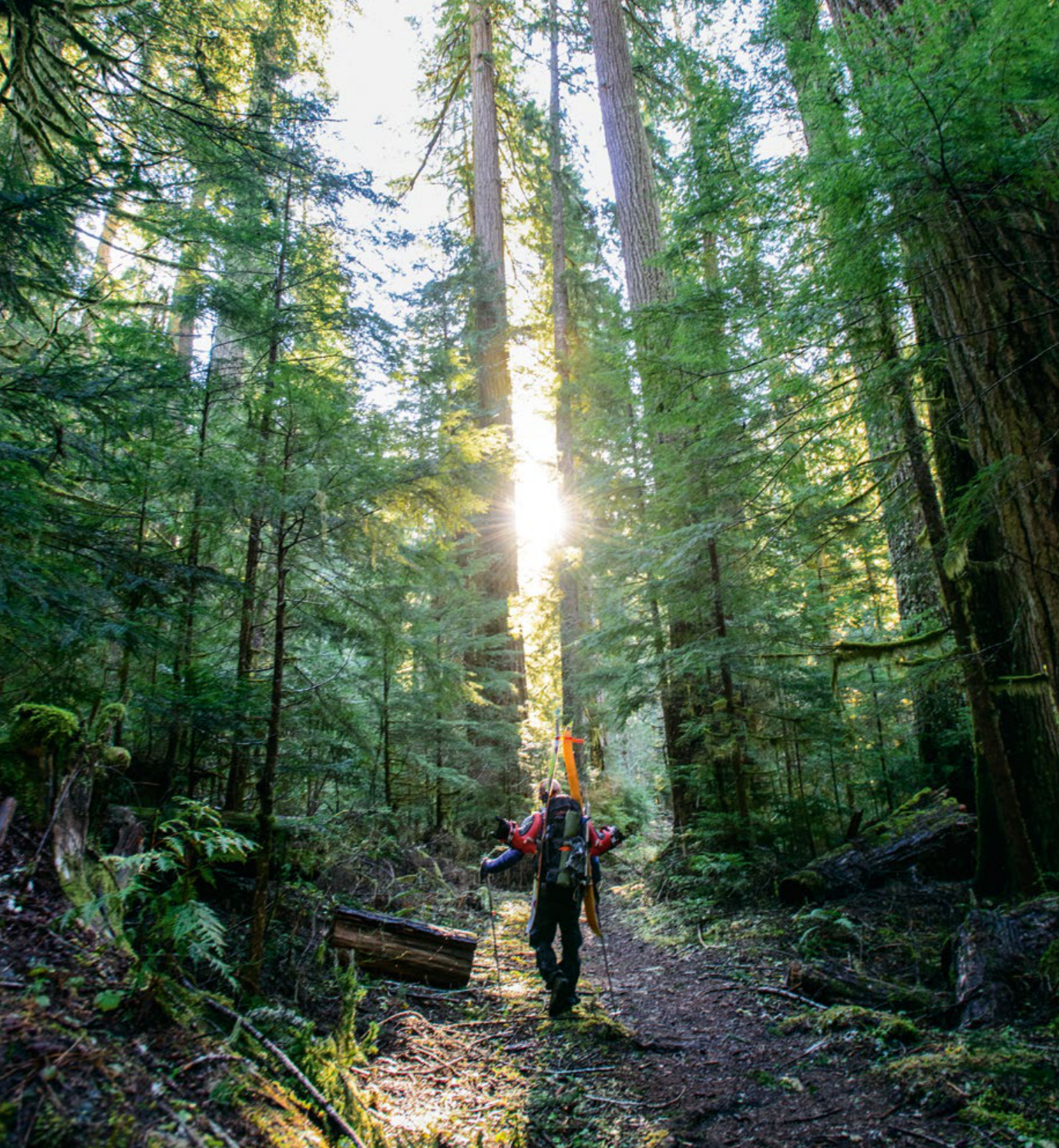
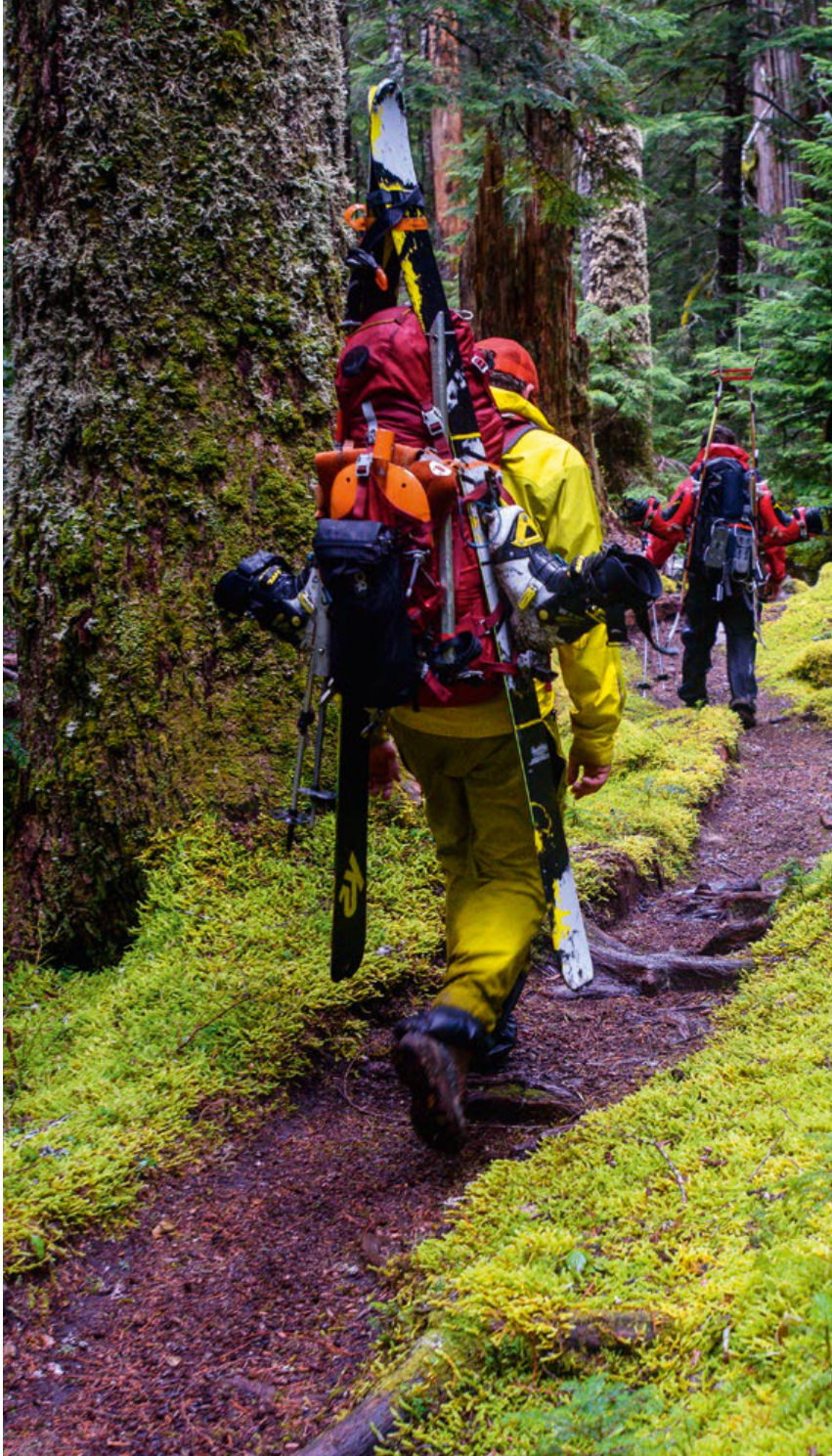
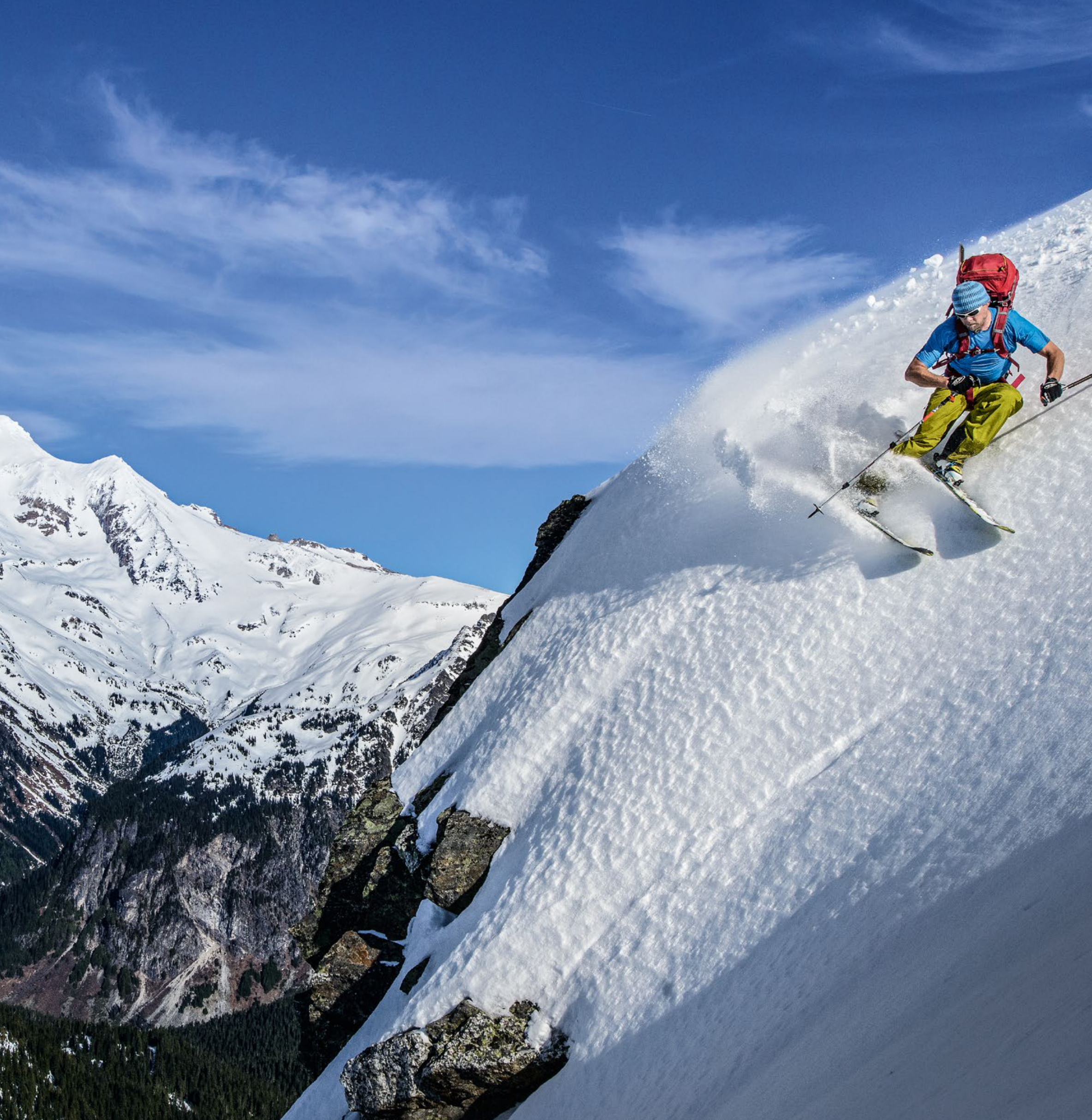
Given enough time, I am led to mountains that my younger self ignored. On Glacier Peak's southwestern flank is a string of peaks connected by route called the Painted Traverse. I set off with my friend, Jeff Rich and splitboarder Rowan Stewart in February, loaded with five days of food and gear. The hike started at Sauk River Trail. A left toward Red Mountain and several thousand feet of climbing led us to snowline. Some boot packing broke us free of the last trees and into open glades. In 10 degree celsius and less than half a day's work later, we stood on the summit of Red, sweating buckets. Within moments, I gazed down Ruby Lake Couloir.
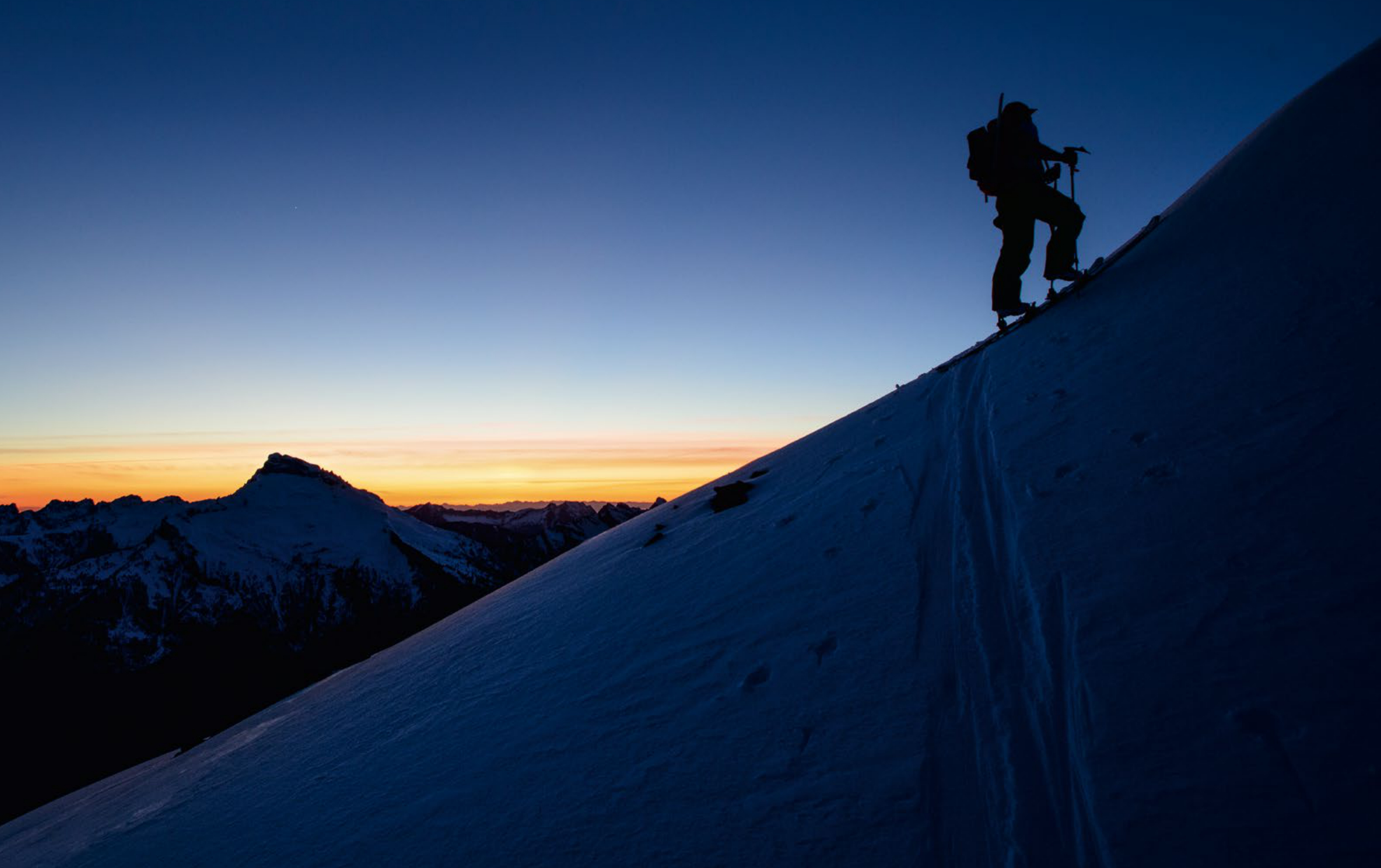
Pretty soon my whoops of joy rung off the rocky escarpments, mixing with the others as we descended toward Ruby Lake. Darkened skies swamped us as we skinned the last feet back to camp. I realized that we chose the most awesome spot ever. Five-star accommodations for a screaming deal, the rock bottom price of one gallon of sweat. That night, the lights of Stevens Pass shone. They were an island in the darkness. Behind me, our tents were brightened. In between was nothing but dark valley hallways between monolithic peaks. Morning woke cool. The rising sun yanked us from our sleeping bags as her warm glow bloomed on the horizon and spread over Red Mountain, earning her namesake. The seven summits along the traverse are all but one named after a color.
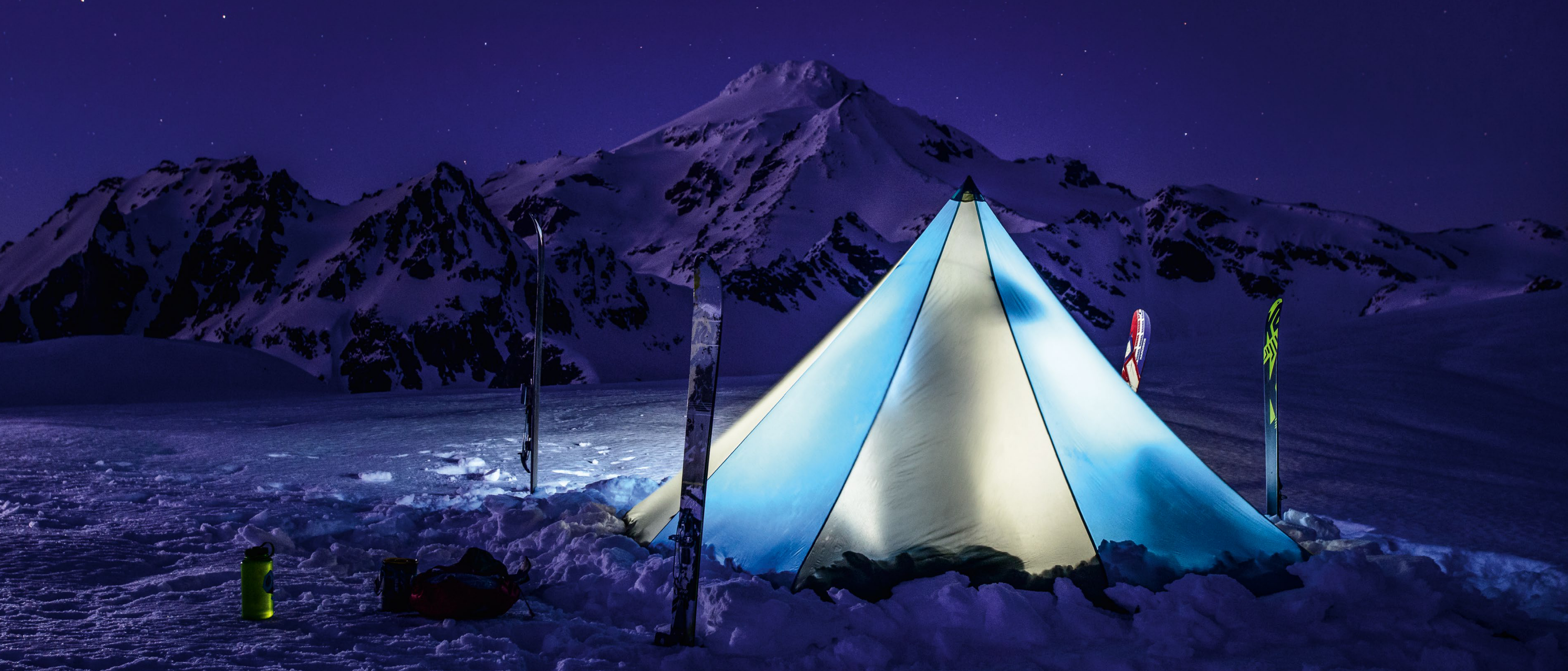
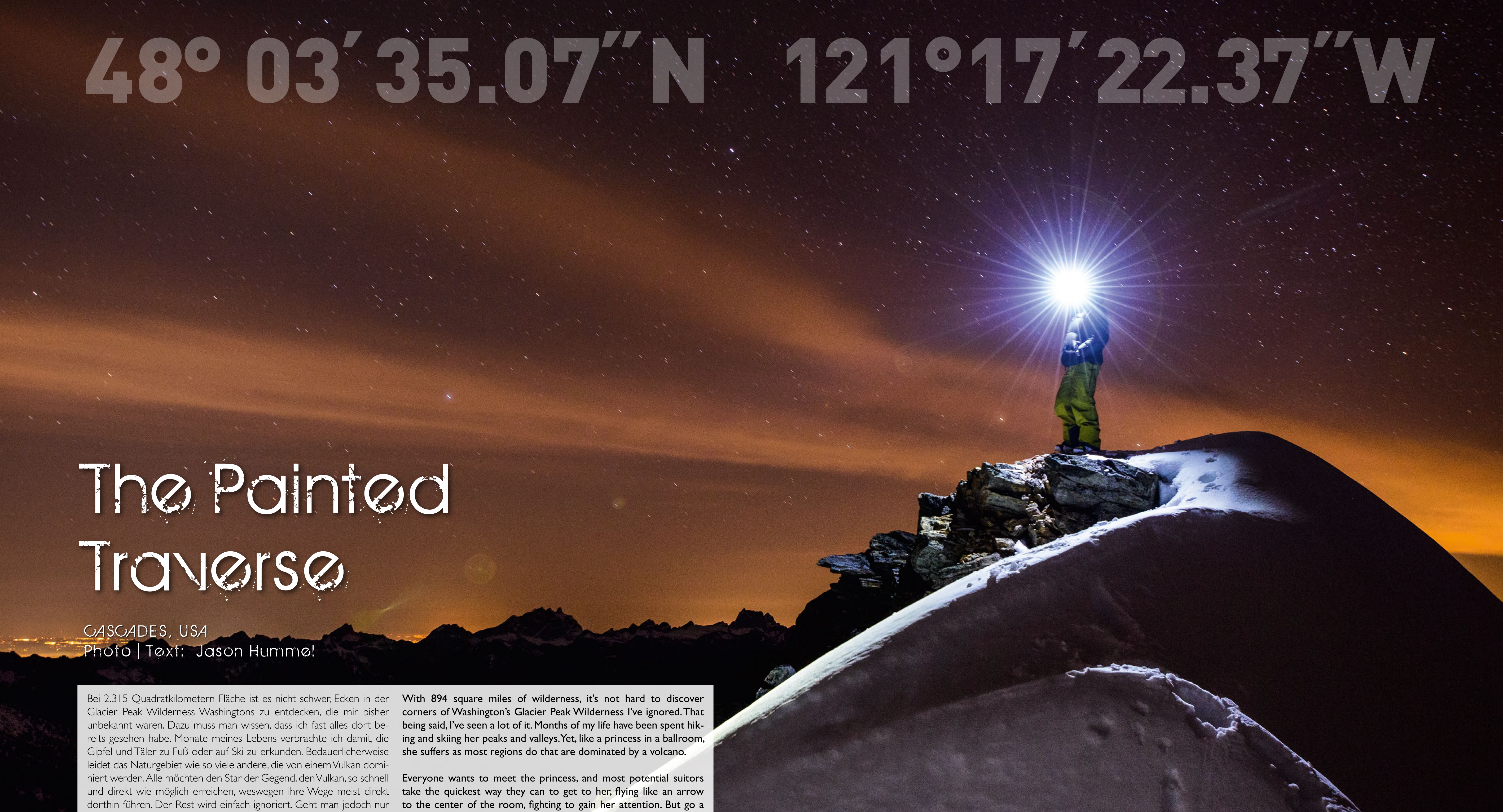
Why one peak was called Skullcap, I don't know. It hardly fits in with the other names: Red, Brown, Magenta, Purple, Black and White. If all went well, we'd try to tag on Glacier Peak as well, but it's beyond the traditional traverse. The ancestral people called it DaKobed, meaning "The great parent". We arrived below Black Mountain. Our plan had been to ski it that day, but we were behind schedule. Instead, we flattened out spots for our tents and then, before sunset, ascended to a high shoulder on Black Mountain. We spent the evening staring at a beautiful sunset blazing above Sloan Peak, a miniature Matterhorn.
Inky colors played from yellow, orange, red to purple before finally fading entirely, becoming black and yet as beautiful as all the rest when pockmarked with stars. Leaving our tents filled with non-essential gear the next day, we reversed our tracks towards Black Mountain. From there, we climbed a steep face, which brought us to a narrow ridge below the north face. We continued for a few hundred feet before climbing the steep final pitch. When I arrived at the top, Jeff and I gazed at DaKobed. Between us, we had 12 summits of her and Rowan had none. When he sauntered up, I saw the glint in his eyes. Snow fell away from the topmost cornice and splattered down the mountain as we skied to the edge of the North Face.
Controlled turns led us to easier ground. Only then did our heartbeats moderate. Back at camp, we packed our gear and set off. DaKobed was in our sights. Instead of sunset turns from camp, we pushed on toward "The Great Parent". Just before the sun dove behind nearby peaks, we strode exhausted into camp on the White Chuck Glacier. I slipped into ice-encrusted boots and stood on rock-hard snow on the fourth morning. The snow shone in the sunlight, and the wind circled around us like a war party. Pushing off from camp, I skate skied the frozen surface for over a mile. Views of Tenpeak opened up as we rose higher, climbing onto Cool Glacier. Clouds choked the valleys. Pretty soon I knew they'd swamp us. We were on the run now.
On the summit, our boots clang the final few steps. From such vantages, we could see our entire last four days stretched out in front of us. We skittered down the slope, edges clawing onto the snow. We met the fog a few thousand feet below the summit, still miles from our camp. White on white blinded us, three fools stumbling around. Back at camp, we huddled in our tents to stay warm, knowing that the weather the following day would not improve. Leaving behind one of my favorite mountains is never easy. But skis sometimes feel like flying when compared to the ascending. Terrain that took hours to climb passed by in seconds on the morning of our last day. Wind whipped past us and before long, we were at snow's end.
Along the way, we added a summit of White Mountain, which was truly living up to her name. That whiteout from the day before was still in full effect. We couldn't see a thing, not until we dropped into the wet valleys. Above hung that heavy cloud like the head on beer just poured from the tap, which reminded me of the beer waiting for me in the car. I pushed down the trail even faster than before. My back creaked, and the agony reminded me of past adventures, of all the years and mountains that had passed under my feet. "An old broom certainly knows the corners best," I muttered under my breath. At the car, we cracked beers and cheered. Smiles swept across our faces.
We'd met the princess, her ladies in waiting along the Painted Traverse, and we'd danced with each of them. A smart man knows that sometimes that's all he's ever going to get. In these splendid mountains, squeezed near the sea, most people only view them from afar and never dare to approach. We were very lucky men indeed, and we knew it.