USA / Kanada · Rocky Mountains / Selkirk Mountains
Tiny House
Issue 2013 · Words: Molly Baker · Photos: Patrick Orton · 5 min read
In October of 2011, Molly Baker and Zack Giffin started building their dream home on wheels. The purpose was to tow their cozy cabin around to North America's most coveted mountain passes. Much like …
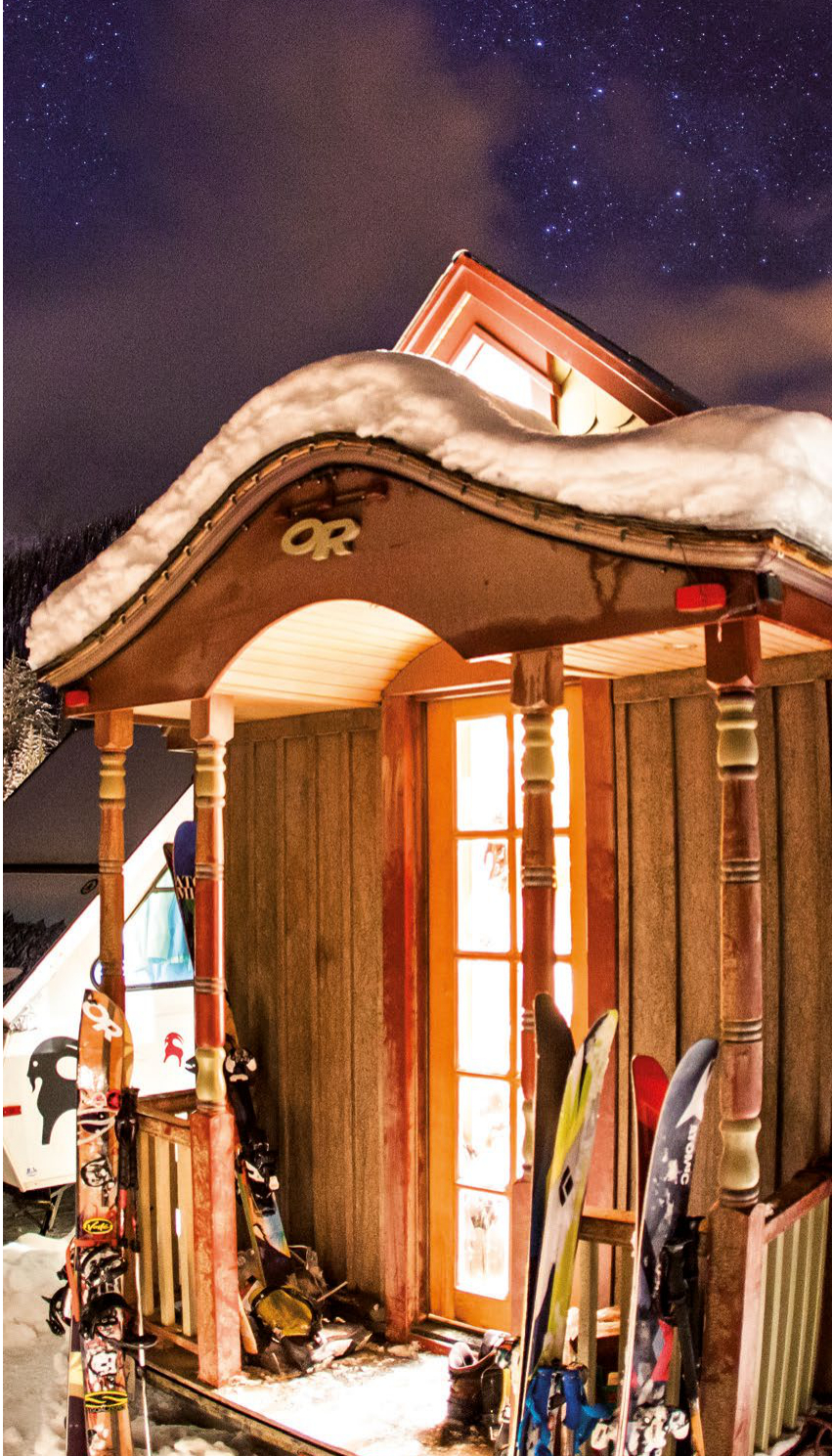
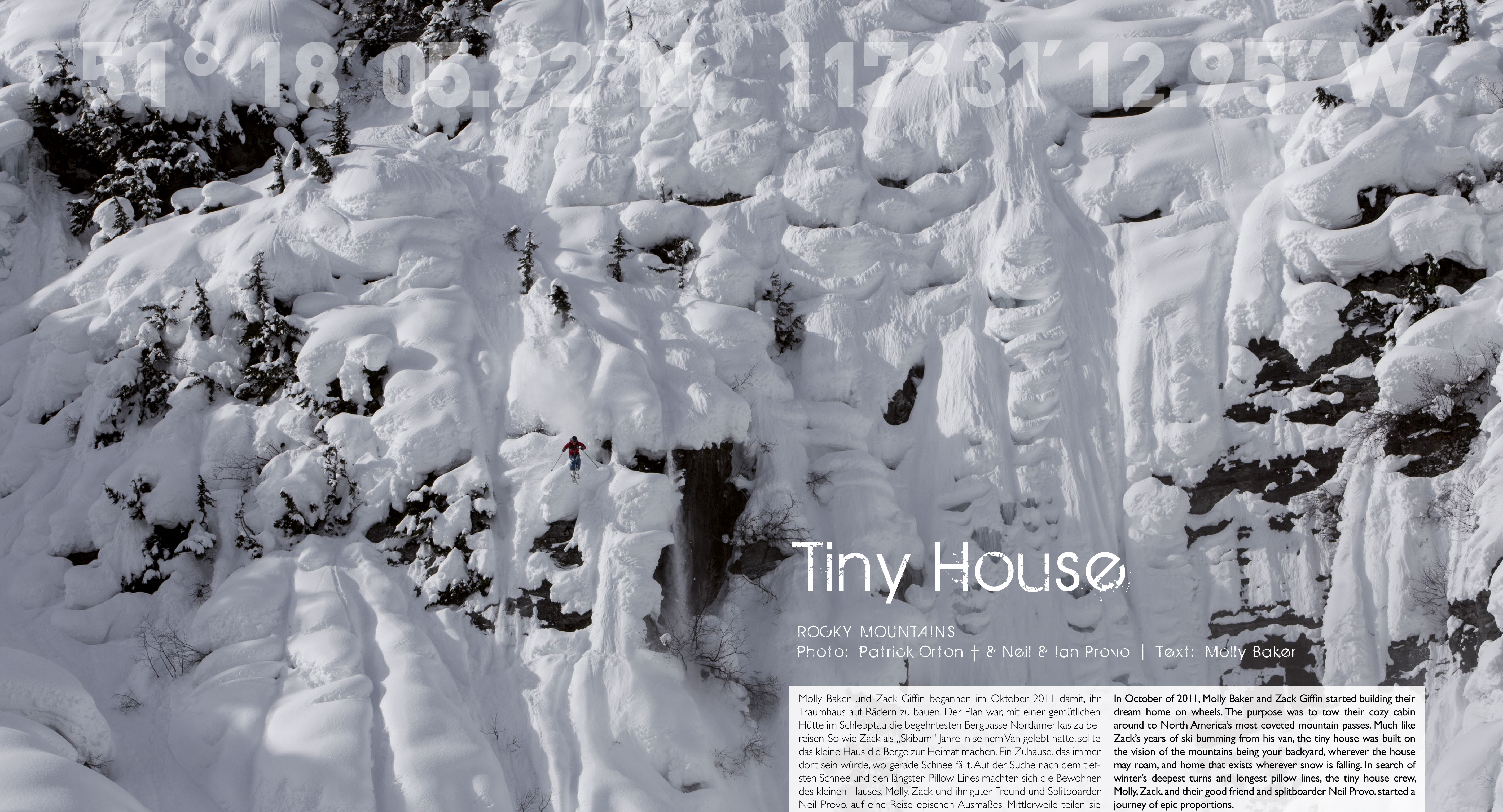
In October of 2011, Molly Baker and Zack Giffin started building their dream home on wheels. The purpose was to tow their cozy cabin around to North America's most coveted mountain passes. Much like Zack's years of ski bumming from his van, the tiny house was built on the vision of the mountains being your backyard, wherever the house may roam, and home that exists wherever snow is falling. In search of winter's deepest turns and longest pillow lines, the tiny house crew, Molly, Zack, and their good friend and splitboarder Neil Provo, started a journey of epic proportions.
Now in their third year of living tiny, these winter gypsies share the experience of living vagrantly from one ski destination to the next, making memories one powder turn at a time. We've traveled from Silverton, Colorado to Revelstoke, British Columbia and everywhere in between, spending weeks in Jackson Hole, skiing outside of Alta, and crossing the border into Canada, drooling over the mountain gems found in Nelson, Revelstoke, and Banff. Of all those places, a special synergy of conditions, friends, and location combined for a three-week trip, when we drove the house to Roger's Pass. It is here that the tiny house found its true home.
For the unassuming eye, Revelstoke, BC may look like an average Canadian logging town, but for the lucky, educated skiers of the world, Revelstoke and the surrounding area is a Valhalla of sorts – the Shangri-La of powder, pillows, and long descents. Just 72 kilometers east of town, Roger's Pass is the kind of place you want to take a lifetime vacation. Preferably with good friends and your house. Arriving in the evening, we pull into the Asulkan lot and begin our routine of carefully selecting a place for the tiny house. This practice is something we've adapted to, but it probably took us a year to have the process go smoothly.
We've backed into snow banks, parked on uneven ground, and squeezed in between trucks in the middle of the night at a truck stop. There's the driver and then everyone else out of the truck, shoveling, pointing, and providing wrong directions and then the right ones. Eventually the house finds home, Neil chops kindling, Zack opens a few beers, and I fall soundly asleep shaken by hours of towing a house. In the morning we wake to a cold house and a tall Norwegian knocking on the door. Santiago Guzman, a longtime friend from Argentina who has decided to come on this portion of the journey, opens the door sleepily. The Norwegian remarks he's seen the house online. He knows all about us.
His friends, a group of backcountry skiers and snowboarders, are staying in an RV they rented in Revelstoke. They're content with the RV, but when the fire starts crackling and we start cooking breakfast in our cozy, pine-scented cabin, you can see the process of thinking moving like a quick current through their heads. "Living in a tiny house at the base of incredible mountains is a dream life. How can I make this happen?" We've encountered countless visitors in this fashion because people are fascinated with the cabin on wheels. Not because they think we're some kind of celebrities, but because they can imagine living that life themselves. They experience a bit of their own dreams once they set foot onto the bamboo floors.
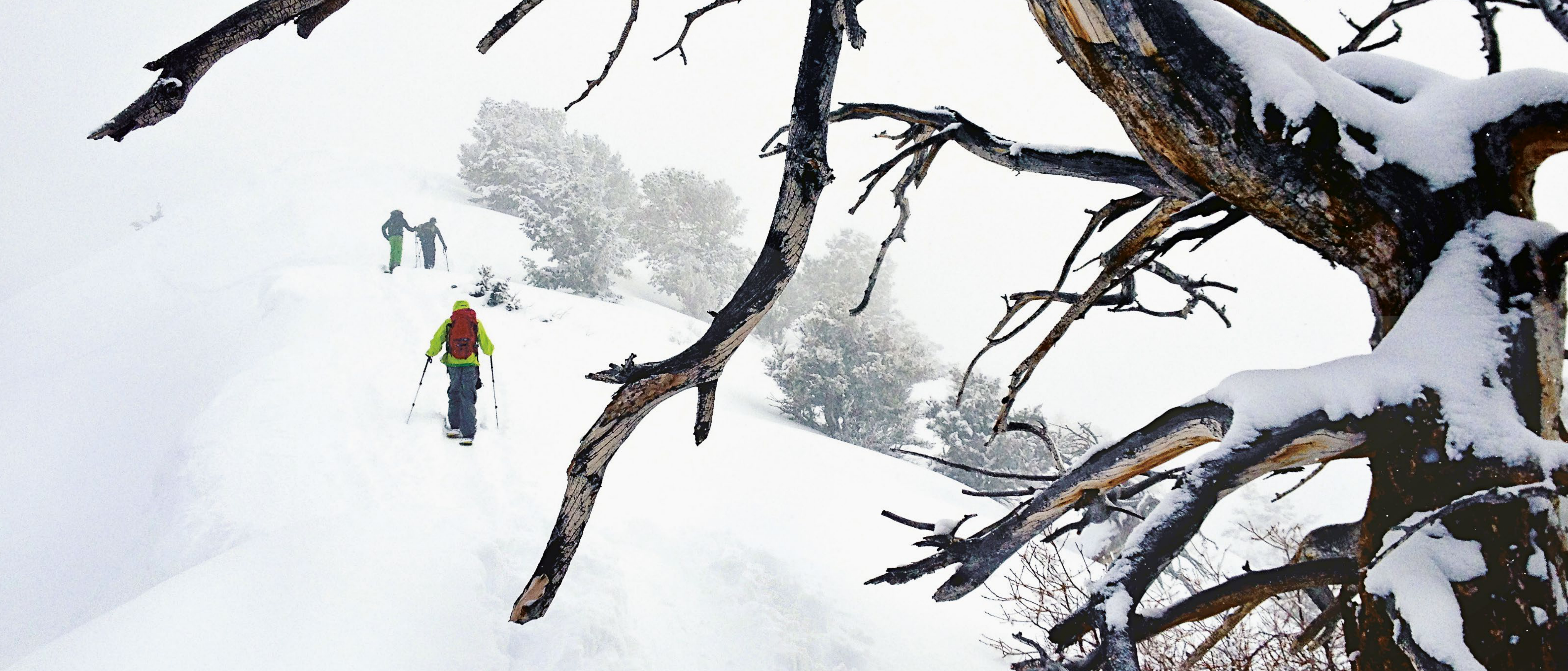
Stepping into the tiny house changes you because it changes what you've thought was possible all along. You can have beauty, warmth, and comfort in a small space. And you can have new snow-covered mountains in your backyard everyday. Our new friends leave as we're preparing to take our first steps into the new playground. From the Asulkan lot the names of tours, summits, and lines rest excitedly on the edges of our lips – Pterodactyl, Young's Peak, Sapphire Col, the Illecillewaet Valley. We make our way into the Asulkan Valley to familiarize ourselves with the newest wonder of our world. It's snowing heavily because it's British Columbia, the land of consistent snowfall.
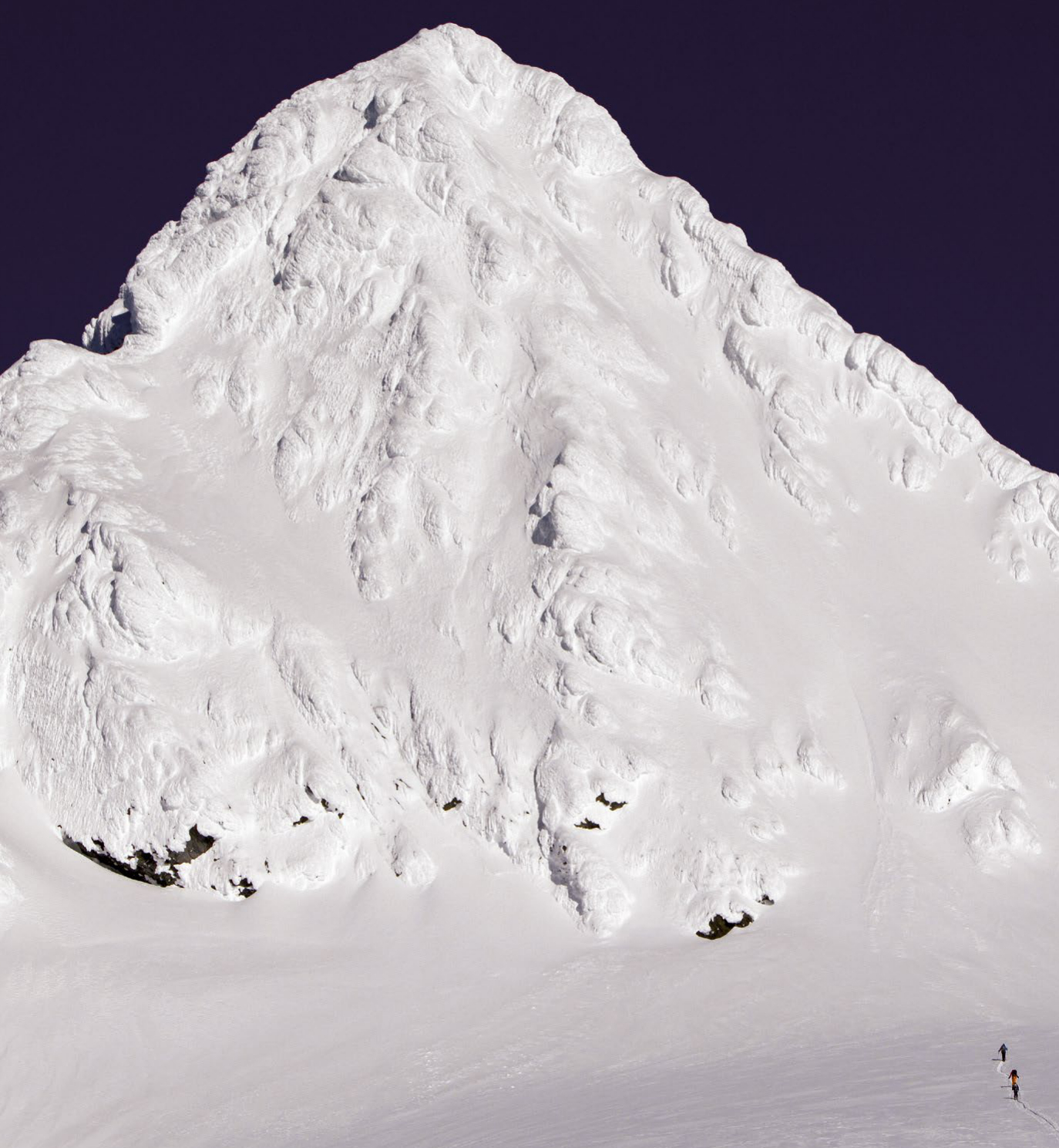
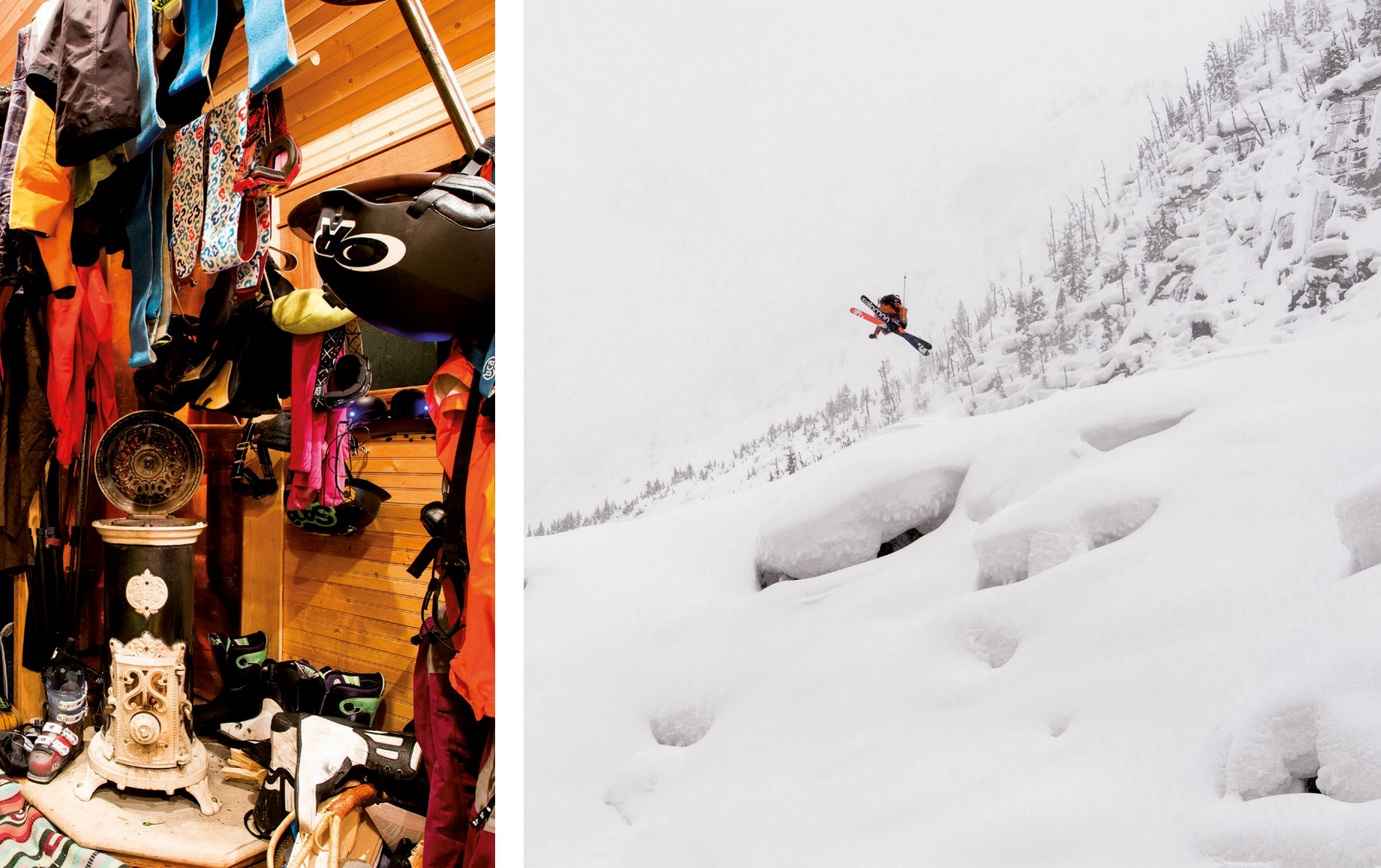
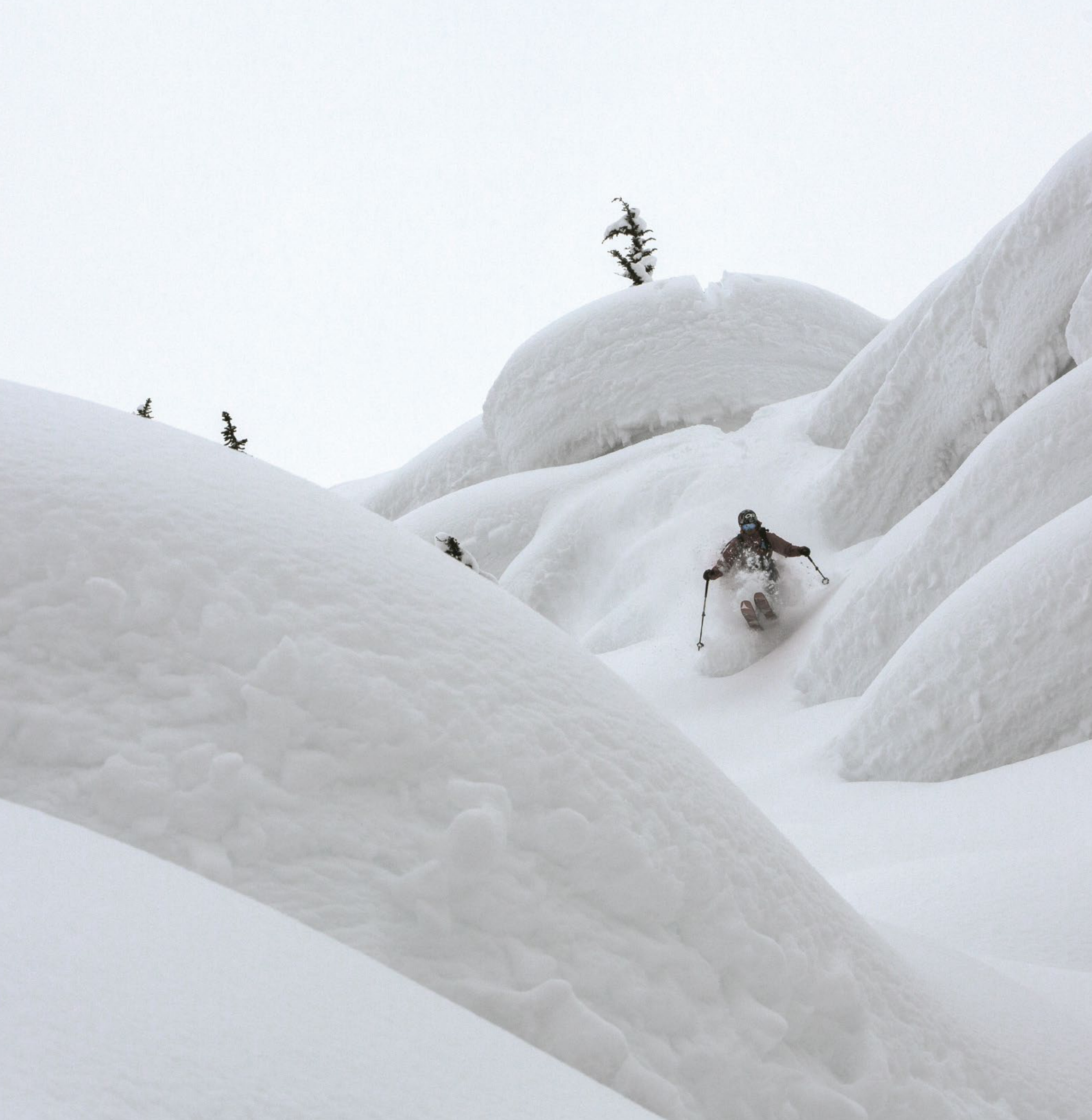
We decide not to explore into the alpine, but instead venture into a grove of sturdy trees covered in moss. The trees (and the tree skiing) are enough to keep any winter lover coming back. About four kilometers from our doorstep we come across a field of pillows longer and wider than any of us had ever seen. At this point our daily commute is established. For the next three weeks we will walk to this point, choose lines from the valley, ascend, ski pillows, and then do it again as many times as possible before the sun sets. Life in the tiny house is that simple. At around 2,500 meters, Mt. Afton, The Rampart, and Mt. Abbot tower above our pillow lines, guarding them protectively like hidden treasures.
They are objective hazards in the world of avalanche danger. Heavy snow combined with warming temperatures keeps these giants looming in our thoughts every day. We struggle with heavy snow, avalanche instability, poor lighting, but every day each of us attempts a pillow line thankful to get out from underneath the three mountain Gods watching us play in their living room. It's not just our house that's parked here. Others were here long before. After three weeks of burying our skis in some of the deepest powder we've ever skied and experiencing the wonders of the alpine a few days, the crew is exhausted.
Our tortillas and cheese are long gone, coffee has run short, and a shower is the first thing we think of in the morning because now instead of pine the tiny house smells of dirty socks. As our bodies have grown tired, our socks have become filthy, but the snow is still the best we've ever skied. On the day we've decided to leave, we wake up to a unique sound. One we haven't heard often on the metal roof of the tiny house. It is faint at first, but as we wake, the sound becomes clear. Rain is falling relentlessly washing away the pillows that gave us so much joy. It is at moments like this that you are so thankful to be mobile. Rain doesn't mean the end to the season. It just means it's time to go somewhere else.
Even with rain it feels like we are abandoning potential adventures. But, snow will bring us back. This won't be the last time our address will be Roger's Pass, British Columbia. Winter next year will bring us home.