Chile · Southern Andes (Villarrica)
Villarrica - Mountain of Fire
Issue 2011 · Words: Dominique Daher · Photos: Dominique Daher · 5 min read
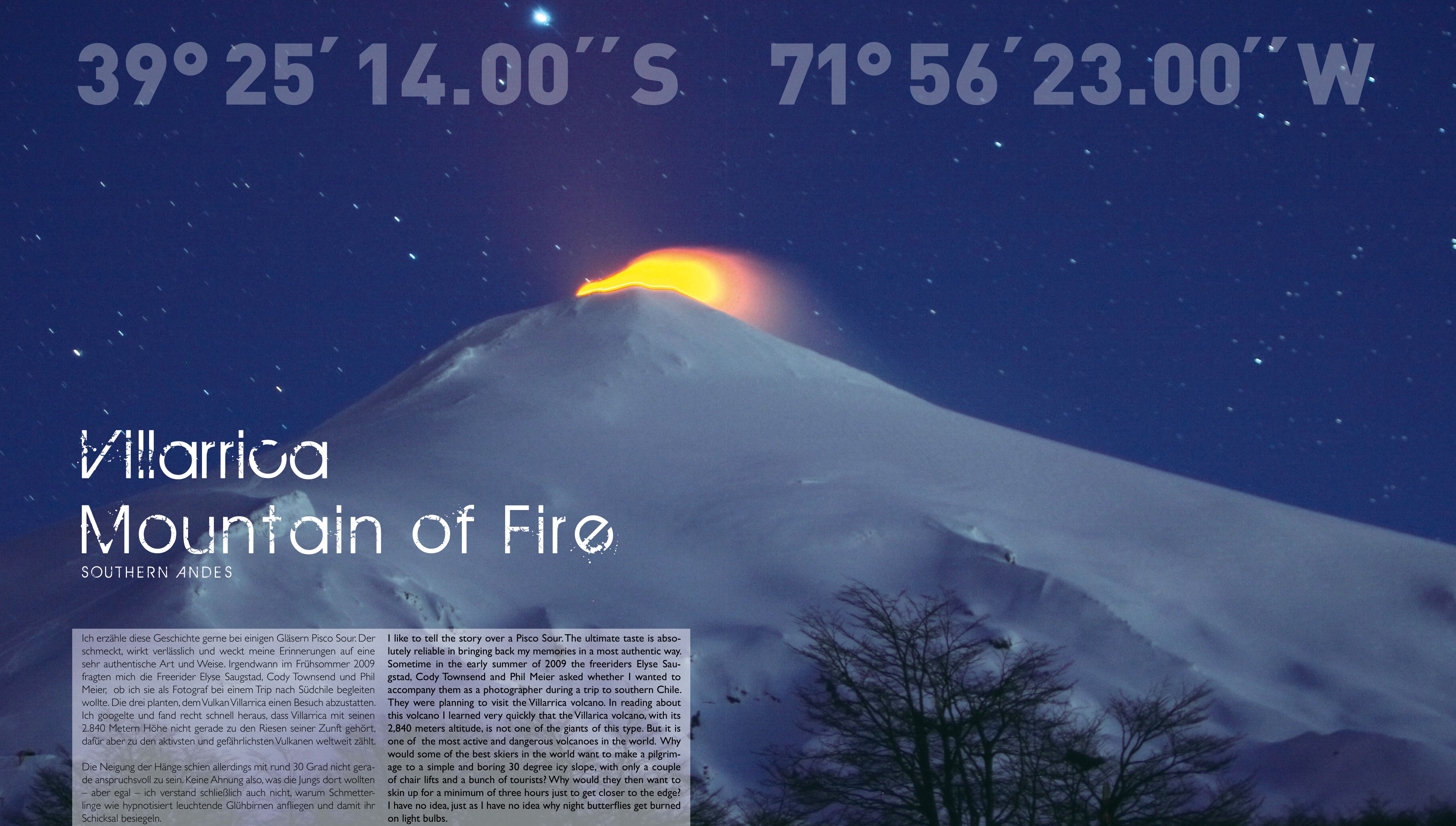
I like to tell the story over a Pisco Sour. The ultimate taste is absolutely reliable in bringing back my memories in a most authentic way. Sometime in the early summer of 2009 the freeriders Elyse …
I like to tell the story over a Pisco Sour. The ultimate taste is absolutely reliable in bringing back my memories in a most authentic way. Sometime in the early summer of 2009 the freeriders Elyse Saugstad, Cody Townsend and Phil Meier asked whether I wanted to accompany them as a photographer during a trip to southern Chile. They were planning to visit the Villarrica volcano. In reading about this volcano I learned very quickly that the Villarrica volcano, with its 2,840 meters altitude, is not one of the giants of this type. But it is one of the most active and dangerous volcanoes in the world.
Why would some of the best skiers in the world want to make a pilgrimage to a simple and boring 30 degree icy slope, with only a couple of chair lifts and a bunch of tourists? Why would they then want to skin up for a minimum of three hours just to get closer to the edge? I have no idea, just as I have no idea why night butterflies get burned on light bulbs. The border between terror and pleasure is often a fine line. For some people – namely the inhabitants and visitors of the town of Villarrica in southern Chile - this dance between fear and fascination is an everyday balancing act, as fiery red magma and imposing clouds of smoke are always displaying their potential power.
The crater at the summit of the volcano has a diameter of over one kilometer. Most of the time lava bubbles deep in the chimney, creating a red vapor that emanates into an incredibly impressive atmosphere. But approximately every 20 years, this drama also ends fatally. More than 50 powerful eruptions were recorded in the last 500 years, claiming hundreds of victims. The town is really touristy. Almost all shops in town offer guided volcano tours. We had a blessing in disguise, because the danger of an eruption during our visit was so high that all the providers preferred to stay at home. Moreover, even the Shuttle chairlift was closed due to heavy drifting snow. A hint of trepidation and excitement came over me.
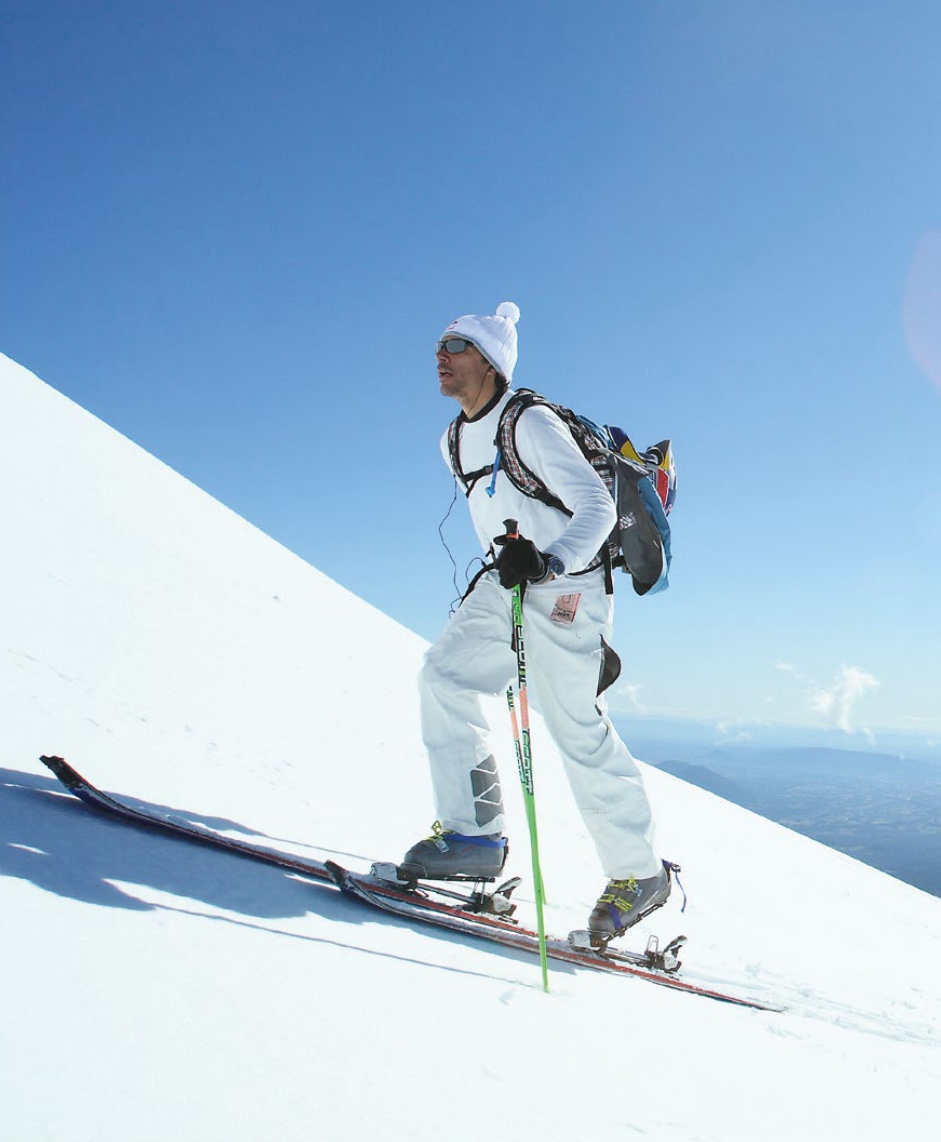
I wondered briefly whether we should actually go up or stay put and drink a few glasses of Pisco Sour. In the end, all doubts were outweighed by curiosity and anticipation of an exciting adventure. The way up was not as smooth as we thought. You have to climb some steep parts made of old lava streams, and then find a way that skirts the middle of the most icy part. On the way up, a strange smell reminded me of the smell you find in a mountain hut bedroom after the traditional evening omelet, and taking each breath seemed like a gamble: breathe in this toxic smoke or not? We needed three hours to reach the summit. For the last and steepest 100 vertical meters, a good mountaineer would have brought crampons and even an ice axe. But we didn't.
More precisely, we didn't bring anything to deal with serious mountains, as we didn't expect a serious mountain. Once we reached the top, we stared at the glowing magma, like tiny mesmerized beings. And then we went down into it. Walking down on small volcanic black gravel I began to glimpse and then to fully comprehend why butterflies are attracted to the light as if by a magnet. My goggles were covering my eyes and the bandana around my neck now covered my nose and mouth. This was not a "Shaun White fashion statement", but the only way to breathe down there. We were perhaps 150 meters away from the blood that runs through the earth. The view of the hot red liquid held us there for a long time.
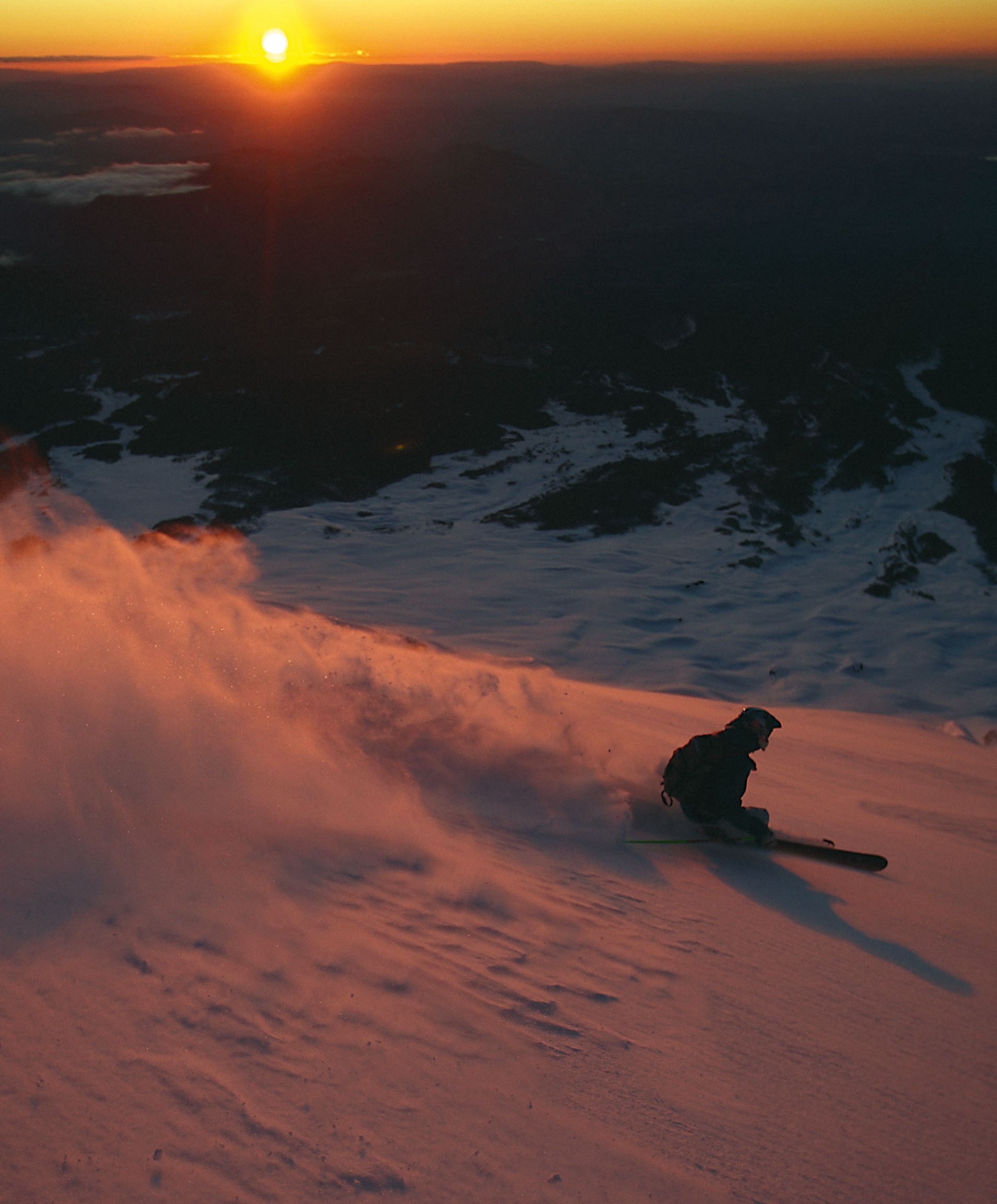
We could not get enough of this spectacle so real and yet so bizarre. When we got back to the top of the crater the daylight was quickly fading. On the climb we had checked a couple of possible runs for our descent – some with a couple of jumps, another one with a narrow couloir in the middle. But we all forgot our main goal. Instead we went down as fast as the sun, just making huge GS turns. We didn't play in the natural half-pipes, or seek jumps off the ridges created by the wind that typically whips through here. We only wanted to go faster and faster, in case the volcano wanted to wake up for real. The image of rocks falling around us like an air bomb attack, and being followed by an avalanche of magma and melting ice, spurred us on.
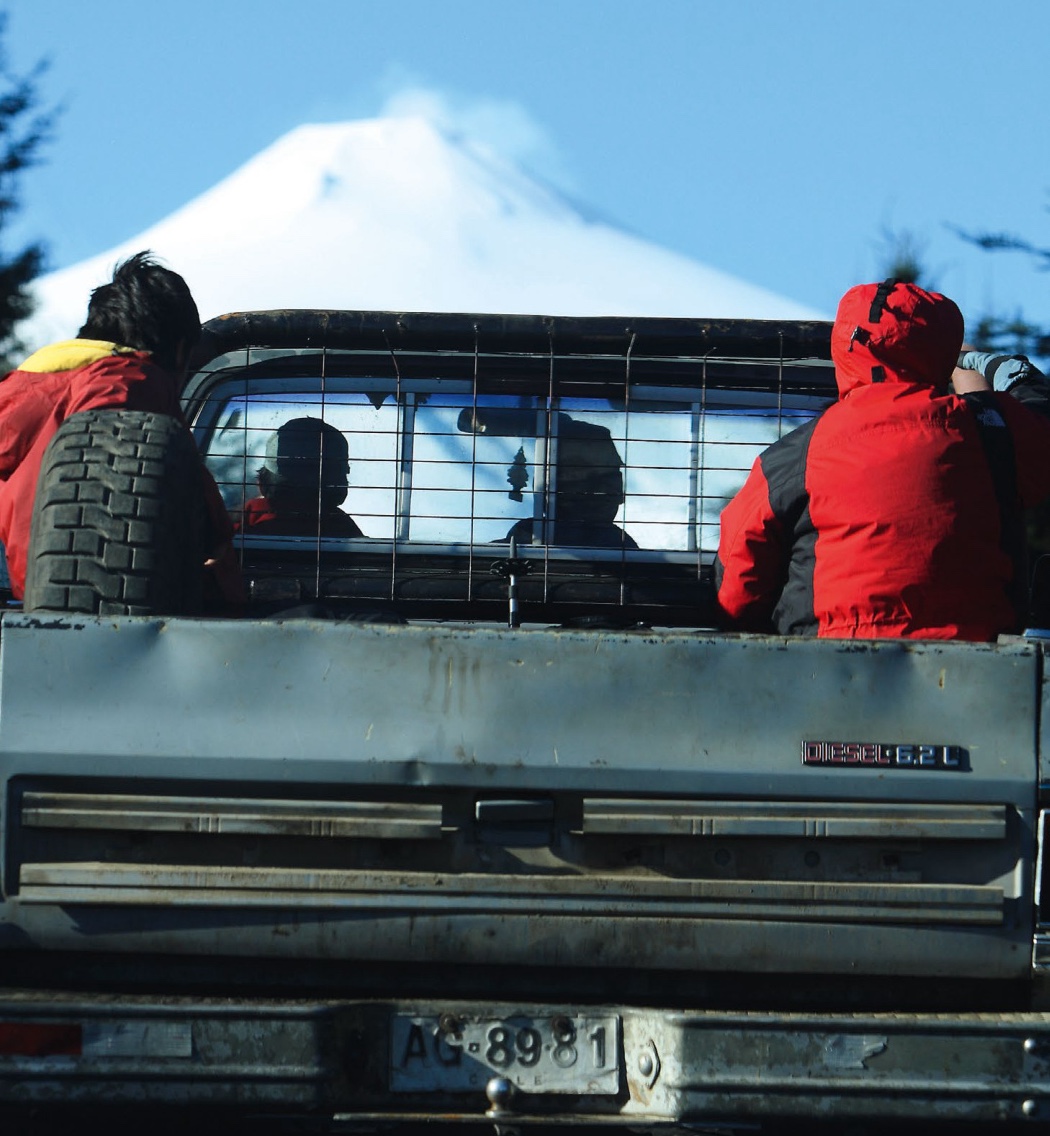
As I reached my maximum speed, the sky was dark blue and I could barely see the tips of my skis. Looking back I saw the magma coming out of the top of the volcano. I couldn't believe this was happening on my first day ever here. But when we got back to the parking lot everything was quiet. The top of the Villarrica was red, orange and yellow, reflecting the magma in the smoke of the volcano. So it was only that reflection, not an eruption. My heart rate slowed down. We just sat on the back of the pick-up and once again took a long look at the spectacle of nature. We didn't count the glasses of Pisco Sours consumed that evening. But somehow, they tasted even better than usual.