Japan · Kubiki Alps (Myoko)
Welcome to Japan
Issue 2013 · Words: K.C. Deane · Photos: Grant Gunderson · 6 min read
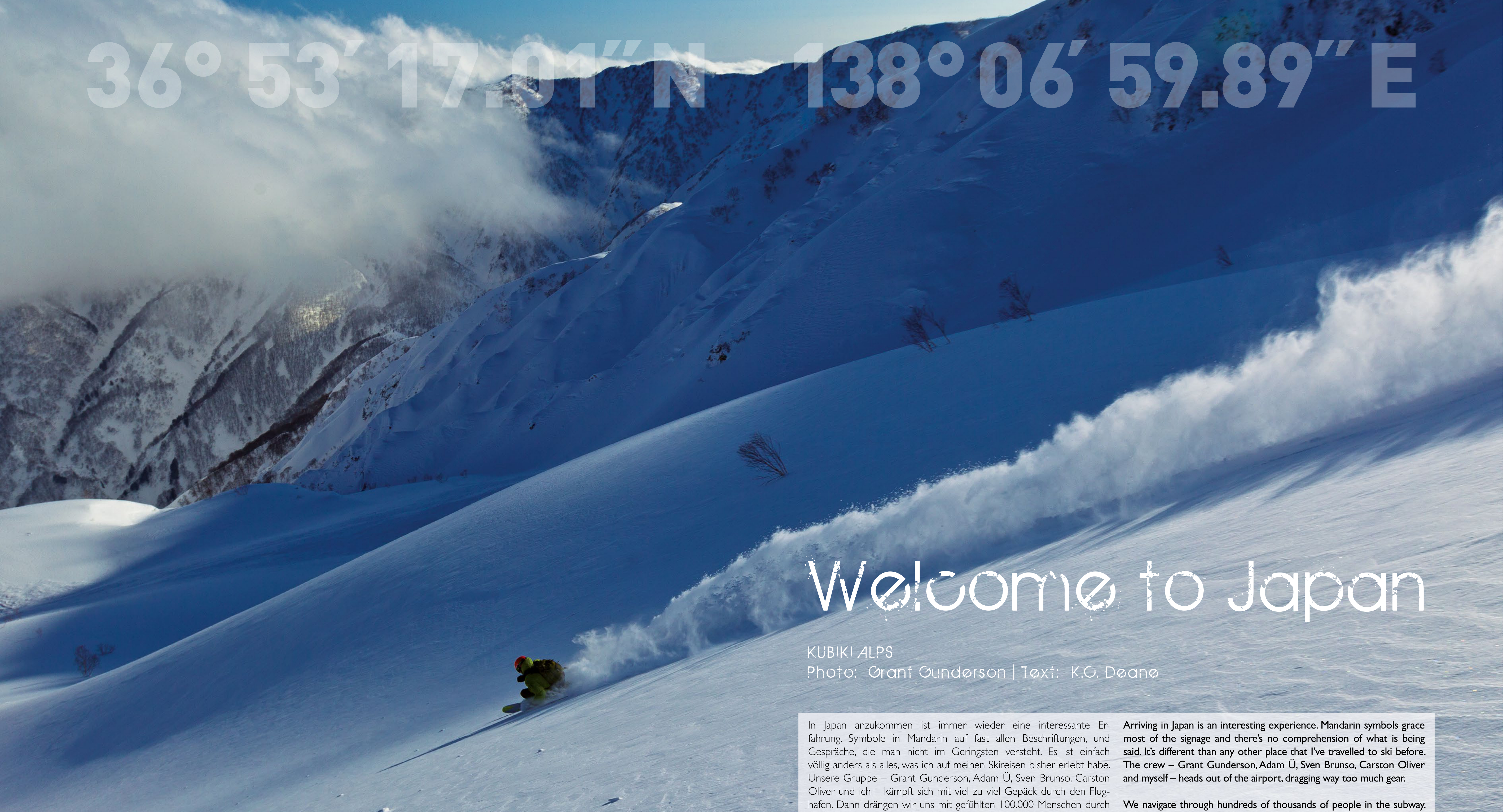
Arriving in Japan is an interesting experience. Mandarin symbols grace most of the signage and there's no comprehension of what is being said. It's different than any other place that I've travelled …
Arriving in Japan is an interesting experience. Mandarin symbols grace most of the signage and there's no comprehension of what is being said. It's different than any other place that I've travelled to ski before. The crew – Grant Gunderson, Adam Ü, Sven Brunso, Carston Oliver and myself – heads out of the airport, dragging way too much gear. We navigate through hundreds of thousands of people in the subway. After much pointing, smiling, and a seemingly short game of charades, we make our first train to the Nagano Prefecture that is roughly three hours outside of Tokyo. We stepped off at the small station of Myokokogen to cold clear skies and the smile of local Bill Ross.
After years of coming to Myoko it was the first time we had not been instantly covered in snow upon our arrival. We made the short drive to Hotel Korakuso, our home for the next nine days. Bill gave us a quick briefing and to our surprise they were expecting a day or two of clear skies. He also mentioned that it hadn't snowed in a week, quite uncharacteristic for Japan. We arrived at our hotel, half a world away tucked in the Kubiki Alps, Myoko. As the sun peaked over the mountains and into the Myoko Valley the next morning we headed to the lobby to find Gunderson and Brunso suited and ready. Sven was buzzing with excitement to get out on the hill. "No need to rush. The snow isn't going anywhere.
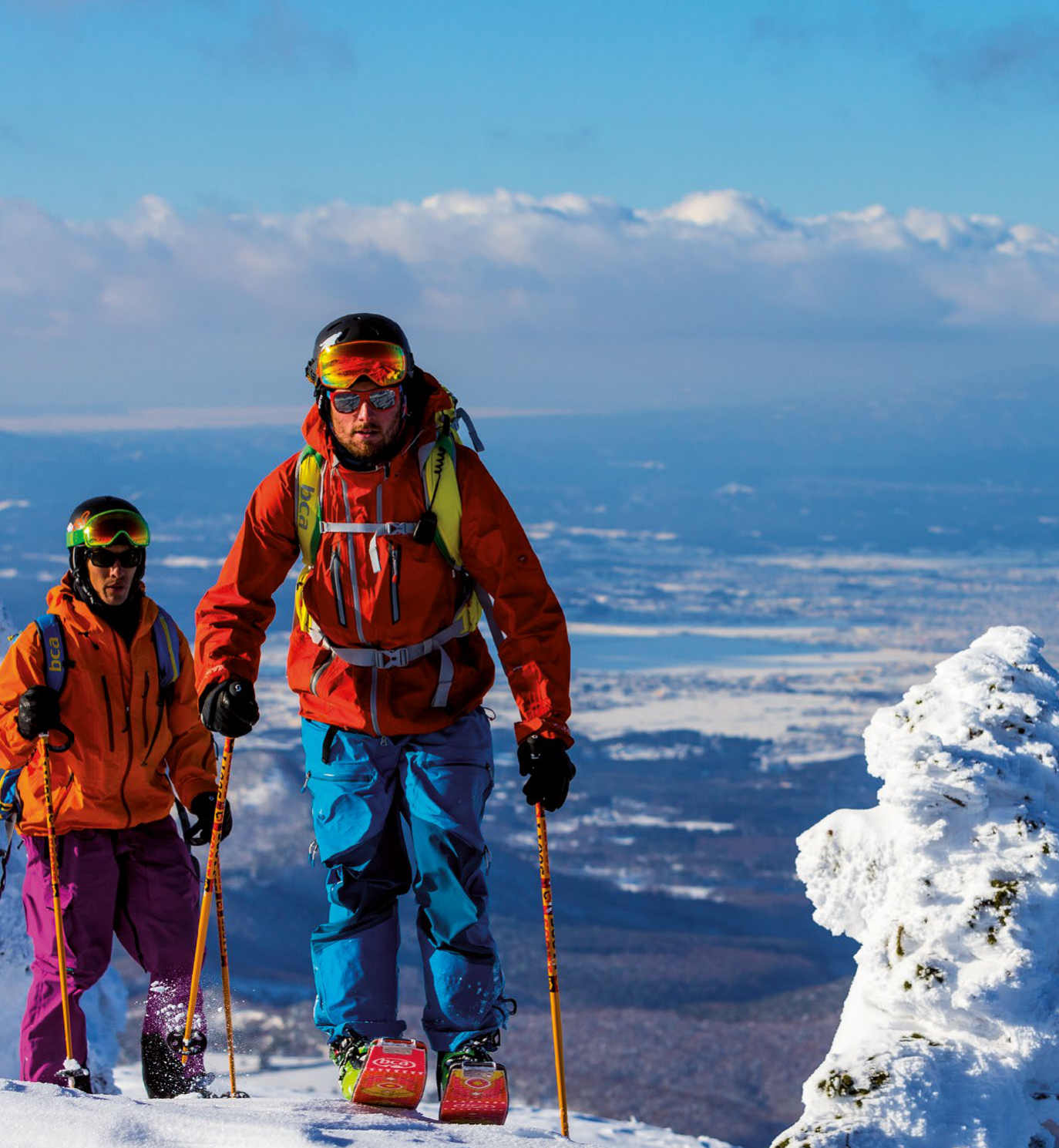
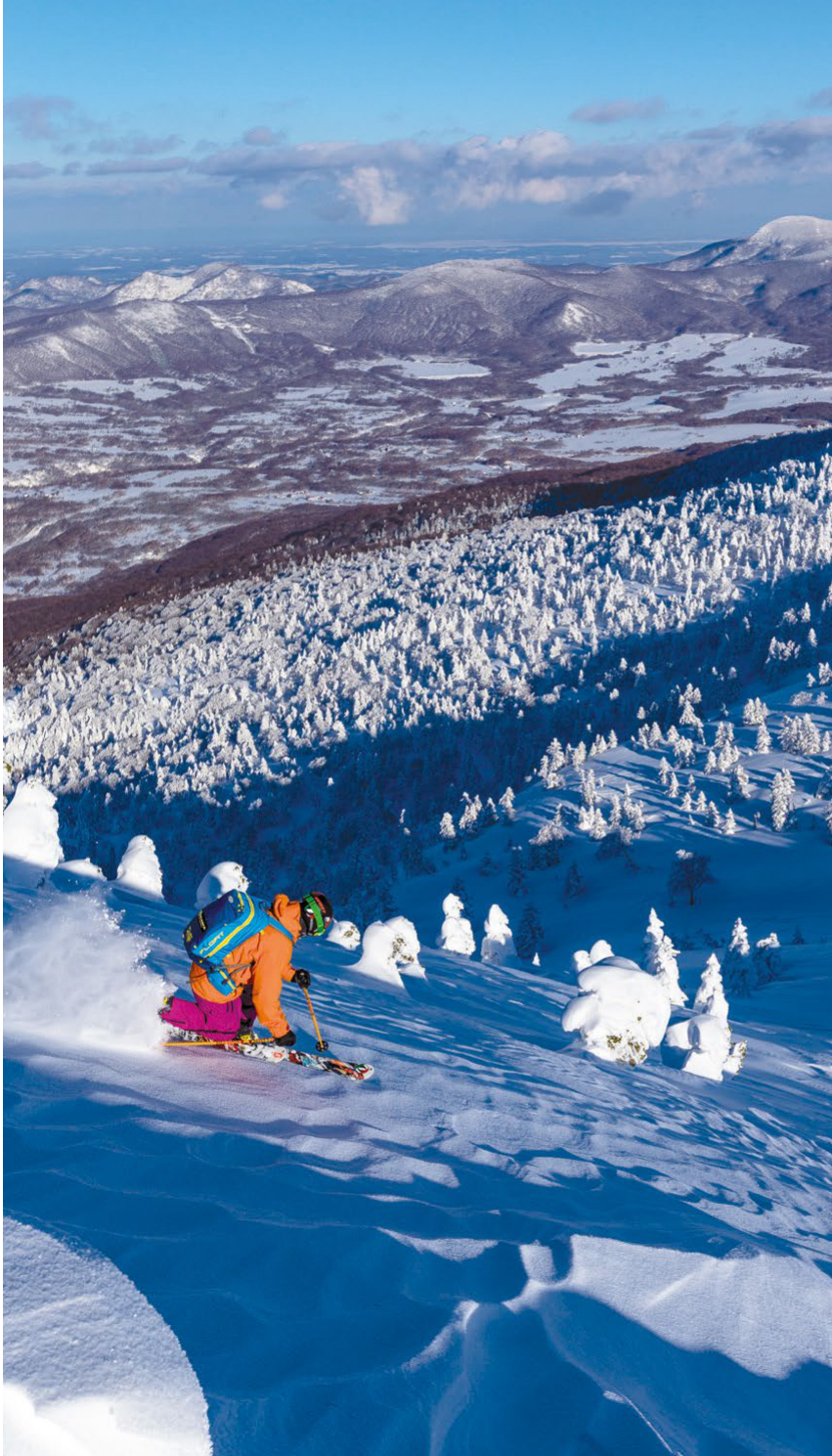
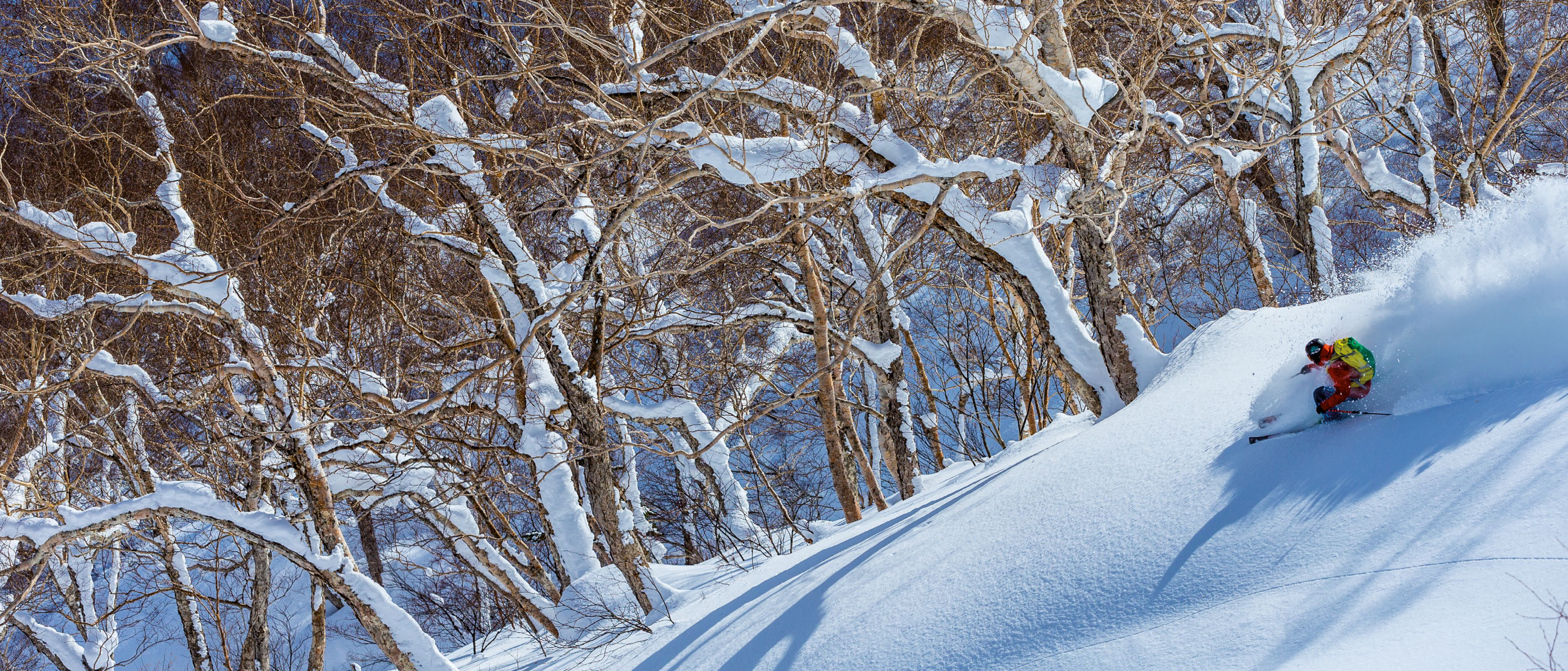
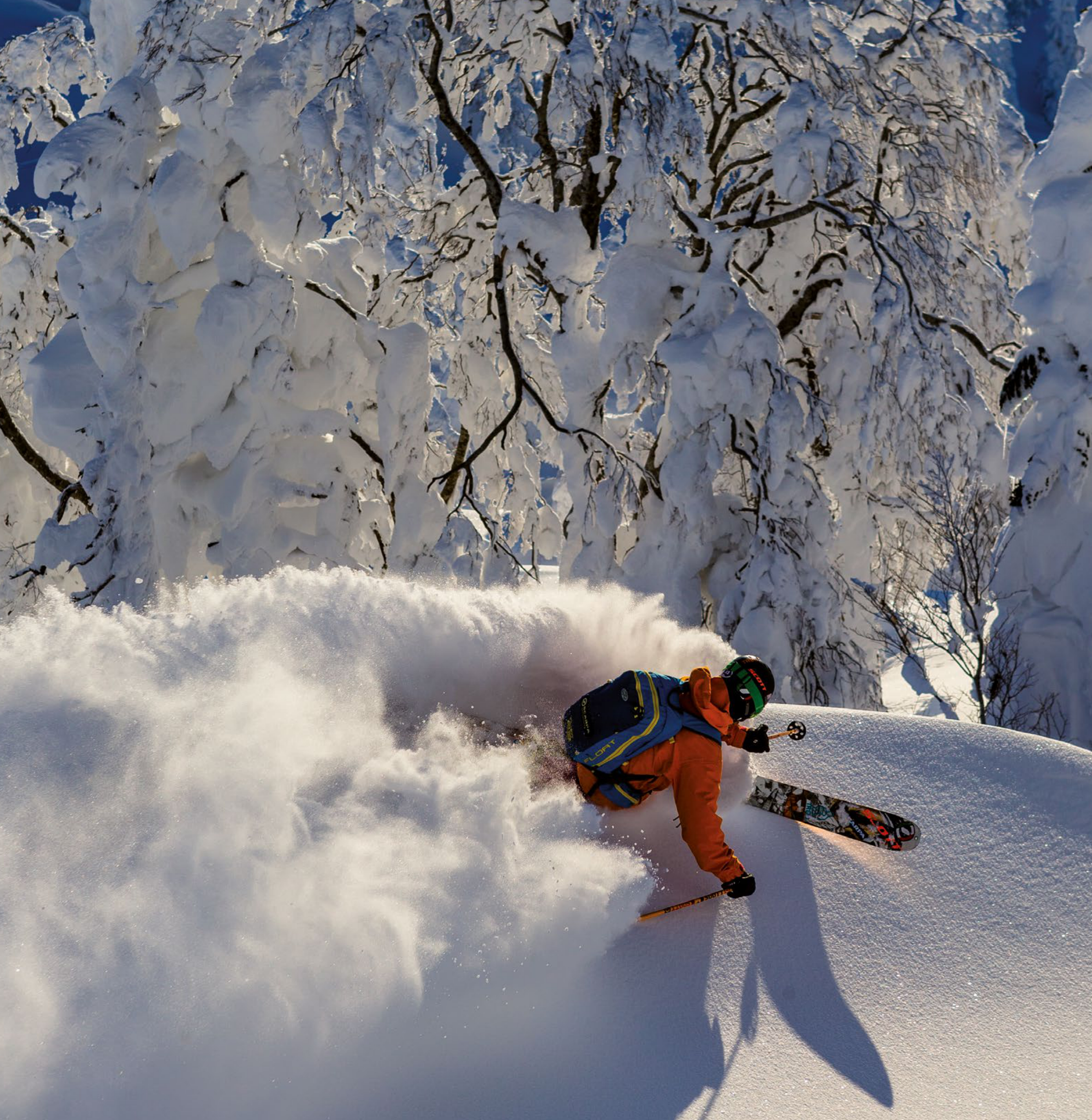
Even the lift-served terrain never gets tracked out, so take your time", reminded Adam as we pull our boots on. The bottom of the ski hill is just a five-minute walk through the main street in Myoko to the base of Akakura Kanko, which lays in the shadow of Mt Myoko. The resort is small with four lifts that access 790 vertical meters of the most amazing trees. With a quick 35-minute tour you find yourself perched above Akakura and the Myoko Valley open with spotted Dakekanda trees. Sven was blown away by what he saw. Even though it hadn't snowed in a week, the trees were nearly void of tracks. Dropping in, I heard Sven ask, "Has it been closed? Can we ski here?" Welcome to Japan. With the sun out we set a skin track from the top of the resort.
In the Nagano Prefecture they average only eight days of sun a year, which is good for skiing deep snow but tough to do long tour missions up high above the valley. Typically touring consists of smaller adventures with short skins to access the large amount of terrain. Laps from the top drop you down 600 meters into town, followed by a quick 15-minute traverse back to Akakura Onsen. From the top lift of Akakura Kanko or Akakan we made our way to the peak of Maecyama. As we gained elevation Mt Myoko came into view, steep and rugged with giant sulfur gas vents protruding from its flanks. With our first day coming to a close, Gunderson tucked his camera away to log some turns of his own. He threw plumes of snow as he disappeared into the trees.
Arriving at the hotel, Gunderson was already there, beard caked full of snow, grinning at Sven, "Did I mention that this isn't even good yet?" The following day clouds hung low as we slowly made our way through town. After three days of skiing our crew had hit so many of the features we were in need of a reset. By midday flakes came down with the faint smell of sea salt and began to blanket the hill. By the end of the day there was almost half a meter of new. Sven said, "The first day was totally bluebird and I was confident that there wasn't going to be the deep powder I came here for. Three days later clouds came in and by morning we had a meter." This went on for four days.
Finally we awoke to several meters of fresh and mountains basking in the early morning sun. We had lost track of time. The days melted together in a haze of deep snow and jetlag. Free from the race to the powder that you experience at home, we relaxed and settled into a different pace. As we walked to the hill in the sun, no one raced to get the first chair. Another morning and it dumped again. A great part about Japan is that with the frequent snowfall it doesn't give much time for the snow to sit in the sun creating a very solid snowpack. Digging a three-meter pit to the dirt we found no hard layers. The stability is great because it gives you confidence to work into some of the more exposed lines.
In Japan it is really easy to get lulled into a false sense of security when there is a ton of snow and you're skiing hot laps in a ski resort. Sometimes pulling off the groomer into a gully, even just 20 meters uphill or downhill of where you thought you were going, can be the difference between a mellow pow lap and realizing halfway down that it doesn't go, and then having to scratch around to find the one place that doesn't air 15 meters into an uphill gully wall landing. With at least four meters of new snow, Carston and I wanted to ski some of the more rowdy lines. Within the resort there is a narrow and steep canyon that has all sorts of lines with spines and cliffs.
Confident that I had our line picked out I dropped in and skied to a safe point to wait for Carston. Ripping steep pow turns we were hooting and hollering, Carston made it down and as I took a few turns I realized that we were off our line. We had dropped in too early and were cliffed out on top of an 18-meter drop that Carston had hit the previous year. Considering our position there was no way to back out and get up the 50-degree slope in this deep of snow. Confident in the depth of the snow and the fact that Carston had hit this before we both made the drop. Although we came out unscathed it was a quick reminder of how fast you can find yourself in a serious situation.
As the trip came to an end I found myself bathed in sunshine and skiing deep snow again. It seemed like ages ago that we were in the hustle and bustle of the Tokyo subway as we stood over the valley watching the sun dip low in the winter sky. As I watched the crew drop one after another I found myself standing solo contemplating my last turns in Japan. The air was crisp as I tipped into the run. I drove my skis deep into the snow and covered my face in an ice blast. The sound of my breathing and the rustle of my jacket were the only things that found my ears. This is skiing in Japan.