Chile · Anden
Where the Mountains Are Alive
Issue 2024 · Words: Stefan Herbke · Photos: Stefan Herbke · 4 min read
When summer is too hot, the wait for the first snow passes in slow motion, and the skis are gathering dust in the basement, so you need to think about alternatives. As the start of the season on the Alpine glaciers is increasingly being pushed back, you have to think globally, just like the …
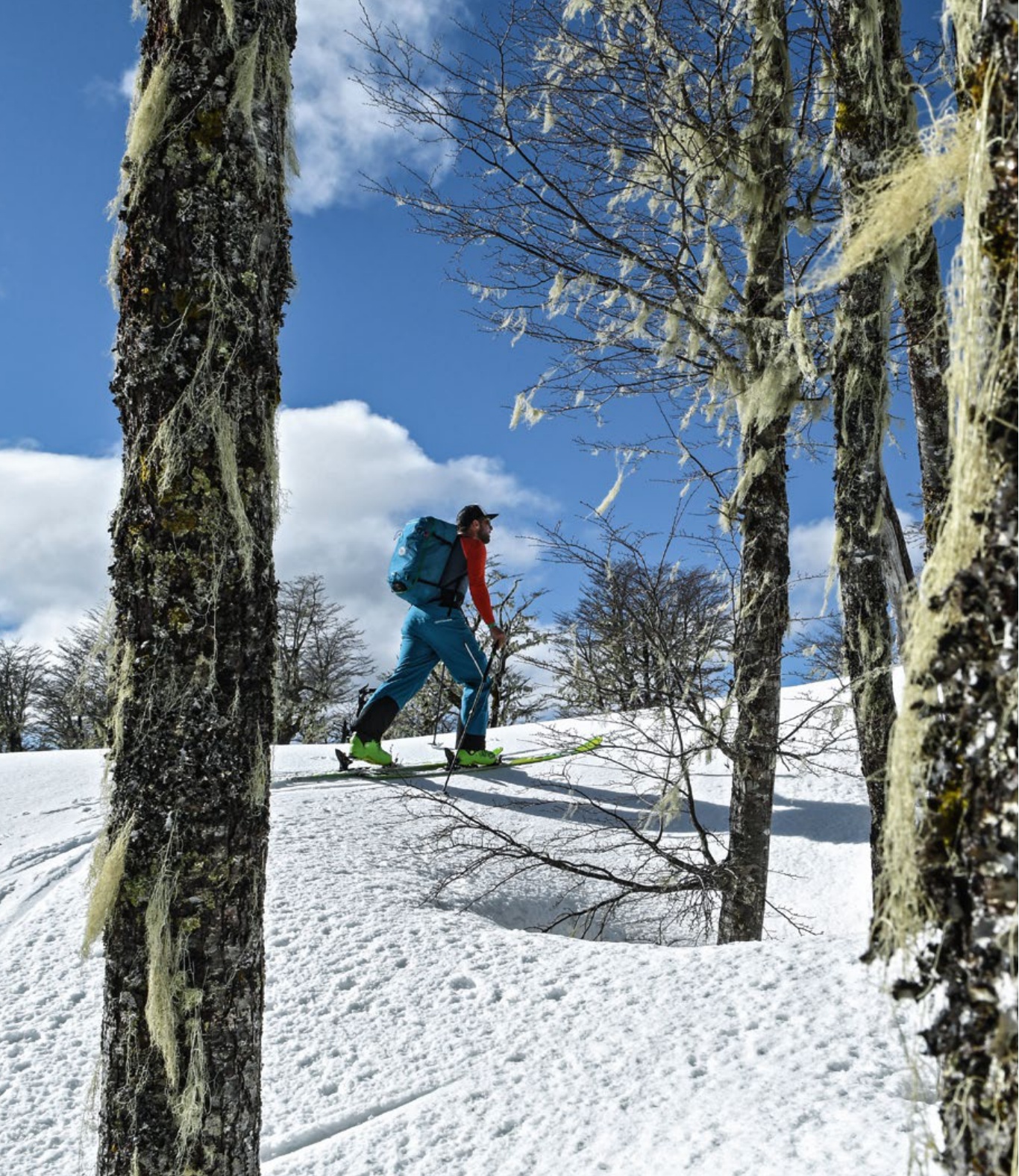
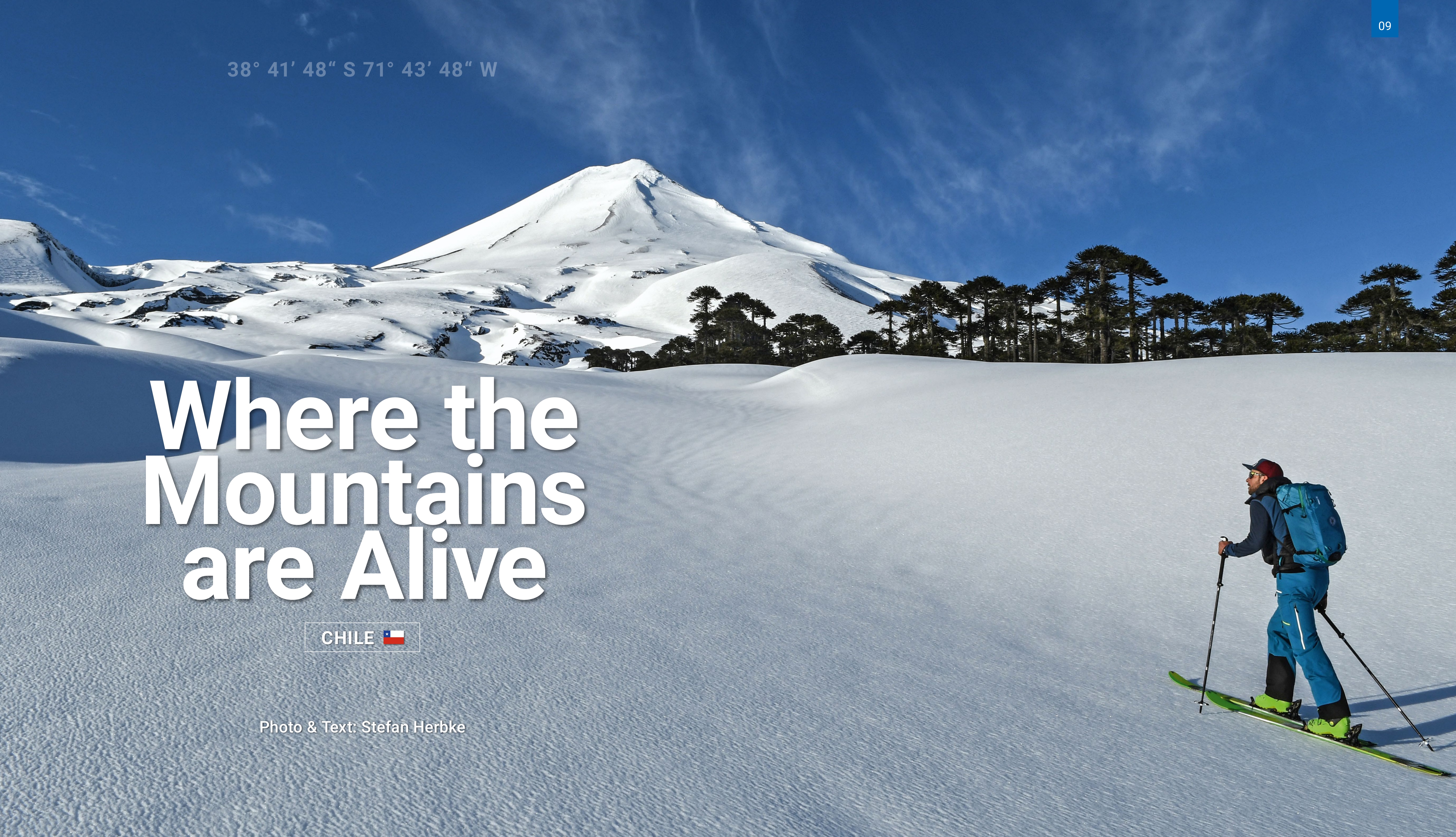
When summer is too hot, the wait for the first snow passes in slow motion, and the skis are gathering dust in the basement, so you need to think about alternatives. As the start of the season on the Alpine glaciers is increasingly being pushed back, you have to think globally, just like the professional skiers who train for the World Cup in the southern hemisphere. What’s more, the ski touring season on the volcanoes of south Chile begins with our fall. In the Araucania region, Chile’s Switzerland, there are several freestanding volcanoes between the mighty Llaima, the Villarrica with its striking column of smoke and the glaciated Osorno not far from the border with Patagonia – white, snow-covered pyramids above crystal-clear lakes, endless vastness and dense forests. These are plenty of reasons to kick off the ski touring season in October.
Three days of rain in the valley have left their marks on the mountains. The small Corralco ski area at the foot of the 9,400-foot Lonquimay is practically snowed in. The cable has obviously jumped out of the pulleys, and only the top parts of the T-bars are visible in the snow. Right next to it, we make our way up the XXL slopes, enjoying the long-awaited sunshine
and the unusual backdrop of volcanoes rising into the sky like giant lighthouses. The waiting time was spent with excursions, inspecting our snow chains and studying the weather forecast until we could kick off the ski touring season. We realized that the short trip to the thermal springs of Malleco turned into a great challenge thanks to endless muddy roads through the Chilean jungle. The chains didn’t fit, and the weather forecast wasn’t getting any better. However, our patience was rewarded. The evenly shaped cone of Lonquimay, which gets steeper as it ascends, is a fantastic ski mountain with countless options.
For the descent, we choose a line through the steep southern face with its striking rocky outcrop – the perfect choice for powder on the south side of the globe. It is a dream in white and the perfect birthday gift for Paul Walser from the Ötz Valley in Austria. Later, the birthday was celebrated at Suizandina restaurant – once established by Swiss immigrants – with raclette and cheese fondue.
The next day, 10,250-foot Llaima is on our agenda. We plan to climb the north side, a long 5,900-foot ascent. It’s already exposed to the sun in the morning and a little more sheltered
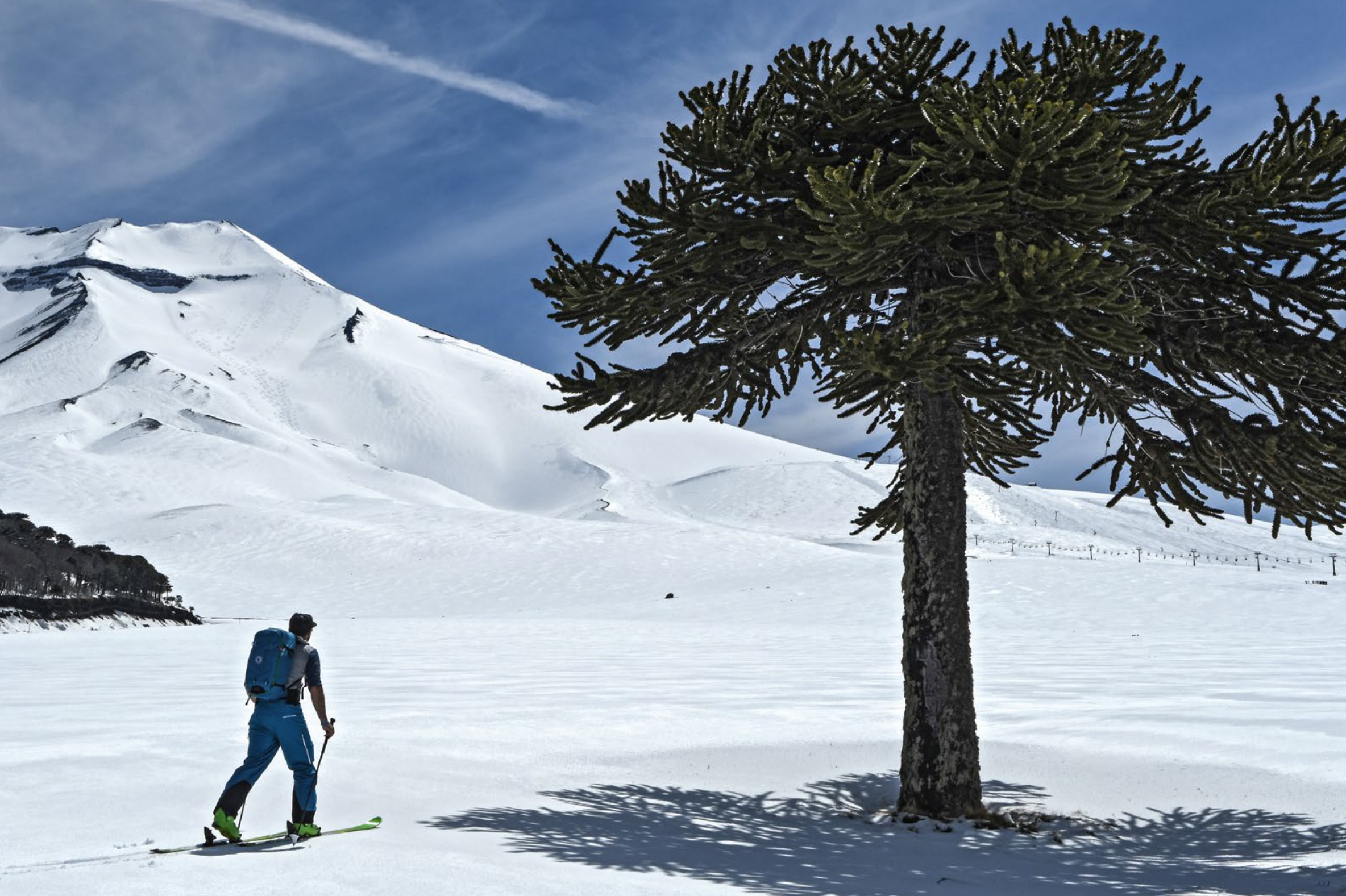
from the wind, which is our constant companion on Chile’s volcanoes. The distances feel like being in the Western Alps, which is why we only slowly approach the volcanic cone, which becomes steeper and steeper towards the top. It is a gigantic mountain, which looks even more exotic thanks to the fasci- nating araucaria forests at its foot. The wind gets stronger with every meter, but there is a sheltered, windless spot with floor heating at the summit, as the Llaima is one of the most active volcanoes in South America.
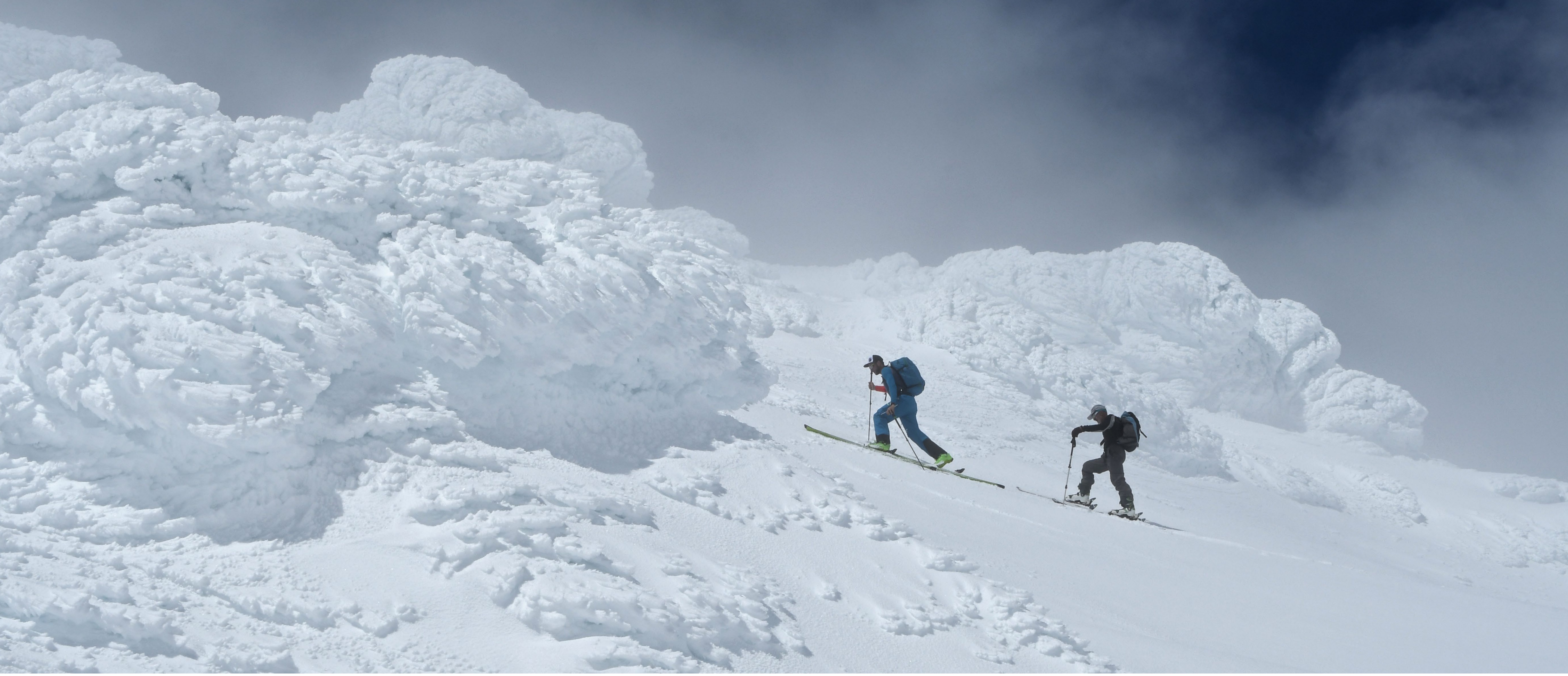
lift with towers and chairs transformed into surreal ice ghosts, we make our way up the freshly snow-covered slopes toward the enormous crater. Unfortunately, the clouds engulf us just below the highest point. Although the storm repeatedly opens them up, looking into the crater with its red-hot lava bubbling below is impossible. Moreover, the thick ice crust is treach- erous; cavities are potentially lurking everywhere underneath because of the warm, volcanic soil.
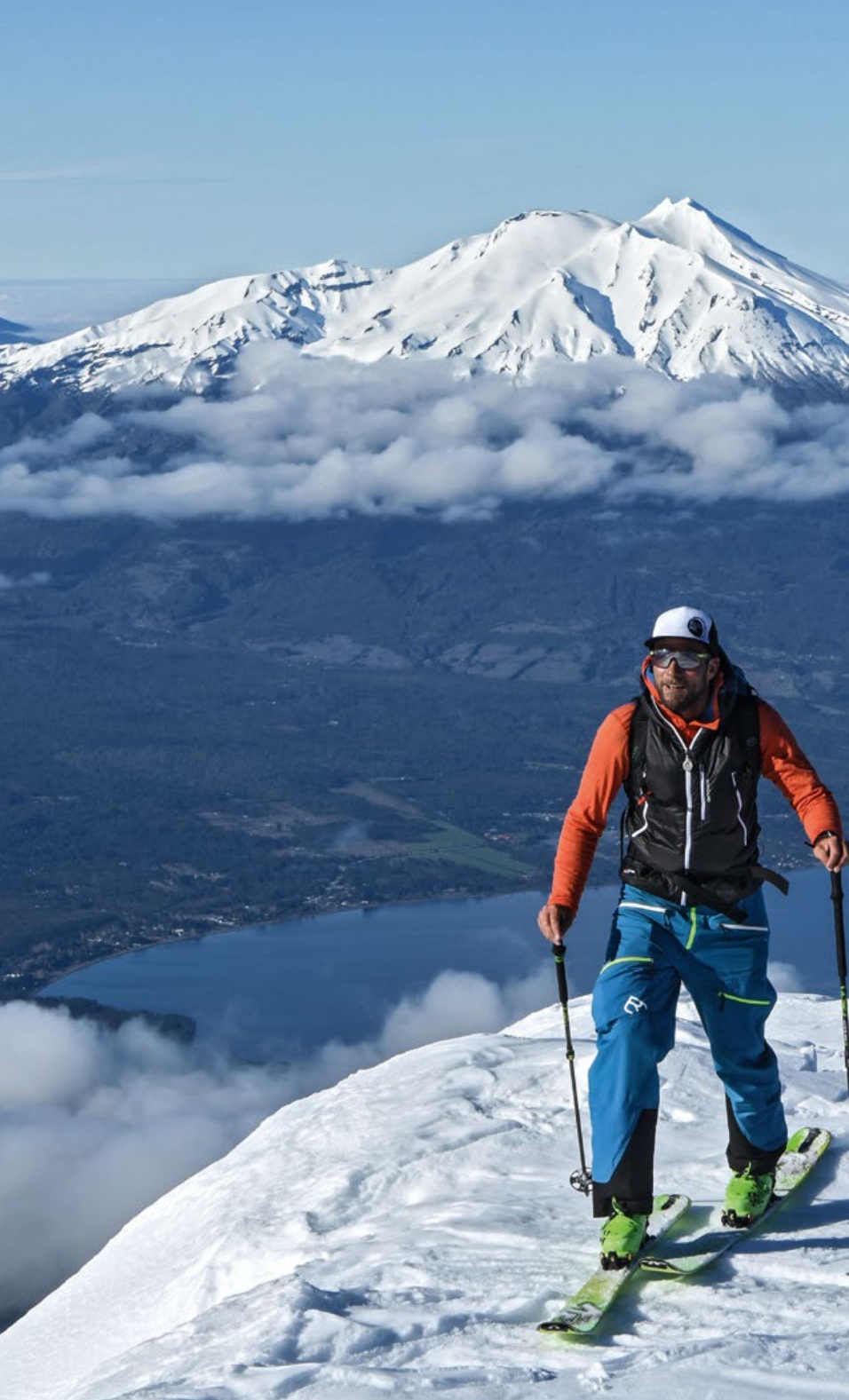
Next up is Villarrica, which has only recently erupted, towering high above the eponymous lake. The mighty smoke column impressively shows that it is permanently active. Passing a
After fantastic hikes to the Quetrupillán, Mocho and Casa- blanca volcanoes, the final stop on our itinerary is the completely glaciated Osorno. It is a mighty mountain that impresses with its sheer size, shape and location above Chile’s
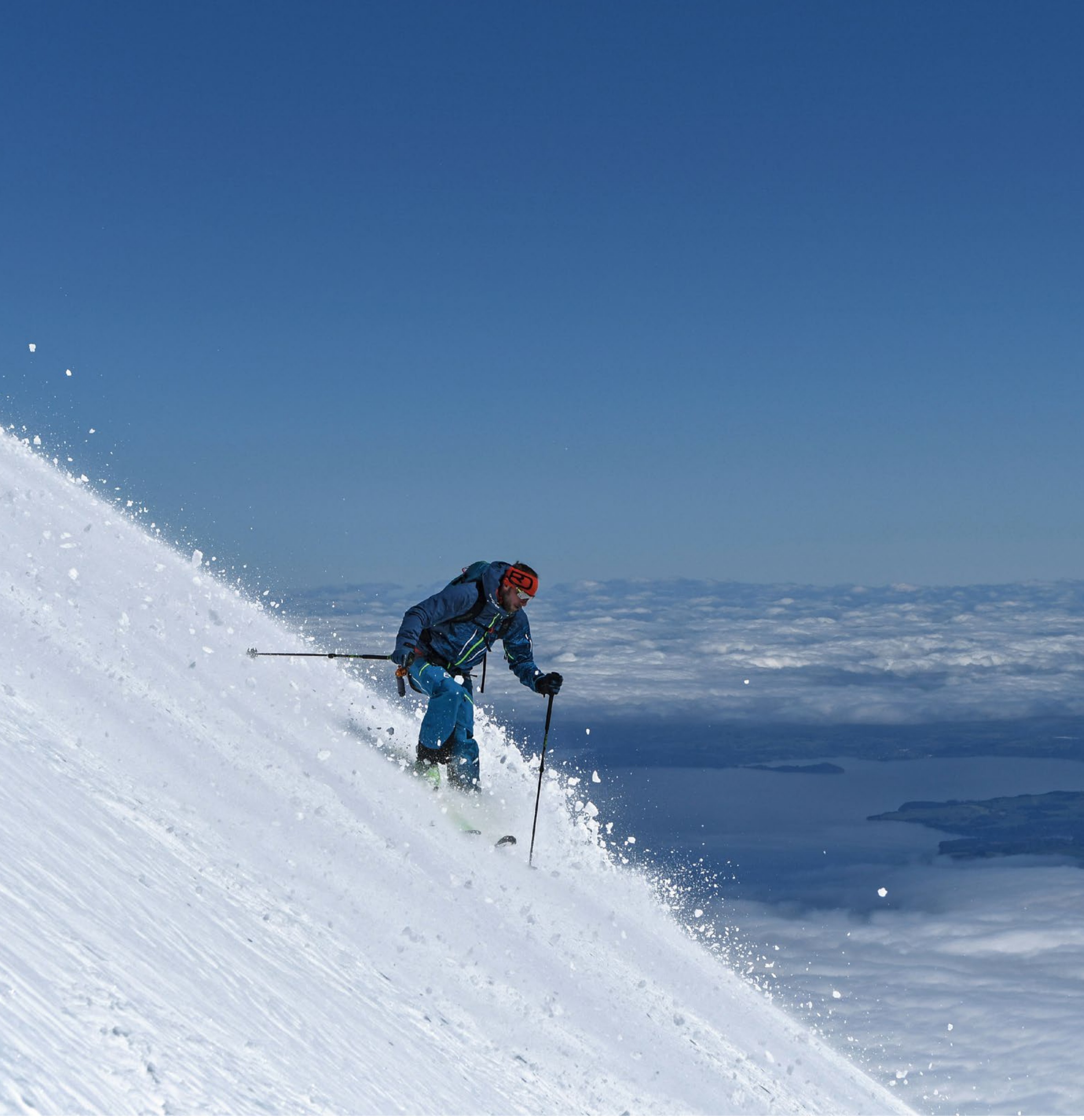
second-largest lake. The weather forecast is promising, and the wind should remain below the 60 mph mark – a perfect day, according to Chilean standards. So much for the theory because the calm is over as soon as we reach the vast summit plateau. We enjoy the stormy panorama for just a brief moment before we drop into the extremely steep, wind-protected north face. It is a fantastic run with endless corn-snowy slopes that ends somewhat abruptly in the dense jungle. But the run was more than worth it, despite the extra 3,000 feet we have to hike back up. After all, we leave our tracks in incredibly alive yet untouched mountains.