Schweden · Sarek National Park
Wind and Wilderness
Issue 2022 · Words: Fredrik Schenholm · Photos: Fredrik Schenholm · 4 min read
With its 6,578 feet, Pårtetjåkko is considered Sweden’s easiest and most accessible peak above 6,500 feet. It is located 15 miles from the nearest road. The mountain is part of the Sarek National Park, often referred to as „Europe’s last wilderness“. The park in the northwestern…
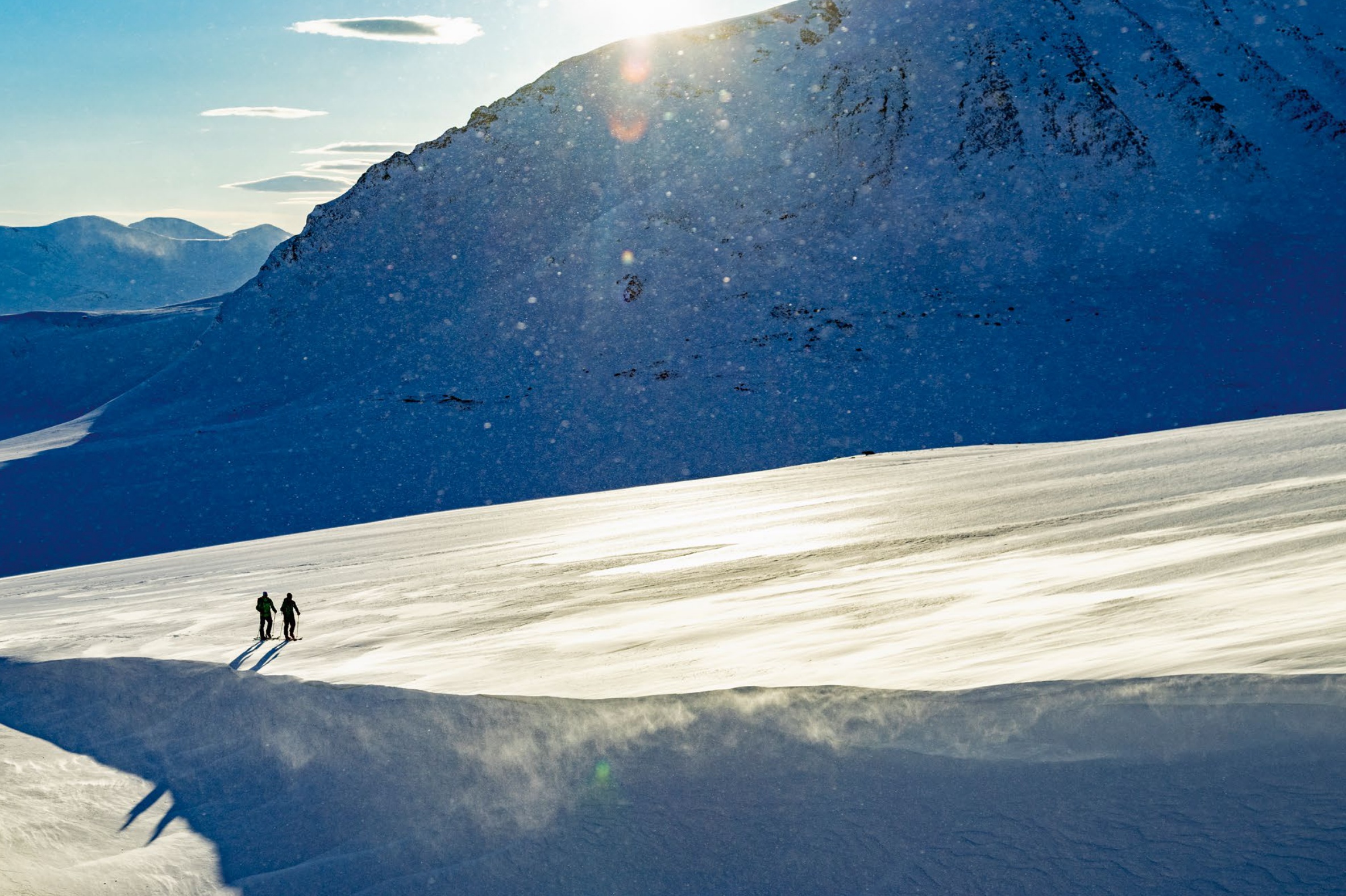
With its 6,578 feet, Pårtetjåkko is considered Sweden’s easiest and most accessible peak above 6,500 feet. It is located 15 miles from the nearest road. The mountain is part of the Sarek National Park, often referred to as „Europe’s last wilderness“. The park in the northwestern part of Sweden covers an area of almost 770 square miles. It is a huge mountain region with sharp peaks, deep valleys, large glaciers and endless ski runs. Within the boundaries of the Sarek, there are no roads, no cabins and no people. You sleep in tents, and if you need help, you will most likely need a satellite phone. This is real wilderness. In this part of the country, you need to be able to take care of yourself.
Pårtetjåkko rises into the sky in the southern part of Sarek. The nearest village accessible by car is Kvikkjokk, a sleepy hamlet with 20 inhabitants. From here you can travel by snowmobile on the King’s trail to the national park border. After that it is all about muscle power, as no motor vehicles are allowed in the park. With favorable snow conditions it takes about three hours to reach the base of the mountain. From here it should be an easy task to reach the top of Pårtetjåkko. For us, however, it turned out to be far from easy. We knew it was going to be a rough couple of days. The forecast predicted a bad storm with large amounts of precipitation and strong winds. But who knows? Sometimes forecasts are wrong.
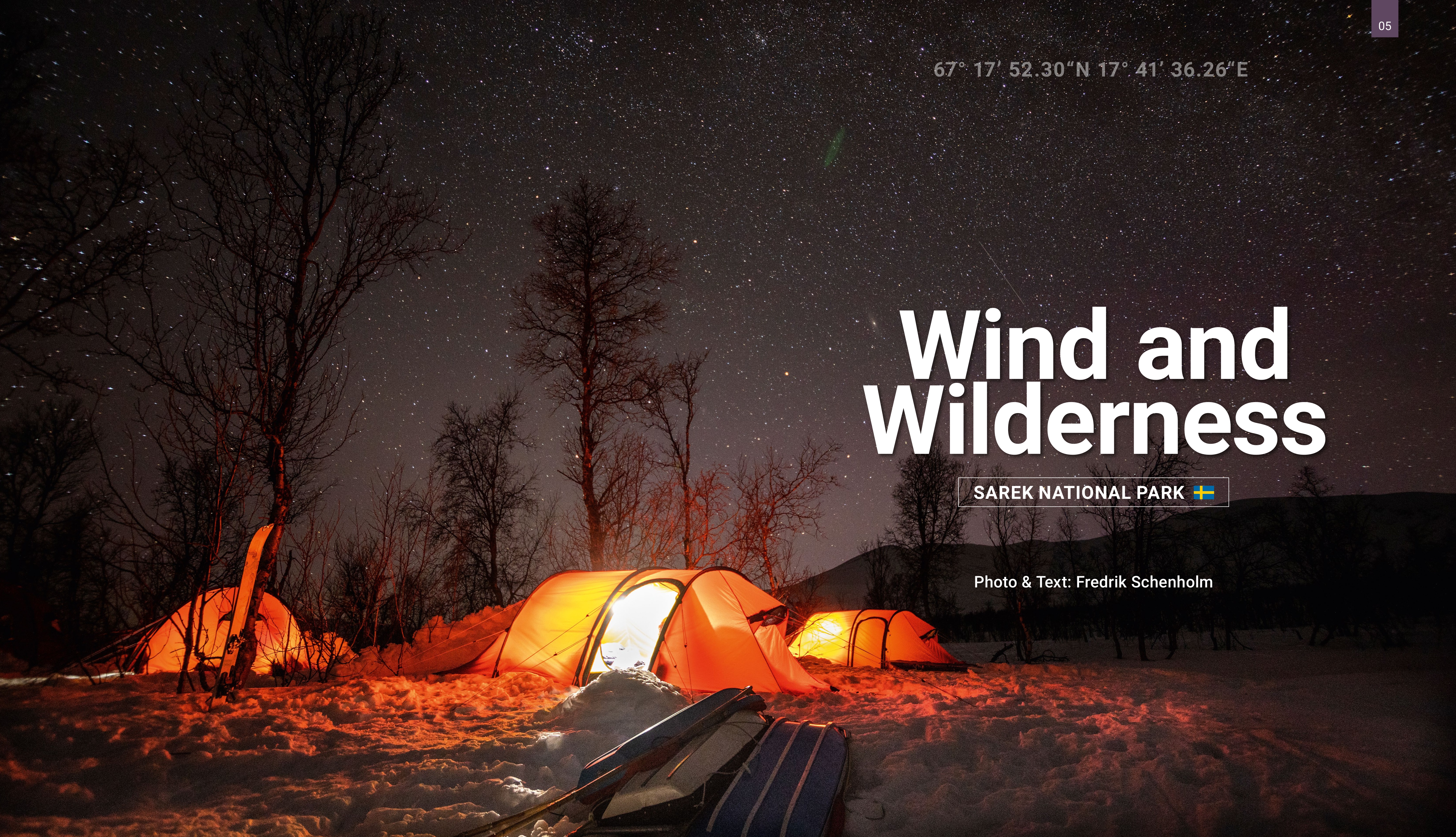
Our original plan was to set up base camp in the middle of Sarek but the forecast forced us to rethink and head to the southern part of the park. After a few hours of repacking from the trunk to the pulks in the parking lot at Kvikkjokk we were finally ready to go. After the 6-mile snowmobile ride along King’s trail we were looking forward to putting our feet in the bindings. The snow conditions were perfect and it took us just over three hours to hike the 5.5 miles to base camp. We set up the tents, dug a water pit and unfolded our sleeping mats before starting to prepare dinner. The next day we woke up to the sound of the wind hitting the tent canvas. After a quick breakfast in our dining tent we were ready to go.
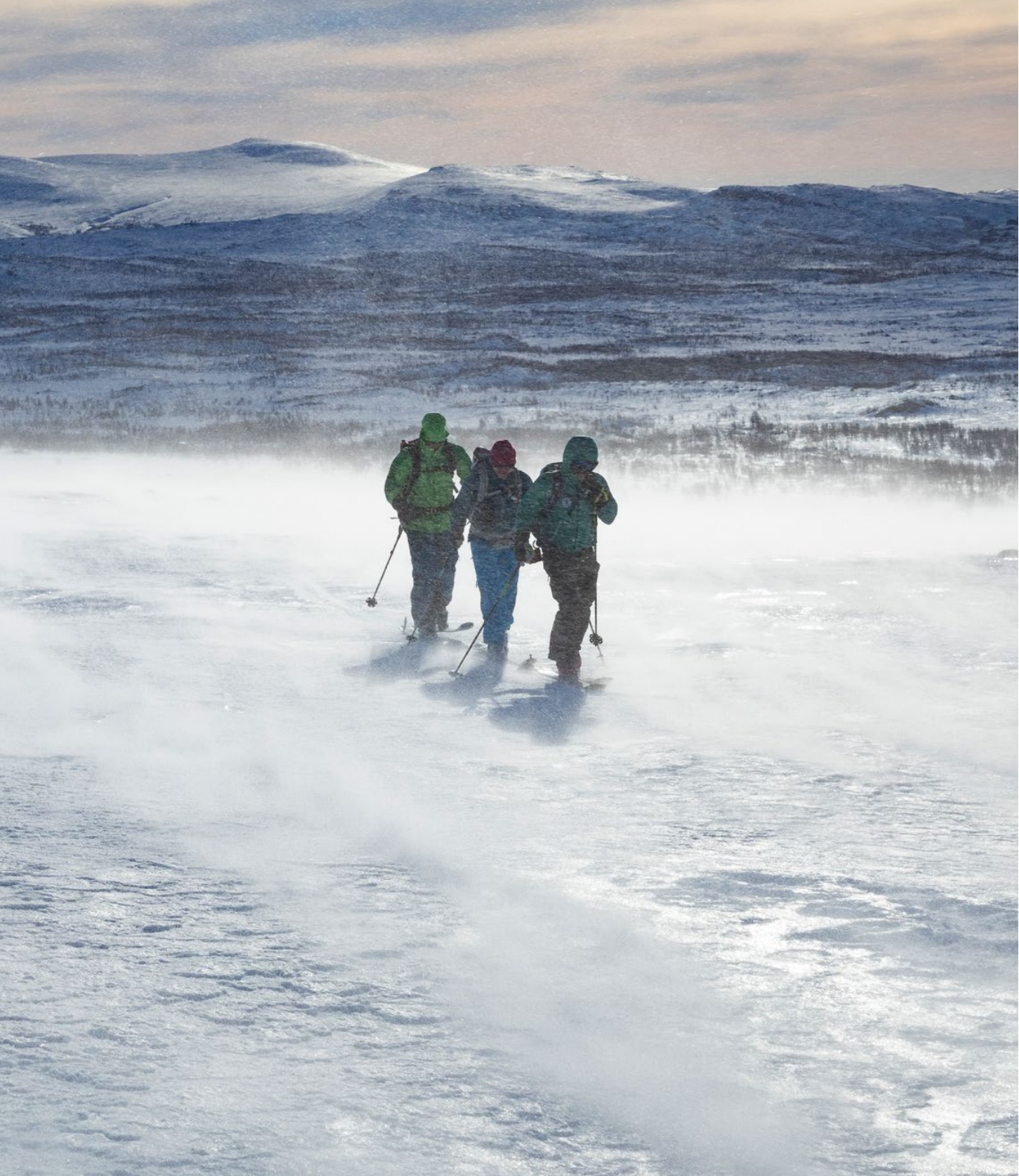
Oscar took the lead and soon we were above the tree line, feeling the wind even more as the cover of the trees disappeared. The higher we got, the stronger the wind got. Soon we realized that this was an impossible mission. We could barely stand upright and hardly wanted to imagine the conditions 3,000 feet higher. We turned around, the headwind became tailwind, and we almost flew back to base camp. Later that evening the storm hit us with full force. Rain in the middle of March in northern Sweden at almost 3,300 feet above sea level. Something is definitely going on with the climate and it’s not good. The storm did not stop the next day.
Luckily we brought the dining tent for this trip, which made a base camp day much nicer than spending it in a small tunnel tent. It was light in the tent when I opened my eyes after a good night’s sleep. A good feeling ran through my body. It was definitely sunny outside. Sure, the roar of the wind was still there but a second attempt at the summit of Pårtetjåkko would definitely happen today. But once out I could hardly keep my balance today either. We hiked for two hours and the conditions were harsh. The wind swept across the landscape like a steamroller; without my ski poles, I would have been flat on the ground. Ellen made a sign and we gathered around her. “I’d like to turn around. It’s too windy,” she said as she struggled to stay on her feet.
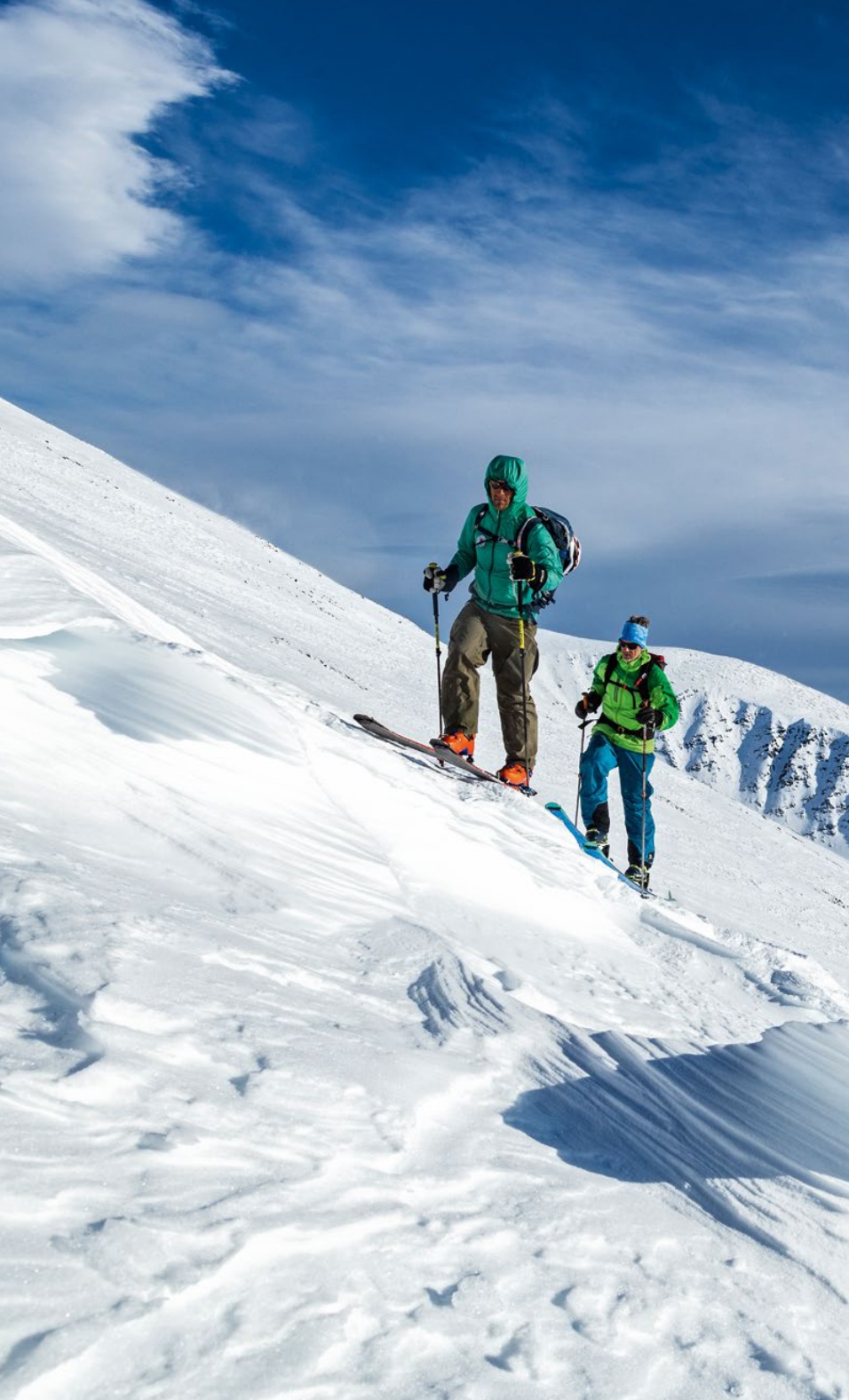
Oh no, I thought. I don’t want to turn back. But in fact, part of me desired the same thing. The wind made hiking so hard and exhausting. But the urge to reach the summit was stronger. We decided that Ellen would return to base camp by herself and Oscar, Johan and I continued towards the summit. The higher we got, the weaker the wind. It wasn’t calm at the summit, but at least we were able stand upright without feeling we were about to take a fall. Sarek spread out in front of us. The view from here is magical, unique. We were in the southernmost part of Sarek and had the entire national park laid out in front of us.
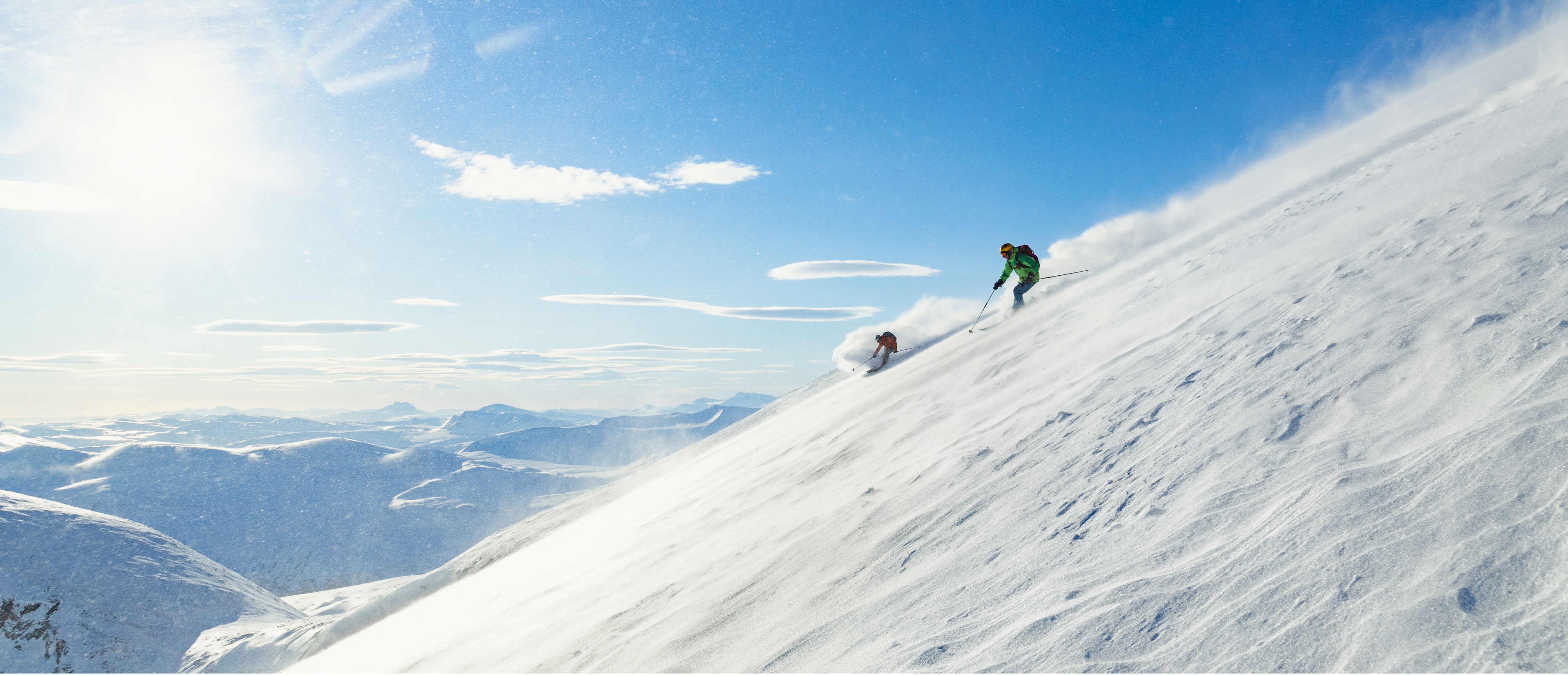
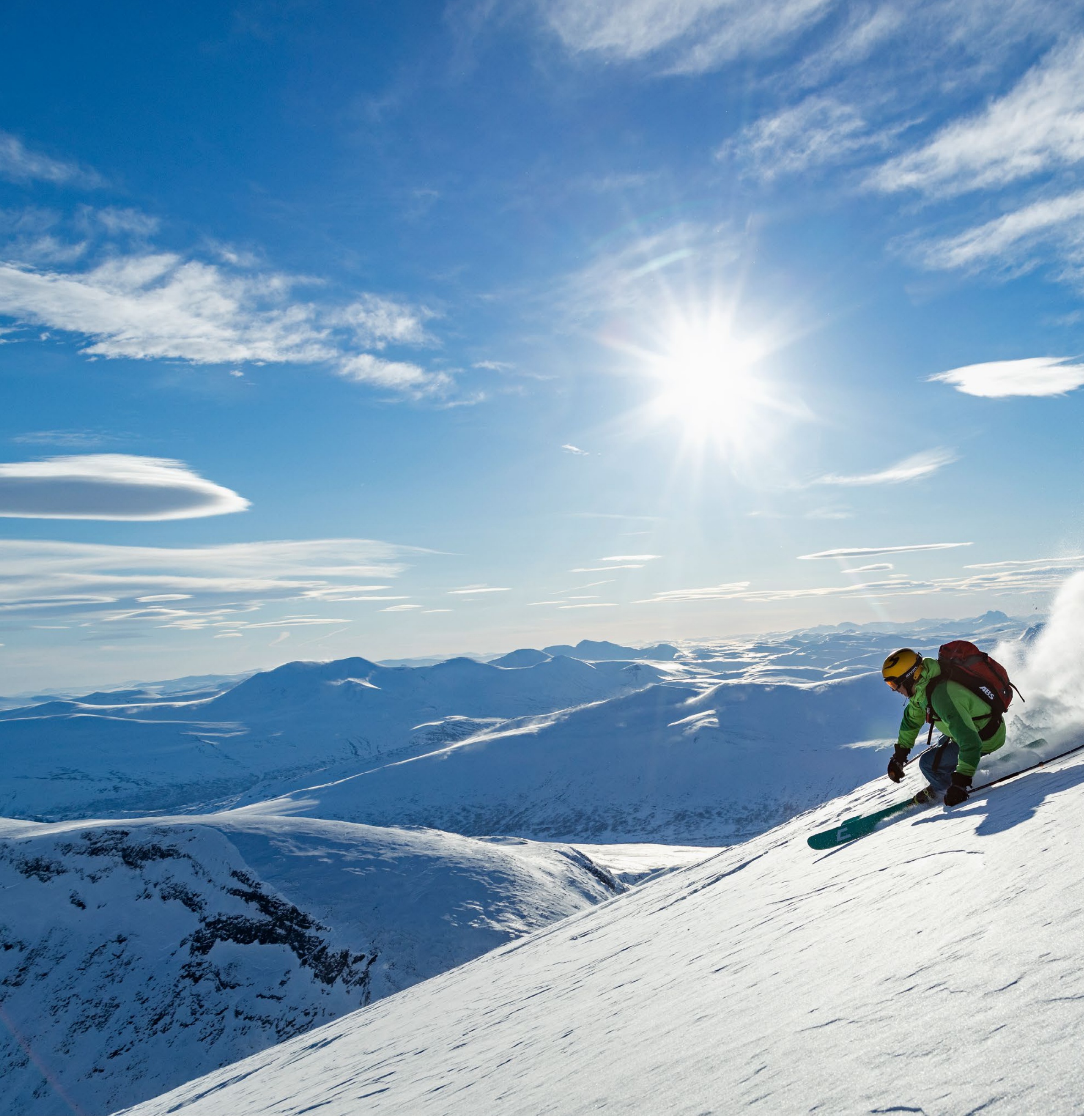
We were standing on the top of Pårtetjåkko, Sweden’s eleventh highest mountain and, according to many, also the easiest and most accessible. It wasn’t easy for us, but who says it should be? Skiing down to base camp turned out to be great despite the rain the day before. Skiing in Sarek will always be something special.